

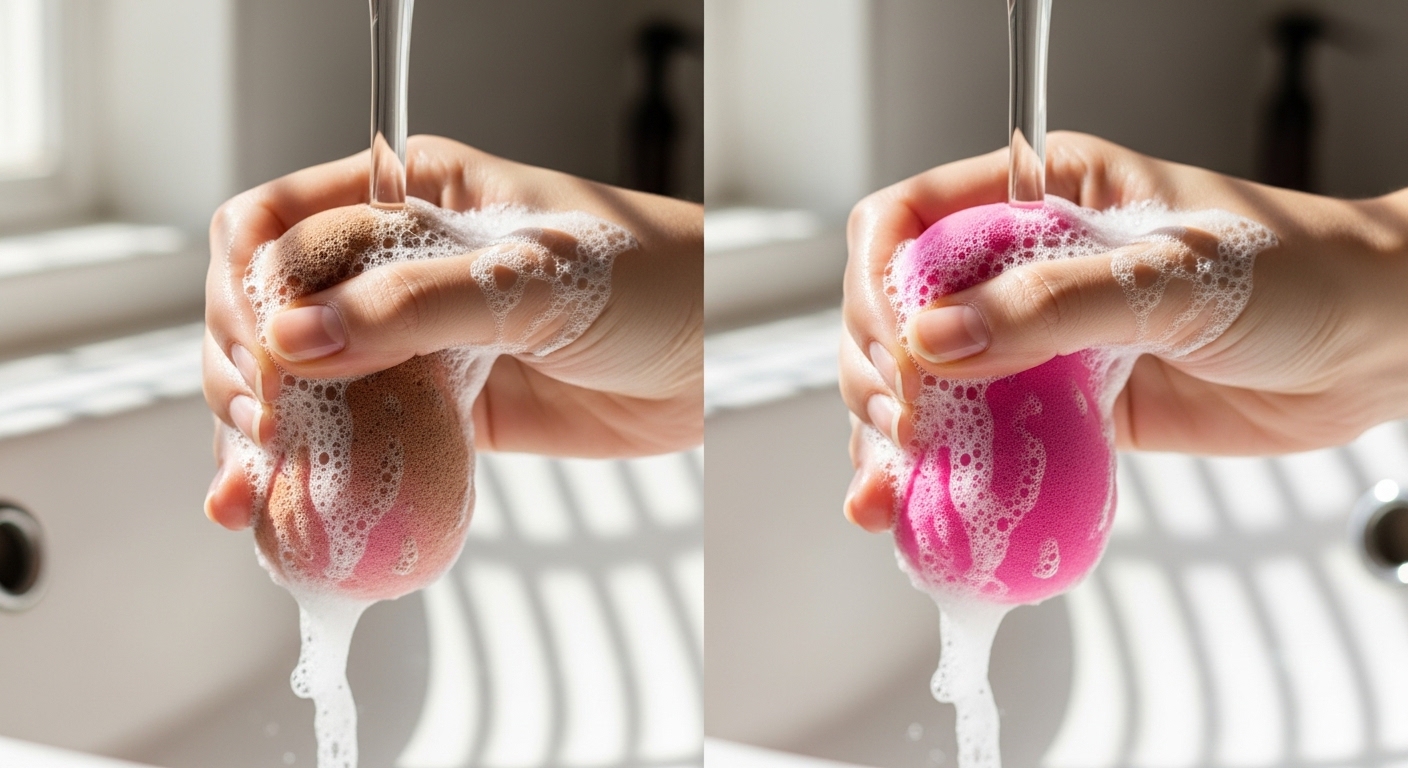
You’ve probably googled how to clean beauty blender right after squeezing it and realizing… yeah, that smell ain’t normal and that color? definitely not original anymore. It’s one of those things you keep meaning to do, like organizing your drawer or replying to that one text, but somehow the sponge just keeps getting used again and again.
And now you’re here, holding a slightly suspicious-looking beauty sponge, wondering if you’ve already gone too far. Good news—you haven’t. Probably.
Let’s fix it.
Why Cleaning Your Beauty Blender Actually Matters (More Than You Think)
Okay so here’s the thing, your beauty blender isn’t just holding foundation. It’s basically a tiny, damp, cozy apartment for bacteria. Sounds gross, yeah, because it kinda is.
When you use a dirty sponge, you’re:
- Spreading old makeup back onto your skin
- Letting bacteria chill on your face (hello breakouts)
- Ruining the finish of your makeup without even realizing it
A study published in the Journal of Applied Microbiology found that used cosmetic tools can harbor bacteria like E. coli and Staphylococcus aureus. Not saying your sponge is a biohazard… but also not saying it isn’t.
So yeah, cleaning isn’t optional. It’s like, bare minimum survival for your skin.
How Often Should You Clean a Beauty Blender?
You’re not gonna love this part.
Ideally? After every use.
Realistically? At least 2–3 times a week.
If you’re using it daily and only cleaning it once a month… um, we need to talk. That sponge has seen things.
Quick rule of thumb:
- Daily makeup → Clean every 1–2 uses
- Occasional use → Clean weekly
- Visible stains or smell → Clean immediately (no excuses)
The Basic Method: How to Clean Beauty Blender Step by Step
Let’s start simple. This is the method that works without needing fancy stuff.
What you’ll need:
- Mild soap or cleanser
- Warm water
- Your hands (obviously)
Steps:
- Soak it properly
Run your sponge under warm water until it expands fully. Don’t rush this bit, dry spots mean trapped gunk later. - Apply cleanser
Add a small amount of soap directly onto the sponge. You don’t need a whole squeeze bottle, relax. - Massage gently
Squeeze and release repeatedly. You’ll see foundation leaking out like secrets. Keep going. - Rinse and repeat
Wash until the water runs clear. Not “kinda clear”, actually clear. - Dry it right
Squeeze out excess water and let it air dry in an open space. Not inside a drawer, please, that’s how mold happens.
Deep Cleaning Method (For When It’s Really Bad)
Sometimes basic cleaning just… doesn’t cut it. Especially if you’ve been ignoring it for a while (no judgement, okay maybe a little).
Try this:
- Fill a bowl with warm soapy water
- Soak the sponge for 15–20 minutes
- Massage again afterward
- Rinse thoroughly
If stains are still there, it doesn’t always mean it’s dirty btw, some pigments just stain. But smell? smell means trouble.
Microwave Method (Yes, Seriously)
This one feels a bit weird but works surprisingly well.
Steps:
- Put your sponge in a microwave-safe cup
- Add water and a bit of cleanser
- Microwave for about 30–60 seconds
Let it cool before touching it unless you enjoy burning your fingers (you don’t).
This method helps kill bacteria more effectively, but don’t overdo it. Too much heat can damage the sponge structure.
What Cleaners Work Best?
You don’t need anything fancy, but some options are better than others.
Good choices:
- Baby shampoo (gentle and effective)
- Liquid dish soap (cuts through oil really well)
- Specialized sponge cleansers
What to avoid:
- Harsh detergents
- Alcohol-based cleaners
- Bar soaps that leave residue
A quick comparison:
| Cleaner Type | Effectiveness | Gentle on Sponge | Removes Oil |
|---|---|---|---|
| Baby Shampoo | Medium | Yes | Medium |
| Dish Soap | High | Mostly | High |
| Sponge Cleanser | High | Yes | High |
| Regular Soap Bar | Low | No | Low |
Common Mistakes People Make (Yeah, You Too Probably)
Let’s call a few things out, just gently.
- Not soaking it first → Dry sponge won’t clean properly
- Rubbing too hard → Tears the sponge (slow death basically)
- Leaving it damp in closed spaces → Mold city
- Using hot water constantly → Breaks down material faster
Also, if your sponge feels crumbly or starts tearing, it’s not “fine”, it’s done. Let it go.
How Long Does a Beauty Blender Last?
Even if you clean it perfectly, it’s not forever.
Most experts recommend replacing it every 3 months.
Signs it’s time to toss it:
- Cracks or tears
- Permanent bad smell
- Doesn’t bounce back when squeezed
- Makeup application feels off
Think of it like a toothbrush. You wouldn’t keep that forever either… hopefully.
Pro Tips That Make a Big Difference (But No One Talks About)
These are the little things that kinda change everything.
- Always squeeze with a towel after washing to remove extra water
- Store in a ventilated holder, not a makeup bag
- Keep one backup sponge so you’re not tempted to reuse a dirty one
- Use less product, it’ll actually make cleaning easier later
And here’s a weird one—sometimes flipping your sponge and using different sides extends its life. Sounds obvious, but people forget.
Quick Cleaning Hack (When You’re Lazy… It Happens)
If you’re in a rush and just need it “good enough”:
- Wet sponge
- Add a drop of dish soap
- Rub it against your palm for 30 seconds
- Rinse quickly
It’s not perfect, but better than nothing. Way better.
Can You Clean a Beauty Blender Without Soap?
Technically yes… but also no.
Water alone won’t remove oils and makeup buildup. You might get surface-level cleaning, but bacteria will still hang around like uninvited guests.
If you’re out of cleanser:
- Try a tiny bit of shampoo
- Even face wash works in a pinch
Just don’t skip cleaning altogether.
Final Thoughts (The Stuff You Kinda Already Knew)
Cleaning your sponge isn’t complicated, you just needed someone to say “hey, do it properly”. Now you know how to clean beauty blender the right way without guessing or half-doing it.
And honestly? Once you get into the habit, it takes like two minutes. Less time than scrolling your phone, which you were gonna do anyway.
So go clean it. Like, now. Not later. You know you’ll forget.

Jamesmathew is an expert Amazon affiliate writer, helping readers discover top products, smart deals, and practical buying guides through honest reviews and insightful content.