

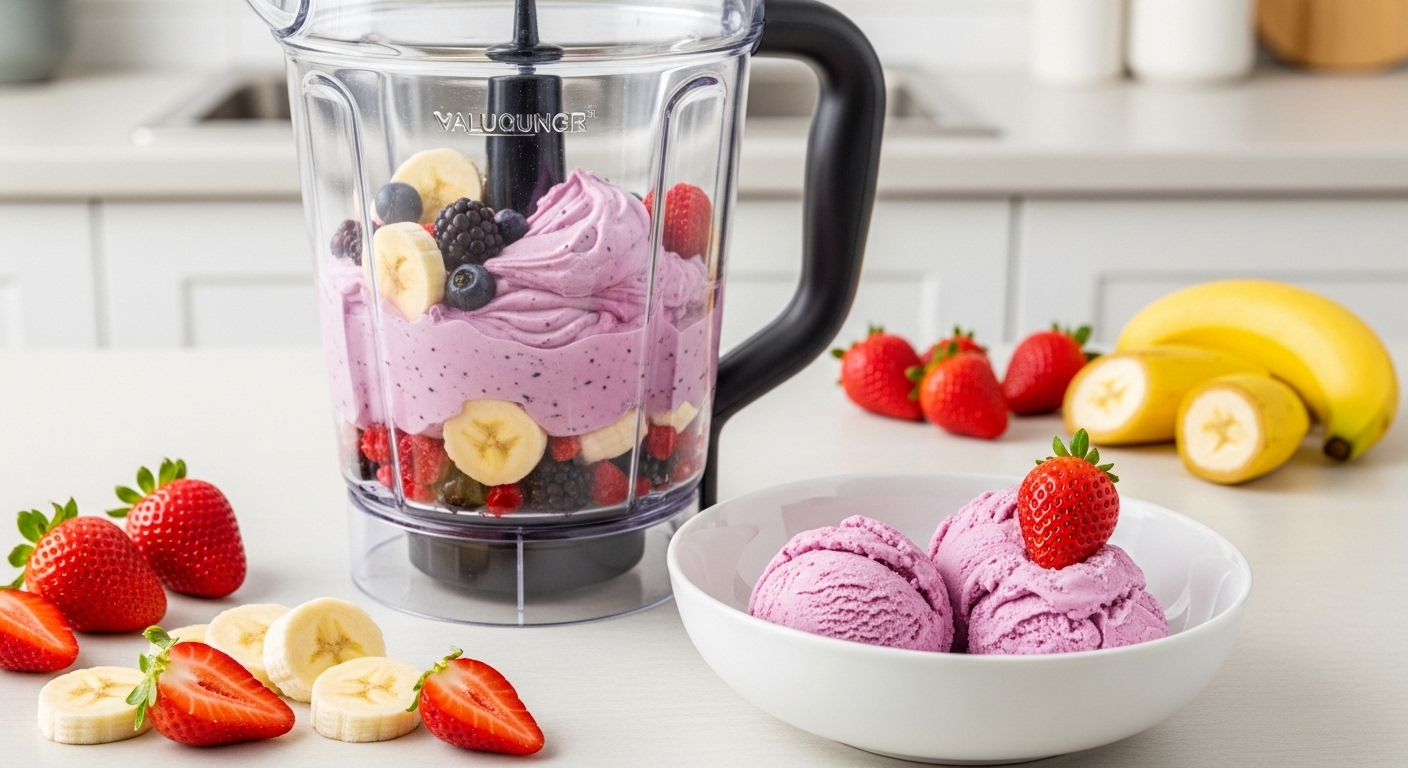
You’re probably standing there wondering can you make ice cream in a blender, like actually real ice cream and not some weird icy mess that tastes kinda sad, and yeah I get it because it does feel like one of those too-good-to-be-true kitchen hacks that either works magically or fails in a very loud, sticky way.
The short answer is yes, you can, but also not always in the way you think, and that’s where things get slightly confusing in a way that people don’t really explain properly. A blender can absolutely get you to something creamy, cold, and very much ice-cream-like, but the method you choose kinda decides whether you end up with silky dessert or just frozen regret in a bowl.
How Does Blender Ice Cream Even Work?
So here’s the thing, when you’re using a blender, you’re basically forcing frozen stuff into submission. Ice cream traditionally needs churning, air incorporation, temperature control, all that fancy science stuff. But a blender just goes fast and hopes for the best, which surprisingly works more often than it should.
What you’re doing is blending frozen ingredients, usually fruit or pre-frozen dairy mixtures, until they break down into a creamy texture. The blades crush ice crystals into smaller bits, and when it’s done right, your brain kinda goes “yep, this is ice cream.”
A slightly odd way to think about it is that you’re skipping the slow process and jumping straight to the final texture, which feels like cheating, but in a good way.
The Two Main Ways People Make Ice Cream in a Blender
There isn’t just one method, and that’s where people mess up sometimes, thinking it’s all the same.
1. Frozen Fruit Ice Cream (Nice Cream Style)
This one is the easiest, and honestly kinda foolproof unless you really try to mess it up.
- Use frozen bananas as a base
- Add other frozen fruits like strawberries or mango
- Blend until smooth
- Maybe add a splash of milk if it gets stuck
What you get is creamy, naturally sweet, and surprisingly close to soft serve. It’s not exactly traditional ice cream, but it scratches the itch in a very convincing way.
“Frozen bananas have a natural emulsifying property that mimics the creaminess of dairy,” notes many culinary experts who study plant-based desserts.
2. Pre-Frozen Ice Cream Base
This one feels more “real,” but also requires a bit more patience, which people don’t always have, lets be honest.
- Mix cream, sugar, and flavorings
- Freeze the mixture in a container
- Break it into chunks
- Blend until smooth
This method gives you something much closer to actual ice cream, especially in texture. The blending step replaces churning, though not perfectly, but enough that most people won’t complain.
What You Actually Need (It’s Not Much)
You don’t need a fancy setup, but your blender does matter more than people admit.
Basic Requirements
- A decent blender (high-speed works better, obviously)
- Frozen ingredients (this is non-negotiable)
- A bit of liquid (milk, cream, or even water)
- Patience, because sometimes it just won’t blend right away
Optional But Helpful
- Sweeteners like honey or sugar
- Vanilla extract or cocoa powder
- Nut butters for extra creaminess
A quick table might make this clearer, even though tables in dessert articles feel slightly unnecessary but here we are:
| Ingredient Type | Purpose | Example |
|---|---|---|
| Frozen Base | Structure & texture | Bananas, frozen cream |
| Liquid | Helps blending | Milk, almond milk |
| Sweetener | Flavor boost | Sugar, honey |
| Add-ins | Variety | Chocolate chips, nuts |
Step-by-Step: Making Ice Cream in a Blender
This part sounds simple, and it is, but also not exactly if you rush it.
Basic Blender Ice Cream Recipe
- Take 2 cups frozen fruit (or frozen base chunks)
- Add 2–4 tablespoons of milk
- Blend on low first, then increase speed
- Stop and scrape the sides (you will need to do this, don’t ignore it)
- Blend until creamy
If it looks crumbly at first, that’s normal, don’t panic. It usually comes together suddenly, like it remembers it’s supposed to be ice cream.
Why Sometimes It Doesn’t Work (And Feels Annoying)
You might try this and end up with something that’s too icy, too thick, or just… wrong. That happens more than tutorials admit.
Common Problems
- Too thick to blend: Not enough liquid
- Too runny: Too much liquid, obviously
- Icy texture: Ingredients not creamy enough
- Blender struggling: Not powerful enough
One slightly frustrating truth is that not all blenders are built for this. Lower-powered ones kinda give up halfway, and you’re left stirring a half-frozen mess wondering what went wrong.
Is Blender Ice Cream Actually Good?
This is where opinions get weirdly divided.
Some people swear it’s just as good as traditional ice cream, others think it’s a completely different dessert pretending to be something it’s not. Both are kinda right.
Texture Comparison
- Traditional ice cream: Smooth, airy, churned
- Blender ice cream: Dense, creamy, sometimes slightly icy
Taste Comparison
- Depends heavily on ingredients
- Fruit-based versions taste fresh and natural
- Dairy versions can get very close to the real thing
A small but interesting stat: according to food trend reports, searches for “blender ice cream” and “nice cream” increased by over 200% in the past few years, mostly because people want quicker, healthier options without special machines.
Tips That Make a Big Difference (Even If They Sound Small)
These are the things people usually skip, and then blame the method when it doesn’t work.
Use Frozen Ingredients Properly
Don’t just toss in semi-cold stuff and expect magic. It needs to be properly frozen, like solid, not “kinda cold.”
Blend in Stages
Start slow, then increase speed. Going full speed immediately sometimes just jams everything together.
Don’t Add Too Much Liquid
This is the most common mistake. You only need a little, really. Too much and you’re basically making a milkshake.
Eat It Immediately (Or Freeze Again)
Blender ice cream melts faster than traditional ice cream. If you leave it out, it turns into soup quicker than you expect, which is slightly tragic.
Fun Variations You Can Try
Once you get the basic method, you can start experimenting in ways that feel slightly chaotic but fun.
Chocolate Peanut Butter
- Frozen bananas
- Cocoa powder
- Peanut butter
- A bit of milk
Mango Coconut
- Frozen mango
- Coconut milk
- Honey
Vanilla Berry Swirl
- Frozen mixed berries
- Vanilla extract
- Cream or yogurt
Each version has its own personality, if that makes sense, like they don’t just taste different, they feel different too.
Is It Healthier Than Regular Ice Cream?
This depends entirely on what you put in it, which sounds obvious but still worth saying.
- Fruit-based versions: Lower in fat, more natural sugars
- Dairy-based versions: Similar to regular ice cream
- No added sugar versions: Obviously healthier
Some nutritionists point out that homemade blender ice cream avoids preservatives and stabilizers, which is a small but real advantage.
When You Shouldn’t Use a Blender
Not every situation is blender-friendly, and forcing it can lead to disappointment.
- If you want ultra-smooth, store-quality ice cream
- If your blender is very weak
- If you don’t have frozen ingredients ready
In those cases, a proper ice cream maker just does a better job, no point pretending otherwise.
Final Thoughts
So yeah, can you make ice cream in a blender? You absolutely can, and it works better than most people expect, but it’s not exactly the same as traditional ice cream, and that’s okay. It’s faster, simpler, and sometimes even more fun because you’re kinda improvising your way into dessert.
If you’re standing in your kitchen debating whether to try it, you probably should, worst case you end up with something slightly off but still edible, best case you discover a ridiculously easy way to make ice cream whenever you feel like it, which honestly sounds like a win either way.

Jamesmathew is an expert Amazon affiliate writer, helping readers discover top products, smart deals, and practical buying guides through honest reviews and insightful content.