

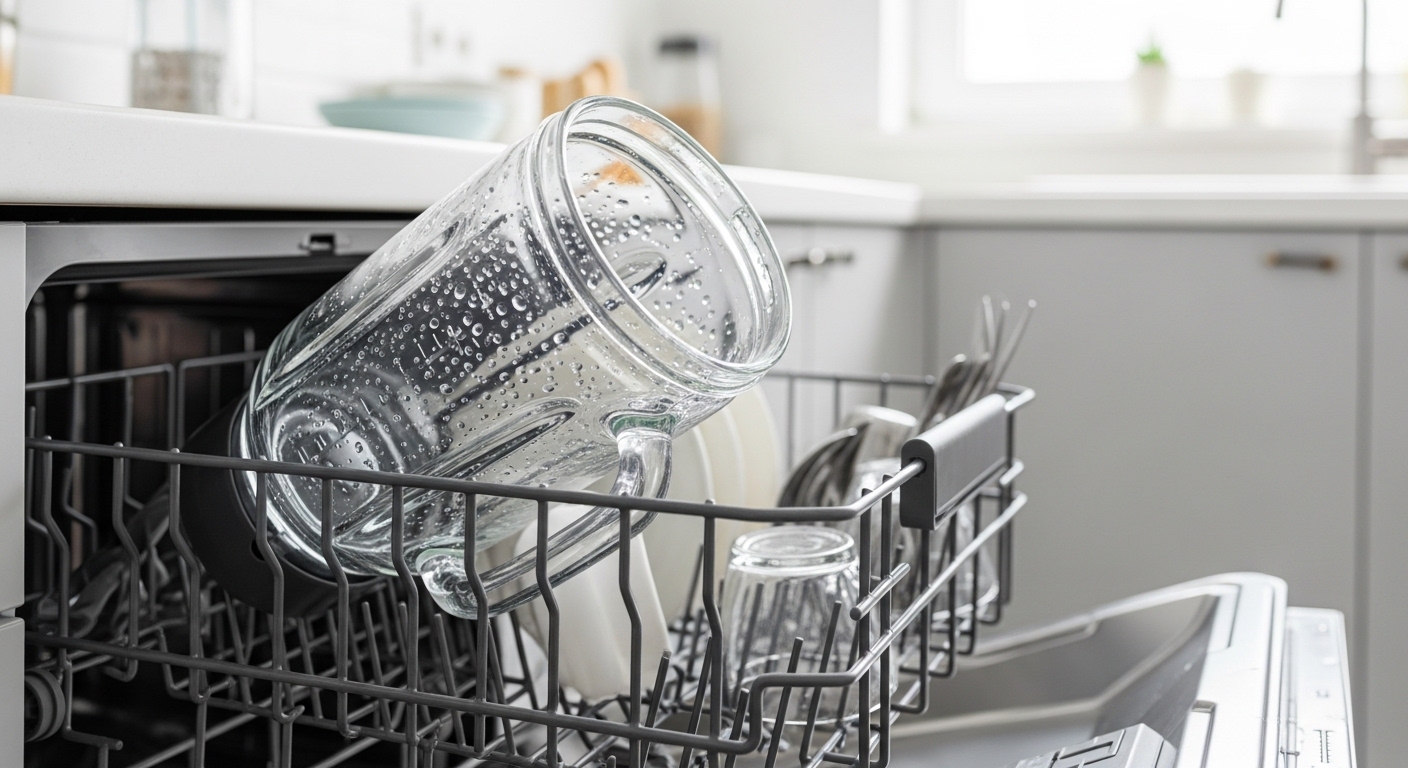
You’re probably standing there right now wondering can a ninja blender go in the dishwasher, maybe holding a sticky jar with dried smoothie bits clinging like they got personal beef with you, and yeah, it’s kinda annoying figuring out what’s safe and what’s gonna ruin your stuff.
So let’s just talk it through like normal people do, not like those manuals that feel like they were written by a robot who never touched a kitchen in its life.
The Short Answer (But Not the Whole Story)
Yeah, most Ninja blender parts can go in the dishwasher, but not everything, and not in just any way you feel like tossing them in there. That’s where people mess it up a bit, honestly.
Here’s the simple breakdown you kinda wish came printed on the lid:
- Dishwasher safe:
- Blender pitchers
- Single-serve cups
- Lids (usually)
- Blade assemblies (top rack only, and carefully)
- Not dishwasher safe:
- The motor base (never ever, please don’t even think it)
- Any electrical component (obvious but still worth saying)
But like… that’s the surface answer. The real thing is a little more nuanced, and yeah, it matters.
Why Some Ninja Blender Parts Survive the Dishwasher (and Some Don’t)
You’d think plastic is plastic, right? Just throw it in and let the machine deal with it. But nah, it’s a bit more picky than that.
Most Ninja blender jars and cups are made from BPA-free plastic, which is designed to handle heat… but not like infinite heat cycles over years. Dishwashers get hotter than you probably realize, especially on heavy settings.
What happens over time if you keep doing it?
- Plastic can go cloudy (that weird foggy look nobody wants)
- Seals might loosen slightly
- Lids may warp just a tiny bit, like barely noticeable till they start leaking, which is annoying
It’s not like one wash ruins it. It’s more like… slow damage you don’t notice till one day your smoothie lid betrays you.
The Blade Situation (This One’s a Bit Tricky)
Blades are where things get slightly… eh, not dangerous exactly, but careless.
Yes, Ninja blender blades are usually labeled dishwasher safe. But there’s a catch that people ignore:
- They’re extremely sharp
- Water pressure can knock them around
- They can dull faster in the dishwasher than with hand washing
Also, if you just toss them in, they can bang into other items. That doesn’t just dull the blade, it can chip things too. Not great.
A safer-ish way:
- Place blades on the top rack
- Keep them secured, not loose
- Avoid overcrowding
Some people just hand wash them quickly, which honestly takes like 10 seconds and saves you future regret.
The Motor Base: Just Don’t
This one’s simple but somehow still worth saying again.
The motor base should never go in the dishwasher, not even for a second, not even if you think “well maybe just a quick rinse.”
Because:
- It has electrical components
- Water = damage (and possibly danger)
- It voids warranties in most cases
If it gets dirty, just wipe it with a damp cloth. That’s it. No drama needed.
Dishwasher vs Hand Washing: Which Is Actually Better?
Alright so here’s where people kinda split into camps like it’s some big debate, but it doesn’t have to be that dramatic.
Dishwasher Pros
- Saves time (obviously)
- Good for deep cleaning sticky residue
- Less effort when you’re tired or just done with the day
Dishwasher Cons
- Long-term wear on plastic
- Possible warping from heat
- Blade dulling over time
Hand Washing Pros
- Gentle on materials
- Keeps things looking new longer
- Safer for blades
Hand Washing Cons
- Slightly more effort
- You have to actually do it (yeah, that part)
Honestly, a lotta people do a mix. Dishwasher sometimes, hand wash other times. That’s probably the most realistic approach, not some strict rulebook.
A Quick Comparison Table (Because It Helps, I Guess)
| Part | Dishwasher Safe | Recommended Method | Notes |
|---|---|---|---|
| Pitcher/Jar | Yes | Top rack dishwasher | Avoid high heat cycles |
| Single-serve cups | Yes | Dishwasher or hand wash | Can cloud over time |
| Lids | Yes | Top rack | Watch for warping |
| Blade assembly | Yes (careful) | Prefer hand washing | Stay sharp longer |
| Motor base | No | Wipe with cloth | Never submerge |
What the Manufacturer Usually Says (and Why It’s Slightly Vague)
If you ever skimmed the manual, it probably said something like “dishwasher safe components, top rack recommended,” and then moved on like it explained everything.
That vagueness is kinda intentional, not gonna lie.
Manufacturers don’t always spell out the long-term effects because:
- They test for safety, not lifetime perfection
- They assume average use, not daily heavy cycles
- They don’t wanna overwhelm you with detail
A general guideline from appliance care experts goes something like this:
“Frequent exposure to high dishwasher temperatures can reduce the lifespan of plastic components, even if labeled dishwasher safe.”
So yeah, safe doesn’t always mean ideal.
Real-Life Scenario (Because This Is Probably You)
You make a smoothie. Banana, peanut butter, maybe some oats. You drink it. You forget the blender in the sink.
Three hours later:
It’s now cement.
At that point, the dishwasher feels like your only friend. And honestly, in that situation? Yeah, go ahead, use it. That’s kinda what it’s there for.
But if you rinse it right away, like even a quick swirl of water, cleaning becomes ridiculously easier, almost suspiciously easy.
Small Habits That Make a Big Difference
You don’t need to overhaul your life or anything, just a few tweaks:
- Rinse immediately after use (this one changes everything)
- Use warm water + a drop of soap and blend for 10 seconds (self-clean hack, works weirdly well)
- Avoid heavy dishwasher cycles unless necessary
- Don’t stack items tightly in the dishwasher
That blending-with-soap trick feels almost lazy, but it’s actually kinda genius.
Common Mistakes People Make (Yeah, Maybe You Too)
Let’s be real for a sec, people do some questionable things with blenders.
- Putting the whole thing (base included) in water
- Using boiling water directly in plastic jars
- Scrubbing blades aggressively and cutting themselves (happens more than you’d think)
- Overloading the dishwasher with parts jammed together
None of these are like… unforgivable, but they do shorten the life of your blender, slowly but surely.
Does Dishwasher Cleaning Affect Taste or Smell?
This one’s weirdly overlooked.
Over time, if plastic gets worn or slightly degraded from heat, it can start holding onto smells more. Like that faint smoothie ghost that never fully leaves.
Especially with:
- Garlic
- Protein powders
- Strong fruits like mango or berries
Hand washing tends to reduce that buildup a bit better, especially if you dry things properly.
So, Can a Ninja Blender Go in the Dishwasher Without Problems?
Yeah, it can. That’s the honest answer.
But the better answer is: it can, but maybe not every single time, and not without thinking a little about how you’re doing it.
If you:
- Use the top rack
- Avoid high heat cycles
- Don’t overdo it daily
Then you’re pretty much fine.
If you throw everything in carelessly every day for months… yeah, you might start noticing small issues creeping in.
Final Thought That Kinda Matters More Than Everything Else
You don’t actually need to be perfect about this.
Some days you’ll hand wash. Some days you’ll just toss it in the dishwasher and move on with your life. That’s normal.
The goal isn’t to treat your blender like some fragile museum piece. It’s just to avoid the few things that obviously mess it up.
And if you were worried you already ruined yours by using the dishwasher a few times, you probably didn’t. These things are built tougher than they look, even if they don’t always feel like it.
If you want, I can also break down the exact cleaning method that takes like 15 seconds and barely feels like cleaning at all, it’s oddly satisfying.

Jamesmathew is an expert Amazon affiliate writer, helping readers discover top products, smart deals, and practical buying guides through honest reviews and insightful content.