

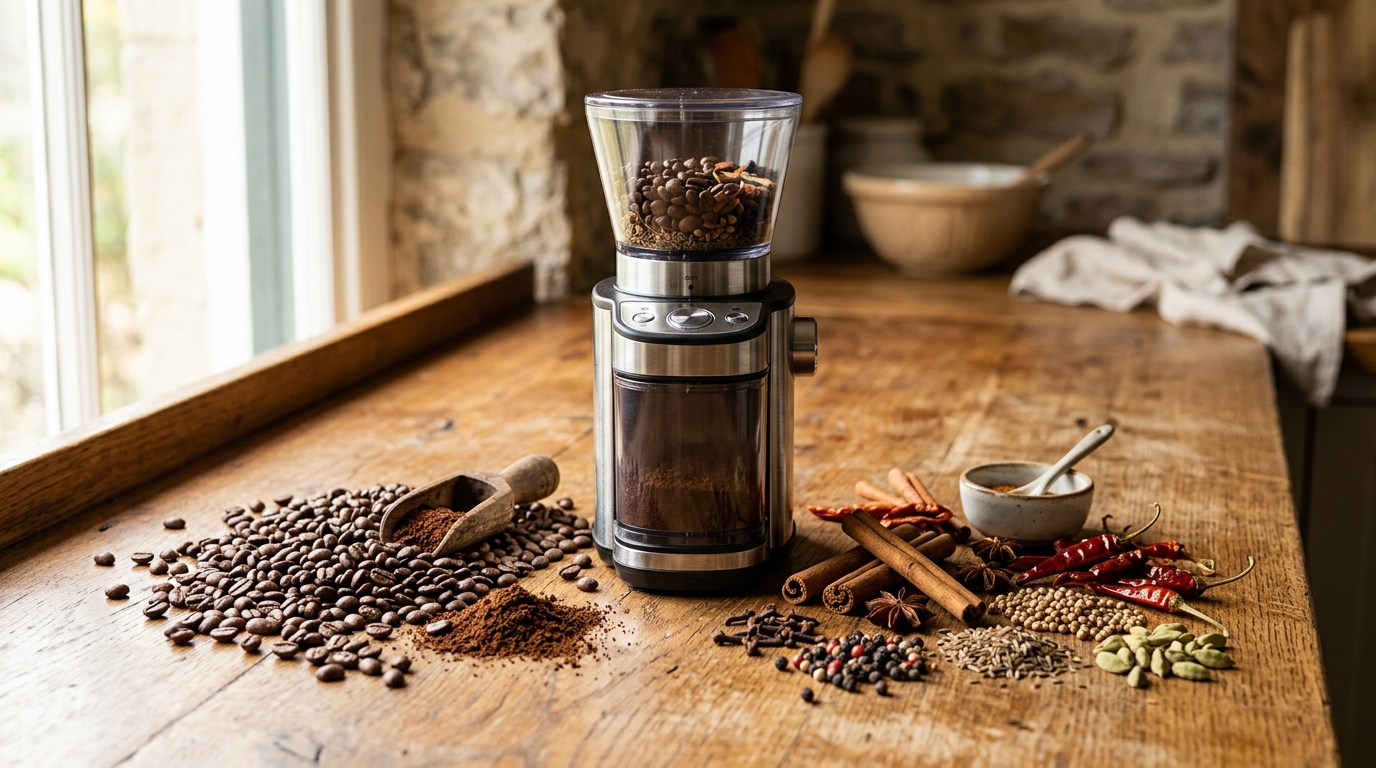
So you’re standing in your kitchen holding a jar of cumin seeds, staring at your coffee grinder, and wondering can you use a coffee grinder for spices without ruining your next pot of coffee or, worse, your dinner. Yeah, I’ve been there too, more times than I’d like to admit, usually at like 6pm when the store is closed and I really need ground coriander for a recipe that’s already half cooked.
Here’s the honest answer, and its a bit more complicated than a simple yes or no. You absolutely can grind spices in a coffee grinder, tons of people do it every single day, but there are some real tradeoffs you should know about before you dump your peppercorns in there and hit the button.
The Short Answer (Because I Know You’re Busy)
Yes, a coffee grinder can grind spices, and honestly it does a pretty decent job at it. Blade grinders especially, the cheap kind most people have sitting on their counter, are basically small food processors with a spinning blade, so they don’t actually care whether they’re chopping up coffee beans or cardamom pods. The machine doesn’t know the difference. What it does care about is flavor transfer, and thats where things get a little messier than people expect.
Why This Question Even Comes Up So Much
Turns out this is one of the most searched kitchen questions out there, and theres a reason for that. Most home cooks don’t own a dedicated spice grinder, they own a coffee grinder because thats what gets used every morning, and buying a whole separate appliance just for the occasional batch of homemade garam masala feels excessive to a lot of people. According to a 2022 survey conducted by the National Coffee Association, roughly 65 percent of American adults drink coffee daily, meaning a huge chunk of households already have a grinder sitting around collecting dust between pots.
Spice grinders, on the other hand, are a much smaller market. Most people who cook with whole spices regularly, think Indian, Middle Eastern, or North African cuisines, either use a mortar and pestle or they’ve repurposed an old coffee grinder specifically for this job. Chef and cookbook author Julie Sahni, who has written extensively on Indian cooking, has noted in interviews that freshly ground spices make a dramatic difference compared to pre-ground jarred versions, and a coffee grinder is often the most accessible tool for home cooks trying to replicate that freshness.
The Coffee Flavor Problem Nobody Warns You About
Okay so here’s the thing that trips most people up. If you grind cumin seeds in the same grinder you use for your morning espresso beans, your next cup of coffee is going to taste like cumin. Not a little bit either, like noticeably, unpleasantly so. Coffee grounds are incredibly porous and they absorb oils and aromas really easily, which is great when your grinding fresh Colombian beans and terrible when there’s leftover garlic powder residue hiding in the crevices.
This works both ways too. Grind your peppercorns right after coffee beans without cleaning the machine and you’ll get a weird bitter, slightly burnt undertone in your pepper. Not dangerous, just kind of gross tasting.
The fix most people land on is dead simple: keep two grinders. One lives its whole life dedicated to coffee and coffee only, the other becomes your designated spice grinder. You’ll see this recommendation over and over in cooking forums and from professional chefs, because its genuinely the easiest solution and it costs way less than you’d think, a basic blade grinder runs somewhere between 15 and 30 dollars in most stores.
Blade Grinders vs Burr Grinders for Spice Duty
This part actually matters a lot more than people realize when their picking which grinder to sacrifice to spice duty.
| Grinder Type | Good for Spices? | Why |
|---|---|---|
| Blade grinder | Yes, quite good | Spinning blade chops unevenly but works fine for most whole spices |
| Burr grinder | Not really recommended | Designed for consistent particle size in coffee, oils from spices can gum up the burrs |
| Mortar and pestle | Excellent, traditional | No cross contamination, full control over texture, but takes more time and effort |
Burr grinders, the more expensive precision machines, are actually a poor choice for spices. Their internal mechanism is tighter and more complex, meaning oily spices like cloves or star anise can clog up the burrs and gunk up the whole thing in ways that are genuinely hard to clean. Blade grinders are simpler machines mechanically, which ironically makes them more forgiving and easier to wipe out afterward.
How to Actually Clean a Coffee Grinder After Grinding Spices
If you’re committed to using just one grinder for both jobs, which plenty of people do out of necessity or just not wanting to buy another gadget, cleaning matters a whole lot more than you’d guess.
Here’s what generally works, based on advice repeated across cooking blogs and by kitchen equipment reviewers like those at America’s Test Kitchen:
- Wipe out the bowl immediately after grinding with a dry paper towel, don’t wait till later
- Run a small batch of dry white rice or plain uncooked rice through the grinder, this absorbs leftover oils and residue surprisingly well
- Discard the rice afterward obviously, don’t eat that stuff
- Use a small brush, an old toothbrush works great honestly, to get into the corners around the blade
- Let it air dry completely before storing it away, moisture plus spice residue is a bad combination
Some people also swear by wiping the inside with a bit of vinegar on a cloth to cut through stubborn oils, though you’ll want to make sure it’s fully dry before the next use so you don’t introduce any weird moisture into your next batch of coffee beans.
What Spices Grind Best in a Coffee Grinder
Not every spice behaves the same way once it hits the blade. Dry, hard spices tend to grind beautifully, things like:
- Cumin seeds
- Coriander seeds
- Black peppercorns
- Fennel seeds
- Dried chilies
- Cinnamon sticks broken into smaller pieces first
Oilier or stickier spices are trickier and can leave more residue behind, stuff like cloves, cardamom pods (especially if you don’t remove the pods first), and star anise. These aren’t impossible to grind, they just require more cleanup effort afterward and might not come out as evenly textured.
A Quick Word on Quantity and Technique
One mistake a lot of beginners make is overloading the grinder, tossing in way more spice than the bowl was ever designed to handle. This usually just results in uneven grinding, some bits turn to powder while other chunks barely get touched at all. Small batches, pulsed rather than run continuously, tend to give you a much more consistent result. Give it a few short bursts, shake the grinder a bit between pulses to redistribute everything, and check the texture as you go rather than just holding the button down for thirty seconds straight.
So, Should You Do It?
Honestly, yeah, grinding spices in a coffee grinder is a totally reasonable thing to do, and its what a huge number of home cooks already do without any issues. The main thing is just being mindful about cross contamination between coffee and spice flavors, and ideally keeping a separate grinder if you can swing it budget wise. If you can’t, or don’t want to, thorough cleaning between uses gets you most of the way there.
At the end of the day this is one of those kitchen questions where the internet tends to overcomplicate a fairly simple answer. Your coffee grinder is a small motor spinning a blade really fast, it doesn’t have opinions about what your feeding it, so as long as you manage the flavor transfer issue sensibly, you’re fine grinding your own spices at home instead of relying on store bought pre-ground stuff that’s often been sitting on a shelf losing its potency for who knows how long.

Jamesmathew is an expert Amazon affiliate writer, helping readers discover top products, smart deals, and practical buying guides through honest reviews and insightful content.