

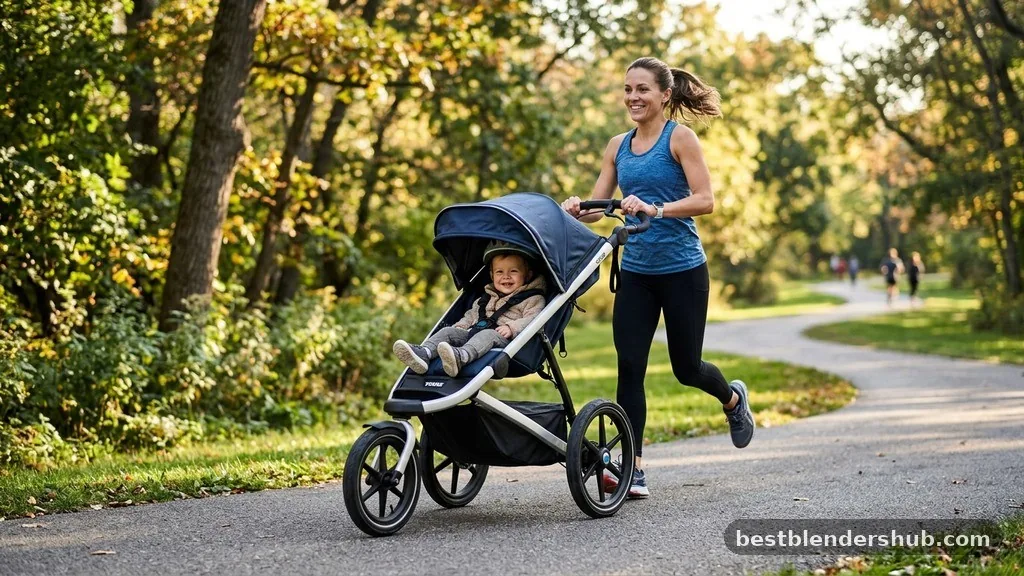
Deciding if you need a specialized piece of equipment for your daily outings often starts with identifying exactly what a jogging stroller brings to the table compared to standard models. While many parents assume these are just regular strollers with larger wheels, they are engineered with specific mechanics to handle higher speeds and uneven surfaces safely.
If you are a parent looking to maintain an active lifestyle, knowing the distinction between a casual travel system and a high-performance runner is vital. Understanding the mechanics of a jogging stroller helps ensure you choose gear that keeps your child secure while you log those miles on the pavement or park trails.
Defining the Jogging Stroller
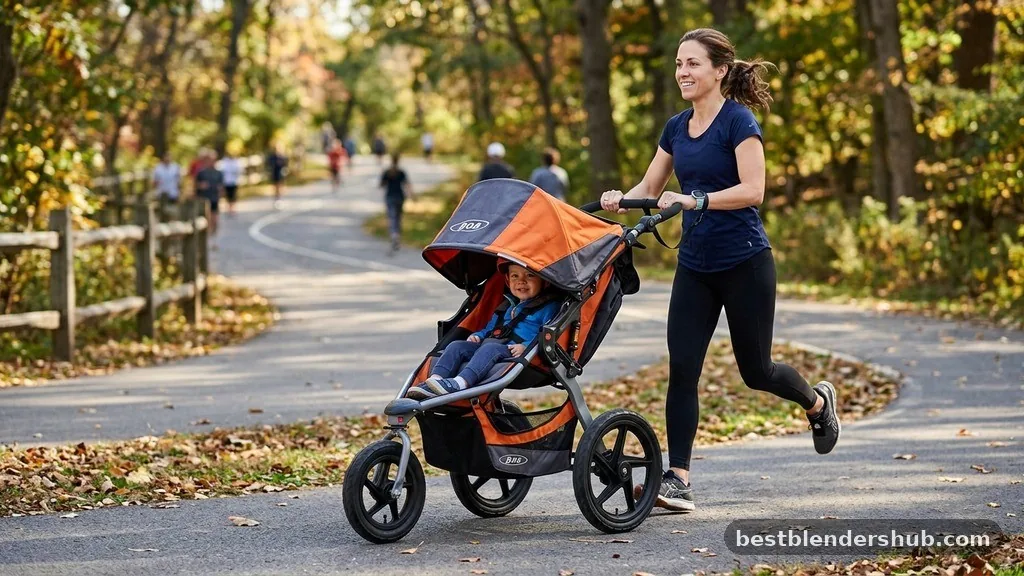
A jogging stroller is a specialized piece of baby gear designed to provide stability and safety during high-speed movement or while navigating rougher terrain. Unlike a standard stroller intended for mall trips or sidewalk walks, these units feature a longer frame and larger, air-filled wheels to minimize vibration.
Manufacturers build them with a lower center of gravity to prevent tipping when you turn corners at a brisk pace. You will notice that these strollers are heavier and less compact than city-bound models, which is a direct trade-off for the durability required for distance running.
Most importantly, the structural integrity of these units is governed by strict ASTM safety standards, which dictate how the frame handles stress and impact. Because you are moving faster than a walking pace, the design focuses on preventing the stroller from wobbling or losing control. This focus on performance means that while they might feel overkill for a quick trip to the grocery store, they are essential for anyone who takes running with a baby seriously.
Key Mechanical Differences
To differentiate between a standard stroller and its athletic counterpart, you must look at the wheelbase and wheel configuration. A typical jogging stroller vs standard stroller comparison highlights that jogging models almost always feature a fixed front wheel or a locking mechanism.
This design prevents the front wheel from wobbling or “shimmying” at higher speeds, which could cause the stroller to veer off course. If you opt for a model with a swivel wheel, ensure it has a robust locking lever that keeps the wheel perfectly straight while you run.
Beyond the wheels, the tire choice is a significant differentiator. Most jogging-specific units utilize pneumatic tires, which are essentially bicycle tires filled with air.
These provide natural shock absorption that hard plastic wheels simply cannot match. When combined with a high-quality suspension system, these tires allow the stroller to glide over cracks, gravel, and uneven grass without jarring your child.
| Feature | Standard Stroller | Jogging Stroller |
|---|---|---|
| Wheel Size | Small (6-8 inches) | Large (12-16 inches) |
| Tire Type | Hard Plastic/EVA Foam | Pneumatic (Air-filled) |
| Front Wheel | Swivel for Maneuverability | Fixed or Lockable |
| Braking | Rear Foot Brake | Handbrake + Foot Brake |
Essential Safety Components
Safety is the absolute priority when designing equipment for athletic use. Because you are traveling at a higher velocity, these strollers include specific features meant to mitigate risk in case you lose your footing or encounter a steep hill. A handbrake is a defining feature of a true jogger, allowing you to control your speed on descents rather than relying entirely on your own strength to hold the stroller back.
Another critical safety element is the wrist strap, which stays tethered to your arm at all times during a run. This simple device ensures that if you trip or let go of the handlebar, the stroller cannot roll away from you.
Inside the seat, you will always find a five-point harness, which is non-negotiable for securing a child who might be jostled by uneven terrain. It is important to note that even with these features, experts generally recommend waiting until a baby is at least six to eight months old before jogging with them, as they need sufficient neck and head control to handle the motion.
Addressing Common Misconceptions
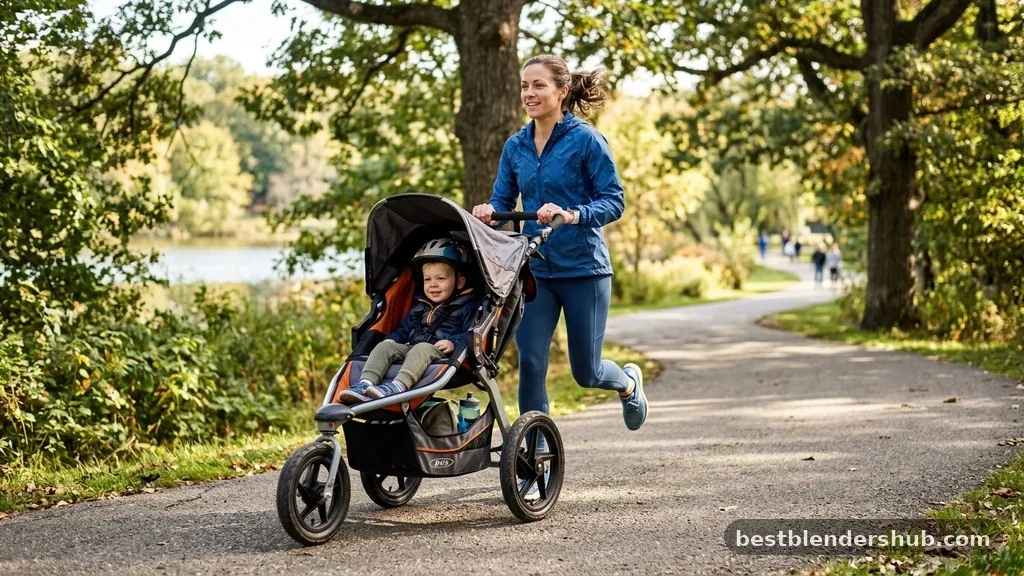
Many parents wonder if they can use a jogging stroller for everyday tasks, and the answer is yes, though with some caveats. While they offer a smoother ride, their larger footprint can make them difficult to navigate in crowded stores or tight aisles. Additionally, the tracking adjustment feature is something you will need to master.
Over time, the front wheel may lose its alignment, causing the stroller to pull to one side. Most high-end joggers include a simple dial or screw adjustment to realign the wheel, ensuring you can run in a straight line without constant steering corrections.
Another common question involves infant car seat compatibility. While many models allow you to click in a car seat using adapters, you should never jog with a newborn in a car seat.
The car seat is designed for stable travel, not for the vibrations and forces experienced during a run. Save the car seat attachment for walking trips and reserve the jogging seat for when your child is old enough to sit up confidently.
Technical Considerations for Performance
If you are serious about your pace, pay attention to the frame material and the child weight limit. Aluminum frames are generally preferred because they offer a high strength-to-weight ratio, preventing the stroller from feeling like a lead weight during long runs. Always check the manufacturer’s weight specifications, as exceeding the limit can compromise the effectiveness of the suspension.
- Air pressure maintenance: Keep those tires inflated to the recommended PSI to avoid flat spots and improve roll efficiency.
- Handlebar ergonomics: Choose a model with an adjustable height so you don’t have to hunch over while running.
- Storage capacity: Look for a secure cargo basket so your water bottles and baby gear don’t bounce out on the trail.
- Foldability: Even the best joggers should fold down to fit in your vehicle, though they will never be as compact as an umbrella stroller.
Maintenance and Longevity
Keeping your stroller in top shape is crucial for long-term safety. Because you are using it on outdoor paths, the wheels and suspension are exposed to dirt, sand, and moisture.
Regularly wipe down the axles and check for debris that could interfere with the wheel rotation. If you notice the stroller starting to pull, perform a quick check of the tracking adjustment before assuming there is a mechanical failure.
Periodically inspect the fabric of the five-point harness for wear and tear. Sun exposure can weaken straps over time, and a secure fit is your child’s primary line of defense.
If you notice any fraying or if the buckle mechanism feels sticky, contact the manufacturer for replacement parts rather than attempting a DIY fix. A well-maintained stroller can easily last through multiple children and thousands of miles of exercise.
Choosing the Right Model for Your Lifestyle
Selecting the right equipment depends on your specific environment. If you live in an area with well-paved bike paths, a model with a slightly smaller wheel diameter might be more than sufficient. Conversely, if your routes include dirt trails or unpaved park paths, you will definitely want the larger, knobby all-terrain tires for better traction.
Think about the weight of the unit as well. A heavy stroller provides stability, but it also adds significant resistance to your workout. If you are a casual jogger, a slightly heavier frame is fine.
However, if you are training for a 5K or 10K, the weight difference between a standard model and a premium performance jogger will become very noticeable by the third mile. Test the weight by pushing the stroller while it is empty to get a sense of how it handles on flat ground.
FAQ
What is the point of a jogging stroller?
The primary purpose is to allow parents to run safely with a child by providing stability and shock absorption.
Can I use a jogging stroller as an everyday stroller?
Yes, but its large size and fixed front wheel make it less convenient for tight, indoor shopping environments.
What age is appropriate for a jogging stroller?
Experts recommend waiting until a baby is at least six to eight months old for proper neck control.
What is the difference between a stroller and a jogging stroller?
Joggers feature larger pneumatic tires, specialized suspension, and a fixed front wheel for high-speed stability and safety.
Can I jog with a newborn in a car seat?
No, car seats are not designed to withstand the vibrations and forces of running, posing a safety risk.
Why does my jogging stroller pull to one side?
This is usually a misalignment of the front wheel, which can be corrected using the tracking adjustment feature.
What should I look for in a jogging stroller?
Prioritize a sturdy frame, reliable handbrake, five-point harness, and proper suspension to ensure a smooth, safe ride.
Final Thoughts
Investing in a high-quality jogging stroller is a commitment to maintaining your physical health while involving your child in your daily routine. By understanding the critical engineering differences, such as the importance of pneumatic tires and the necessity of a locking front wheel, you can make an informed decision that prioritizes both performance and child safety. Remember that these strollers are tools for a specific job; when used correctly, they provide a smooth experience that makes running with a baby both enjoyable and efficient.
Whether you are hitting the neighborhood pavement or local trails, ensure your gear is properly maintained and your child is always securely buckled. If you have questions about specific brands or features, feel free to reach out for more detailed advice on finding the perfect match for your family.

Jamesmathew is an expert Amazon affiliate writer, helping readers discover top products, smart deals, and practical buying guides through honest reviews and insightful content.