


Determining when a baby can safely transition into an umbrella stroller is a common milestone for new parents looking to simplify their daily outings. While these lightweight, compact options are incredibly tempting for travel and quick trips, they are not designed for newborns. Understanding the physical requirements, such as neck control and core strength, ensures you don’t compromise your child’s posture or safety.
Most pediatricians and manufacturers suggest waiting until a baby hits specific developmental markers before making the switch. Knowing exactly when your little one is ready helps you balance the convenience of a lightweight stroller with the necessity of proper physical support during those early, formative months.
Understanding the Physical Requirements for Strollers
The primary reason you cannot place a newborn in a standard umbrella stroller is a lack of physical maturity. A young infant requires significant head support and a stable, flat surface to maintain an open airway. Umbrella strollers typically feature a sling-style seat that lacks the rigidity needed for a baby who has not yet reached key developmental milestones.
The Role of Neck Control and Core Strength

Before considering an umbrella stroller, your baby must demonstrate excellent neck control. By the time a child can hold their head steady without wobbling, their muscles are better equipped to handle the minor vibrations and bumps of a sidewalk.
Furthermore, sitting unassisted is the gold standard for moving into a more upright stroller seat. If a baby slumps to the side or struggles to keep their torso centered, they are not yet ready for the minimal structure provided by a lightweight frame.
Why Full Recline is Non-Negotiable
If you find an umbrella stroller that claims to be suitable for younger infants, it absolutely must offer a full recline feature. A flat or near-flat position mimics the safety of a bassinet, preventing the chin-to-chest position that can restrict breathing. Without this, a baby’s head may flop forward, which is a significant safety risk during a walk.
Matching Stroller Features to Infant Development
Not all strollers are built to the same safety standards. When you are evaluating potential models, you need to look past the marketing and focus on the technical specifications that protect your child.
- Five-point harness: Essential for keeping a wiggly infant secure within the seat area.
- Stroller seat padding: Provides necessary cushioning to prevent pressure points on a developing spine.
- Folding mechanism: A reliable, pinch-free design is crucial for safety while managing the baby.
- Portability: While lightweight, the frame must remain rigid enough to support the child’s weight without collapsing.
Comparing Stroller Categories
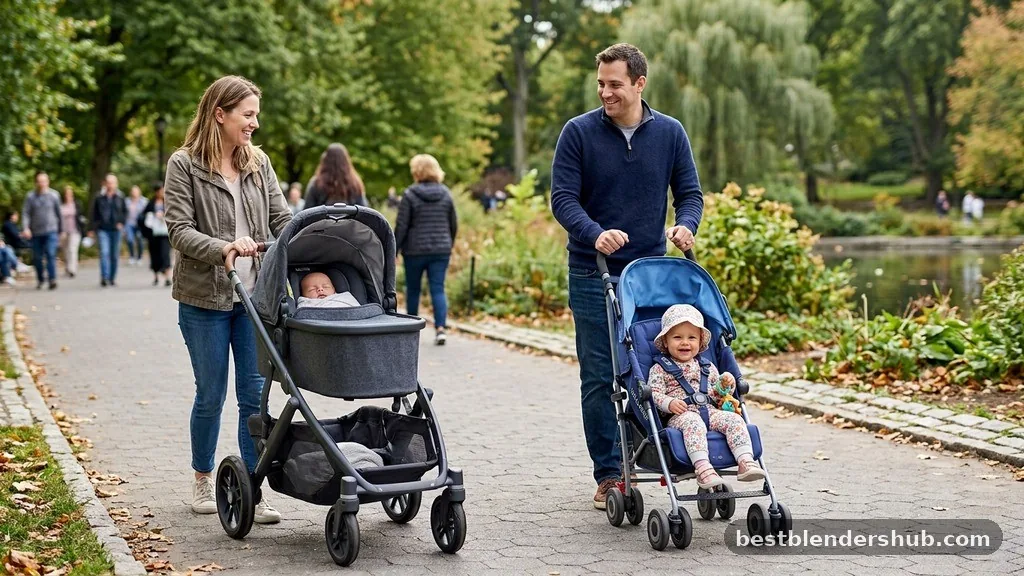
Many parents start with a travel system because it allows for infant car seat compatibility. This creates a secure, familiar environment for the baby while transitioning from the car to the sidewalk. Once the baby outgrows the car seat, the transition to a more permanent, upright stroller becomes the logical next step.
| Stroller Type | Recommended Age/Stage | Key Benefit |
|---|---|---|
| Full-Size/Travel System | Newborn to Toddler | Maximum support and storage |
| Lightweight Umbrella | 6 Months+ | Superior portability and ease |
| Jogging Stroller | 6-8 Months+ (for walking) | Durability on uneven terrain |
Addressing Common Developmental Gaps
A frequent point of confusion for parents is the discrepancy between what a manufacturer claims and what a physical therapist might recommend. Many lightweight strollers are technically rated for “infants,” but this often refers to weight capacity rather than orthopedic readiness.
How to Bridge the Gap
If you must travel and need a lightweight option before your baby is sitting unassisted, consider using a stroller that accepts an infant car seat. This allows you to retain the portability of a smaller frame while ensuring your baby has the specialized head support and structural integrity of their car seat.
Never use aftermarket inserts or pillows to prop up a baby in a standard umbrella seat, as these can shift and create suffocation hazards. Always follow pediatric safety guidelines regarding the duration of time a baby spends in a semi-upright position, as their developing spines need frequent breaks from any restrictive seating.
Strategic Benefits of the Transition
Once your child hits the six-month mark or demonstrates the physical readiness to sit up, the benefits of moving to a lighter model become clear. You will notice an immediate improvement in your ability to manage trunk space in your vehicle. Unlike bulky travel systems that dominate a trunk, a compact stroller leaves room for groceries, diaper bags, and other essentials.
Efficiency in Daily Travel
The ease of a quick folding mechanism is a massive advantage when navigating public transit or busy city streets. You can collapse the unit with one hand, carry your child with the other, and continue your day without the physical strain of lugging around a heavy, full-sized chassis. This level of mobility often encourages parents to get out more frequently, which is vital for both the parent’s mental health and the child’s sensory development.
Safety Checklist Before Your First Trip
Before you head out, perform a quick inspection of the stroller to ensure it is ready for your little one. Even if the stroller is new, shipping or storage can sometimes loosen connections.
Check that the five-point harness clips securely and that the straps are adjusted to fit snugly against the baby’s chest. Ensure the brakes are fully functional and that the wheels do not wobble excessively when pushed.
If the stroller has been in storage, check for any debris in the folding mechanism that might prevent it from locking properly. Always confirm that the canopy is securely attached and provides adequate shade, as infants are more sensitive to sun exposure.
Addressing Your Frequently Asked Questions
Can I put my 4 month old in an umbrella stroller?
No, most 4-month-olds lack the necessary neck control and core strength for a standard umbrella stroller seat.
When can you switch to an umbrella stroller?
Most experts recommend waiting until at least 6 months old or when the baby sits up unassisted.
Is a full recline feature enough for a newborn?
Only if the stroller is specifically designed and safety-rated for newborn use, which is rare for umbrellas.
How do I know if my baby has enough core strength?
If your baby can sit upright for several minutes without slumping, they are likely ready for an upgrade.
Can I use a head insert to support my baby?
Avoid aftermarket inserts, as they may shift and pose a suffocation risk; use only manufacturer-approved support systems.
Why is a five-point harness so important?
It prevents the baby from sliding down or leaning out, which is critical in lightweight, open-frame stroller designs.
Does an umbrella stroller work for travel?
Yes, their primary advantage is portability and minimal weight, making them ideal for air travel and transit.
Ensuring Long-Term Comfort and Safety
Deciding when a baby can use an umbrella stroller is a balance between your need for convenience and your child’s physical development. By waiting until they possess the required neck and core strength, you ensure their comfort and safety during every outing. Remember to prioritize strollers with robust safety features, like a reliable harness and a stable frame, even as you seek the portability that defines the lightweight category.
As your child grows, these strollers become an essential tool for exploring the world together. If you have questions about specific models or your child’s readiness, consult your pediatrician for advice tailored to their growth milestones. Enjoy the newfound freedom of a lighter, faster way to move through your day with your little one.

Jamesmathew is an expert Amazon affiliate writer, helping readers discover top products, smart deals, and practical buying guides through honest reviews and insightful content.