

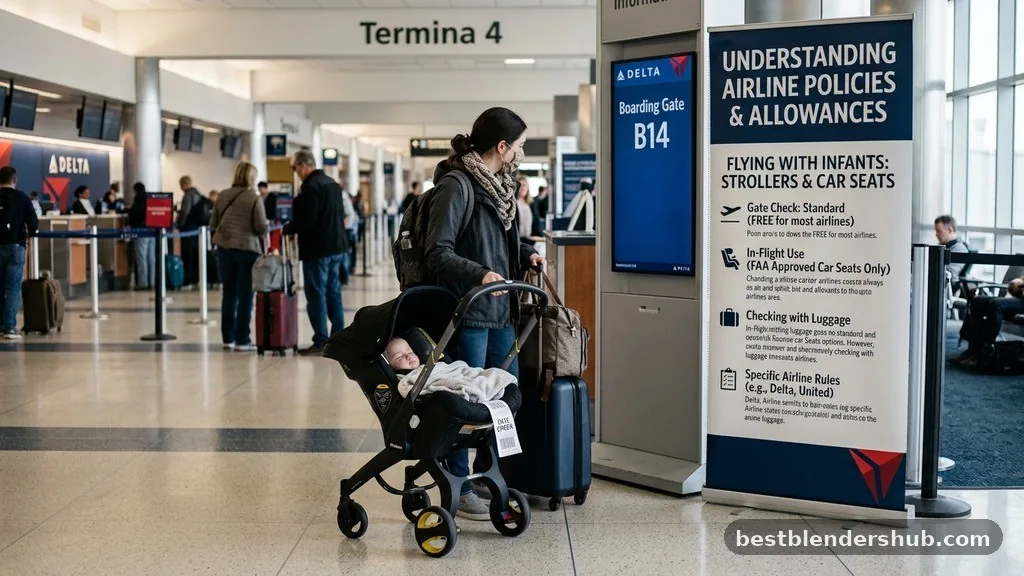
Navigating the airport with young children often feels like a logistical puzzle, especially when you are figuring out how to fly with stroller and car seat configurations. Many parents feel overwhelmed by the sheer volume of gear required to keep a child safe and comfortable during transit.
By breaking down the process into manageable steps—from selecting the right equipment to mastering security—you can significantly reduce your stress levels. Whether you are aiming for a minimalist setup or packing the full suite of infant travel gear, understanding airline policies and airport procedures is the key to a smoother journey for your entire family.
Understanding Airline Policies and Allowances
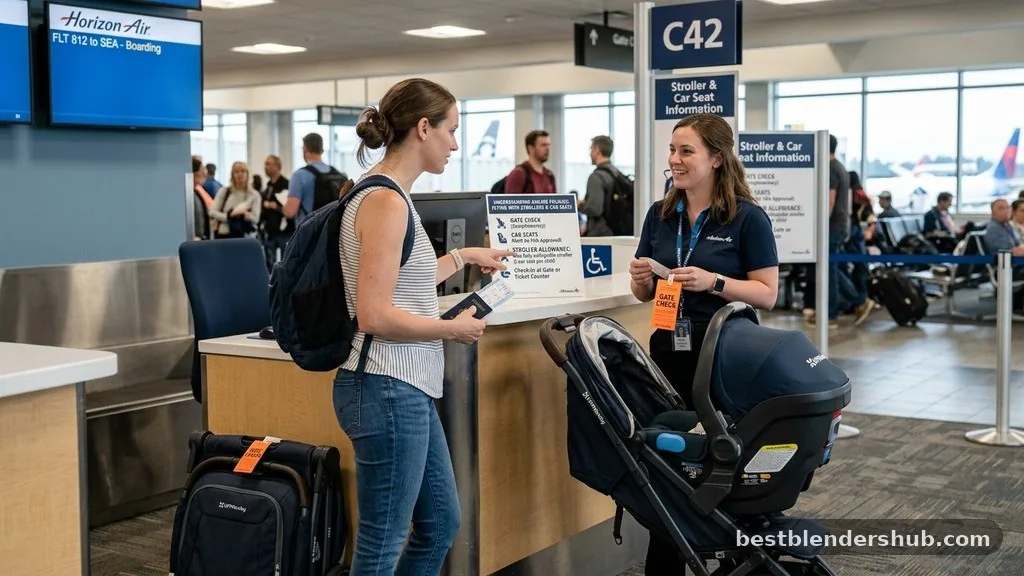
Most major airlines offer generous policies for families, but the specifics vary significantly between carriers. Before heading to the terminal, visit your airline’s website to confirm their specific infant boarding policy and equipment allowances. Generally, domestic airlines allow you to bring both a car seat and a stroller at no extra cost, treating them as essential items rather than standard checked luggage fees.
International carriers, however, may be stricter, sometimes counting these items toward your total weight allowance or baggage count. Always verify if your chosen carrier requires you to register these items at the check-in desk. If you are flying with an infant in arms, remember that while they might not have a ticketed seat, they are still entitled to their own baggage allowance, which often covers the car seat and stroller.
Choosing the Right Gear for Air Travel
Selecting the correct equipment is the foundation of successful family travel logistics. A bulky, heavy-duty stroller might be perfect for neighborhood walks, but it can become a liability in a crowded terminal. Many parents opt for a lightweight travel stroller that folds compactly, sometimes even small enough to fit into an overhead bin.
When it comes to your child restraint system, prioritize safety and FAA compliance. An FAA-approved car seat will have a sticker indicating its suitability for aircraft use.
If you plan on using the seat during the flight, ensure it is narrow enough to fit between standard armrests. If you prefer to check the seat, invest in a durable, padded stroller bag or car seat cover to protect your investment from the rough handling often associated with baggage transfer.
| Gear Type | Best Practice for Flying | Storage Option |
|---|---|---|
| Full-Size Stroller | Gate check at the jet bridge | Stroller bag |
| Travel Stroller | Carry-on if dimensions allow | Overhead bin |
| Infant Car Seat | Use on board if seat is purchased | Aircraft seat |
| Convertible Car Seat | Gate check or checked at counter | Padded protective bag |
Navigating TSA Security Screening
Passing through TSA security screening with a child and multiple pieces of equipment requires preparation and patience. You will need to place your stroller through the X-ray machine, which means your child will need to be removed from the seat. If you have an infant, you may carry them through the metal detector or advanced imaging technology.
Be prepared to remove your child from their car seat if the seat itself must go through the X-ray machine. To speed up the process, try to consolidate your loose items into a single diaper bag or backpack.
Keep your gate check tag and boarding passes easily accessible. If you have questions about specific procedures, the TSA website offers a dedicated section for families that outlines exactly what to expect during the screening process.
Gate Checking Versus Checking at the Counter
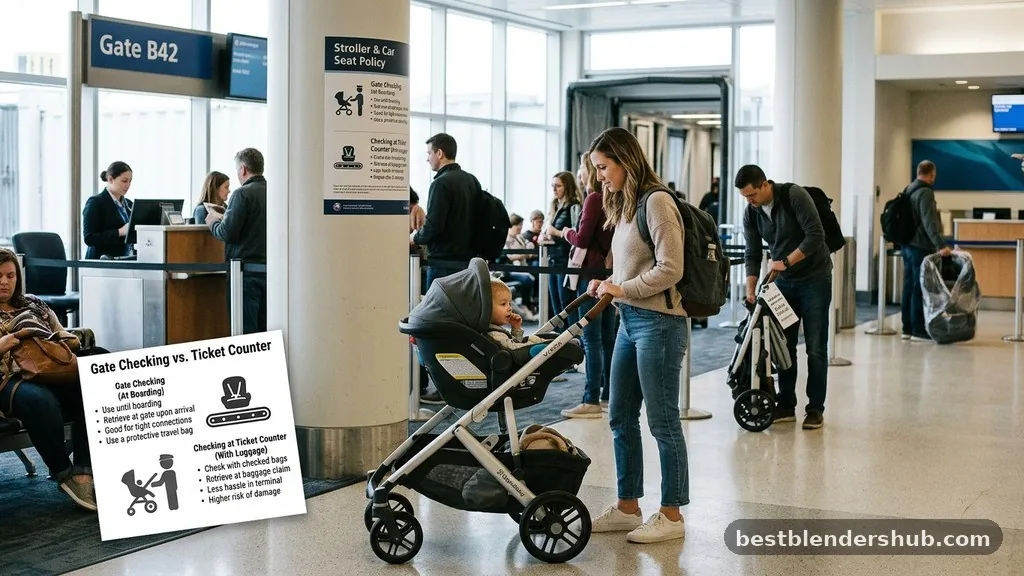
The decision to gate check or check your items at the main counter is a common dilemma. Checking items at the ticket counter gets them out of your hands early, allowing you to move through the airport unencumbered. However, this leaves you without a stroller to transport your child and gear to the gate, which can be a significant challenge in large terminals.
Gate checking involves taking your stroller and car seat all the way to the aircraft door. You will receive a gate check tag from the gate agent, which you attach to your items before leaving them at the end of the jet bridge. This is usually the preferred method for parents, as it ensures you have your equipment immediately upon landing, which is particularly helpful if you have a tight connection or a long walk to baggage claim.
- Use a travel stroller with a one-handed fold mechanism to save time at the gate.
- Invest in a universal car seat adapter to keep your infant in their carrier while navigating the terminal.
- Label all gear with your contact information, including a phone number and flight destination.
- Consider using a travel backpack to store small travel stroller accessories or baby essentials to keep your hands free.
- Always arrive at the gate early to ensure the flight crew has time to process your gate-checked items.
Addressing Common Travel Logistics Gaps
One of the biggest concerns for parents is the risk of damage during the transit process. While airlines do their best, gear can be tossed or squeezed into tight compartments.
To mitigate this risk, always remove any detachable parts of your stroller, such as cup holders or snack trays, before handing it over to the gate agent. These items are frequently lost or broken if left attached.
Another common gap is the confusion regarding car seat usage on board. Many parents assume they can use their seat for free, but this only applies if you have purchased a seat for your child.
If your child is an “infant in arms,” you cannot occupy an extra seat for the car seat unless the flight is empty and the crew grants explicit permission. Always confirm seat availability with the flight attendant before attempting to install your restraint system.
Managing Connections and Layovers
Long layovers can be exhausting when you are managing a stroller and car seat. If you have a long wait, look for family-friendly amenities in the airport, such as nursing rooms or play areas. Having your stroller with you is a huge advantage here, as it provides a mobile base for your child to nap or sit comfortably while you wait.
If you are concerned about your car seat making it through a connection, check your luggage tags during the layover. If you gate-checked your items, they should be waiting for you at the gate of your arrival city.
However, if you checked them at the main desk, they will likely be sent to your final destination, meaning you will be without them during your connection. If you have a long layover, prioritize carrying your car seat through the terminal if you need it for a rental car or transit vehicle at your destination.
Safety and Comfort During the Flight
When you bring your child restraint system onto the plane, safety is the primary goal. Ensure the seat is installed correctly using the airplane seatbelt, not the LATCH system found in cars. Most flight attendants are happy to assist or verify the installation, as they are trained on proper safety protocols.
Comfort is the secondary goal. Bring familiar items like a favorite blanket or soft toy to help your child feel secure in their seat.
If your child is struggling with pressure changes during takeoff and landing, encourage them to drink from a bottle or pacifier, as the swallowing motion helps alleviate ear pain. A little bit of preparation goes a long way in ensuring a peaceful flight for everyone on board.
Conclusion
Successfully managing your gear while flying is entirely possible with a bit of foresight. By knowing your airline’s policies, choosing the right equipment, and preparing for the security process, you can transform a potentially stressful day into a manageable travel experience. Remember to prioritize convenience by utilizing gate check options and ensuring your car seat is FAA-approved if you plan to use it in-flight.
Every airport experience is a learning opportunity, and with each trip, you will become more efficient at handling your family’s needs. Feel free to reach out if you have more questions about specific airline requirements or need tips for your next big adventure with your little ones.
Can I take both a car seat and a stroller on a plane?
Yes, most airlines allow you to bring both items for free, either as carry-on or checked luggage.
How do I handle TSA security with a car seat and stroller?
Both items must go through the X-ray machine, so be prepared to carry your child through security separately.
Is it free to check a car seat and stroller?
Most major airlines check these items for free, separate from your standard baggage allowance or carry-on limit.
Should I gate check or check my stroller at the counter?
Gate checking is generally better because it allows you to use your stroller through the airport terminal.
Do I need a special bag for my car seat?
A padded travel bag is highly recommended to protect your car seat from dirt and damage during handling.
Can I use my car seat on the plane?
Yes, if it is FAA-approved and you have purchased a separate seat for your child to use it.
What if my stroller is too big for the gate?
If a stroller is too large, the airline may require you to check it at the main desk instead.

Jamesmathew is an expert Amazon affiliate writer, helping readers discover top products, smart deals, and practical buying guides through honest reviews and insightful content.