

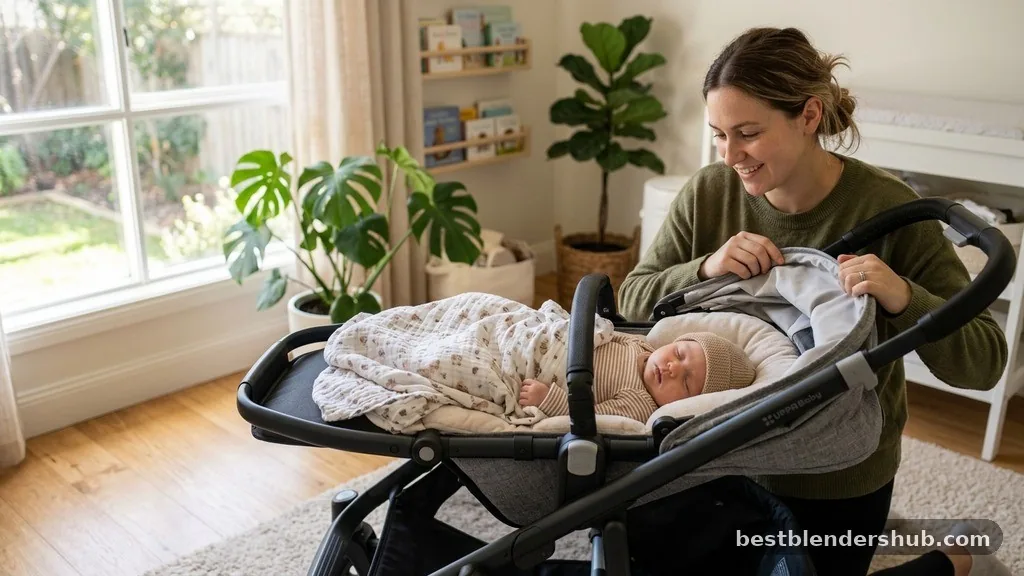
Deciding when you can safely put your baby in a stroller depends heavily on the specific design of the gear you are using and your child’s physical development. Many parents feel anxious about taking their infant out for the first time, but understanding the mechanics of stroller safety makes the transition much smoother.
Most manufacturers design modern travel systems to accommodate infants from day one, provided you use the right configuration. By focusing on your baby’s neck support and current developmental milestones, you can confidently start enjoying outdoor walks while ensuring your little one remains secure and comfortable in their mobile environment.
Understanding Newborn Stroller Requirements
You can technically put a newborn in a stroller immediately, but only if the seat is newborn-ready. A standard upright seat is dangerous for a tiny baby because they lack the neck strength to support their heads.
If the seat cannot achieve a flat position, your baby’s airway could become compromised. Always check the manufacturer’s manual to see if your specific model requires an infant car seat adapter or a dedicated bassinet attachment for the earliest weeks of life.
The Importance of a Flat Position
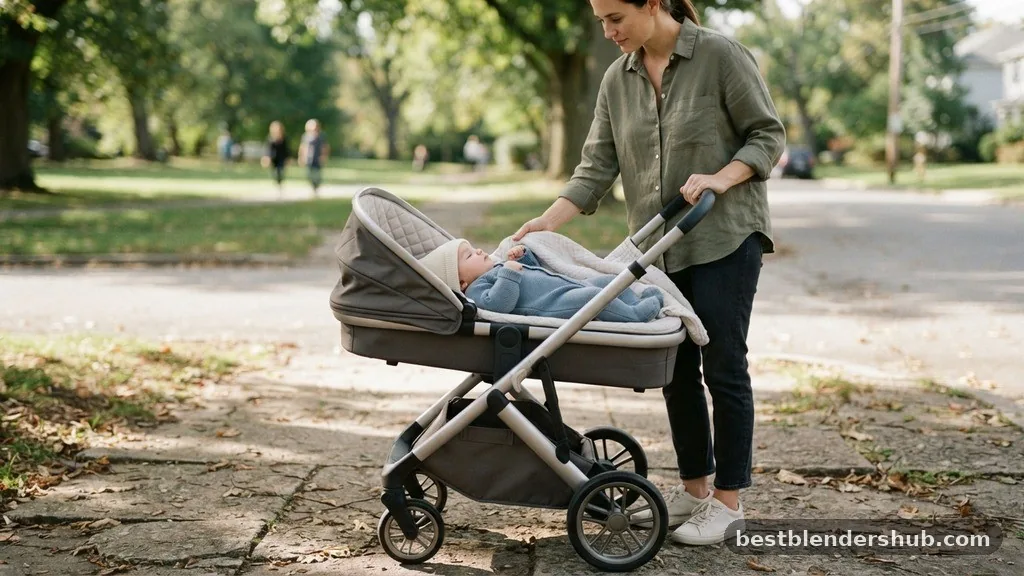
For the first few months, a flat position is non-negotiable for spinal development and breathing. Newborns have soft, underdeveloped neck muscles that cannot handle the vibrations of a bumpy sidewalk if they are propped up.
When you ensure your baby is lying completely horizontal, you provide the necessary stability for their fragile frame. Many premium strollers come with a lie-flat mode, which is essentially a built-in bassinet, allowing you to bypass external attachments entirely.
Using Infant Car Seat Adapters
Many parents prefer to use an infant car seat adapter because it allows for an easy transition from the car to the stroller without waking the baby. This setup is perfectly safe for newborns, provided the car seat is clicked in correctly and the five-point harness is tightened to fit snugly against their chest.
However, avoid keeping your baby in the car seat for extended periods. Pediatricians generally suggest limiting “bucket seat” time to prevent potential breathing issues caused by the “chin-to-chest” position.
Key Developmental Milestones for Upright Seating
As your baby grows, their physical capabilities will change, signaling that they are ready for a more vertical view of the world. You should look for specific cues before moving them out of the bassinet or car seat.
The most important indicator is consistent head control. When your baby can hold their head steady for several minutes without bobbing, their muscles are finally strong enough to handle the minor jolts of a stroller journey.
Signs of Readiness for Upright Positions
* Your baby can hold their head up steadily while lying on their tummy.
* They can sit with minimal support or lean against the back of the seat without slumping.
* The child shows interest in their surroundings and tries to look around during walks.
* They no longer fuss when placed in a semi-reclined position for short intervals.
Stroller Safety and Equipment Features
When you evaluate when can I put baby in stroller configurations, the hardware matters just as much as the baby’s age. High-quality stroller suspension is a significant factor in safety, as it absorbs the shock of uneven pavement, protecting the infant’s developing brain and neck. A stroller with poor suspension can jar a young baby, making a gentle stroll feel much rougher than it appears to you.
Comparing Stroller Configurations for Infants
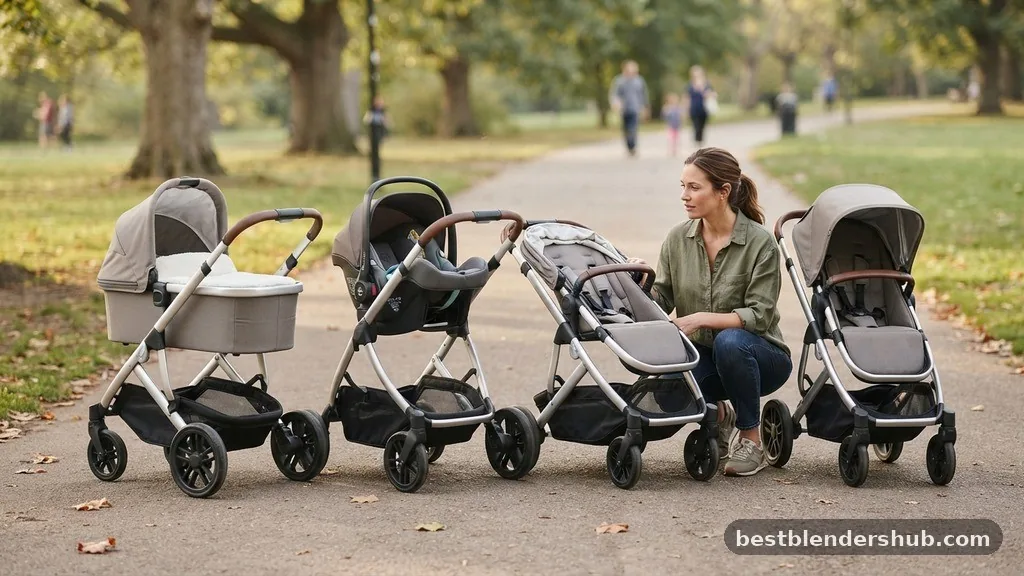
| Configuration | Best Age Range | Safety Level | Comfort Profile |
|---|---|---|---|
| Bassinet Mode | 0–6 Months | Highest | Excellent for sleep |
| Car Seat Adapter | 0–9 Months | High | Convenient for travel |
| Reclined Seat | 3–6 Months | Moderate | Good for observation |
| Upright Seat | 6+ Months | Standard | Best for active babies |
Addressing Common Topical Gaps
A frequent point of confusion involves the “3-6-9 rule,” which is often referenced in parenting forums regarding physical development. While not a medical mandate, this rule of thumb suggests that by three months, a baby should have decent head control; by six months, they should be sitting with support; and by nine months, they are often crawling or pulling up. Applying this to strollers, you can usually start using a reclined seat around the three-month mark, provided the stroller has adequate padding and support.
Why Stroller Recline Matters
Even after a baby gains some neck control, they will still tire easily. A stroller recline feature is essential for those mid-walk naps.
If you force a baby into an upright seating position before they are physically ready, they will likely slump to the side, which is not only uncomfortable but can also restrict their breathing. Always err on the side of caution by keeping the seat reclined until your pediatrician confirms that your child has reached the necessary physical strength for a fully vertical ride.
Optimizing the Stroller Ride
Beyond age and physical ability, the environment plays a role in safety. When you are out, ensure the five-point harness is used every single time, even for short trips. Some parents get lazy with the straps once the baby is older, but a sudden stop or a tipped stroller can cause serious injury.
Additionally, keep an eye on the sun and temperature. Newborns cannot regulate their body heat well, so ensure your stroller canopy provides full coverage and that you aren’t overheating the baby with too many blankets.
Maintaining Proper Alignment
Your baby’s body should remain centered in the seat. If you notice your infant sliding down or leaning heavily to one side, they are likely not ready for that specific seat configuration.
You can use infant-safe head supports or inserts specifically designed for your stroller model to provide extra stability. Never use rolled-up adult towels or blankets to prop up a baby, as these can shift and create suffocation hazards.
Navigating Public Spaces with a Stroller
Taking your child out in public involves more than just the stroller itself; it involves managing the environment. When you go into crowded areas, keep the stroller locked and under your direct control at all times.
If you are using a front-facing stroller, check on your baby frequently. You cannot see their face if they are facing away from you, which makes it harder to notice if they are struggling or if their head has fallen into an unsafe position.
Choosing the Right Terrain
If you live in an area with rough terrain, such as cobblestones or gravel, prioritize a stroller with large, air-filled tires and robust stroller suspension. Smaller plastic wheels are fine for smooth mall floors, but they can transmit significant vibration to the baby on city sidewalks. Always walk at a moderate pace to minimize the force of impacts, and avoid jogging with your infant until they are old enough to handle the intensity of a dedicated jogging stroller—typically around six to eight months, depending on the manufacturer.
Conclusion
Determining exactly when you can start using a stroller is a balance between following pediatric guidelines and observing your baby’s unique development. While the convenience of a travel system is undeniable, your child’s comfort and safety must always be the priority. By sticking to a flat position for newborns and gradually transitioning to more upright configurations as they gain neck strength, you ensure that every outing is a positive experience.
Always rely on your stroller’s manual for weight and age limits, as these are engineered with your baby’s safety in mind. If you are ever unsure about your child’s readiness for a specific seat, a quick chat with your pediatrician can provide the peace of mind you need to keep exploring the world together.
FAQ
Can I put my 4 month old in a stroller?
Yes, most 4-month-olds can sit in a reclined stroller, provided they have good head and neck control.
Can I put a 2 month old in a stroller?
Only if the stroller is in a fully flat position or using an infant car seat adapter system.
Can I put my 3 month old in a stroller?
Yes, at 3 months, you can use a reclined seat, but ensure the baby is properly supported and secured.
What is the 3 6 9 rule for babies?
It is a developmental guideline: 3 months for head control, 6 months for sitting, 9 months for crawling.
When can baby sit in front facing stroller?
Typically around 6 months, when the baby has strong neck and back muscles to sit upright unsupported.
Can I use a stroller for a newborn without an adapter?
Only if the stroller features a lie-flat bassinet mode designed specifically for newborns without additional seating inserts.
How do I know if my baby is ready for an upright seat?
If they can hold their head up steadily and sit with minimal support, they are ready for upright.

Jamesmathew is an expert Amazon affiliate writer, helping readers discover top products, smart deals, and practical buying guides through honest reviews and insightful content.