


Figuring out exactly when a baby can be in a stroller is a common milestone for new parents looking to get out of the house. While the convenience of a stroller is undeniable, your little one’s physical development dictates when they are ready for different seating positions.
Most manufacturers design gear with specific age and weight ranges, but your baby’s ability to hold their head steady is the real factor. By understanding the safety requirements for newborns versus older infants, you can ensure every walk is comfortable and secure for your growing child.
Newborns and Flat Recline Requirements
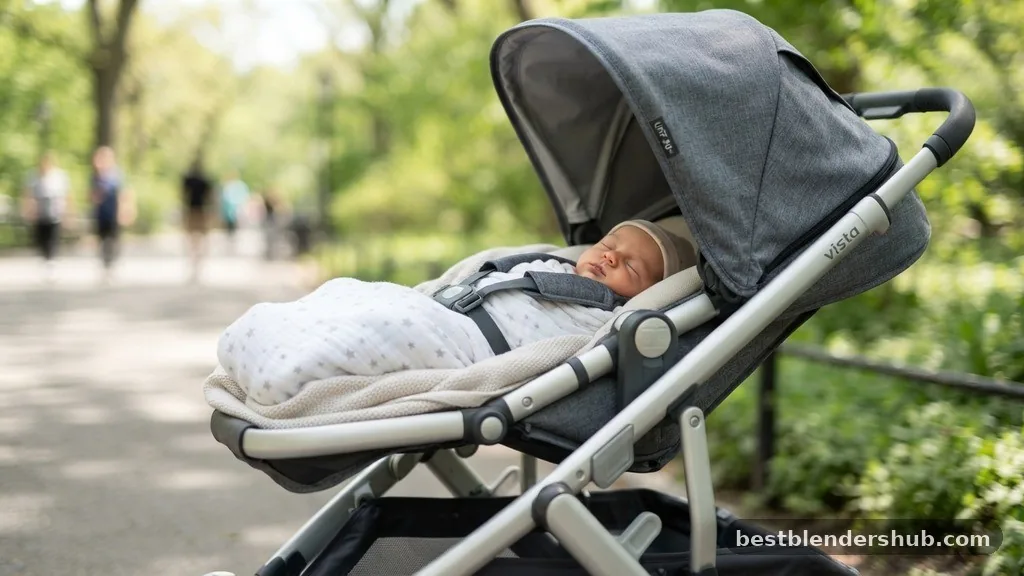
You can safely place a newborn in a stroller immediately after birth, provided the seat offers a flat recline position. Infants do not have the full neck control required to stay upright, meaning they must lie completely horizontal to keep their airways open. If your stroller seat does not recline fully flat, you must use a bassinet attachment or an infant car seat adapter to keep your baby in a safe, lying-down posture.
Using a stroller that forces a newborn into a semi-upright angle can cause their head to slump forward, which compromises their breathing. Always verify that the stroller you choose is marketed as “newborn-ready” before taking your infant for a stroll. Never attempt to prop a newborn up with blankets or pillows in a standard seat, as these items pose a suffocation risk and do not provide the necessary support for their developing spine.
Key Developmental Milestones for Upright Seating
The transition to an upright sitting position generally happens between four and six months of age. You should wait until your baby displays head and neck stability and has started building the core strength required to sit without significant slouching. If your baby still wobbles or cannot hold their head up for an extended period, they are not ready for a standard stroller seat.
Pediatricians often suggest looking for specific signs of readiness before moving away from the bassinet or car seat:
- The baby can hold their head steady without wobbling while in a supported sitting position.
- The infant shows interest in their surroundings and can track moving objects.
- The baby has gained sufficient muscle tone to resist gravity while seated.
- The child no longer requires the specialized head support found in newborn inserts.
The Role of Stroller Gear and Features
When you decide when a baby can be in a stroller, the equipment you use plays a massive role in safety. A five-point harness is non-negotiable for any stroller, as it secures the baby at the shoulders, waist, and between the legs to prevent sliding. Proper baby ergonomics ensures that the seat supports the natural curve of the infant’s spine rather than forcing them into an unnatural posture.
| Stroller Feature | Purpose | Recommended Age |
|---|---|---|
| Bassinet Attachment | Allows newborn to lie flat for spine and neck health. | 0 to 6 Months |
| Infant Car Seat Adapter | Connects car seat to frame for travel convenience. | 0 to 12 Months |
| Standard Stroller Seat | Supports child who can sit up independently. | 6 Months+ |
Many parents eventually want to switch to a forward-facing orientation to let their child see the world. However, experts recommend keeping the baby in a parent-facing position as long as possible.
This allows you to monitor their airway and comfort closely during the early months. Wait until the child is older and has better head control before turning them away from you.
Addressing Topical Gaps in Stroller Safety

One common question is whether you can put a three-month-old in a standard stroller seat. The answer depends entirely on the recline function of that specific model.
If the seat reclines to a near-flat position, it is generally safe for a three-month-old, provided you use an infant insert to provide the necessary head support. Without these modifications, the seat is likely too large and leaves the baby unsupported.
Another gap involves the “3-6-9 rule,” which is often referenced in parenting forums. This is not an official medical guideline but rather a rule of thumb for developmental stages. At three months, focus on flat recline and neck support.
By six months, most babies transition to more upright seating. By nine months, children are typically stable enough for any standard stroller configuration. Always prioritize your specific baby’s development over generic rules.
Stroller Seat Transition and Comfort
The stroller seat transition should be gradual rather than abrupt. Even if your baby meets the age requirement, test the seat for short periods first.
Observe how they react to the harness and the seat angle. If they seem uncomfortable or if their head is rolling, return to the bassinet or a more reclined setting.
Make sure the five-point harness is snug enough that you can only fit one or two fingers between the strap and your baby’s chest. Loose straps can lead to the baby slipping down, which shifts their weight away from the proper support zones. Always check that the fabric is breathable and that the stroller frame remains stable on uneven surfaces to avoid jolting the baby’s neck.
Pediatric Safety Guidelines for Walks
Following pediatric safety guidelines is the best way to ensure your outings are safe. Avoid long periods of inactivity in a stroller if your baby is under four months old, as they need time to stretch and move their limbs. Frequent breaks during long walks allow the baby to move out of the fixed position, which is beneficial for their physical development.
Be mindful of the weather and the stroller’s canopy. A newborn is susceptible to temperature changes, and you should avoid direct sunlight on their face.
Ensure that the stroller has adequate ventilation, especially when using a rain cover or a heavy blanket for warmth. Never hang heavy bags from the handles, as this can tip the stroller over, especially when the seat is in a reclined or rear-facing configuration.
Conclusion
Determining when your baby can be in a stroller is a matter of matching their physical development to the right equipment. Newborns require flat, fully supported positions, while older infants can sit upright once they have achieved the necessary head and core control. By utilizing bassinets, car seat adapters, and proper harness techniques, you ensure that every outing is safe.
Always keep an eye on how your child handles the seat, and don’t hesitate to keep them in a reclined position longer if they seem to need the extra support. With the right approach to ergonomics and safety, you’ll be able to enjoy many adventures together. Feel free to reach out if you have specific questions about your stroller model or your baby’s current developmental stage.
Frequently Asked Questions
Can I put my 2 month old in a stroller?
Yes, but only if the stroller seat reclines completely flat or uses a bassinet/car seat attachment.
Is a 4 month old ready for a standard stroller seat?
Only if the baby has full head and neck control and the seat offers a reclined position.
What is the safest position for a newborn in a stroller?
The safest position is lying completely flat to protect the baby’s airway and developing neck muscles.
Why is the five-point harness important?
It secures the baby at the shoulders and waist, preventing them from sliding or falling out.
When can a baby face forward in a stroller?
It is usually recommended to wait until the baby is at least six months old and stable.
Do I need a newborn insert for my stroller?
Yes, if the seat is designed for older babies, an insert provides essential head and neck support.
How long can a baby stay in a stroller?
Limit time for newborns to avoid strain; older babies can stay longer but need frequent movement breaks.

Jamesmathew is an expert Amazon affiliate writer, helping readers discover top products, smart deals, and practical buying guides through honest reviews and insightful content.