

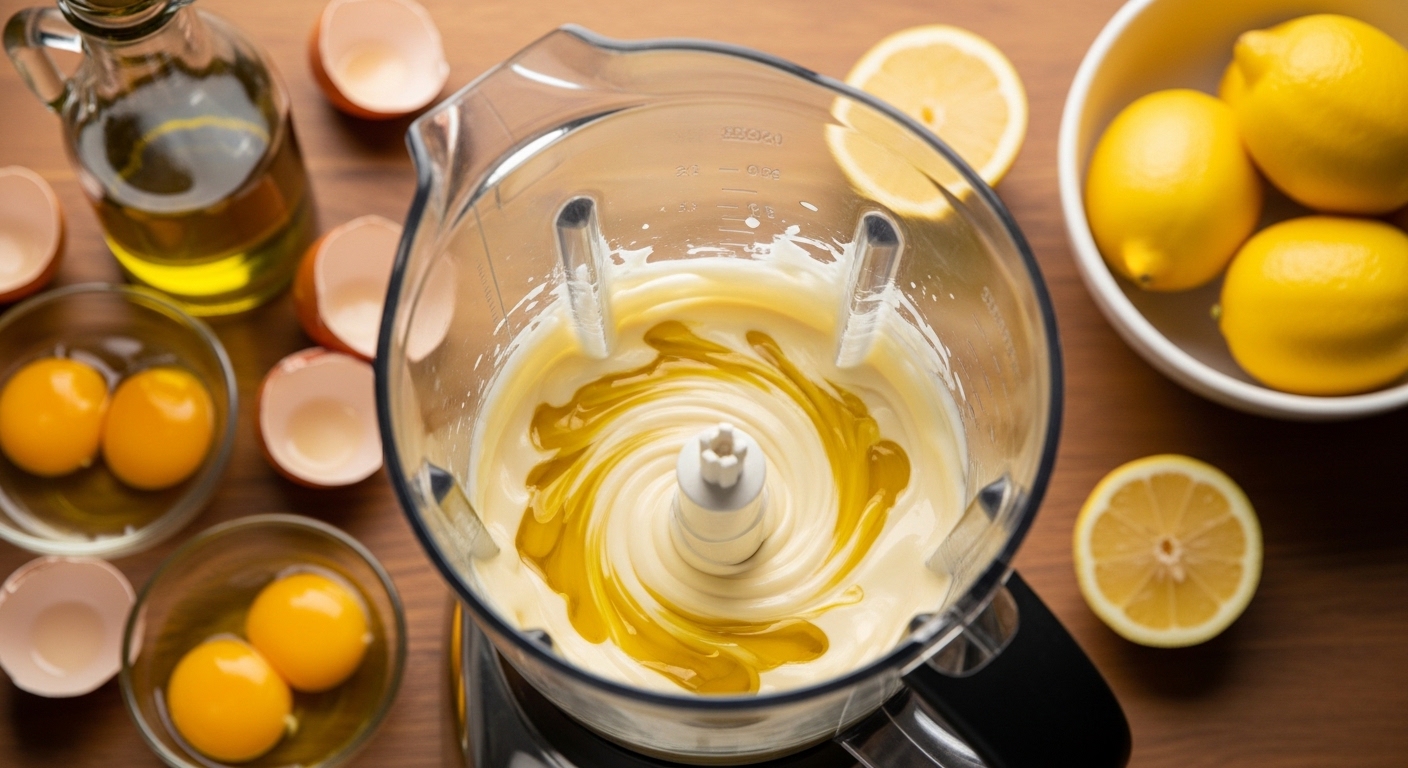
Can you make mayo in a blender without it turning into a sad oily soup is exactly the kind of question you end up asking when you’re staring at eggs and oil on your kitchen counter like, okay now what even.
You’re probably in that situation where you want homemade mayonnaise but the idea of whisking for ten straight minutes feels a bit ridiculous, or maybe you tried once and it broke into something weird and separated and honestly kinda ruined your confidence a bit. Yeah, that happens more than people admit.
The good news is, yes, you actually can make mayo in a blender, and not only that, it’s one of the easiest ways to get it right if you don’t overthink it. It’s just a bit picky at the start, like it wants attention for a few seconds and then suddenly behaves.
Can You Make Mayo in a Blender (and Why It Works So Well)
So the question can you make mayo in a blender isn’t really about possibility, it’s more about stability. Mayonnaise is basically an emulsion, which is a fancy way of saying oil and water normally hate each other but you’re forcing them to stay together using egg yolk as a mediator.
A blender helps because it does the job of whisking at a speed your arm could never realistically reach. That fast motion breaks oil into tiny droplets, and those droplets get wrapped in proteins from the egg yolk, creating that thick creamy texture.
Food scientists often explain emulsions like this: if oil droplets are too big, the mixture breaks; if they’re small enough and evenly suspended, you get that stable mayo structure. A blender basically guarantees the “small enough” part, if you don’t rush it too badly.
And honestly, the first time you see it thicken in like 10–15 seconds, it feels a bit unreal, like it shouldn’t work that fast but it does.
Ingredients You Actually Need (and Why Ratios Matter More Than You Think)
Before you rush in, mayo is not forgiving about guessing. The blender helps, but the ratio still decides everything.
Here’s the basic structure most reliable homemade mayo recipes follow:
- 1 egg yolk (room temperature works best)
- 1 cup neutral oil (sunflower, canola, light olive oil)
- 1–2 teaspoons mustard (helps emulsification)
- 1 tablespoon lemon juice or vinegar
- Salt to taste
- Optional: pinch of sugar or garlic if you like it a bit extra
Now here’s something people often mess up: oil quality and speed matter more than fancy ingredients. Expensive olive oil can sometimes make mayo bitter, which surprises a lot of beginners.
A rough ratio table:
| Ingredient Role | Purpose |
|---|---|
| Egg yolk | Emulsifier, structure base |
| Oil | Main body and thickness |
| Acid (lemon/vinegar) | Stabilizes and brightens taste |
| Mustard | Helps bind mixture faster |
It’s not complicated, but it’s sensitive in a slightly annoying way.
How to Make Mayo in a Blender Step-by-Step
This is where things usually either go perfectly or go slightly wrong, depending on how patient you are in the first 30 seconds.
Step 1: Add the base first
Put egg yolk, mustard, lemon juice, and salt into the blender first. Let it mix for a few seconds until it looks smooth.
Step 2: Start blending, but slow
Now turn it on low or medium. Don’t blast it on high immediately or it can mess up the early emulsification stage.
Step 3: Add oil slowly (this is the whole game)
Pour oil in a very thin stream. Not jokingly slow, like almost boring slow. This is where most failures happen.
If you dump it too fast, it separates and you’ll sit there wondering why it betrayed you.
Step 4: Watch it thicken
After about 10–30 seconds, you’ll see it suddenly turn creamy. That moment feels a bit like magic honestly.
Step 5: Adjust taste
Once thick, taste it and adjust salt or acidity. Some people like it sharper, some smoother.
That’s it. No drama if you follow the rhythm.
Why Blender Mayo Sometimes Fails (and how to fix it)
Even though can you make mayo in a blender has a yes answer, there are still moments where it just refuses to behave.
Here are the usual suspects:
- Oil added too fast
- Ingredients too cold
- Wrong blender speed
- Not enough emulsifier (egg yolk or mustard)
- Blender jar too wide (some models struggle with small batches)
If it breaks, don’t panic. You can usually save it.
A quick fix:
Take a new egg yolk in a clean bowl, then slowly whisk the broken mixture into it like you’re restarting the emulsion from scratch. It works more often than you’d expect.
Blender vs Whisk Method (honest comparison)
People argue about this more than they should, but both work. It just depends on patience level.
| Method | Difficulty | Time | Failure Risk | Texture |
|---|---|---|---|---|
| Blender | Easy | 1–2 minutes | Medium (if rushed) | Very smooth |
| Hand whisk | Hard | 8–12 minutes | Low-medium | Slightly rustic |
| Food processor | Easy | 2–3 minutes | Low | Very stable |
Blender wins for speed, but whisking gives you more control if you’re careful and slightly patient, which not everyone is on a random Tuesday evening.
A Bit of Science Behind That Creamy Texture
Mayonnaise is actually a pretty classic example used in culinary schools to explain emulsions. The egg yolk contains lecithin, a natural emulsifier that binds oil and water together.
When you blend, you’re basically forcing oil into microscopic droplets that get coated by lecithin molecules. That coating prevents them from recombining into separate layers.
The acidity from lemon juice or vinegar also helps stabilize the structure, lowering pH and making the mixture less likely to break.
It sounds technical, but in real life it just means: blend slowly at first, then it behaves.
Safety Note About Raw Eggs (important but not scary)
One thing people worry about is raw egg yolk. And yeah, that concern is valid.
According to food safety guidance commonly referenced by agencies like the USDA, raw eggs can carry a small risk of salmonella. The risk is low in many places but not zero.
If you want safer options, you can:
- Use pasteurized eggs
- Buy pasteurized liquid egg yolk
- Or make a cooked egg base version (a bit more work)
Most homemade mayo enthusiasts still use fresh eggs, but it depends on your comfort level.
Flavor Variations You Can Try
Once you understand can you make mayo in a blender, you basically unlock a base sauce for a bunch of variations.
Some easy upgrades:
- Garlic mayo (basically aioli, but blender version)
- Spicy mayo with chili flakes or hot sauce
- Herb mayo with parsley or dill
- Smoked paprika mayo for burgers
- Honey mustard mayo for sandwiches
It’s one of those sauces that quietly becomes a fridge staple once you get it right.
Real-world usage (why people even bother)
Mayonnaise is a massive global condiment. Industry estimates often place the global mayonnaise and dressing market at over 12 billion USD, and it keeps growing because people just use it everywhere: sandwiches, fries, salads, wraps, burgers.
Homemade versions are popular because they taste fresher and you control what goes in. No weird preservatives, just oil, egg, acid, and seasoning.
Common beginner mistakes that nobody warns you about
A few things you only learn after messing it up once or twice:
- Thinking “a bit faster oil” won’t matter (it does)
- Using fridge-cold eggs straight away
- Overfilling a small blender jar
- Forgetting acid until the end (it actually helps early too)
- Walking away while it’s blending (bad idea)
It’s not hard, it’s just sensitive in a very specific way.
Final thoughts
So can you make mayo in a blender? Yeah, and once you do it properly once, it stops feeling like a kitchen mystery and starts feeling like something you could do half-asleep.
It’s fast, a bit temperamental at the start, and then suddenly it just becomes thick and glossy like it always knew what it was supposed to be. And honestly, that little transformation is probably why people keep doing it at home instead of buying the jar every time.

Jamesmathew is an expert Amazon affiliate writer, helping readers discover top products, smart deals, and practical buying guides through honest reviews and insightful content.