

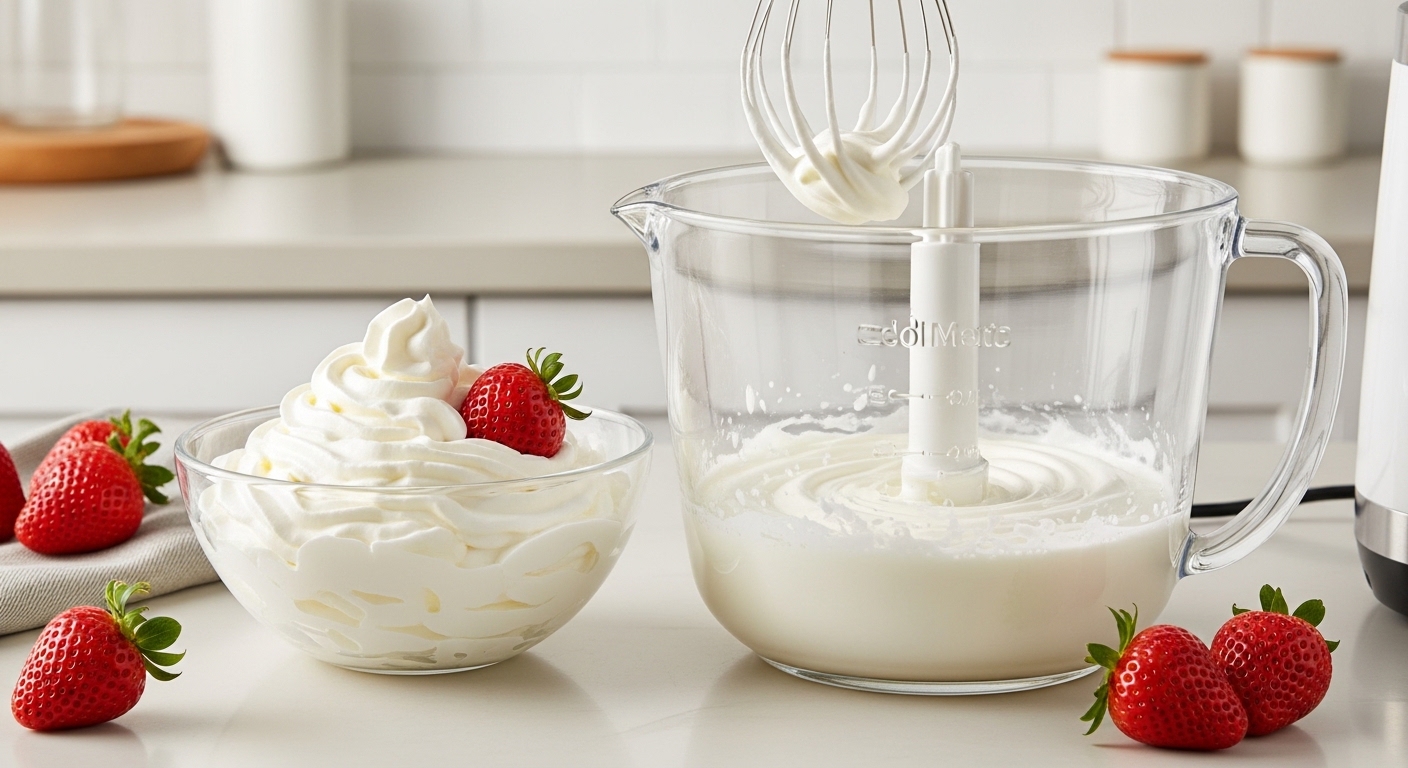
You probably just stood there staring at your blender thinking, can you make whipped cream in a blender or is this gonna turn into some weird milk soup mess, and honestly yeah, that hesitation is kinda fair because blenders feel like they wanna destroy things, not gently fluff them into clouds.
The short answer is yes, you can absolutely make whipped cream in a blender, but it behaves a little… dramatic, like it goes from “not ready” to “oops that’s butter now” faster than you expect. So if you’re here because you don’t have a whisk or mixer or just dont feel like doing arm workouts, you’re in the right place, just don’t blink too long while it blends.
How a Blender Actually Turns Cream Into Whipped Cream
There’s something quietly fascinating about how liquid cream suddenly thickens, like it’s making a decision mid-spin. What’s happening is air getting forced into the fat molecules of heavy cream, and they start forming a structure that traps that air. Sounds fancy, but it’s basically organized chaos.
A blender does this faster than a whisk because of the blade speed, but that speed is also why things go sideways quickly. According to food science basics, heavy cream typically needs about 30–40% fat content to whip properly, and most store-bought whipping cream fits right into that zone.
Here’s what a blender does differently:
- It incorporates air very quickly
- It heats the cream slightly due to friction (yeah, even that matters)
- It can overwhip in seconds
That last point is where most people mess up, not gonna lie.
What You Need Before You Start
You don’t need much, which is probably why you’re even considering this method in the first place.
Basic Ingredients
- Cold heavy cream (this is non-negotiable, warm cream is just sad)
- Sugar (optional, but like… why skip sweetness)
- Vanilla extract (tiny splash, makes it feel fancy-ish)
Equipment
- Blender (obviously)
- A container to transfer quickly
One thing people overlook is temperature. Cold cream whips better because fat stays structured. If your kitchen is warm or you left the cream out, pop it in the fridge for a bit. Some folks even chill the blender jar, which sounds extra but actually helps.
Step-by-Step: Making Whipped Cream in a Blender
This is where things either go beautifully right or slightly wrong in a blink.
Step 1: Pour Cold Cream into Blender
Fill it about one-third full. Not more. You need space for air, otherwise it just spins uselessly like it’s confused.
Step 2: Start Blending on Low
Don’t go full speed like you’re crushing ice. Start low, then gradually increase. This gives you a bit more control, even if it still feels fast.
Step 3: Watch Closely (Seriously, Watch)
After about 15–30 seconds, you’ll see it thicken. It goes from liquid → slightly foamy → soft peaks pretty quick.
Step 4: Stop Early
This is the part people mess up. Stop when it looks slightly softer than you want. It thickens a bit more after stopping.
Step 5: Transfer Immediately
Leaving it in the blender can keep it spinning slightly or settling weird. Just move it out.
What Happens If You Overblend It
So yeah, let’s talk about the mistake everyone makes at least once.
If you keep blending past whipped cream stage, the fat separates from the liquid and boom, you’ve made butter. Not fake butter, actual butter. And then there’s leftover buttermilk.
Signs you’ve gone too far:
- It looks grainy instead of smooth
- Liquid separates out
- It clumps together
At that point, there’s no going back to whipped cream. You didn’t fail, you just accidentally became a butter maker.
Blender vs Hand Mixer vs Whisk
You might be wondering if using a blender is even worth it compared to other tools. Honestly, it depends on your mood and patience level.
| Method | Time Needed | Control Level | Effort |
|---|---|---|---|
| Blender | 20–40 sec | Low | Very low |
| Hand Mixer | 2–4 min | High | Low |
| Whisk (manual) | 5–10 min | Very high | Medium-high |
Blenders are fast but risky. Whisks are slow but safe. Hand mixers are kinda the middle child that does everything decently.
Tips That Make a Big Difference (Even If They Seem Small)
Sometimes it’s the tiny things that decide if your whipped cream is dreamy or disappointing.
- Always use cold cream – warm cream refuses to cooperate
- Don’t overfill the blender – airflow matters more than you think
- Use powdered sugar if possible – dissolves quicker, smoother texture
- Blend in short bursts – gives you more control than continuous blending
- Stay near the blender – this is not a “walk away” recipe
There’s this weird moment when it looks almost done but not quite, and that’s exactly when you should be paying the most attention, not checking your phone.
Can You Flavor Whipped Cream in a Blender
Yeah, and honestly this is where it gets kinda fun.
You can add flavors directly while blending, just don’t go overboard with liquids or it messes with the texture.
Easy Flavor Ideas
- Vanilla (classic, safe, always works)
- Cocoa powder (for chocolate whipped cream)
- Honey or maple syrup (slightly different sweetness vibe)
- Cinnamon (tiny pinch, don’t go wild)
One thing though, if you add too much liquid flavoring, the cream might not whip properly. It’s a balance, not a free-for-all.
Real-World Example: Why People Actually Use a Blender
A small survey by kitchen appliance brands showed that nearly 35% of people prefer multipurpose tools like blenders over single-use gadgets, especially in smaller kitchens. Makes sense, not everyone has space for five different machines.
Picture this: you’re making dessert, realize you need whipped cream, but no mixer, no whisk, just a blender sitting there like “well, I exist.” That’s when this method shines. It’s not perfect, but it’s practical.
Common Mistakes (That You’ll Probably Make Once Anyway)
Let’s just be real here.
- Using low-fat cream (it won’t whip, it just… won’t)
- Blending too long (hello butter)
- Starting on high speed (chaos from the start)
- Not watching closely (you looked away, didn’t you)
These are the things that turn a simple process into a confusing one. But once you mess up once, you kinda get it forever.
Is Blender Whipped Cream as Good as Traditional Methods
This is where opinions split a bit.
Blender whipped cream is:
- Slightly denser
- Sometimes less airy
- Faster to make
Whisked or mixer-made whipped cream tends to be lighter and fluffier because air is incorporated more gradually.
But for most everyday uses, topping coffee, pancakes, desserts, you honestly won’t notice a huge difference unless you’re comparing side by side like a food critic.
When You Should NOT Use a Blender
There are moments where the blender just isn’t the best choice, even if it technically works.
- When you need super stiff peaks for piping designs
- When making large batches (control becomes harder)
- When you want ultra-light texture
In those cases, a hand mixer gives you more control and consistency.
A Quick Note on Storage
Whipped cream doesn’t last forever, and blender-made cream is no exception.
- Store in fridge for up to 2 days
- Keep it in an airtight container
- It may lose some volume over time
If it deflates slightly, you can gently whisk it back, but don’t try re-blending, that usually makes things worse.
Final Thoughts
So yeah, can you make whipped cream in a blender, absolutely, and once you get the timing right it almost feels too easy, like you cheated a little bit. The only real trick is knowing when to stop, which sounds simple but somehow feels like trying to catch a moment that doesn’t wanna be caught.
If you’re the kind of person who likes quick solutions and doesn’t mind a tiny bit of unpredictability, a blender works just fine. Just stay close, watch it carefully, and maybe accept that your first attempt might turn into butter, which honestly isn’t the worst backup plan in the world.

Jamesmathew is an expert Amazon affiliate writer, helping readers discover top products, smart deals, and practical buying guides through honest reviews and insightful content.