

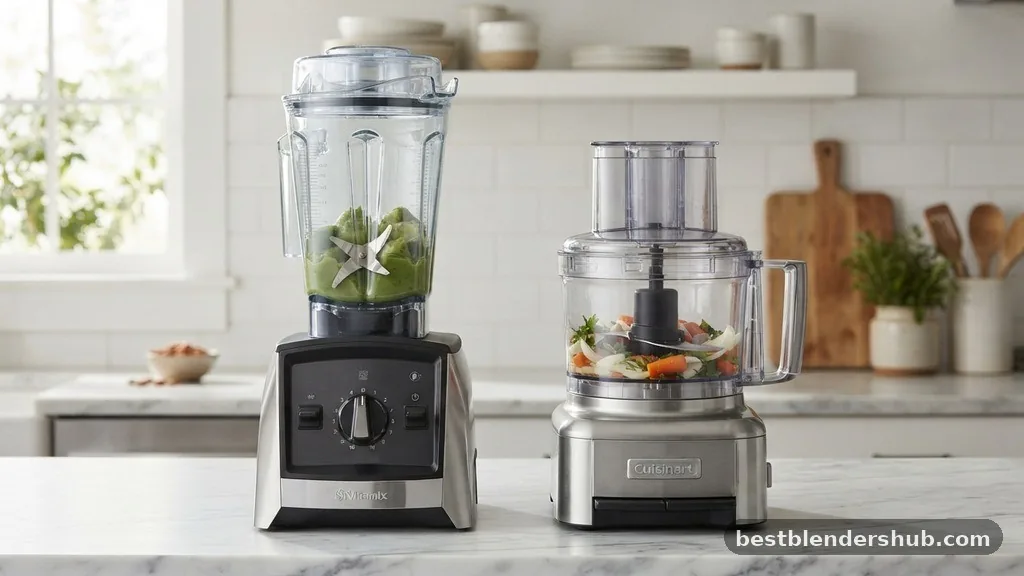
Many home cooks find themselves staring at a recipe that calls for a food processor when all they have on the counter is a blender. Determining whether you can use a blender instead of a food processor comes down to understanding how these machines manipulate ingredients.
While both tools use spinning metal, their designs serve fundamentally different purposes in the kitchen. You can achieve surprisingly similar results if you adjust your technique, but you need to be aware of the mechanical limitations of your equipment to avoid turning a rustic chopped salad into an accidental puree.
Mechanical Differences Between Blenders and Processors
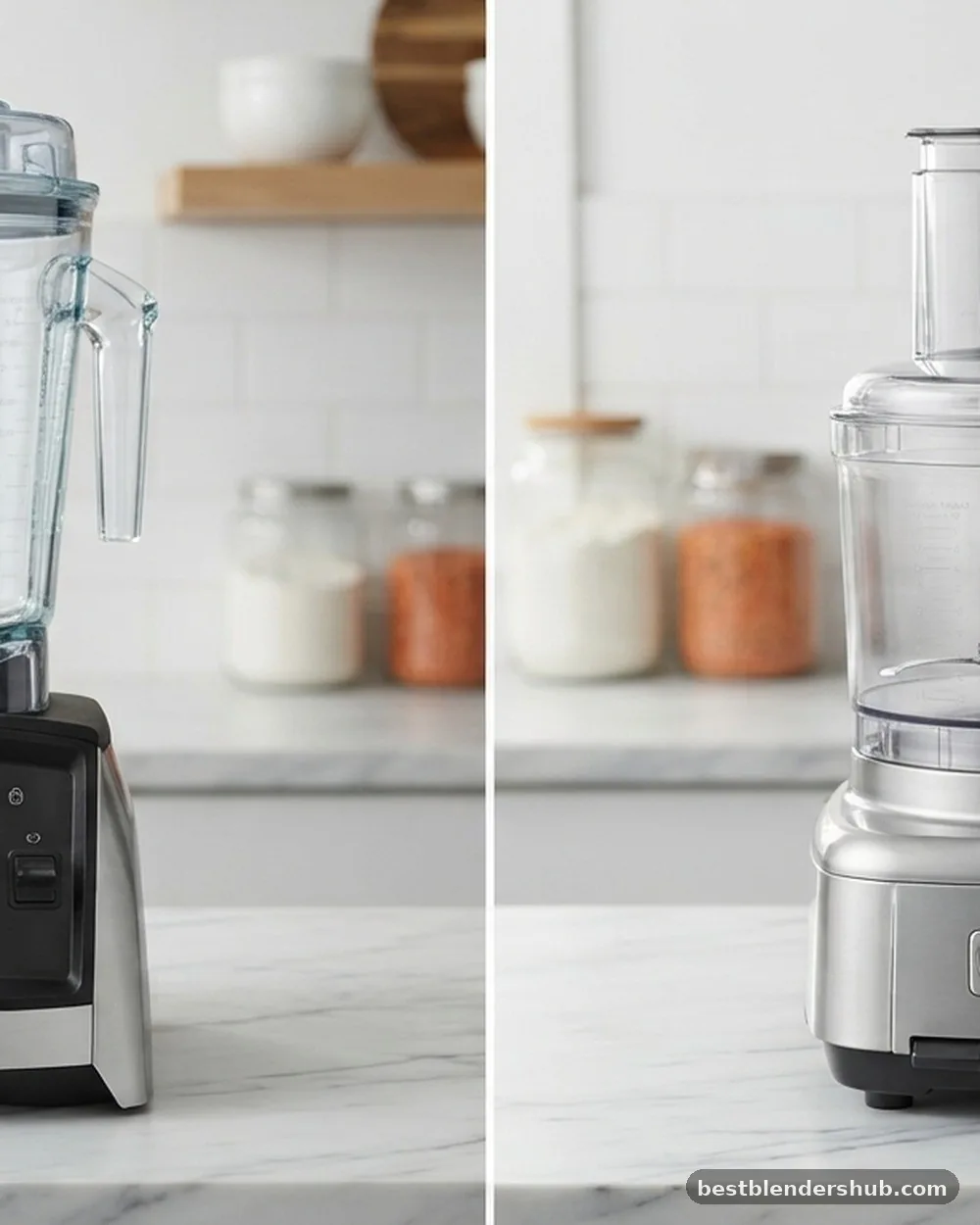
A blender and a food processor are not interchangeable because of how they handle ingredients. The primary difference lies in the blade configuration and the motor torque optimized for specific tasks.
A standard countertop blender features blades designed to pull ingredients downward into a vortex, which is perfect for liquids and soft solids. In contrast, a food processor utilizes a wide, flat bowl and a variety of interchangeable discs or S-shaped blades that spin parallel to the bottom of the container.
This structural difference dictates the food texture you can achieve. Blenders are built for emulsification and creating smooth, uniform consistencies. Food processors are designed for mechanical cutting, slicing, and shredding.
When you force a blender to perform tasks meant for a processor, you are essentially asking a high-speed liquidizer to mimic a precise knife. This often results in uneven cuts or a mushy mess if you aren’t careful with your timing.
Handling Liquid-to-Solid Ratios
The most critical factor when swapping these appliances is the liquid-to-solid ratio. Blenders require a significant amount of liquid to maintain a vortex; without it, the blades will simply spin in empty air, creating a “cavitation” effect where ingredients get stuck above the blades. If you are trying to chop vegetables without adding water or oil, a blender will likely fail to process the bottom pieces properly, leaving you with a layer of puree at the base and large chunks at the top.
To mitigate this, you must add liquid in small, controlled increments. If you are making a thick sauce or dip, start with the absolute minimum amount of liquid needed to get the blades moving.
You can always add more, but you cannot remove liquid once it’s incorporated. If your goal is a dry chop, like onions or herbs, a blender is rarely the right choice unless you use the pulse function with extreme precision, stopping frequently to scrape down the sides.
When a Blender Fails to Deliver
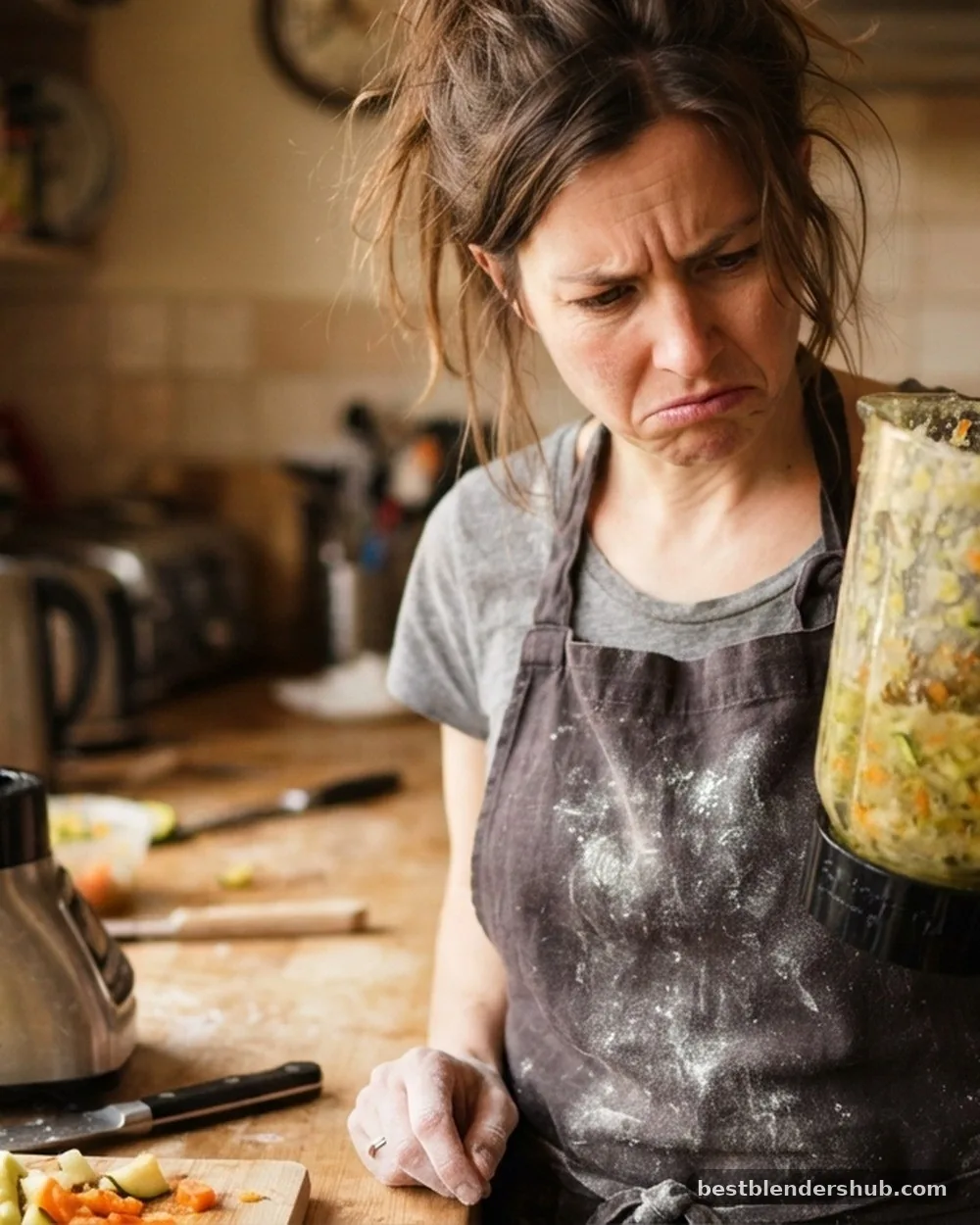
There are specific culinary tasks where a blender simply cannot replicate the performance of a food processor. Dough kneading is the most prominent example. A food processor has the power and the bowl volume to work heavy, thick doughs until they form a ball. A blender, particularly its narrow base and fragile blade assembly, will likely overheat or stall when faced with the resistance of bread or pie dough.
Similarly, vegetable chopping for a salad or a chunky salsa requires the precision of a food processor’s S-blade. A blender tends to pulverize the cell walls of vegetables instantly, turning crisp ingredients into a watery slush. If you are preparing ingredients for a stir-fry or a coleslaw, the blender will likely destroy the structural integrity of the produce, whereas a food processor will provide that uniform, crisp texture you expect.
| Feature | Food Processor | Countertop Blender |
|---|---|---|
| Blade Type | Broad S-blade or Slicing Discs | Fixed, high-speed star or serrated |
| Primary Motion | Horizontal chopping/slicing | Vertical vortex/pulverizing |
| Best For | Dough, chopping, shredding | Smoothies, soups, emulsions |
| Liquid Requirement | Low to none | High for optimal vortex |
Tips for Successful Substitution
If you find yourself without a processor, you can still achieve decent results using a blender by following a few strategic rules. The most important technique is to master the pulse function. Never turn the blender on high and walk away.
Instead, use short, one-second bursts to control the size of the particles. This mimics the stop-and-start action of a processor, giving you more control over the final outcome.
You should also process your ingredients in small batches. Filling a blender to the brim prevents the ingredients from moving evenly, leading to uneven results where the bottom is liquified and the top remains untouched. By working in smaller quantities, you allow each piece of food to make contact with the blade surface, which is essential for achieving a consistent chop.
- Use the pulse setting to avoid over-processing ingredients into a puree.
- Cut your ingredients into uniform, smaller pieces before putting them in the blender.
- Scrape down the sides of the blender jar frequently to ensure even distribution.
- Add liquids slowly to maintain control over the final viscosity.
- Avoid heavy, dense mixtures like thick bread dough which can damage the motor.
- Consider an immersion blender for smaller quantities of dips or sauces.
Addressing Topical Gaps: Advanced Workarounds
A common frustration is trying to create textures that require “dry” processing, like breadcrumbs or ground nuts. When you use a blender for these, the friction generates heat very quickly, which can turn nuts into nut butter rather than a coarse meal.
To prevent this, chill your ingredients in the freezer for 15 to 20 minutes before blending. The cold temperature helps keep the fats solid, preventing the “buttering” effect during the brief pulses required to break down the solids.
Another gap involves the processing of fibrous materials like kale or tough stems. A food processor handles these by mechanical force, while a blender may struggle to cut through the fibers without wrapping them around the blade assembly.
If you must use a blender, remove the tough stems first and chop the leaves into ribbons by hand before adding them to the jar. This pre-processing step saves your blender motor from unnecessary strain and ensures a more uniform result.
Safety and Maintenance Considerations
Using a blender for tasks it wasn’t designed for puts extra stress on the appliance. The high-speed blending action is meant for liquids, and the motor is often air-cooled based on that usage.
When you pulse thick or heavy solids, the motor can heat up significantly faster. If you smell something metallic or burning, stop immediately and let the machine cool down.
Furthermore, ensure your blender jar is designed for the task. Plastic jars can scratch easily if you are processing hard, abrasive items like dry spices or nuts.
Glass jars are more durable but can be heavy and prone to breakage if you drop them while trying to maneuver thick mixtures. Always verify that your blade assembly is tightly secured, as the vibration from processing solid, heavy ingredients can sometimes loosen the base, leading to leaks.
FAQ: Using Blenders as Food Processors
Can you make salsa in a blender?
Yes, but use the pulse function sparingly to maintain a chunky texture instead of a liquid puree.
Is it possible to knead dough in a blender?
No, the motor lacks the necessary torque and the blade design is unsuitable for handling heavy doughs.
Can I shred cheese using a blender?
It is difficult; the blender will likely heat the cheese, resulting in a soft, clumpy, melted mess.
Can you make peanut butter in a blender?
Yes, high-speed blenders can handle nuts, but you must stop often to scrape down the sides.
Will a blender work for making falafel?
It works well if you pulse the chickpeas in small batches to avoid turning them into hummus.
Can you chop onions in a blender?
Yes, but only pulse for one second at a time to prevent the onions from releasing too much water.
What is the biggest risk of using a blender for processor tasks?
The biggest risk is overheating the motor or accidentally turning your ingredients into an unwanted, watery puree.
Final Thoughts on Appliance Versatility
While a food processor offers superior control for chopping, slicing, and kneading, a blender can certainly act as a capable substitute for many common kitchen tasks. By keeping your batches small, utilizing the pulse function, and being mindful of the liquid-to-solid ratio, you can achieve results that are perfectly acceptable for most home cooking needs. Understanding the limitations of your kitchen appliance versatility allows you to be more creative and less reliant on having a specialized tool for every single step of a recipe.
Experimenting with your blender’s settings will help you learn exactly how much power is needed for different textures, eventually making you a more versatile cook in your own kitchen. Don’t hesitate to try these techniques next time a recipe calls for a tool you don’t have on hand.

Jamesmathew is an expert Amazon affiliate writer, helping readers discover top products, smart deals, and practical buying guides through honest reviews and insightful content.