

Navigating the airport with young children is a logistical challenge, and knowing what to do with a stroller when flying effectively can make or break your travel day. Most families find that having a mobile set of wheels is essential for getting through terminals, but the transition from curbside to the cabin requires a solid plan. Whether you are aiming to breeze through the terminal with a lightweight umbrella stroller or managing a bulky travel system, understanding the specific rules for gate checking versus checked luggage is the first step toward a stress-free journey.
Understanding the Basics of Airport Stroller Policies
Every airline maintains its own airline baggage policy, but most major carriers offer a complimentary allowance for strollers and car seats. You generally have two primary options for transport: checking the item at the check-in counter or utilizing a gate check service. Choosing between these depends on your need for mobility inside the terminal and your comfort level with potential handling damage.
If you prefer to keep your hands free at the check-in desk, handing your stroller over early is the safest bet for avoiding damage. However, most parents find that keeping their collapsible stroller until the last possible moment is a lifesaver. It allows you to transport children, snacks, and personal bags through long security lines and across massive terminals without carrying the extra weight.
Navigating the TSA Security Checkpoint
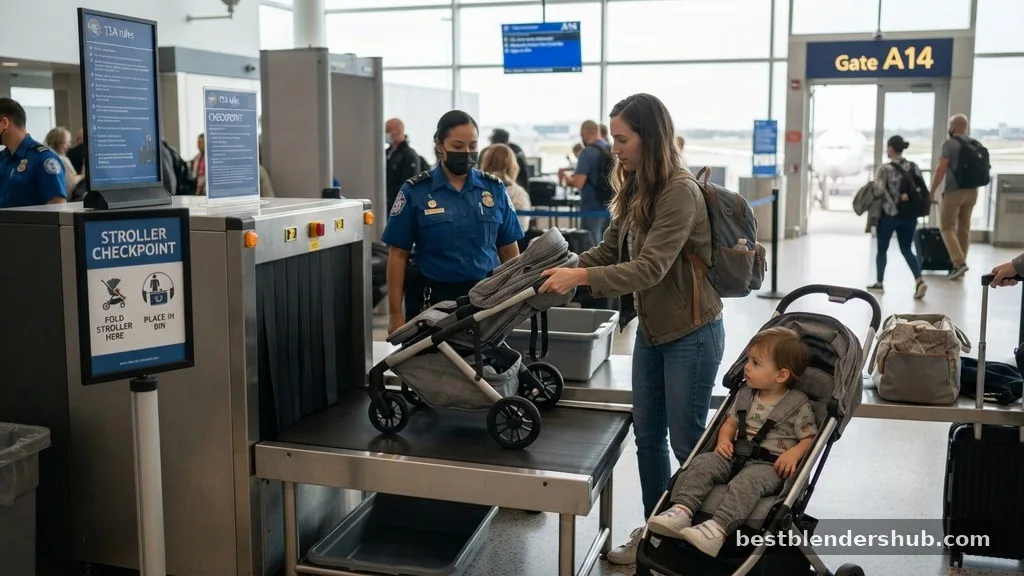
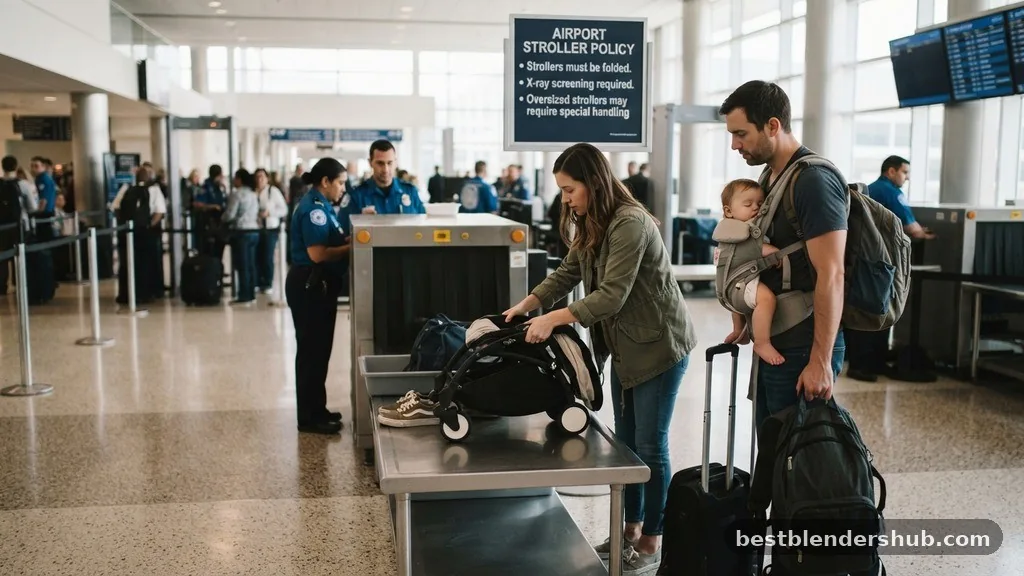
Passing through the TSA security checkpoint with a stroller requires a bit of coordination. You will be required to remove your child from the seat, and the stroller itself must go through the X-ray machine. If the stroller dimensions are too large for the scanner, a TSA officer will perform a manual inspection instead.
To speed up this process, it is wise to clear all items out of the storage basket before you reach the front of the line. Removing bulky blankets or toys from the under-seat area ensures the device passes through the scanner without triggering a secondary search. If you are using a travel stroller that folds compactly, keep it ready for a quick breakdown to minimize your time spent in the screening area.
Gate Checking Versus Checked Luggage
Deciding on the best method for your specific trip involves weighing convenience against the risk of rough baggage handling. Gate checking is the most popular choice for families, as it keeps your gear accessible until you reach the aircraft door.
| Method | Best For | Pros | Cons |
|---|---|---|---|
| Gate Check | Daily use strollers | Keeps gear available in terminal | Risk of damage during loading |
| Check-in Counter | Heavy or expensive strollers | Less handling stress at boarding | Must carry child through airport |
When you opt for a gate check, you must obtain a stroller tag from the gate agent before boarding begins. This tag acts as a tracking label, ensuring your gear is waiting for you on the jet bridge or at the aircraft door upon arrival. If you are flying on a smaller regional jet, remember that some strollers might be sent straight to baggage claim due to limited cargo space.
Protecting Your Gear During Transit
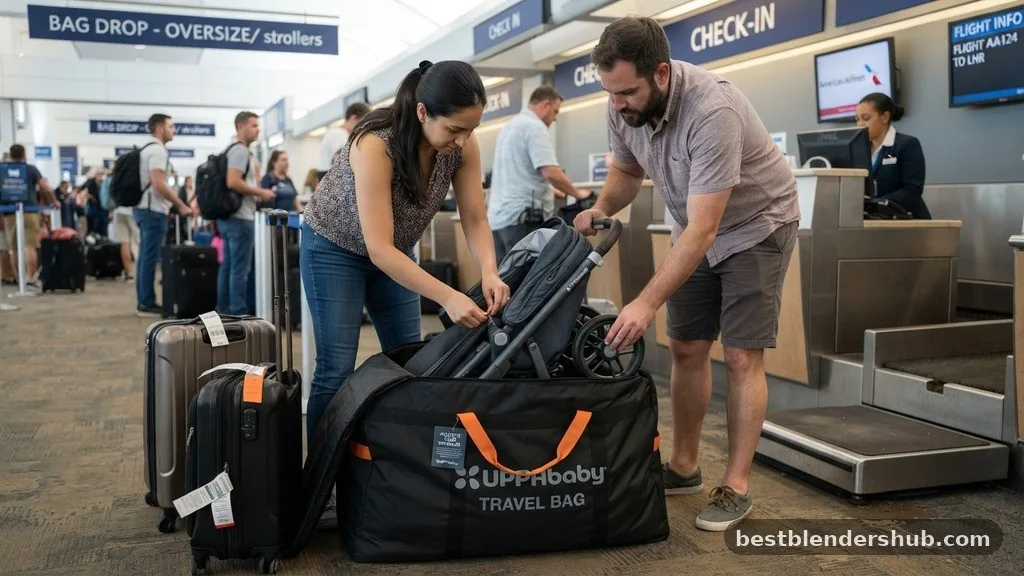
A stroller bag is a critical investment for parents who want to keep their equipment clean and functional. Airport ramps are often dirty, and ground crews move quickly, which can lead to scuffs, tears, or broken mechanisms. Using a padded or durable heavy-duty protective cover significantly reduces the chance of mechanical failure.
Even if you choose to gate check, using a dedicated cover provides a layer of defense against rain and grease. Ensure the cover is clearly labeled with your contact information, just in case the stroller tag becomes detached during the loading process. Many parents also use zip ties to keep the fold-down mechanisms secure, preventing the stroller from accidentally popping open while it is being moved into the cargo hold.
Managing Car Seats and Strollers Together
Many families travel with an infant car seat that clicks into a frame. This setup is highly efficient, but it adds complexity to your carry-on allowance and luggage management. If you plan to use the car seat on the plane, you must ensure it is FAA-approved and that you have purchased a seat for your child.
If the car seat is not being used on the aircraft, it should be checked alongside your stroller. Some airlines allow you to check both items for free, but you should verify this on the carrier’s website before you arrive. If you are traveling solo, consider using a travel bag with wheels for your car seat to make moving through the airport more manageable.
Addressing Common Travel Stroller Challenges
Many travelers worry about what happens if their stroller is damaged or lost during the flight. While rare, it is important to be prepared for the possibility.
Always take a photo of your stroller before you leave home, especially if it is a high-end model. This documentation is invaluable if you need to file a damage claim with the airline.
Another common issue involves international travel. Different countries have varying rules regarding stroller dimensions and gate check procedures. Research your destination’s airport layout, as some international airports have strict policies that require all large items to be checked at the counter rather than the gate.
Tips for Smooth Transitions at the Gate
The moments before boarding are often chaotic. To minimize stress, have your collapsible stroller prepped and ready to fold the moment you reach the end of the jet bridge. Remove all loose items, such as cup holders or attachable toys, as these are easily lost during the flight.
If you are using a lightweight umbrella stroller, practice folding it at home until you can do it with one hand. This skill is incredibly helpful when you are holding a child in one arm and trying to manage a boarding pass in the other. Once you reach the gate, confirm with the agent that the flight is not full, as this can sometimes dictate where your stroller will be stored.
Conclusion
Knowing what to do with a stroller when flying comes down to preparation and choosing the right equipment for your needs. By deciding early whether to use the check-in counter or a gate check, you can avoid last-minute panic at the terminal. Investing in a protective bag and familiarizing yourself with your specific airline’s baggage policy will keep your gear safe and your travel experience smooth.
Whether you are heading off on a quick weekend trip or a long-haul international flight, keeping your stroller accessible while protecting it from handling hazards is the key to maintaining your sanity. If you have any specific experiences or tips for other parents, feel free to share your thoughts as you plan your next family adventure.
Do I need to pay extra to check a stroller?
Most major airlines allow you to check one stroller and one car seat for free per child.
Can I take my stroller through the TSA security checkpoint?
Yes, you can bring it through security, but it must be folded and scanned by the X-ray machine.
Should I gate check or check at the counter?
Gate check is better for terminal mobility, while counter check is safer for protecting expensive, fragile equipment.
What is a stroller tag?
A stroller tag is a printed label provided by the gate agent to identify your gear during boarding.
Do I need a protective bag for my stroller?
A bag is highly recommended to protect your stroller from dirt, grease, and damage during the loading process.
What if my stroller is too big for the plane?
If the stroller exceeds size limits, the airline may require you to check it at the main desk.
Where do I pick up my stroller after landing?
It will typically be waiting on the jet bridge, though some airlines deliver it to the baggage claim area.

Jamesmathew is an expert Amazon affiliate writer, helping readers discover top products, smart deals, and practical buying guides through honest reviews and insightful content.