

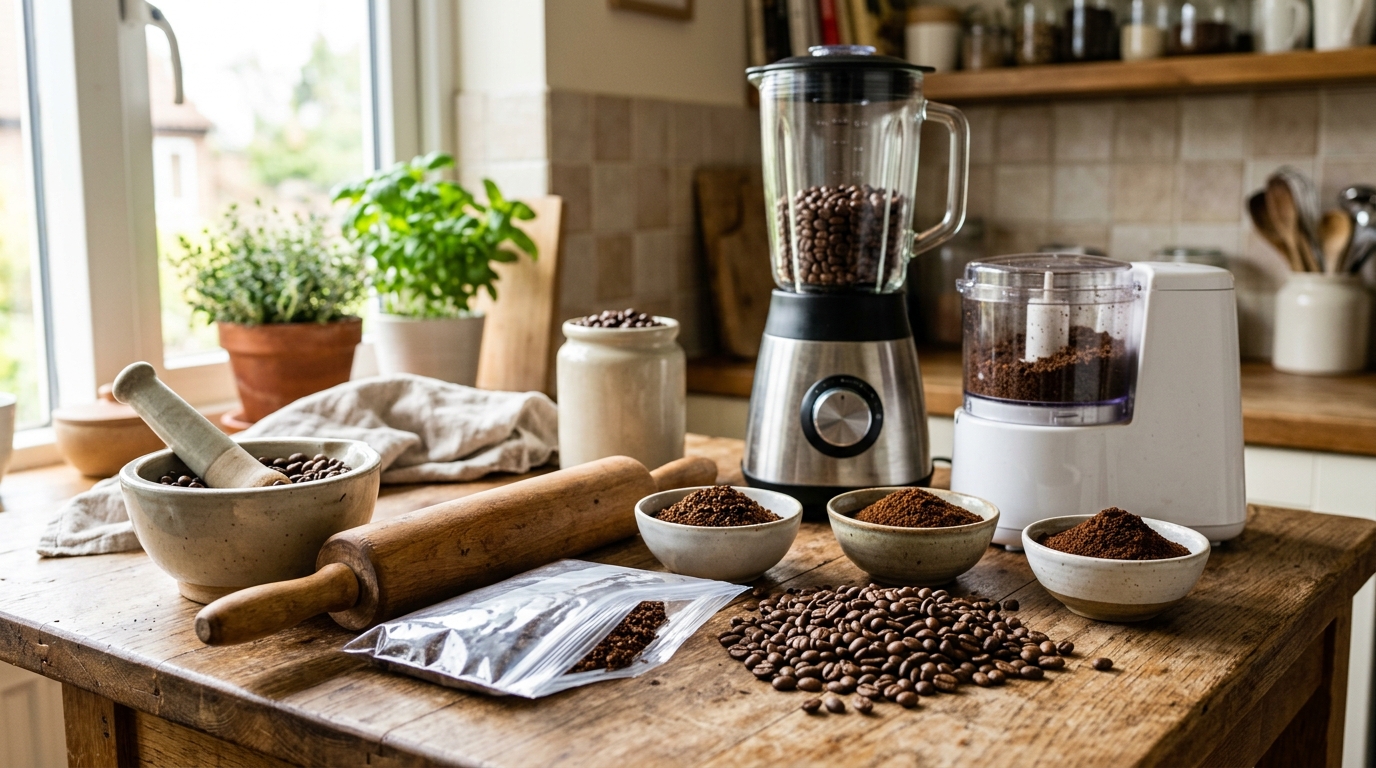
So you woke up, you want your coffee, and then it hits you — you gotta grind coffee beans without a grinder because the darn machine broke last night or maybe you just never owned one in the first place. It happens more then you’d think, honestly. You standing there in the kitchen holding a bag of whole beans like they personally betrayed you. Don’t panic though, because this is one of them situations where a little kitchen improvising goes a real long way, and by the end of this you’ll know exactly which method suits your situation best.
Coffee grinding without a proper grinder isn’t some rare survivalist skill, its something people have been doing for centuries before electric grinders even existed. Turkish coffee culture, for example, relied on hand mills and mortars long before anyone plugged in a Cuisinart. So really, you’re not improvising as much as you think, you’re just going back to basics that worked fine for generations.
Why Would You Even Need to Grind Coffee Without a Grinder
There’s a bunch of reasons this comes up, and its not always because someone forgot to buy one. Maybe you’re camping and the grinder got left on the counter at home, or maybe your grinder just died mid-morning without so much as a warning noise. Some people also travel a lot and don’t wanna lug around bulky kitchen appliances just for coffee, which, fair enough honestly.
According to the National Coffee Association’s 2024 consumer trends report, roughly 65 percent of American adults drink coffee daily, and a good chunk of them prepare it at home rather then buying it out. That’s a LOT of people who, at some point, are gonna face a grinder-less morning and need a backup plan.
The Best Methods to Grind Coffee Beans Without a Grinder
Below are the methods that actually work, ranked more or less by how consistent the grind comes out, though consistency is kind of relative when your improvising with kitchen tools that were never meant for this job in the first place.
1. Mortar and Pestle
This one’s probably the closest thing to a “real” grind you’re gonna get without electricity. A mortar and pestle lets you control pressure directly, so you can crush the beans into a texture that’s fine or coarse depending on what you need it for.
Steps for this:
- Add a small handful of beans, don’t overload it
- Press down and twist rather then just smashing straight down
- Rotate the pestle in circular motions to break beans evenly
- Sift out bigger chunks and re-crush them if needed
It takes some elbow grease, no doubt, but the payoff is a decently even grind that works great for French press or even pour-over if your patient enough.
2. Rolling Pin (The Bag-and-Bash Method)
This is probably the most common trick people already know without realizing it has a name. You put the beans in a thick ziplock bag, seal it good, then roll a rolling pin over it applying steady pressure. For an even finer grind, follow up by bashing the bag a few times with the flat side of a meat tenderizer or even the bottom of a heavy pan.
A barista quoted in a Serious Eats piece on manual grinding once described the bag method as producing a grind that’s “uneven but totally workable” for drip coffee, which lines up with what most home experimenters find too.
3. Blender
Not every blender is suited for this, but a decent one with sharp blades can pulse whole beans into a rough grind pretty quick. Pulse it in short bursts — like one or two seconds at a time — rather then holding the button down, cause that tends to create uneven results with some beans turning to dust while others stay whole.
4. Food Processor
Similar idea to the blender, though food processors usually give you slightly more control since the blades sit lower and the bowl’s wider. Pulse in short intervals and shake the processor between pulses so beans redistribute evenly across the blade.
5. Hammer
Sounds a bit extreme maybe, but hear me out. Place your beans between two layers of parchment paper or inside a sealed bag, then use the flat side of a hammer to crush them with controlled taps. This method gives you a coarser grind generally, which actually works out fine for cold brew since cold brew wants a chunkier consistency anyways.
6. Rolling Bottle or Wine Bottle
If you don’t have a rolling pin handy, an empty wine bottle does basically the same job. Lay the beans flat in a bag, roll the bottle over them applying even pressure, and rotate the bag occasionally so you’re not just grinding one spot into powder while the rest stays whole.
Comparing the Methods
| Method | Grind Consistency | Best Brew Match | Effort Level |
|---|---|---|---|
| Mortar and Pestle | Fairly even | French press, Turkish coffee | High |
| Rolling Pin (Bag) | Uneven but workable | Drip coffee | Medium |
| Blender | Coarse to medium | Cold brew, French press | Low |
| Food Processor | Medium | Drip, pour-over | Low |
| Hammer | Coarse | Cold brew | Medium |
| Bottle Roll | Uneven | Drip, French press | Medium |
What Grind Size Matters For, Anyway
If your wondering why grind size even matters this much, it comes down to extraction time. Finer grinds expose more surface area to water, meaning flavor extracts faster, which works for espresso or Turkish coffee where brew time is short. Coarser grinds are better suited for methods like French press or cold brew, where the coffee sits in water for a much longer stretch.
The Specialty Coffee Association actually publishes grind size charts showing how espresso needs particles close to table salt in size, while French press needs something closer to sea salt or breadcrumbs. So when your improvising a grind without a proper machine, aim for that texture depending on what your brewing.
Tips That Actually Help
- Freeze your beans for about ten to fifteen minutes before crushing them, it makes them brittle and easier to break down evenly
- Work in small batches rather then trying to grind a whole bag at once
- Sift your grounds through a fine mesh strainer afterward to catch any big chunks that need a second pass
- Store leftover whole beans in an airtight container away from light, since exposure speeds up flavor loss
A Quick Word on Flavor Difference
Some folks assume a rougher, improvised grind ruins the coffee’s taste completely, but that’s not really accurate. Coffee scientist Christopher Hendon, who’s written extensively on brewing chemistry, has pointed out that grind uniformity matters more for extraction consistency then for flavor intensity alone, meaning an uneven grind might taste slightly different batch to batch but it wont necessarily taste bad.
So don’t stress too much if your first attempt looks a little rough around the edges, texture-wise. It’s still real coffee, made from real beans, and it’s gonna taste like coffee even if a professional barista would wince a bit looking at the grounds.
Final Thoughts
Grinding coffee beans without a grinder isn’t glamorous, and it definitely takes more effort then pressing a button, but it works. Whether you reach for a mortar and pestle, a rolling pin, or even just a hammer and some parchment paper, you can still get a decent cup of coffee going without waiting around for a replacement grinder to show up. Next time you’re caught without one, just remember, generations of coffee drinkers managed just fine without electric grinders, and so can you for one morning.

Jamesmathew is an expert Amazon affiliate writer, helping readers discover top products, smart deals, and practical buying guides through honest reviews and insightful content.