

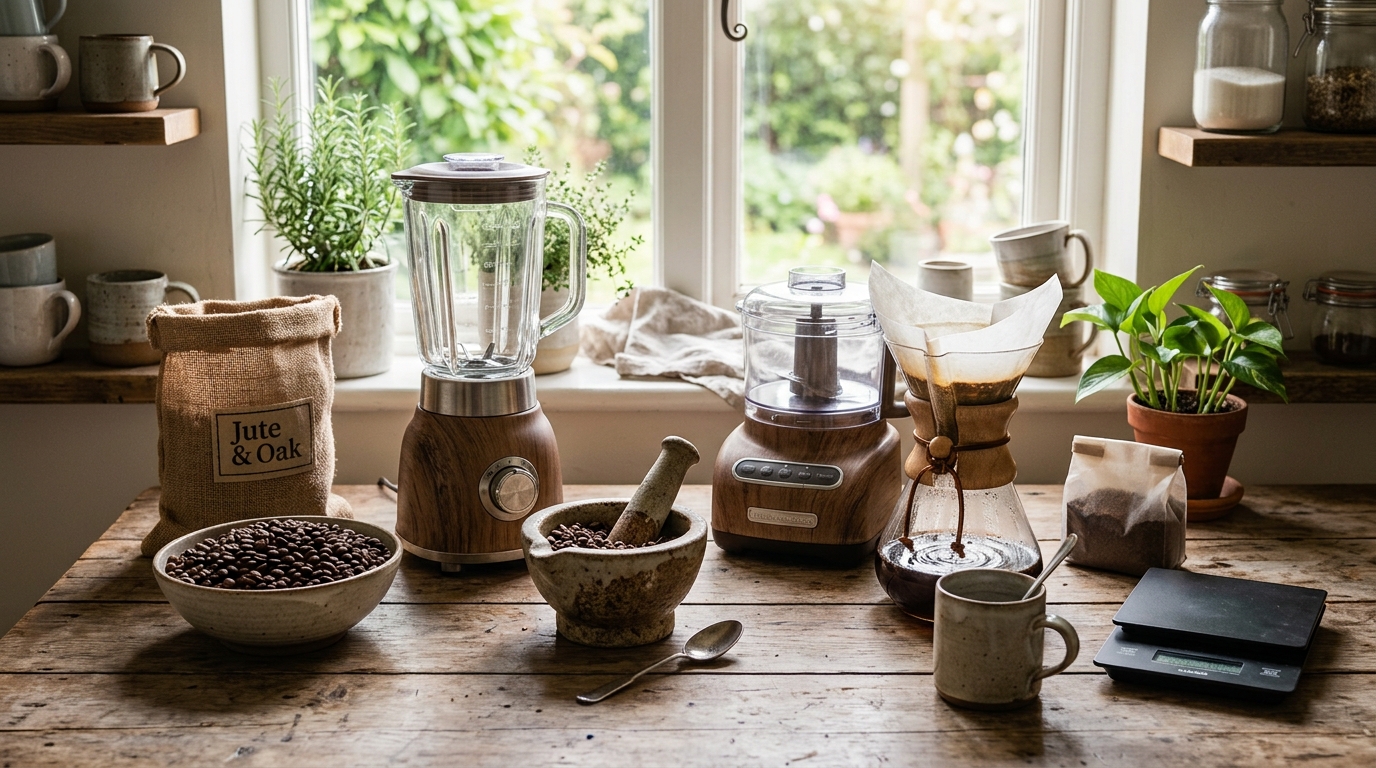
You probably landed here because figuring out how to grind coffee without a coffee grinder wasn’t exactly part of the morning plan. Maybe your grinder stopped working right when you needed it, maybe you’re traveling, or maybe you just bought whole beans because they smelled too good to leave behind. It happens more often than people admit, honestly. The good news is that you don’t have to give up on fresh coffee just because one small gadget decided to be difficult.
Whole coffee beans are surprisingly forgiving if you know how to persuade them into smaller pieces. Sure, a dedicated grinder does the job faster, but several ordinary kitchen tools can get you close enough for a delicious cup. Some methods create a more even grind than others, and a few take a little elbow grease. Still, fresh-ground coffee made by hand often beats stale pre-ground coffee that has been sitting on a shelf for weeks.
Why Grind Coffee Beans Yourself?
Coffee starts losing aroma shortly after grinding. According to research published by the Specialty Coffee Association, grinding exposes more surface area to oxygen, accelerating oxidation and the loss of volatile flavor compounds.
That means whole beans stay fresh much longer than pre-ground coffee. When you grind only what you need, you preserve:
- Richer aroma
- Better sweetness
- More balanced acidity
- Fuller body
- Fresher taste
It’s kinda funny, really. Two cups brewed from the exact same beans can taste almost like different coffees simply because one was ground minutes before brewing.
Before You Start: Know Your Target Grind Size
Different brewing methods need different grind sizes. Using the wrong one won’t ruin your coffee, though it can make it taste weak, bitter, or oddly sour.
| Brewing Method | Recommended Grind |
|---|---|
| French Press | Coarse |
| Cold Brew | Extra Coarse |
| Pour Over | Medium |
| Drip Coffee Maker | Medium |
| AeroPress | Medium-Fine |
| Espresso | Fine |
| Turkish Coffee | Extra Fine |
Without a grinder, hitting the perfect size every time isn’t likely. That’s alright. Aim for consistency rather than perfection.
Best Ways to Grind Coffee Without a Coffee Grinder
Use a Blender
A blender is probably the easiest substitute sitting in most kitchens.
The spinning blades chop beans quickly, although they don’t create perfectly uniform particles. Instead of holding the button continuously, pulse the blender several times. Short bursts keep the beans moving and reduce the chance of producing too much coffee dust.
Steps:
- Add a small amount of beans.
- Secure the lid tightly.
- Pulse for 2–3 seconds.
- Shake the blender slightly.
- Repeat until satisfied.
This works best for drip coffee or pour-over brewing. Espresso-level fineness is pretty hard to achieve.
Crush Beans with a Rolling Pin
A rolling pin gives surprisingly good control.
Place your coffee beans inside a sturdy freezer bag or between two sheets of parchment paper. Press gently first to crack the beans. Once cracked, roll back and forth with firm pressure.
It feels almost like kneading bread that suddenly decided to become coffee instead. Strange comparison maybe, but that’s what it reminds people of.
Pros
- Inexpensive
- Good consistency
- Easy cleanup
Cons
- Takes time
- Requires effort
Use a Mortar and Pestle
Long before electric grinders existed, people relied on mortar and pestles for grinding spices, grains, and coffee.
This method actually produces one of the most consistent manual grinds because you control both crushing and grinding motions.
How to do it:
- Add a small handful of beans.
- Crush them using downward pressure.
- Continue grinding with circular motions.
- Sift visually and repeat if necessary.
Professional coffee competitions occasionally demonstrate this traditional approach simply because it offers impressive consistency in skilled hands.
Hammer Method
Yes, an ordinary hammer can work.
Place beans inside a thick freezer bag. Cover with a towel before striking gently. Avoid swinging like you’re driving nails into wood. Light taps are enough.
After breaking the beans, continue crushing until reaching the desired size.
The kitchen might sound like a tiny construction site for a minute or two, though.
Use a Heavy Skillet or Frying Pan
A cast iron skillet works especially well because of its weight.
Spread the beans inside a freezer bag and press down using the bottom of the skillet. Rock it slowly while applying steady pressure.
Once cracked, continue pressing until most pieces reach a similar size.
It’s slower than a blender but often produces more even results.
Food Processor
A food processor behaves much like a blender.
Pulse rather than running continuously. Shake the bowl between pulses so larger bean pieces move toward the blades.
Don’t overload it. Small batches grind much more evenly.
Knife Method
This method surprises people.
Lay the flat side of a large chef’s knife over the beans. Press firmly using your palm until they crack.
Continue chopping afterward if you need a finer grind.
Use caution, obviously. Sharp knives deserve respect even when lying flat.
Which Method Produces the Best Results?
Here’s a quick comparison.
| Method | Grind Quality | Speed | Best For |
|---|---|---|---|
| Mortar & Pestle | Excellent | Slow | Most brewing methods |
| Rolling Pin | Very Good | Medium | French Press, Pour Over |
| Blender | Good | Fast | Drip Coffee |
| Food Processor | Good | Fast | Drip Coffee |
| Hammer | Fair | Medium | French Press |
| Skillet | Good | Medium | Pour Over |
| Knife | Fair | Slow | Emergency use |
Tips for Better Manual Grinding
Grinding coffee by hand isn’t difficult, though a few small habits improve the results quite a bit.
- Grind only what you’ll brew immediately.
- Work in small batches.
- Shake beans frequently while grinding.
- Avoid overheating the beans.
- Check consistency often.
- Store remaining whole beans in an airtight container.
One odd little trick many home brewers discover by accident is that slowing down actually gives better results. Rushing usually creates a mix of powder and huge chunks.
Common Mistakes to Avoid
Even experienced coffee drinkers make these mistakes sometimes.
Grinding Too Much at Once
Large batches don’t move evenly, especially in blenders and processors.
Holding the Blender Button Down
Continuous blending heats the beans and creates inconsistent particle sizes.
Pulse instead.
Using Thin Plastic Bags
Cheap sandwich bags tear easily.
Choose freezer bags whenever crushing beans manually.
Ignoring Brew Method
A French Press filled with powder tastes muddy.
Espresso made from coarse chunks tastes watery.
Matching grind size matters more than many people realize.
Does Manual Grinding Affect Flavor?
Yes, although not always negatively.
Uniform coffee particles extract evenly during brewing. Uneven particles create two problems simultaneously:
- Small particles over-extract.
- Large particles under-extract.
That sounds contradictory, yet both happen in the same cup.
Despite that, fresh beans ground moments before brewing usually taste brighter than old pre-ground coffee. Freshness often outweighs slight inconsistencies.
What If You Need Espresso?
Espresso demands an extremely fine and consistent grind.
Without a burr grinder, achieving true espresso quality is exceptionally difficult.
If espresso is your daily drink, a proper burr grinder becomes one of the best coffee investments you can make. Temporary methods work reasonably well for drip coffee, French Press, and pour-over, though they rarely meet espresso’s strict grind requirements.
How Long Does It Take?
Approximate grinding times vary depending on the method.
| Method | Time |
|---|---|
| Blender | 30–60 seconds |
| Food Processor | 45–90 seconds |
| Rolling Pin | 3–5 minutes |
| Mortar & Pestle | 5–10 minutes |
| Hammer | 2–4 minutes |
| Skillet | 3–5 minutes |
| Knife | 5–8 minutes |
It’s not exactly lightning fast, but neither is waiting in line at a coffee shop.
Frequently Asked Questions
Can you grind coffee beans without any equipment?
Not really. You’ll need something sturdy enough to crush the beans, even if it’s only a rolling pin, hammer, skillet, or heavy mug.
Is a blender better than a food processor?
Both perform similarly. A blender often creates slightly finer grounds, while a food processor may produce a somewhat more even grind depending on the blade design.
Will manual grinding ruin coffee beans?
No. As long as you avoid overheating or contaminating the beans, manual grinding doesn’t damage them.
Can I use a pepper grinder?
Only if it’s completely clean and dedicated to coffee afterward. Pepper residue transfers flavor surprisingly easily.
Which method is closest to a real grinder?
A mortar and pestle usually produces the most consistent manual grind, especially with patience and practice.
Final Thoughts
Learning how to grind coffee without a coffee grinder turns what feels like a morning disaster into a small kitchen experiment. You don’t need fancy equipment to enjoy fresh coffee. A blender, rolling pin, mortar and pestle, skillet, or even a hammer can all break whole beans into usable grounds with a little patience. None of these methods perfectly replace a quality burr grinder, that’s true, yet they deliver something many people forget matters most: freshly ground coffee with aroma still hanging in the air instead of fading inside a supermarket package.
If you’re only dealing with a broken grinder or an occasional camping trip, these techniques are more than enough to keep your coffee routine alive. And who knows, you might even find that slowing down for a few extra minutes before brewing becomes part of the ritual rather than an inconvenience. Sometimes the coffee tastes better because you had to work just a little bit for it.

Jamesmathew is an expert Amazon affiliate writer, helping readers discover top products, smart deals, and practical buying guides through honest reviews and insightful content.