

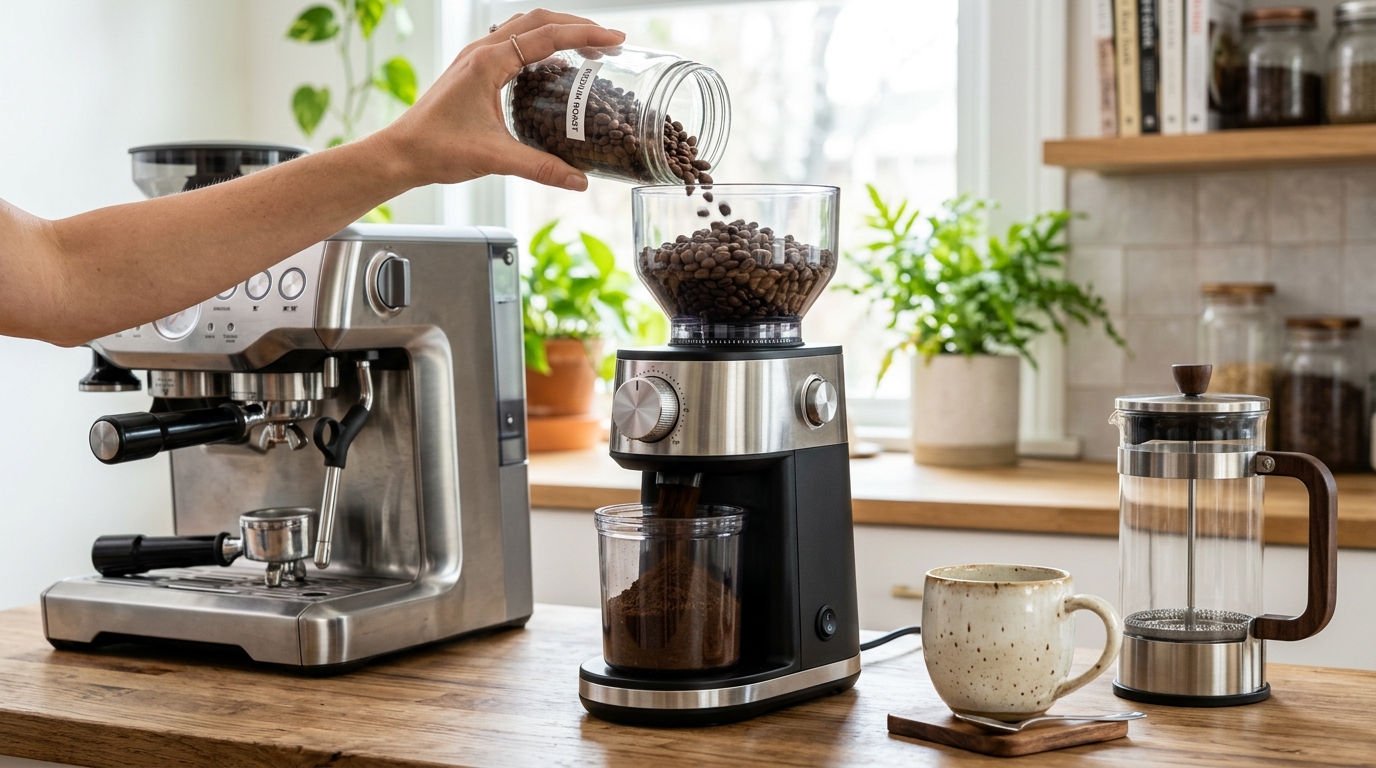
If you’re staring at how to use Cuisinart coffee grinder instructions while your coffee beans are just sitting there looking smug, you’re honestly not alone. You press a button, maybe two, then wonder if you’ve already done something wrong. It happens more than folks admit, and weirdly enough, the grinder itself is usually much simpler than it first looks.
Freshly ground coffee changes almost everything about your morning cup. Even decent beans can taste noticeably richer when they’re ground just before brewing instead of weeks earlier. The nice part? Once you understand your Cuisinart grinder, using it becomes almost automatic. You won’t really think about it anymore, you’ll just do it.
This guide walks through everything you need to know—from identifying your grinder type to choosing the right grind size, cleaning it properly, fixing common issues, and getting consistently better coffee every single day.
Why Fresh Grinding Actually Matters
Coffee begins losing aromatic compounds within minutes after grinding. According to the Specialty Coffee Association, consistent grind size plays a major role in extraction quality and overall flavor.
That sounds technical, but here’s the plain version.
If the coffee particles aren’t roughly the same size:
- Tiny particles over-extract and become bitter.
- Large particles under-extract and taste sour.
- Your cup feels kinda confused, if that makes sense.
A good grinder minimizes those differences.
Know Which Cuisinart Coffee Grinder You Own
Before learning how to use a Cuisinart coffee grinder, identify the model because operating steps vary slightly.
The most common types include:
| Grinder Type | Best For | Grind Consistency |
|---|---|---|
| Blade Grinder | Everyday coffee | Moderate |
| Burr Grinder | Better flavor and precision | Excellent |
| Supreme Grind Automatic Burr Grinder | Multiple brewing styles | Very Good |
| Touchscreen Burr Models | Convenience | Excellent |
If yours has two spinning blades inside a small chamber, it’s a blade grinder.
If it has adjustable grind settings with burrs hidden underneath, you’ve got a burr grinder. Lucky you, honestly.
Before Your First Use
Don’t immediately dump beans into the grinder.
Instead:
- Remove all packaging materials.
- Wash any removable containers.
- Wipe the grinding chamber with a dry cloth.
- Assemble everything securely.
- Read the safety instructions for your specific model.
Most removable parts should only be hand-washed unless the manual specifically says otherwise. Some people skip this first cleaning step. Probably not the end of the world, but it’s worth five minutes.
How to Use Cuisinart Coffee Grinder Step by Step
Here’s the complete process.
Step 1: Measure Your Coffee Beans
A general guideline:
- 2 tablespoons of beans per 6-ounce cup
- About 10 grams per cup
- Roughly 20 grams for a standard large mug
Don’t overfill the hopper.
Many Cuisinart grinders have maximum fill indicators for a reason.
Step 2: Select the Grind Size
Different brewing methods require different grind levels.
| Brewing Method | Grind Size |
|---|---|
| Espresso | Extra Fine |
| Moka Pot | Fine |
| Pour Over | Medium-Fine |
| Drip Coffee Maker | Medium |
| French Press | Coarse |
| Cold Brew | Extra Coarse |
This part matters more than expensive beans, which feels backwards but it’s kinda true.
Step 3: Adjust Cup Settings
Most automatic burr grinders allow you to choose:
- 4 cups
- 6 cups
- 8 cups
- 10 cups
- 12 cups
- 14 cups
- 18 cups
The grinder automatically dispenses approximately enough grounds for that amount.
If you’re making just one mug, don’t always trust the smallest setting blindly. Sometimes it’s a little generous.
Step 4: Start Grinding
Simply press:
- Start
- Grind
- On
Depending on your model.
You’ll hear a steady grinding sound.
Avoid opening the lid while it’s running.
Grinding usually takes:
- Blade grinder: 10–30 seconds
- Burr grinder: 15–45 seconds
Step 5: Remove the Grounds
Once finished:
- Pull out the grounds container.
- Pour coffee directly into your brewer.
- Brush away any loose grounds.
Static electricity occasionally makes grounds cling to the container. It looks annoying because…well, it is.
How Long Should You Grind?
For blade grinders especially, timing controls particle size.
Approximate guide:
| Grind | Time |
|---|---|
| Coarse | 8–10 seconds |
| Medium | 12–15 seconds |
| Fine | 18–25 seconds |
Instead of holding the button continuously, try pulsing.
Pulse.
Pause.
Pulse again.
Oddly enough, it usually produces more even grounds.
Blade Grinder vs Burr Grinder
People ask this constantly.
Here’s the practical comparison.
Blade Grinder Advantages
- Lower price
- Compact design
- Easy storage
- Fast grinding
Blade Grinder Disadvantages
- Uneven particle sizes
- Less flavor consistency
- More heat during grinding
Burr Grinder Advantages
- Uniform grind
- Better extraction
- Adjustable settings
- Excellent for espresso
Burr Grinder Disadvantages
- Costs more
- Slightly louder
- Requires more cleaning
If coffee is mostly just fuel for your mornings, a blade grinder does the job fine. If you’re chasing café-quality flavor, burr grinders are worth the extra money.
Best Grind Settings for Different Brewing Methods
Let’s make this practical.
Drip Coffee Maker
Use:
- Medium grind
- Medium cup setting
This is where most Cuisinart owners spend their time.
French Press
Choose:
- Coarse grind
Fine coffee grounds make French press coffee muddy.
Nobody really enjoys chewing coffee.
Espresso
Use:
- Extra fine
Tiny adjustments can dramatically change extraction time.
If espresso suddenly tastes bitter, don’t automatically blame the beans.
Pour Over
Aim for:
- Medium-fine
Water should pass through in roughly three to four minutes.
Cold Brew
Select:
- Extra coarse
Because the coffee steeps for many hours, finer grounds can become unpleasantly bitter.
Common Mistakes to Avoid
Everybody makes at least one of these.
Grinding Too Much Coffee
Ground coffee loses freshness quickly.
Only grind what you’ll use immediately.
Using Oily Beans
Very dark roasted beans leave oily residue.
Over time they can clog burr grinders.
Ignoring Cleaning
Coffee oils build up surprisingly fast.
Old oils equal stale flavors.
Choosing the Wrong Grind
Using espresso grind in a French press?
That’s almost guaranteed disappointment.
Overfilling the Hopper
Beans need room to move.
Packing the hopper completely full may reduce grinding consistency.
How to Clean a Cuisinart Coffee Grinder
Cleaning doesn’t need to become some huge weekend project.
For daily care:
- Empty remaining beans.
- Brush loose grounds away.
- Wipe the exterior.
Weekly cleaning:
- Remove the bean hopper.
- Remove grounds container.
- Brush burrs carefully.
- Wash removable plastic parts.
- Dry everything completely.
- Reassemble.
Never immerse the motor base in water.
Seems obvious, but someone somewhere definitely tried it.
Deep Cleaning Tips
Every month or so:
- Use grinder cleaning tablets if compatible.
- Vacuum loose coffee particles carefully.
- Inspect burrs for trapped beans.
- Check for oil buildup.
Some people grind uncooked rice for cleaning.
Many manufacturers discourage this because it may stress burr mechanisms or leave starch residue. Better to use products designed specifically for grinder maintenance.
Troubleshooting Common Problems
Grinder Won’t Start
Possible causes:
- Hopper isn’t locked
- Grounds container missing
- Lid not secured
- Power issue
Double-check assembly first.
It’s surprisingly often something simple.
Grinder Stops Mid-Cycle
Potential reasons:
- Jammed beans
- Overheating
- Blocked burrs
Unplug the grinder before inspecting it.
Coffee Grounds Are Uneven
Possible fixes:
- Clean burrs
- Reduce hopper fill
- Replace worn burrs if necessary
Blade grinders naturally produce less uniform results, so don’t expect perfection.
Strange Noises
Check for:
- Small stones mixed with beans
- Foreign objects
- Loose components
Good-quality coffee beans are usually sorted carefully, but tiny debris occasionally sneaks through.
Tips for Better Coffee Every Morning
Little habits make bigger differences than expensive equipment.
Try these:
- Store beans in an airtight container.
- Keep beans away from sunlight.
- Buy smaller amounts more frequently.
- Grind immediately before brewing.
- Use filtered water.
- Weigh beans instead of estimating.
- Clean your grinder weekly.
Coffee sorta rewards consistency more than perfection.
How Long Does a Cuisinart Coffee Grinder Last?
With normal home use:
- Blade grinders often last 5–8 years.
- Burr grinders commonly last 8–15 years.
Regular cleaning greatly extends lifespan.
Replacing burrs, when available, can restore grinding performance without replacing the whole machine.
Frequently Asked Questions
Can I grind spices in my Cuisinart coffee grinder?
Only if the manual specifically allows it. Otherwise, spices leave strong oils and odors that can affect future coffee.
Should I leave beans in the hopper?
It’s better not to.
Beans stay fresher when stored in an airtight container instead of inside the grinder.
How often should I clean the grinder?
Brush out loose grounds after every few uses.
Perform a deeper cleaning about once a month, or more often if you grind daily.
Why is my coffee suddenly bitter?
Possible reasons include:
- Grind is too fine.
- Water is too hot.
- Coffee is over-extracted.
- Grinder needs cleaning.
Usually it’s one of those four.
Can I grind flavored coffee beans?
You can, but flavored beans often leave sticky residue inside the grinder.
Cleaning afterward becomes more important.
Final Thoughts
Learning how to use Cuisinart coffee grinder isn’t complicated once you stop second-guessing every button. Most mistakes come from using the wrong grind size, skipping regular cleaning, or grinding far more coffee than you’ll actually brew. Fix those three things and your coffee usually improves almost immediatly, even if nothing else changes.
Start simple. Measure your beans, match the grind to your brewing method, clean the grinder now and then, and pay attention to how your coffee tastes. Tiny adjustments—sometimes almost laughably tiny—can make a surprisingly noticeable difference in the cup.
And don’t worry if your first few batches aren’t perfect. Coffee has this funny way of teaching you one mug at a time, even when it feels like it’s being a little stubborn about it.

Jamesmathew is an expert Amazon affiliate writer, helping readers discover top products, smart deals, and practical buying guides through honest reviews and insightful content.