

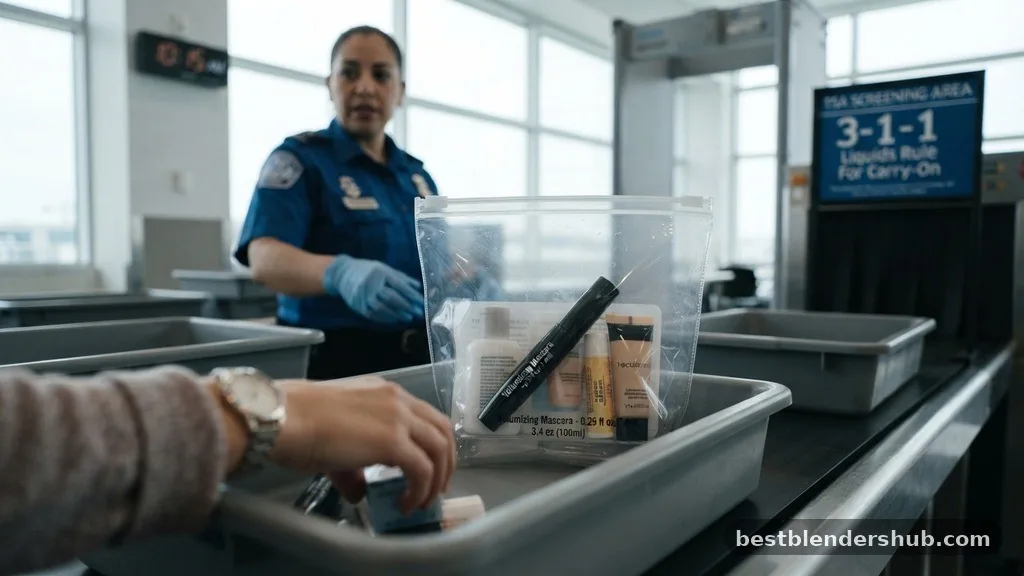
When preparing for air travel, one of the most common points of confusion for beauty enthusiasts is whether mascara is considered a liquid when flying. Navigating the regulations set forth by aviation security authorities can feel like a daunting task, especially when you are trying to pack your favorite makeup products into a carry-on bag.
The short answer is yes: the Transportation Security Administration (TSA) classifies mascara as a liquid, gel, or aerosol, meaning it is subject to the standard restrictions governing what you can bring through an airport security checkpoint. Understanding these requirements is essential to ensuring your travel day goes smoothly without having to discard your expensive beauty products at the screening belt.
Because mascara has a viscous consistency that falls under the broad umbrella of liquid-like substances, it must comply with the specific volume limits enforced by security personnel. This rule applies to any product that is spreadable, pourable, or pumpable, which includes everything from mascara tubes to cream-based eyeliners.
While it might seem counterintuitive to categorize a small tube of lash-lengthening formula alongside shampoos or lotions, the security logic is based on the chemical properties of the item. By treating these items with the same scrutiny as other restricted fluids, the TSA maintains consistency in how they screen items for potential security threats.
Understanding the TSA Liquid Rules for Cosmetics
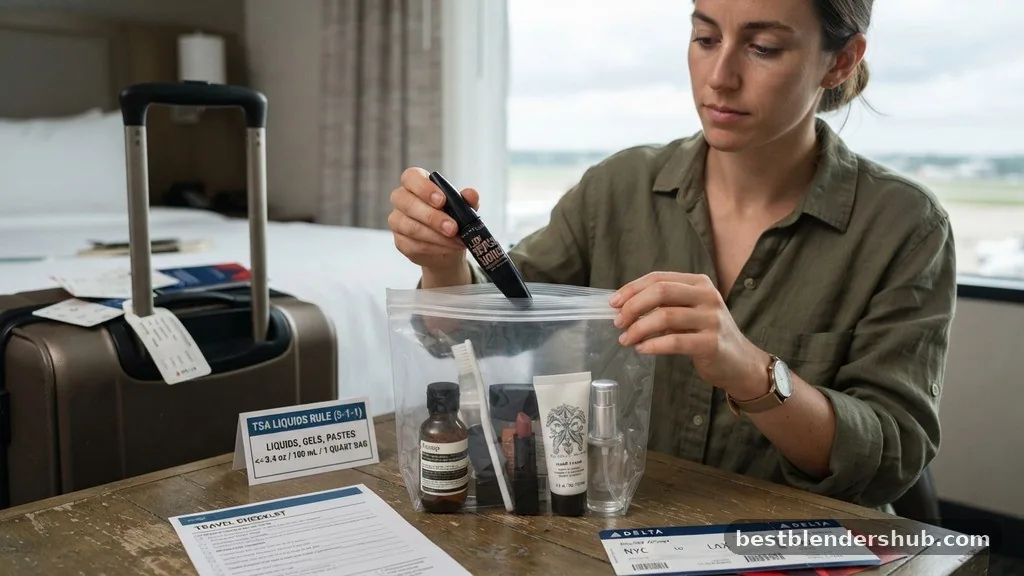
The core of the issue lies in the TSA liquid rules, which state that any liquid, gel, or aerosol carried in your carry-on baggage must be stored in containers that hold no more than 3.4 fluid ounces (100 milliliters) each. When travelers ask themselves if mascara is considered a liquid when flying, they often overlook the fact that the total volume of the container matters more than the actual amount of product left inside. Even if your mascara tube is nearly empty and contains less than a teaspoon of product, the packaging itself dictates how it is handled by the security officer.
Because of this, you should always treat your mascara as a regulated item. The “3-1-1” rule is the gold standard for air travel: you are permitted to carry travel-size containers of liquids, gels, and aerosols that are 3.4 ounces or less, all of which must fit into one single, clear, quart-sized plastic bag. Mascara tubes are almost universally well under this size limit, which is a major advantage for travelers.
You will rarely find a standard mascara tube that exceeds the volume restrictions, meaning that as long as you pack it correctly, you will have no issues getting it through the checkpoint. The goal of these regulations is to streamline the screening process, allowing security agents to quickly inspect the contents of your toiletry bag without needing to open every single container.
Categorizing Makeup Consistency and Security Screening
It is helpful to understand why the TSA views makeup consistency through such a strict lens. Security screening at an airport relies on technology that scans for the density and composition of items. When a substance like mascara enters a scanner, its viscosity—or thickness—is interpreted similarly to other liquids or gels.
If the consistency is fluid enough to be poured or smeared, it is generally treated as a liquid. This category is quite expansive, covering everything from liquid foundation and concealer to hair gels and toothpaste.
This classification system simplifies the job of the TSA agents. Instead of requiring officers to know the specific chemical makeup of every individual beauty brand on the market, they use broad categories to manage safety. If it is a gel-based cosmetic or a liquid formula, it goes into the clear bag.
If it is a solid, such as a traditional stick of lipstick or a pressed powder compact, it is exempt from the liquid rules. This distinction is vital for frequent flyers who want to organize their luggage efficiently. By knowing what falls into the “liquid” category, you can save yourself time during the security process by having your toiletry bag ready and accessible, rather than fumbling through your carry-on to pull out individual items that shouldn’t have been buried in the first place.
The Logic Behind the 3.4 Ounce Limit
The 3.4 fluid ounces limit is not a random number chosen to annoy travelers; it is based on years of research into aviation safety and the detection of hazardous materials. When you consider if mascara is considered a liquid when flying, you are essentially asking if the product poses a risk if it were to be misused.
Because liquid-based explosives can be disguised as common toiletries, the TSA requires that any container capable of holding a significant volume of liquid be limited in size. By restricting the size of the container, the agency mitigates the potential for large quantities of prohibited materials to be brought into the cabin.
For the average makeup user, this limit is quite generous. Most mascara tubes contain between 0.2 and 0.4 fluid ounces of product. This means you could technically fit dozens of mascara tubes into your quart-sized plastic bag without exceeding the 3.4-ounce limit per item.
The restriction is really about the capacity of the vessel, not the quantity of the liquid inside. This distinction is important for those who prefer high-end beauty products and want to ensure they don’t have to throw away their expensive mascara tubes. As long as the container itself is smaller than the mandated threshold, your products are perfectly safe to bring along on your journey.
Packing Your Toiletry Bag for Maximum Efficiency
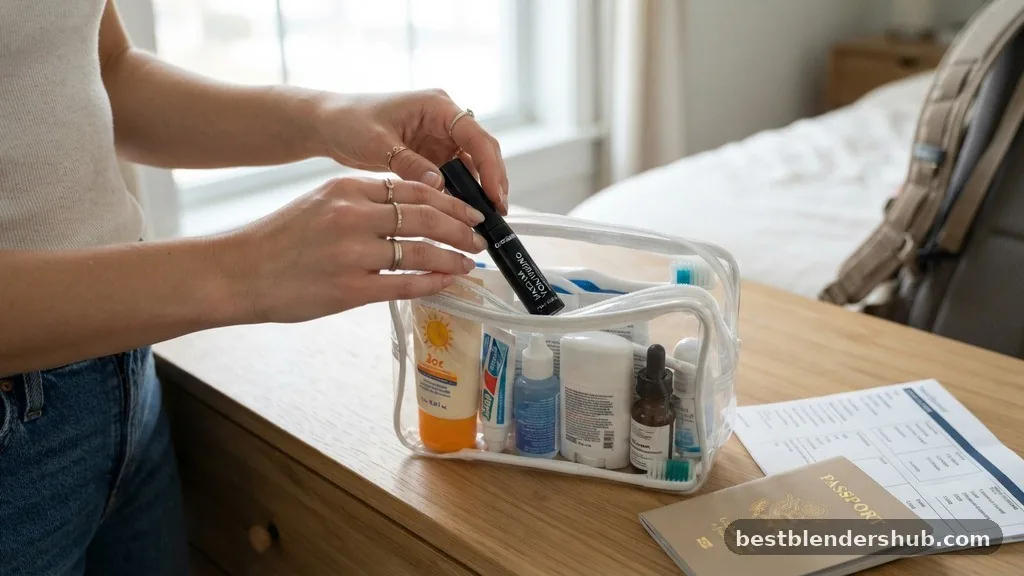
Efficiency at the airport security checkpoint is the key to a stress-free travel experience. Since you now know that mascara is considered a liquid when flying, the best strategy is to group it with your other personal care items that fall under the same rules.
Start by acquiring a high-quality, clear, quart-sized plastic bag that is durable enough to survive multiple trips. Having a dedicated toiletry bag that you keep packed with your travel-size containers can prevent you from forgetting essential items at the last minute.
When packing, place your mascara tubes, liquid eyeliners, concealers, and small jars of face cream into this single clear bag. Ensure that the bag is easily accessible within your carry-on luggage. Many experienced travelers keep their liquids bag at the top of their bag or in an exterior pocket, so they can quickly remove it and place it in the bin for screening.
This simple organizational step demonstrates to the TSA agents that you are prepared, which can lead to a faster and more polite interaction. Avoid stuffing the bag to the point where it won’t zip shut; the regulations state that all items must fit comfortably within the bag, and it should be able to close fully.
Common Makeup Items That Fall Under Liquid Rules
Aside from mascara, many other common beauty products are subject to the same scrutiny. If you are ever in doubt about an item, a good rule of thumb is to ask yourself if the product would spill if you turned the container upside down and opened it. If the answer is yes, it should go into your quart-sized bag.
Liquid foundation, primer, and concealer are clear examples of products that must be included. Even products that feel like a “gel” or a “cream”—such as potted brow pomades, cream blushes, or lip glosses—are typically classified as liquids or gels for security purposes.
Conversely, items that remain solid at room temperature generally do not need to be in your liquid bag. This includes traditional bullet lipsticks, pressed powder foundations, eyeshadow palettes, and blush compacts. These items can stay in your makeup bag or anywhere else in your carry-on.
Knowing the difference between these categories can help you optimize your packing space. You don’t need to crowd your quart-sized bag with items that don’t need to be there, leaving more room for the products that truly require it. If you are ever unsure about a specific item, it is always safer to place it in the liquids bag than to risk having it confiscated at the checkpoint.
Distinguishing Between Liquids, Gels, and Solids
The distinction between a liquid and a solid can sometimes feel blurry, especially with modern cosmetics that have unique textures. For example, some “mousse” foundations or “jelly” highlighters might seem like solids, but they possess properties that classify them as gels. When in doubt, the TSA screening process will treat these items as liquids.
If a product has a texture that can be spread, it is safer to group it with your liquids. This helps prevent any confusion when your bag passes through the X-ray machine.
Airport security checkpoints are equipped with advanced imaging technology that allows officers to see through your bags. If an item looks questionable or has a density that mimics a regulated substance, they may decide to perform a physical inspection of your bag. By proactively grouping all liquid-like products together, you minimize the chances of an agent needing to conduct a manual search of your luggage.
This not only speeds up the process for you but also reduces the likelihood of your makeup being handled or potentially damaged during an inspection. Being proactive with your organization is the best way to ensure your beauty routine remains intact throughout your travels.
What to Do if You Are Carrying Larger Containers
Sometimes you might have a favorite product that comes in a full-size container exceeding the 3.4-ounce limit. If you are wondering if mascara is considered a liquid when flying in this context, the answer remains the same: it is a liquid, and it must comply with the rules. However, the rule only applies to your carry-on baggage.
If you decide to check your luggage, the liquid volume restrictions do not apply. You can pack as many full-size beauty products as you like in your checked bags, as long as they are securely sealed to prevent leakage during the flight.
If you are only traveling with a carry-on, you will need to transfer your larger products into travel-size containers. There are many affordable options available, such as small silicone squeeze tubes or tiny jars that are specifically designed for travel.
By transferring a small amount of your favorite foundation, primer, or moisturizer into these containers, you can bring your preferred products without violating the TSA liquid rules. Just remember to label your containers if you are transferring products that look similar, as it can be difficult to tell the difference between various creams and lotions once they are in identical travel-size jars.
Frequently Asked Questions About Makeup and TSA
Travelers often have follow-up questions regarding the nuances of these rules. One common question is whether items like lip balm or chapstick count as liquids. While a standard stick of chapstick is considered a solid, some lip glosses or jarred lip balms have a consistency that leans toward a gel or liquid.
Again, when in doubt, pack it in your liquids bag. Another frequent concern involves “what three items did TSA just ban?”
This is a bit of a myth, as the TSA does not frequently announce specific “banned” makeup items. Instead, they maintain consistent standards for all liquids and gels.
Another common inquiry involves whether eyeliner is considered a liquid. Liquid eyeliner pens are definitely treated as liquids, while pencil eyeliners are usually considered solid. If you are carrying a gel eyeliner in a small pot, that would also fall under the liquid/gel category.
By keeping these general principles in mind—liquids, gels, and aerosols in the quart-sized bag; solids in your regular makeup kit—you can navigate the airport with confidence. The most important thing is to stay informed about current guidelines, as occasional updates can occur, though the fundamental rules regarding liquids have remained stable for many years.
Final Tips for a Smooth Security Experience
To wrap up, knowing that mascara is considered a liquid when flying is the first step toward becoming a savvy traveler. By adhering to the 3.4-ounce limit and utilizing a clear, quart-sized plastic bag, you can ensure that your beauty products pass through the security checkpoint without a hitch. Remember that the goal of these security measures is to keep everyone safe, and by being prepared and organized, you contribute to a more efficient and pleasant experience for yourself and your fellow passengers.
Always check your bags before heading to the airport to ensure you haven’t accidentally left any restricted items in your carry-on. If you have any doubt about a specific product, check the official TSA website, which offers a comprehensive list of what is and isn’t permitted.
With a little bit of planning and a clear understanding of the rules, you can focus on the excitement of your trip rather than the stress of packing your makeup bag. Safe travels, and enjoy your time away with your favorite beauty essentials in tow.

Jamesmathew is an expert Amazon affiliate writer, helping readers discover top products, smart deals, and practical buying guides through honest reviews and insightful content.