

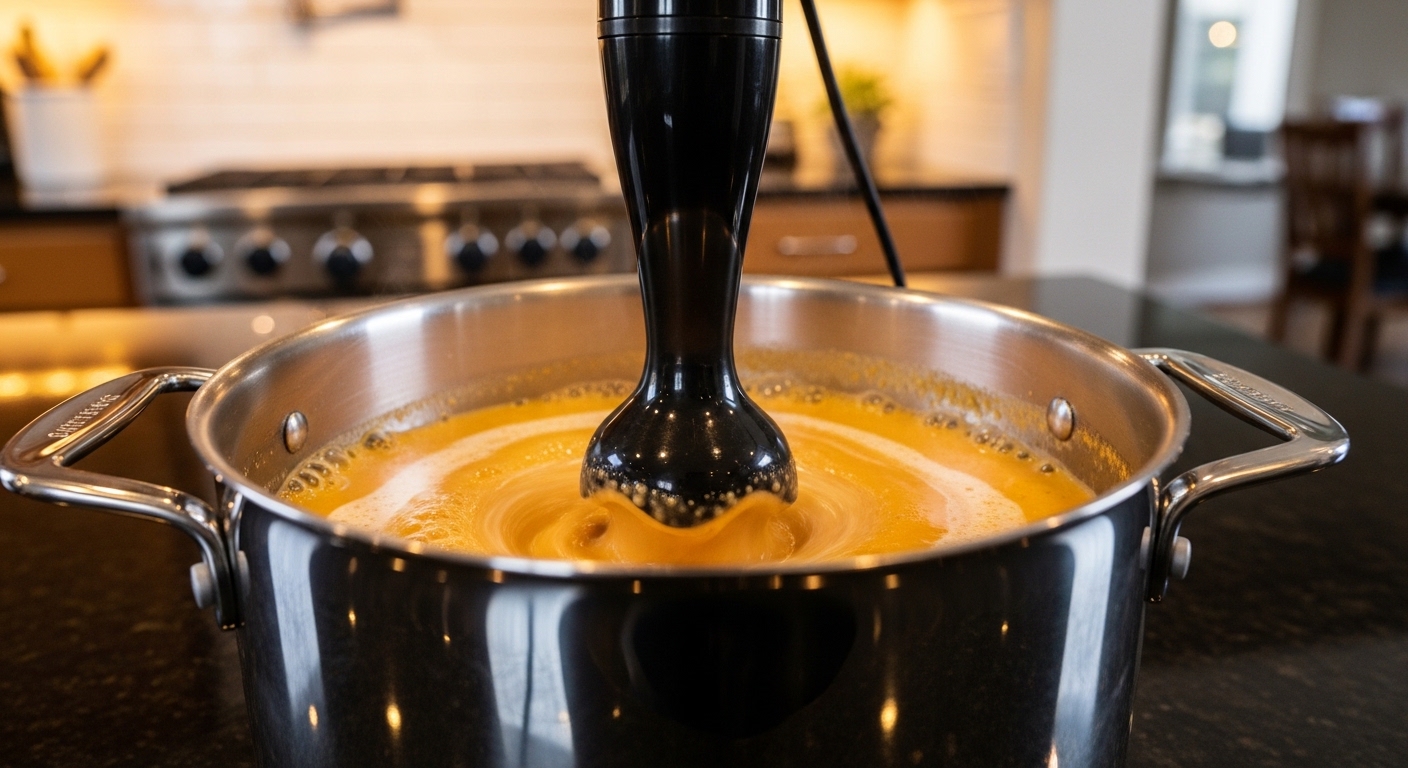
You’ve probably heard someone casually mention an immersion blender while they’re halfway through a soup recipe and you’re just standing there thinking… wait, what even is that thing, and why do I suddenly feel like I’m missing out on some secret kitchen shortcut. Yeah, that moment hits a bit weird, like you skipped a chapter in a book you didn’t know you were reading.
So let’s just slow down a second and unpack it properly, not in that stiff dictionary way, but in the way you’d actually understand standing in your kitchen with a pot bubbling and no clue what tool you’re supposed to grab.
What Is an Immersion Blender, Really?
An immersion blender, sometimes called a hand blender or stick blender, is basically a long, wand-like kitchen tool you stick directly into food to blend it. No transferring hot soup into a bulky machine, no juggling lids that don’t quite fit right. You just… lower it in and press a button. That’s it. Feels almost too simple, like you’re cheating a little.
Instead of pouring your soup into a countertop blender and risking splashes (or mild kitchen chaos), the immersion blender works right inside the pot. It’s quick, it’s kinda satisfying, and honestly it feels like you’re using some low-key magic stick.
What It Looks Like (in case you’re picturing it wrong)
- A long handle with a motor inside
- A blending shaft extending downward
- Sharp rotating blades at the bottom
- Usually one or two speed buttons
Some models even come with attachments, which makes things a bit more interesting than you’d expect at first glance.
Why People Love Using an Immersion Blender
Here’s the thing, once you start using one, you sort of wonder why you didn’t earlier. It’s not just convenience, though that’s a big part of it. It’s also about control, like you’re in charge of the texture instead of hoping the machine gets it right.
Let me explain in a way that might hit closer to home.
1. No More Pouring Hot Liquids
You ever try pouring hot soup into a blender and suddenly it feels like a risky life decision. Steam builds up, lid rattles, and you’re standing there like… this could go wrong fast.
With an immersion blender:
- You blend directly in the pot
- No transferring, no spills
- Less cleanup afterward (which is always a win)
2. Quick, Almost Instant Results
You press the button, move it around a bit, and boom — smooth soup. It’s not dramatic, it just quietly works, which is kinda nice in a world where everything feels overcomplicated.
3. Easy to Clean (like actually easy)
Most immersion blenders:
- Have detachable shafts
- Can be rinsed under water in seconds
- Don’t require taking apart five different pieces
It’s the kind of cleanup that doesn’t make you sigh before you even start.
Common Uses of an Immersion Blender
Now here’s where it gets more interesting, because an immersion blender isn’t just for soup, even though that’s what most people associate it with.
Blending Soups and Sauces
This is the classic use. Think:
- Tomato soup
- Pumpkin soup
- Lentil soup
- Creamy sauces
You cook everything, then blend it right there in the pot. No drama.
Making Smoothies (sort of)
It can handle smoothies, yeah, but don’t expect the same silky finish as a high-powered blender. It’s more like… good enough for a quick morning fix when you’re not chasing perfection.
Whipping Cream or Eggs
Some immersion blenders come with whisk attachments. These can:
- Whip cream
- Beat eggs
- Mix batters lightly
Not heavy-duty baking stuff, but for quick tasks, it does the job.
Pureeing Baby Food
Parents tend to love immersion blenders for this. You can:
- Blend cooked veggies directly
- Control texture easily
- Avoid extra equipment clutter
Making Mayonnaise or Dressings
This one surprises people a bit. An immersion blender can emulsify ingredients really well, which means:
- Homemade mayo in under a minute
- Smooth salad dressings
- Creamy dips
Immersion Blender vs Regular Blender
This is where people usually get stuck. Like, if you already have a blender, do you really need this thing?
Let’s break it down simply.
| Feature | Immersion Blender | Regular Blender |
|---|---|---|
| Portability | Lightweight, handheld | Bulky, countertop |
| Best For | Soups, small batches | Smoothies, large blends |
| Cleanup | Quick rinse | Multiple parts |
| Power | Moderate | High |
| Storage | Easy to store | Takes space |
So yeah, they’re not exactly competitors. More like… cousins that do different things in the same kitchen.
Types of Immersion Blenders
Not all immersion blenders are created equal, which might be why you feel confused when browsing them online. There’s a bit more variety than you’d expect for something that looks so simple.
Basic Models
- One speed
- Simple design
- Budget-friendly
Good for occasional use, like soups now and then.
Multi-Speed Models
- Adjustable speeds
- Better control over texture
- Slightly more powerful
These feel more flexible, especially if you experiment with recipes.
Cordless Immersion Blenders
- Rechargeable
- No cords getting in your way
- Slightly less power sometimes
Convenient, but you gotta remember to charge it, which people forget more than they admit.
High-End Models
- Strong motors
- Multiple attachments
- Durable materials
These are for people who actually use it a lot, not just once every few weeks.
Key Features to Look For
If you’re thinking about getting one, don’t just grab the first thing you see. There are a few details that quietly matter more than you’d expect.
Power (Wattage)
Higher wattage usually means:
- Smoother blending
- Better performance with tough ingredients
Around 200–500 watts is common, but more is better if you plan to use it often.
Material
- Stainless steel shafts are more durable
- Plastic ones are lighter but less sturdy
If you’re blending hot foods, stainless steel is generally safer.
Grip and Comfort
You’ll be holding it while blending, so:
- A comfortable grip matters
- Lightweight design helps
Otherwise your hand starts feeling it after a while, which is annoying.
Attachments
Some models include:
- Whisks
- Choppers
- Measuring cups
These extras can make it more versatile, but only if you actually use them.
Tips for Using an Immersion Blender Safely
It’s a simple tool, but yeah, you can still mess things up a bit if you’re not careful.
- Always keep the blade submerged before turning it on
- Don’t lift it out while it’s running (unless you like splatter everywhere)
- Use a deep pot or container to avoid mess
- Turn it off before removing it
Small habits, big difference.
Cleaning and Maintenance
This part’s refreshingly easy, which is probably why people end up using it more often.
Quick Cleaning Method
- Fill a cup with warm soapy water
- Turn the blender on inside it
- Rinse under clean water
Done. No overthinking required.
Deep Cleaning
- Detach the shaft (if possible)
- Wash thoroughly
- Dry completely before storing
Don’t ignore this step too long, or things get a bit… questionable.
Real-World Example: Why It Saves Time
Let’s say you’re making a big pot of lentil soup.
Without an immersion blender:
- Cook everything
- Let it cool slightly
- Transfer in batches to a blender
- Blend, then return to pot
With an immersion blender:
- Cook everything
- Blend directly in the pot
- Done in minutes
That’s not just convenience, that’s like cutting the effort in half without even noticing.
Common Mistakes People Make
Yeah, people mess up with this thing more than they’d admit.
- Using it in shallow containers → splashes everywhere
- Expecting it to crush ice → not built for that
- Over-blending → texture becomes too thin
- Not cleaning immediately → harder to clean later
It’s simple, but not foolproof.
Is an Immersion Blender Worth It?
This depends on you, not some general rule.
You’ll probably love it if:
- You cook soups or sauces often
- You hate cleaning bulky appliances
- You prefer quick, no-fuss tools
You might skip it if:
- You only blend occasionally
- You already rely heavily on a powerful blender
But honestly, most people who get one don’t regret it. It’s one of those tools that quietly becomes part of your routine without making a big deal about it.
Final Thoughts
So yeah, an immersion blender isn’t some fancy chef-only gadget, even though it kinda sounds like one at first. It’s just a practical, slightly underrated kitchen tool that makes certain tasks feel easier than they should be, like you found a shortcut no one told you about.
And if you’ve been standing there mid-recipe wondering whether you need one… you probably do, or at least you’d enjoy having it around more than you think. It’s not life-changing in a dramatic way, but in those small everyday cooking moments, it kinda is, just a little bit, in that quiet helpful way.

Jamesmathew is an expert Amazon affiliate writer, helping readers discover top products, smart deals, and practical buying guides through honest reviews and insightful content.