

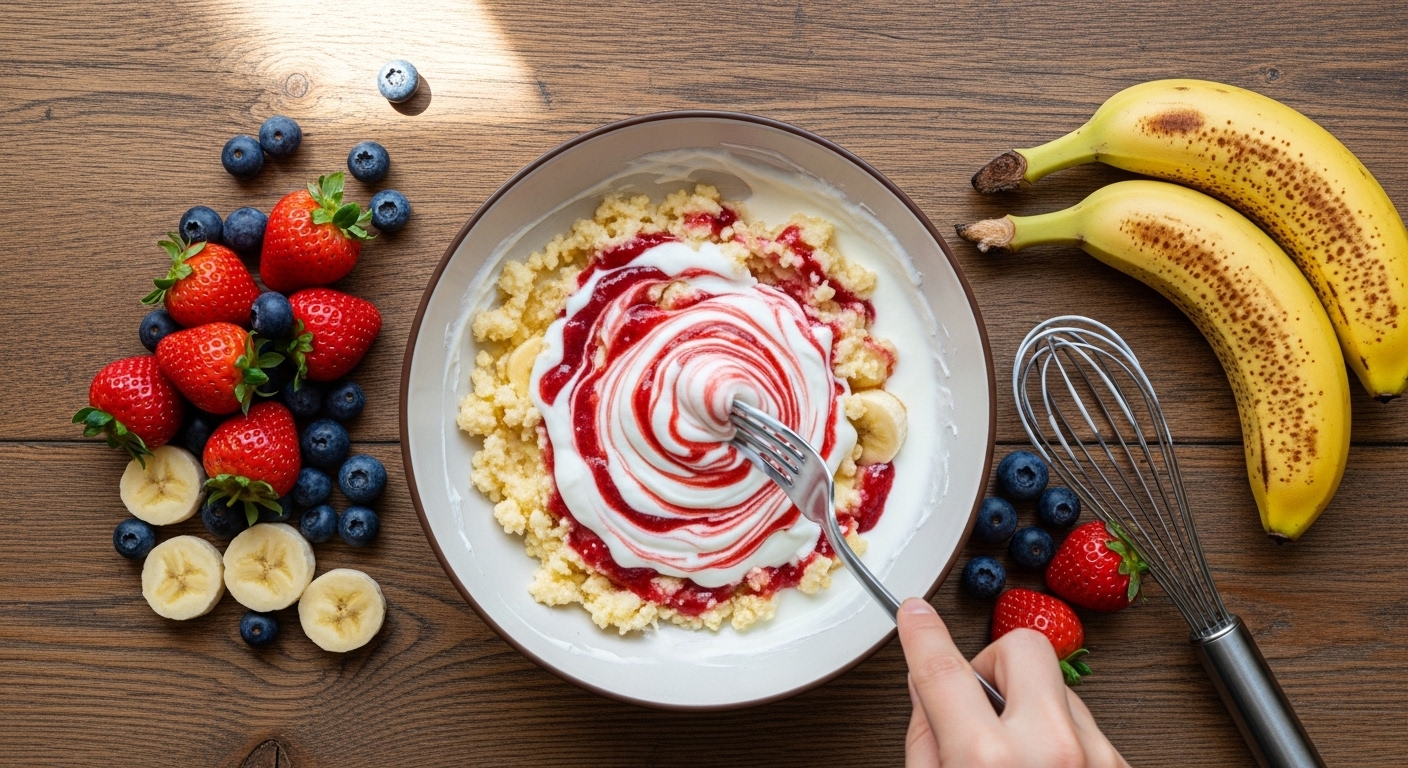
how to make a smoothie without a blender comes up at the exact moment you’re staring at fruit and realizing your blender is either broken or just… not there. And yeah, it’s a bit of a frustrating pause in your kitchen plans, like everything was going smooth until suddenly it isn’t. You probably already have bananas or berries sitting around, maybe yogurt too, and now you’re wondering if it’s even possible to turn all that into something drinkable without the usual whirring machine doing the heavy lifting.
The good news is, it absolutely is possible, even if it feels slightly improvised or a bit “old-school kitchen survival mode.” You just need a different rhythm, not necessarily better ingredients.
Why you might end up making a smoothie without a blender
Sometimes it’s not about creativity, it’s just life being mildly inconvenient. Maybe your blender stopped working mid-week and you didn’t bother fixing it yet. Or you’re traveling, staying somewhere with limited kitchen gear, or just don’t own one at all. Happens more often than people admit.
There’s also this growing habit of people trying simpler food prep methods. The World Health Organization suggests at least 400 grams of fruits and vegetables per day for better health outcomes, and smoothies are often an easy way people try to hit that target. But no blender? That doesn’t cancel the nutrition plan, it just changes the technique a bit.
And honestly, the texture you get when you manually make a smoothie can feel a bit more rustic, less aerated, sometimes even richer. Not always perfect, but kinda interesting in its own way.
What actually counts as a smoothie without a blender
Let’s not overcomplicate it. A smoothie without a blender is basically mashed or softened fruit mixed with liquid and something creamy until it reaches a drinkable consistency. It might not be perfectly silky, but it should still feel cohesive, not like random fruit chunks floating in juice.
Think of it more like a “hand-mixed smoothie base” than a machine-perfect drink. Once you accept that, everything gets easier.
You’re aiming for:
- Soft, mashed fruit texture
- A liquid component (milk, water, juice)
- Optional thickener (yogurt, peanut butter, oats)
It’s less about equipment and more about technique patience, honestly.
Ingredients that work best when you have no blender
Not all fruits behave the same when you mash them by hand. Some cooperate, others kind of resist and stay chunky no matter how optimistic you are.
Best fruits for a no-blender smoothie:
- Bananas (the easiest, almost always your base)
- Ripe mangoes (soft, naturally juicy)
- Strawberries (mashable when very ripe)
- Avocado (gives creaminess, surprisingly useful)
- Kiwi (soft enough with effort)
Liquid bases:
- Milk (dairy or plant-based)
- Yogurt thinned with water or milk
- Fresh fruit juice
- Even plain water in a pinch
Extra boosters:
- Honey or dates for sweetness
- Oats for thickness
- Peanut butter or almond butter for richness
- Chia seeds (they expand and help texture)
Small note here: overripe fruit is actually your friend in this method, even if it looks slightly “too far gone” for eating fresh.
Tools you can use instead of a blender
You don’t need fancy equipment, just whatever is in your kitchen drawer.
- Fork (your main hero tool)
- Potato masher
- Spoon (for pressing and stirring)
- Mortar and pestle (if you have it, surprisingly effective)
- Mason jar with lid (for shaking instead of blending)
- Whisk (for mixing after mashing)
Some people even use a clean glass bottle to crush soft fruits by pressing carefully. Not elegant, but it works in a pinch.
Step-by-step: how to make a smoothie without a blender
Step 1: soften your fruit first
If your fruit isn’t already soft, you’ll struggle. Let it sit at room temperature or lightly mash it in a bowl. Bananas basically collapse on their own, so start there.
Step 2: mash thoroughly
Use a fork or masher and press until you get a paste-like texture. Don’t rush this step, it’s where most of your final consistency comes from.
Step 3: add liquid slowly
Pour in milk, juice, or yogurt little by little. Stir continuously. The mistake most people make is dumping too much liquid too early and ending up with fruit soup instead of smoothie.
Step 4: mix and refine
Keep stirring until it becomes drinkable. If it’s too thick, add more liquid. If it’s too thin, mash a bit more banana or add yogurt.
Step 5: optional shake method
If you’re using a jar, close it tightly and shake it hard for 20–30 seconds. It won’t fully blend, but it improves consistency more than people expect.
Comparison of no-blender smoothie methods
| Method | Texture Quality | Difficulty | Time Needed |
|---|---|---|---|
| Fork mashing in bowl | Slightly chunky but creamy | Easy | 5–10 min |
| Jar shaking method | Medium smooth, a bit foamy | Easy | 3–5 min |
| Mortar & pestle | Smoothest possible manually | Medium | 8–12 min |
| Spoon pressing method | Rustic, uneven texture | Very easy | 5–8 min |
Each method kind of reflects how patient you feel that day. There’s no single “correct” way here.
Nutrition side of things (what you’re actually drinking)
Even without a blender, the nutritional value stays almost the same. You’re still getting fiber, vitamins, and natural sugars from fruit.
For example:
- A medium banana contains about 3 grams of fiber and potassium
- Strawberries are rich in vitamin C and antioxidants
- Yogurt adds protein and probiotics
According to Harvard Health Publishing, diets rich in fruits and vegetables are consistently linked with improved heart health and lower risk of chronic diseases. So whether it’s blended or mashed, you’re still doing something good for your body.
One thing though: manual smoothies sometimes retain more fiber texture because nothing is fully broken down, which can actually help digestion for some people.
Common mistakes people make
You’d be surprised how often these happen:
- Adding too much liquid too early
- Using underripe fruit (hard to mash, poor texture)
- Skipping banana or creamy base entirely
- Over-mixing until everything becomes watery
- Not tasting before serving (big one)
Also, people sometimes expect blender-level smoothness. That expectation alone ruins the experience. It’s a different category, not a downgrade.
Flavor variations you can try without a blender
Even with simple tools, you can still get creative:
Banana yogurt mash smoothie
Banana + yogurt + honey + splash of milk. Creamy and forgiving.
Strawberry milk crush
Mashed strawberries + chilled milk + a bit of sugar or honey. Slightly chunky but refreshing.
Mango oat mix
Ripe mango mashed + soaked oats + milk. Surprisingly filling.
Avocado creamy drink
Avocado + milk + honey + ice cubes crushed manually. Thick and rich.
These aren’t perfect recreations of blended smoothies, but they’re honestly satisfying in their own way.
A small reality check
People sometimes think a blender is the “minimum requirement” for smoothies, but historically, that’s not true. Before electric appliances, fruit drinks were often made by hand-mashing and mixing. It just took a bit more effort and patience.
So when you’re figuring out how to make a smoothie without a blender, you’re not doing a workaround—you’re actually using one of the original methods.
And maybe that’s why it feels slightly slower, but also more intentional.
FAQs
Can a smoothie really taste good without a blender?
Yes, but expect a more textured drink. If your fruit is ripe enough, it can still be very enjoyable.
What is the easiest fruit to use?
Bananas. Always bananas. They basically do half the work for you.
Can I store a no-blender smoothie?
You can, but it separates faster than blended ones. It’s better fresh, ideally within a few hours.
Is it healthy compared to blended smoothies?
Yes, the nutrition is mostly the same. In some cases, it may even retain slightly more fiber texture.
Final thoughts
Once you try making a smoothie without a blender, you realize it’s less about equipment and more about how willing you are to get a bit hands-on with your food. It’s not going to look like something from a café machine, and that’s fine. It still does the job, sometimes even in a more satisfying, slightly imperfect way that feels oddly real in your kitchen.

Jamesmathew is an expert Amazon affiliate writer, helping readers discover top products, smart deals, and practical buying guides through honest reviews and insightful content.