

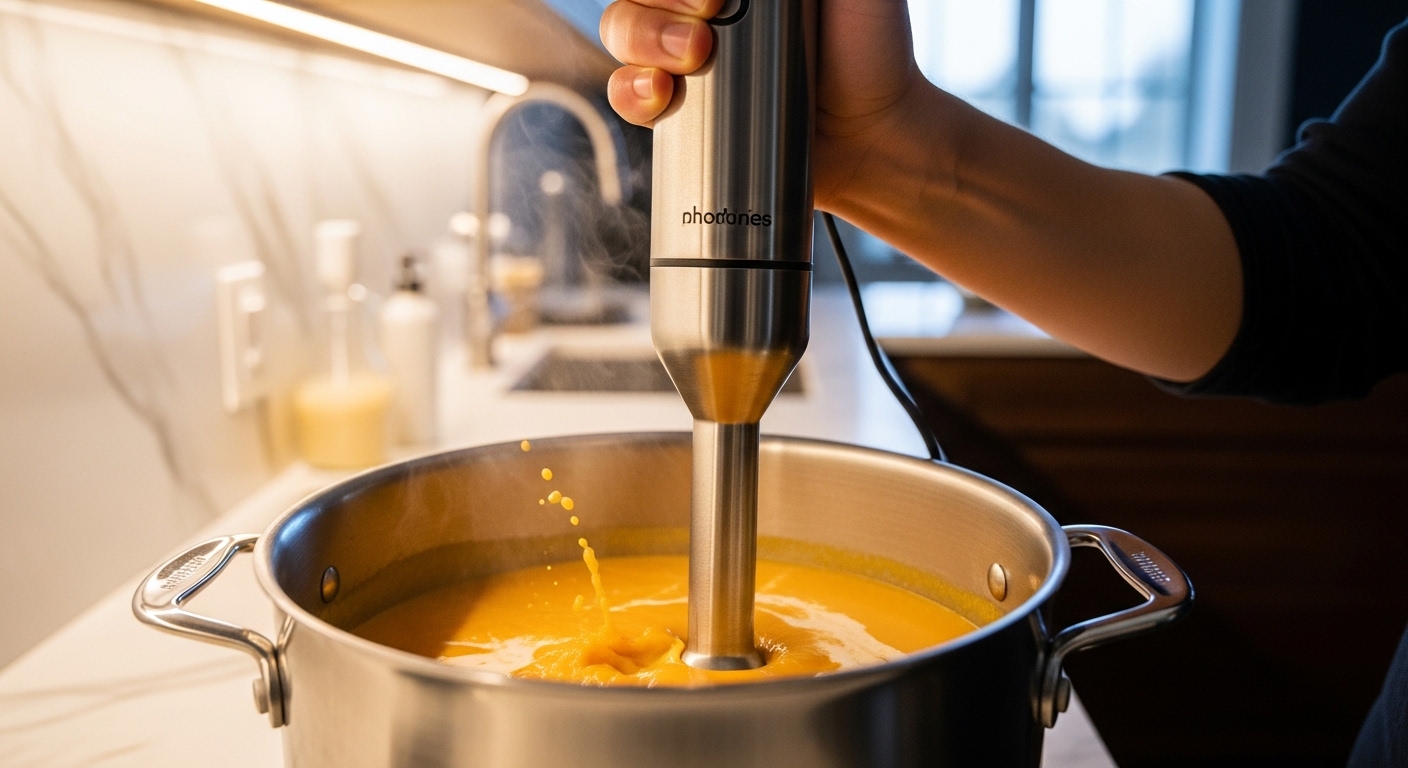
When you’re standing in your kitchen thinking about how to use an immersion blender without splashing soup all over your shirt again, yeah, you’re not alone in that mess honestly. It looks simple in the drawer, like “just stick it in and blend”, but then reality hits and suddenly you’re questioning every cooking decision you’ve made so far. This guide is basically that missing manual nobody gives you, but in a real-life way, not some overly polished lecture.
So What You’re Actually Holding in Your Hand
An immersion blender (some people call it a stick blender or hand blender, depends where you grew up really) is basically a motor with a spinning blade at the end of a long stick. You dunk it straight into food instead of pouring food into a big blender jug.
It’s used mostly for:
- Soups that are still in the pot
- Sauces that need smoothing out
- Baby food (yes, still a thing in many homes)
- Quick smoothies if you’re lazy like that
- Whipping small batches of cream
A small stat worth knowing: kitchen appliance surveys by consumer reports have shown immersion blenders are among the top 10 most bought “time-saving kitchen tools” in urban households, mostly because people are tired of washing big blender jars every day.
And honestly, that tracks.
How to Use an Immersion Blender Without Making a Mess Everywhere
If you’ve been wondering how to use an immersion blender correctly, it’s not complicated, but the trick is control. The blade is fast, like surprisingly fast, and it doesn’t care about your kitchen cleanliness.
Here’s the basic process, but don’t rush it:
- Plug it in, but don’t switch it on yet
- Put the blender head fully into the food before turning it on
- Start at a low speed if your model allows it
- Move it slowly up and down instead of just sitting it in one place
- Turn it off before pulling it out of the mixture
A common mistake is lifting it while it’s still running. That’s how you get tomato soup on your walls, and trust me, it dries in ways you don’t want to experience twice.
Go slow, no need to rush it alot.
A Quick Table So You Don’t Overthink It
| Step | What You Do | What Usually Goes Wrong |
|---|---|---|
| 1 | Submerge blender first | Forgetting and splashing |
| 2 | Start on low speed | Starting too fast |
| 3 | Move slowly | Sticking in one spot |
| 4 | Blend evenly | Lumpy soup remains |
| 5 | Turn off before lifting | Hot splatter surprise |
It looks simple in a table, but in real kitchen conditions, it’s slightly more chaotic, like life usually is.
Real Foods That Work Best With an Immersion Blender
Not everything is meant to be blended with a stick blender, even though people try anyway.
Best things to use it on:
- Creamy soups like pumpkin, tomato, or lentil
- Sauces like pasta sauce or curry bases
- Mashed potatoes (yes, but careful or it gets gluey)
- Smoothie mixes in deep containers
- Whipped eggs for quick omelets
One chef from a cooking workshop once said, “If your pot is deep enough, you don’t need to transfer anything, and that saves you from washing three extra dishes.” That reflects a real kitchen mindset.
Less washing up is always a win.
Mistakes People Keep Making
Even if you’ve watched how to use an immersion blender online, people still mess up the same things.
Common mistakes include:
- Using it in shallow bowls
- Not covering the blade fully before turning it on
- Blending too long in one spot
- Forgetting hot liquid expands while blending
- Using it in non-stick pans and scratching them
There’s also the “over-blending soup into foam” issue. Once it turns foamy, there’s no easy fix.
Safety Tips You Probably Shouldn’t Ignore
Immersion blenders look harmless, but they deserve respect.
- Always unplug before cleaning the blade
- Don’t touch the blade even when it’s off
- Keep fingers and utensils away while running
- Avoid splashing hot liquids
- Don’t turn it on before it’s inside the food
Most kitchen blender accidents happen from distraction, not malfunction. So yeah, stay focused even for a few seconds.
Cleaning It Without Losing Your Patience
Cleaning is where people usually get annoyed, but immersion blenders are actually easy.
- Detach the blending shaft if possible
- Rinse immediately after use
- Blend warm water + a drop of soap for 10 seconds
- Rinse again and air dry
Never soak the motor part. That’s where things go wrong fast.
Don’t let food dry on it too long or you’ll regret it later, trust me its annoying.
Immersion Blender vs Countertop Blender
| Feature | Immersion Blender | Countertop Blender |
|---|---|---|
| Cleanup | Very easy | More parts |
| Power | Moderate | High |
| Best use | Soups, sauces | Ice, thick smoothies |
| Storage | Compact | Bulky |
| Convenience | Very high | Medium |
Immersion blenders win on convenience. Countertop blenders win on raw power.
Pro Tips That Actually Help
If you want to get better at how to use an immersion blender, try these:
- Tilt the pot slightly so food gathers
- Move in slow circles, not just up and down
- Use pulses instead of constant blending
- Start slow then increase speed
- Always keep blade fully submerged
A cook once said, “The blender doesn’t need strength, it needs direction.” Sounds fancy but it’s true.
Why People Actually Like It
People keep using immersion blenders because:
- Less cleaning
- No transferring hot food
- Faster cooking workflow
- Compact storage
- Simple operation
It quietly saves time without making a big deal about it.
Final Thoughts
Learning how to use an immersion blender is less about perfection and more about not panicking when things move inside a hot pot. Once you get used to it, it becomes second nature, like just another quick kitchen habit.
You’ll still make small mistakes sometimes, but that’s normal. Over time, it just becomes one of those tools you grab without thinking, and suddenly soup nights feel a lot easier than they used to.

Jamesmathew is an expert Amazon affiliate writer, helping readers discover top products, smart deals, and practical buying guides through honest reviews and insightful content.