

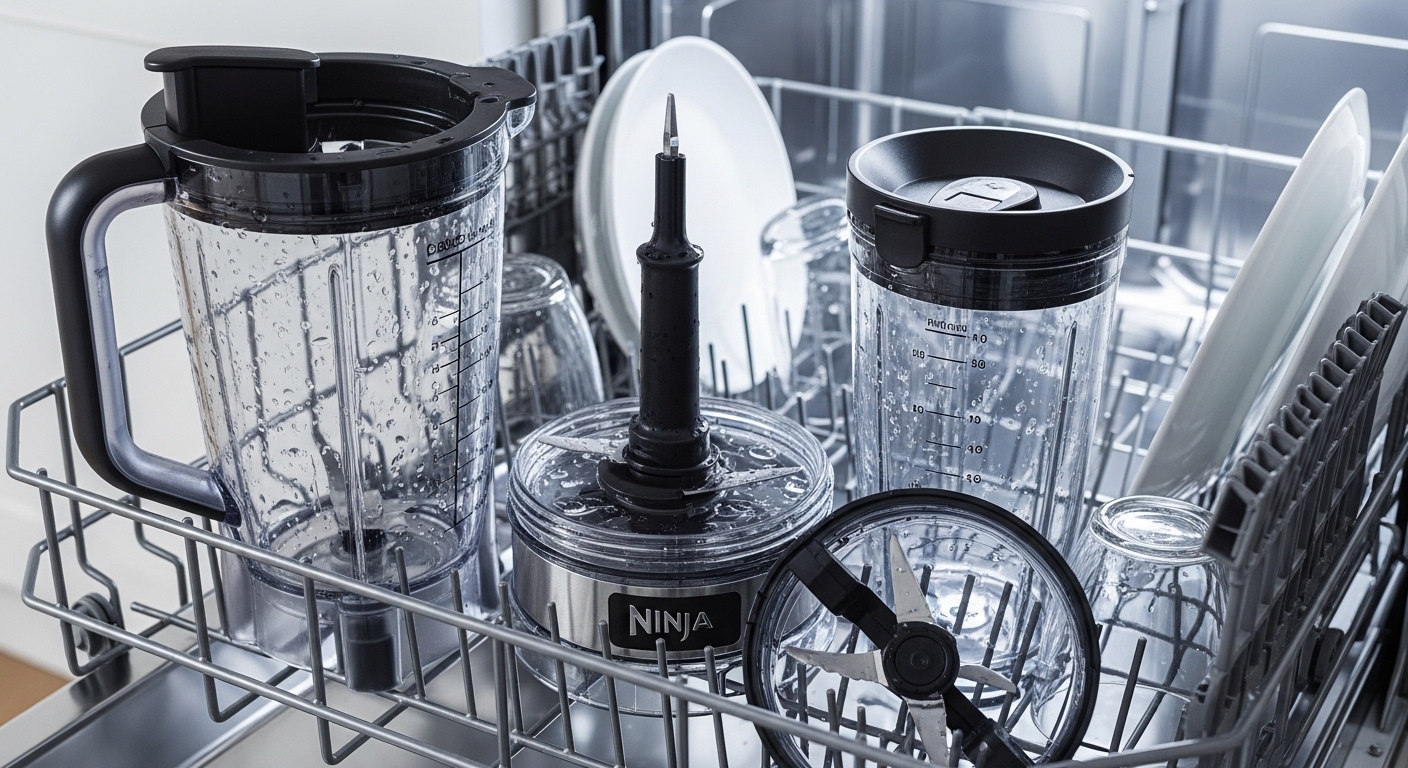
Is the ninja blender dishwasher safe is the kind of question you suddenly ask yourself when you’re staring at a sink full of smoothie mess and thinking “there’s no way I’m hand washing all this today.” And yeah, you’re not alone in that moment of hesitation, kinda annoyed, kinda unsure, wondering if one wrong move will ruin a pretty expensive kitchen gadget.
So let’s talk about it in a real way, not the overly perfect manual-style explanation you usually get. Because the answer is not just yes or no, it’s a bit messy (just like your blender after strawberries and spinach exploded everywhere).
Understanding the Ninja Blender Dishwasher Safe Question
When people ask “is the ninja blender dishwasher safe,” they usually mean the whole unit, but that’s where confusion starts. A Ninja blender isn’t one single material thing. It’s like 4–6 different parts acting like a team, and each part behaves differently in water, heat, and detergent.
Most Ninja blender models (like the popular ones from the professional and foodi series) are designed with dishwasher-safe components, but not everything is meant to go inside the dishwasher, and that detail gets ignored a lot.
Here’s the simple breakdown before we go deeper:
- Blender jars: usually dishwasher safe (top rack)
- Lids: mostly dishwasher safe
- Blades: sometimes dishwasher safe, but tricky
- Motor base: NEVER dishwasher safe (seriously, don’t)
- Gaskets/seals: often dishwasher safe but can wear out
And yeah, Ninja itself (SharkNinja company) basically states in most manuals that removable parts can go in the dishwasher top rack, but they also quietly recommend hand washing for longer life.
What Parts of a Ninja Blender Are Dishwasher Safe?
Now let’s break it down properly because this is where most people mess up and later complain about cloudy jars or dull blades.
1. The Blender Jar (Pitcher or Cup)
The jar is usually the safest bet. Most Ninja blender jars are made from BPA-free plastic that can handle dishwasher heat, but only on the top rack.
Putting it on the bottom rack? Not a great idea. The heating element down there can warp it slowly, not instantly, but enough that one day you notice it doesn’t sit right anymore.
A lot of users online say something like:
“I’ve washed my Ninja pitcher in the dishwasher for 2 years and it’s fine, but it looks kinda cloudy now.”
That cloudiness is super common, it’s not damage-damage, but more like wear from heat + detergent combo.
2. The Lid
The lid is usually dishwasher safe too. But here’s the weird part, food traps inside the lid edges sometimes don’t fully clean unless you rinse first. If you just toss it in without rinsing, you might get dried smoothie gunk stuck in corners.
Small annoying detail, but true.
3. The Blades (Important One)
Blades are where things get confusing.
Technically, many Ninja blender blades are dishwasher safe, but long-term dishwasher use can dull them faster. And dull blades mean your smoothies start acting weird—chunky banana bits, uneven ice crush, all that.
So while it’s “safe,” it’s not always smart.
Some kitchen experts (and even appliance technicians) often say something like:
“Dishwasher cleaning is convenient but may reduce blade sharpness over time due to repeated heat exposure.”
So yeah, safe but slightly risky if you care about performance.
4. The Motor Base (Big Warning Here)
This one is simple but people still mess it up.
The motor base of a Ninja blender is NOT dishwasher safe, not even a little bit. No soaking, no rinsing under tap, nothing.
It’s electrical, and water + electricity = expensive regret.
Just wipe it with a damp cloth, that’s it. Honestly it takes like 30 seconds but saves you from replacing the whole machine.
Dishwasher Safety by Ninja Blender Types
Not all Ninja blenders are built the same, and this is where people get surprised later.
Here’s a simple comparison table:
| Ninja Blender Type | Jar Dishwasher Safe | Blade Dishwasher Safe | Notes |
|---|---|---|---|
| Ninja Professional Blender | Yes (top rack) | Usually yes | Clouding may occur over time |
| Ninja Foodi Blender | Yes | Sometimes recommended hand wash | Better sealing system |
| Ninja Personal Blender Cups | Yes | Yes | Very dishwasher friendly |
| Ninja Auto-iQ Series | Yes | Mixed advice | Depends on model manual |
So if you’ve got a newer Ninja model, chances are it’s more dishwasher-friendly. But older ones tend to be more sensitive.
Why Dishwasher Cleaning Can Still Be a Problem
Even if the answer to is the ninja blender dishwasher safe is mostly yes, there are still some hidden problems people don’t talk about much.
Heat Damage Over Time
Dishwashers don’t just use water, they use high heat cycles. That heat slowly affects plastic clarity and flexibility. You won’t notice it in the first week, but maybe after months or years.
Detergent Wear
Dishwasher detergents are strong, sometimes a bit too strong for plastic parts. They can slowly make jars look foggy or slightly rough on the inside.
Water Pressure Issues
High-pressure jets inside dishwashers can sometimes push water into seals where it shouldn’t go, especially lids with rubber gaskets.
When You SHOULD Use the Dishwasher Anyway
Let’s be honest, nobody wants to scrub a blender after a thick peanut butter smoothie.
So here’s when dishwasher use actually makes sense:
- After light blending (fruits, protein shakes)
- When you’re in a hurry
- When parts are not heavily greasy or sticky
- When your model explicitly says dishwasher safe
In these cases, just rinse first, then load top rack, and you’re good.
When You Should NOT Use the Dishwasher
Sometimes hand washing is just the better option, even if it feels like extra work.
Avoid dishwasher when:
- You blended hot soups (residue sticks weirdly)
- You used oily ingredients (nuts, seeds, butter)
- Blades feel already slightly dull
- You want your blender to last many years
A quick hand wash with warm water and dish soap actually takes less than 2–3 minutes if you do it right.
Real-World Experience: What Users Actually Say
People who use Ninja blenders daily tend to fall into two groups.
Group 1: “I throw everything in dishwasher, no issues”
Group 2: “I hand wash everything because I noticed wear”
One common feedback you’ll see repeated in reviews:
- Dishwasher use is convenient
- But hand washing keeps parts looking newer longer
So both sides are kinda right, depends how picky you are with your kitchen tools.
Simple Cleaning Method (That Honestly Works Better Sometimes)
If you want a quick clean without a dishwasher, try this:
- Fill blender halfway with warm water
- Add a drop of dish soap
- Blend for 20–30 seconds
- Rinse thoroughly
It sounds almost too simple, but it works surprisingly well, especially for sticky smoothies.
Final Verdict on “Is the Ninja Blender Dishwasher Safe”
So coming back to the main question, is the ninja blender dishwasher safe?
The honest answer is:
Yes, mostly—but not completely.
The jars and lids are generally safe for dishwasher use (top rack only), blades are conditionally safe but better hand washed for longevity, and the motor base should never ever see water beyond a wipe.
If you treat it casually, dishwasher is fine. If you want your blender to stay sharp, clear, and long-lasting, a bit of hand washing now and then makes a real difference.
And yeah, it’s one of those kitchen things where convenience and long-term care kinda pull in opposite directions, so you just pick what matters more in your daily routine.

Jamesmathew is an expert Amazon affiliate writer, helping readers discover top products, smart deals, and practical buying guides through honest reviews and insightful content.