

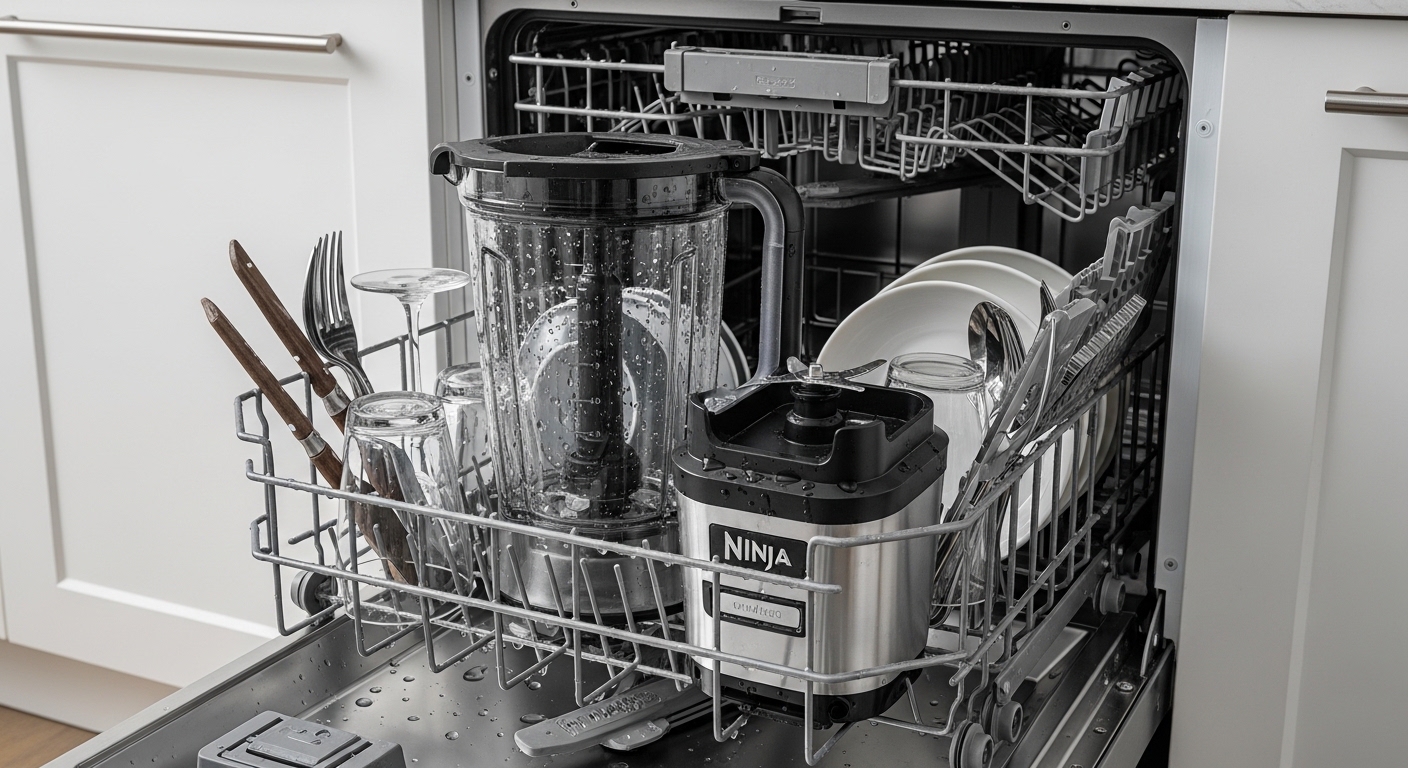
Can ninja blender go in dishwasher is something you probably end up googling right after you’ve just finished making a messy smoothie and you’re staring at that sticky pitcher thinking “I really don’t feel like scrubbing this right now.” Yeah, been there mentally, and honestly it’s one of those kitchen questions that sounds simple but gets weirdly confusing once you start digging.
The truth is not everything in your Ninja blender is treated equally by water, heat, and detergent, even if it all looks like it could survive a nuclear blast. Some parts are fine, some are “maybe but don’t push your luck,” and a couple are absolutely a no-go zone no matter how tired you are after breakfast.
Let’s break it down properly so you don’t accidentally shorten the life of your blender just because you wanted an easier cleanup.
Can Ninja Blender Go in Dishwasher Safely or Not?
Short answer: yes… but only certain parts.
Most modern Ninja blenders (especially from SharkNinja, the company behind the brand) are designed with dishwasher-safe components, but that doesn’t mean the whole machine can be tossed in like a lunchbox.
Typically, these parts are dishwasher safe:
- Pitcher / blending jar
- Lid
- Single-serve cups (like Nutri Ninja cups)
- Blade assemblies (in many models, but top rack only)
But these parts are NOT dishwasher safe:
- Motor base (this one is obvious, but people still ask)
- Any electronic attachments
- Rubber seals in some older models (they can warp over time)
A general statement from Ninja product manuals usually says something like:
“Containers, lids, and blade assemblies may be washed in the dishwasher on the top rack only. Do not immerse motor base in water.”
That’s not just legal talk, it’s actually important because heat + pressure + detergent can slowly damage plastic clarity and blade alignment over time.
Why Dishwasher Safety Isn’t the Same for Every Ninja Blender Part
Here’s where it gets slightly interesting. Not all plastic is created equal, and not all dishwasher heat cycles behave the same way.
Dishwashers typically run between 50°C to 75°C (122°F to 167°F). That’s hot enough to soften certain plastics over repeated cycles, especially cheaper or older ones.
The Ninja blender pitchers are usually made from BPA-free Tritan plastic, which is more heat resistant than regular plastic. Still, even Tritan can slowly get cloudy or scratched if you keep blasting it on the bottom rack every day.
Blade assemblies are another story. They’re stainless steel, yes, but the seal system around them can weaken if exposed to prolonged heat cycles too often.
So the real issue isn’t “will it break immediately,” it’s more like:
- Will it last as long as it should?
- Will it stay crystal clear or go foggy?
- Will the sealing ring loosen over time?
Small things, but they add up.
Top Rack vs Bottom Rack: This Detail Actually Matters
If you remember only one thing, make it this: always top rack.
Putting Ninja blender parts on the bottom rack is probably the fastest way to shorten their lifespan.
Why?
Bottom rack = direct heat + stronger water jets + closer to heating element
Top rack = gentler wash + cooler exposure + less stress on plastic
Quick breakdown:
| Part | Dishwasher Safe? | Rack Placement | Notes |
|---|---|---|---|
| Pitcher | Yes | Top rack | Avoid bottom heat exposure |
| Lid | Yes | Top rack | Can trap water, place angled |
| Blades | Usually yes | Top rack | Be careful when unloading |
| Motor base | No | Never | Wipe only |
| Rubber gasket | Sometimes | Prefer hand wash | Can loosen over time |
If your dishwasher has a “gentle” or “eco” cycle, that’s even better for blender parts.
What Happens If You Wash Ninja Blender Wrong?
This is where people usually get surprised. You might think “it’s just soap and water, what’s the big deal?”
Well, here’s what can slowly happen if you keep ignoring guidelines:
- Pitcher becomes cloudy or hazy
- Blade base starts leaking slightly
- Rubber seals loosen and cause drips
- Plastic develops micro-scratches
- Smell gets trapped in scratches (weird but real)
One user review floating around appliance forums mentioned:
“I kept washing mine on bottom rack and after like a year it just didn’t seal properly anymore, started leaking smoothies on the counter.”
Not dramatic instant failure, but slow wear-and-tear stuff.
Hand Wash vs Dishwasher: What’s Actually Better?
Even though Ninja says dishwasher safe, hand washing still wins in terms of longevity.
Dishwasher is about convenience. Hand washing is about preserving your blender longer.
Hand washing advantages:
- No heat stress on plastic
- Better control around blades
- No risk of warping seals
- Faster for small cleanups
Dishwasher advantages:
- Saves time
- Good for deep cleaning sticky residue
- Convenient after big batch prep
Honestly, most people end up doing a mix of both depending on how lazy or busy the day is. No shame in that.
Best Way to Clean a Ninja Blender (Without Overthinking It)
If you want a simple routine that doesn’t mess anything up, try this:
- Rinse immediately after use (don’t let residue dry)
- Add warm water + a drop of dish soap
- Blend for 20–30 seconds
- Rinse thoroughly
- Air dry upside down
That’s it. Weirdly enough, this “self-clean blend method” works better than people expect.
For deeper cleaning once or twice a week:
- Remove blade assembly carefully
- Wash seals separately
- Use a soft sponge (not abrasive pads)
- Let everything dry fully before reassembling
Moisture trapped in blade bases is one of the most common causes of odor over time.
Common Mistakes People Make With Dishwasher Use
You’d be surprised how often these happen:
- Putting motor base in dishwasher (please don’t, it’s basically a death sentence for electronics)
- Using heated dry cycle on plastic parts repeatedly
- Overloading dishwasher so parts knock around
- Not securing lids properly so they flip and warp
- Washing blades loosely (they can damage other items)
Small mistakes, but they stack up.
Real-World Usage Insight (What People Actually Do)
If you look at appliance usage surveys (kitchen habits data from consumer appliance studies), around 60–70% of blender owners prefer dishwasher cleaning when available, mainly for convenience. But interestingly, long-term users often shift to partial hand washing after noticing clouding or wear.
It’s kind of a pattern:
- New users = dishwasher everything
- Experienced users = selective dishwasher use
- Long-term users = mostly hand wash blades, dishwasher cups
Not a strict rule, just something that shows up again and again in real usage behavior.
When You Should Avoid Dishwasher Completely
Even if your Ninja model is technically dishwasher safe, skip it when:
- You notice cracks or stress marks in plastic
- Blade assembly feels loose
- Rubber seal is already worn
- You’re using very high heat sanitize cycles
At that point, dishwasher use becomes more harmful than helpful.
Final Thoughts: So, Can Ninja Blender Go in Dishwasher?
Yes, it can—but only the right parts, and only in the right way.
If you treat the pitcher, lid, and cups properly (top rack, moderate cycles), your Ninja blender will probably be fine for years. But if you just throw everything in without thinking, you’ll slowly notice the difference in clarity, sealing, and overall performance.
So it’s not really a yes or no question. It’s more like “yes, if you don’t overdo it.”
And honestly, once you get used to a quick rinse-and-blend cleaning habit, you might not even rely on the dishwasher as much as you thought you would in the first place.

Jamesmathew is an expert Amazon affiliate writer, helping readers discover top products, smart deals, and practical buying guides through honest reviews and insightful content.