

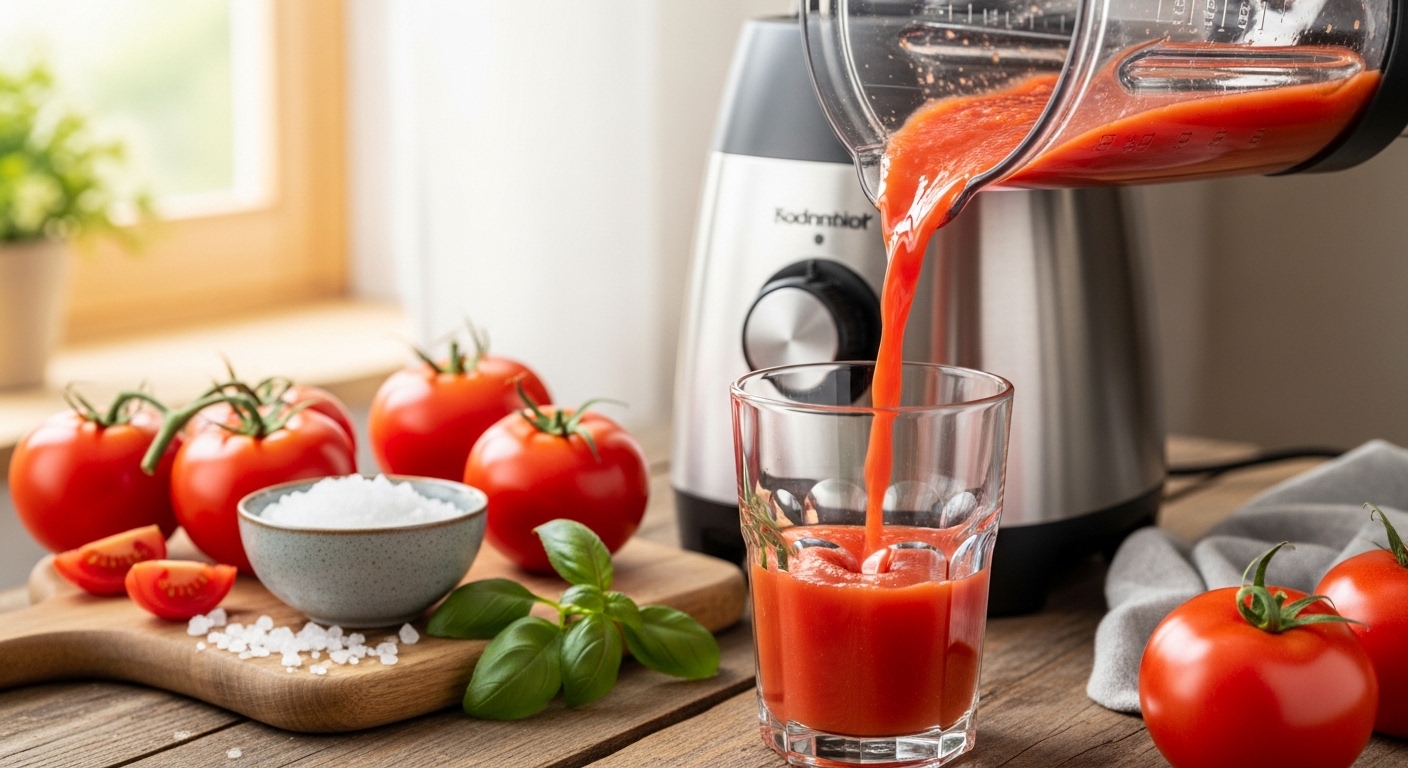
You’re probably standing there with a pile of tomatoes and wondering how to make tomato juice in a blender without turning your kitchen into a weird red accident, right, like it feels simple but also oddly not-simple at the same time. Maybe you tried once and it came out too thick, or kinda watery but still chunky in a confusing way, and now you’re just staring at the blender like it betrayed you a lil bit. It’s fine, honestly, it’s more forgiving than it seems, just… there are tiny things people don’t tell you.
Why Making Tomato Juice at Home Feels Different (and better, kinda)
Store-bought tomato juice has this very specific taste, like it’s been standardized by a committee that hates surprises. When you make it yourself, you get something fresher, slightly unpredictable, maybe even a bit louder in flavor, if that makes sense, like the tomato is actually talking.
According to food science data from the USDA, fresh tomatoes contain around 95% water, which sounds like “easy juice,” but actually makes blending tricky since too much water + pulp can confuse texture if you dont handle it right. That’s why homemade juice sometimes feels thicker or oddly separated.
What you get at home:
- More natural sweetness (especially if tomatoes are ripe-ish)
- No preservatives or hidden sodium bombs
- Ability to adjust flavor like a chaotic artist
And yeah, sometimes it tastes slightly different every time, but that’s not a bug, that’s… kinda the whole point.
Choosing the Right Tomatoes (this part matters more than ppl think)
Not all tomatoes behave nicely in a blender, some just… refuse to cooperate in subtle ways. If you grab whatever is in the fridge, it might work, but choosing better ones saves you effort later.
Best types for blender tomato juice
- Roma tomatoes – thicker flesh, less watery chaos
- Vine-ripened tomatoes – balanced flavor, easy blending
- Cherry tomatoes – sweeter, but need more quantity (tiny but dramatic)
Avoid tomatoes that feel too soft like they’ve given up on life already, they tend to taste dull and slightly off, even if they look fine.
“The quality of raw produce directly determines juice flavor intensity,” notes a common principle in culinary science.
And yeah, that sounds obvious but people still ignore it, including maybe you right now.
Ingredients You Actually Need (simple but not boring)
You don’t need much, which is nice, because complicated recipes for tomato juice feel kinda unnecessary.
Basic ingredients
- Fresh tomatoes (about 4–6 medium ones)
- A pinch of salt (not optional, even if you think it is)
- Cold water (just a little, dont overdo it)
Optional add-ins (this is where it gets fun-ish)
- Black pepper (adds a slight kick)
- Lemon juice (brightens flavor, makes it less flat)
- A bit of sugar (only if tomatoes are sour-ish)
- Fresh herbs like basil or mint (unexpected but good)
Some people go wild and add celery or garlic, which is fine, but if you’re just learning how to make tomato juice in a blender, maybe keep it simple first so you understand the base taste.
Step-by-Step: How to Make Tomato Juice in a Blender
Alright, this is where things either go smoothly or slightly weird depending on how you do it. Follow this loosely but don’t stress if it’s not perfect.
1. Wash and prep the tomatoes
Rinse them properly, not just a lazy splash. Cut out the core (that hard bit at the top), and chop into chunks. No need to be precise, your blender isn’t judging your knife skills.
2. Blend (but don’t over-blend, seriously)
Add tomatoes into the blender and start on medium speed. Then increase gradually.
Blend for about 30–60 seconds.
If you go too long, it can:
- Heat the juice slightly (weird but true)
- Break seeds too much, making it bitter-ish
So yeah, don’t just let it run forever while you scroll your phone.
3. Add a little water if needed
If it’s too thick and just spinning angrily in place, add a small amount of cold water.
Not too much, or you’ll end up with tomato-flavored disappointment.
4. Strain (optional, depends on your vibe)
If you like smooth juice, strain it using a sieve.
If you like texture, skip this step and embrace the chaos.
| Texture Type | Method | Result |
|---|---|---|
| Smooth | Strain through sieve | Clean, drinkable |
| Pulpy | No straining | Thick, more filling |
| Semi-smooth | Light strain | Balanced feel |
5. Season and adjust
Add salt, taste, then adjust. Maybe add lemon juice or pepper.
This part is oddly important, because without salt the juice tastes… flat in a confusing way, like something is missing but you cant name it.
Common Mistakes (you’ve probably done at least one)
Making tomato juice in a blender is simple, but there are these tiny mistakes that ruin it quietly.
Over-blending
Creates bitterness and weird foam on top. Not ideal.
Using unripe tomatoes
Leads to sour, thin juice that no one really enjoys.
Adding too much water
You’ll lose the tomato’s personality completely.
Skipping seasoning
Even a pinch of salt changes everything, like dramatically.
Nutritional Value (why your body lowkey likes this)
Tomato juice isn’t just refreshing, it actually has real benefits, not in a “miracle drink” way, but still solid.
Approx nutrition per 1 cup (240 ml)
- Calories: ~40
- Vitamin C: ~20% daily value
- Potassium: ~10% daily value
- Lycopene: High (linked to heart health)
Lycopene, in particular, is interesting because it’s more absorbable when tomatoes are processed (like blended), which is kinda ironic since raw foods usually get all the praise.
Flavor Variations (if plain feels boring after a while)
Once you get the basic method down, you can experiment a bit.
Spicy tomato juice
- Add chili flakes or fresh green chili
- A dash of black salt for extra punch
Sweet tomato juice
- Add a pinch of sugar
- Use cherry tomatoes for natural sweetness
Herbal twist
- Blend with basil or mint
- Adds freshness that feels slightly fancy
Sometimes you’ll create combinations that don’t fully work, but that’s part of it, not every experiment is meant to succeed honestly.
Storage Tips (because you might make too much)
Tomato juice doesn’t last forever, even in the fridge, which is slightly annoying but understandable.
Storage guidelines
- Refrigerate in airtight container
- Best consumed within 2–3 days
- Shake before drinking (it separates, that’s normal)
If it smells off or tastes weirdly sour (not the good kind), just don’t risk it.
Real-Life Scenario (this might sound familiar)
You wake up, feel like you need something fresh, not tea, not coffee, just… something clean but also flavorful. You remember you have tomatoes sitting there, slightly ignored for days.
You try making juice, first attempt is too thick.
Second attempt, too watery.
Third time, you finally balance it, and suddenly it clicks. It’s not about exact measurements, it’s about adjusting as you go, which sounds vague but is actually the whole trick.
Quick Recap (for when you forget everything later)
- Use ripe tomatoes, not sad ones
- Blend for short time, don’t overdo it
- Add water carefully, like cautiously
- Season properly, salt is key
- Strain only if you want smooth texture
Final Thoughts (slightly messy but honest)
Learning how to make tomato juice in a blender isn’t really about following a strict recipe, it’s more like figuring out how tomatoes behave when you push them into a machine and ask them to become something else. Sometimes they cooperate, sometimes they act weird, and you just adjust.
You’ll probably mess it up once or twice, maybe more, and that’s fine. The process isn’t meant to be perfect, it’s meant to be repeatable in a slightly different way each time.
And weirdly enough, once you get used to it, store-bought juice might start tasting… a bit too predictable, almost boring in a way you didn’t notice before.

Jamesmathew is an expert Amazon affiliate writer, helping readers discover top products, smart deals, and practical buying guides through honest reviews and insightful content.