

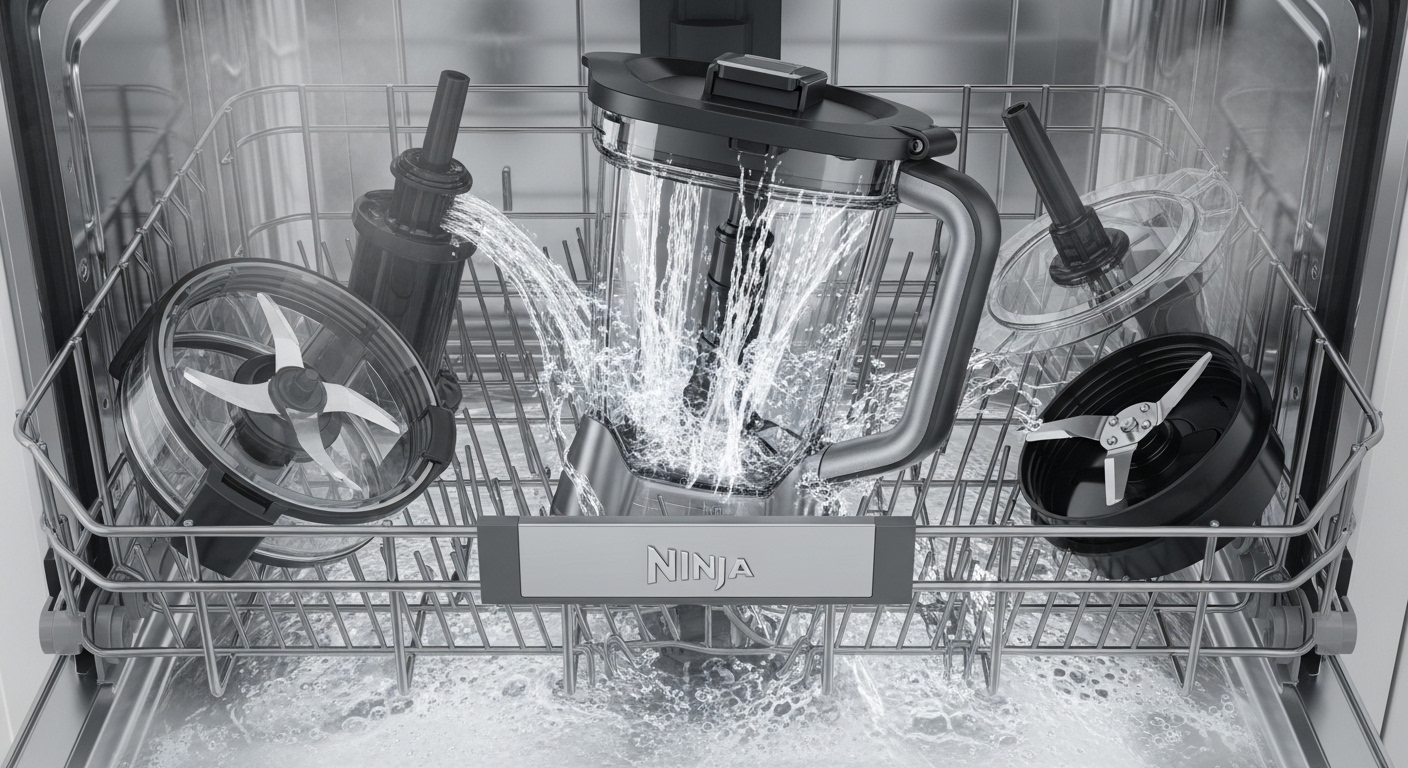
You’re probably standing there with your Ninja blender jug in one hand, kinda squinting at it and wondering can you put ninja blender in dishwasher or is that one of those “technically yes but also maybe no” situations that ends up costing you a new lid later.
It’s a fair confusion, honestly. Blender parts don’t exactly come with personality labels that say “I love hot water” or “please don’t melt me alive,” and if you’ve ever ruined a plastic lid before, you already know how unforgiving dishwashers can be when they feel like it. So yeah, let’s untangle this properly, without pretending it’s simpler than it is.
Can You Put Ninja Blender in Dishwasher (Short Answer First)
Most Ninja blender parts are dishwasher safe, but not all of them, and even the ones that are… well, they still kinda prefer a gentler life.
Here’s the quick breakdown you probably came here for:
- Blender pitcher (the big jug): Usually dishwasher safe (top rack recommended)
- Lids: Dishwasher safe, but heat can warp them over time
- Blades: Dishwasher safe, but you gotta be careful handling them
- Motor base: Absolutely NOT dishwasher safe
And yeah, that last one seems obvious, but you’d be surprised what people try when they’re tired and just wanna be done with dishes.
Why Some Ninja Blender Parts Survive the Dishwasher (and Others Don’t)
So here’s where things get a bit oddly specific. Ninja designs most of their blender components using BPA-free plastic and stainless steel, which technically can handle dishwasher cycles. But “can handle” and “enjoys being handled like that repeatedly” are not the same thing, not really.
The pitcher and lid, for example, are made to tolerate heat, but prolonged exposure to high-temperature drying cycles can slowly mess with their shape. Not immediately, no, it’s more like a slow betrayal over weeks or months. One day the lid just doesn’t snap right anymore and you’re like… when did that happen.
Blades are another thing. Stainless steel doesn’t mind water or heat much, but dishwashers can dull edges faster than hand washing, especially if they knock around against other utensils. It’s not dramatic at first, just slightly less sharp, then a bit more, then suddenly your smoothies feel chunkier than they used to be.
Dishwasher Safety by Ninja Blender Part
1. The Pitcher (Jar)
Most Ninja blender pitchers are labeled dishwasher safe, and yeah, you can put them in.
But here’s the slightly annoying truth:
Top rack is safer, always.
Why?
- Bottom rack = higher heat exposure
- Top rack = more gentle washing environment
- Less chance of warping or clouding over time
Also, if your pitcher is made of plastic (which most are), repeated dishwasher cycles can make it go a bit cloudy. It still works fine, just looks like it’s been through some life, you know.
2. The Lid
Lids are weirdly the most sensitive part, even though they seem sturdy.
Dishwasher safe? Yes.
Dishwasher-proof forever? Not really.
Heat can cause:
- Slight warping
- Looser sealing
- Difficulty snapping into place
If you’ve ever had a blender leak mid-use, you already know that’s not a fun moment.
3. The Blade Assembly
Now this part, you gotta respect it a bit more.
Blades are dishwasher safe, but:
- They are extremely sharp
- They can get dulled faster in a dishwasher
- They can damage other items in the wash
Some people actually prefer hand washing blades just to keep them sharper longer. It’s one of those small habits that kinda pays off without you noticing immediately.
4. The Motor Base
Let’s just say it clearly so there’s no accidental chaos:
Never, ever put the motor base in the dishwasher.
Not even a little rinse. Not even a “quick cycle.”
This part contains electrical components. Water + electricity = not a story you wanna be part of. Clean it with a damp cloth, unplugged, gently, like you’re dealing with something that can betray you if annoyed.
What Ninja Officially Says (And What People Actually Do)
According to manufacturer guidelines, most removable parts of Ninja blenders are dishwasher safe. That’s the official stance, neat and tidy.
But in real life, people do a mix of both:
- Dishwasher for convenience
- Hand wash for longevity
And honestly, both approaches kinda work, depending on how careful you are and how long you want your blender to stay looking and working like new.
A survey published by appliance care groups found that around 60% of blender owners use dishwashers regularly, while about 40% stick to hand washing to extend lifespan. Not a scientific war, just preferences colliding.
Dishwasher vs Hand Washing: Which Is Actually Better?
Let’s not pretend there’s only one correct answer, because there isn’t. It depends on what you care about more: convenience or longevity.
Dishwasher Pros
- Saves time (obviously)
- More hygienic in high-temp cycles
- Less effort after messy blending sessions
Dishwasher Cons
- Can warp plastic parts slowly
- Dulls blades over time
- Can cause cloudiness in pitchers
Hand Washing Pros
- Keeps parts in better condition longer
- Maintains blade sharpness
- More control over cleaning
Hand Washing Cons
- Takes effort (ugh, yeah)
- Risk of cutting yourself if careless
- Not as quick
If you’re the type who uses your blender daily, a hybrid method actually works best. Dishwasher sometimes, hand wash other times. Not very dramatic, but practical.
The “Self-Cleaning” Trick Most People Forget
This one’s kinda underrated, almost feels like cheating but in a good way.
After using your Ninja blender:
- Fill the pitcher halfway with warm water
- Add a drop of dish soap
- Blend for 20–30 seconds
- Rinse
That’s it.
It cleans surprisingly well, especially for things like smoothies or protein shakes. Not perfect for sticky stuff like nut butters, but for everyday use, it saves you from dealing with the dishwasher at all.
And yeah, it feels oddly satisfying watching it clean itself, not gonna lie.
Common Mistakes People Make (That You Might Be Doing Too)
There are a few things people do without thinking, and they slowly ruin their blender without any dramatic warning signs.
- Putting parts on the bottom rack every time
- Using high-heat drying cycles constantly
- Letting blades knock against metal utensils
- Not rinsing immediately after use (dried residue is harder to clean)
- Tossing everything in together without spacing
These don’t break your blender instantly. They just… wear it down in quiet ways.
How Long Do Dishwasher-Safe Parts Actually Last?
Here’s a slightly uncomfortable truth: dishwasher safe doesn’t mean lifetime safe.
With regular dishwasher use:
- Pitchers may last 1–3 years before noticeable wear
- Lids may loosen earlier if exposed to heat often
- Blades may dull within months if heavily used
With mostly hand washing:
- Parts can last significantly longer
- Performance stays more consistent
It’s one of those trade-offs where convenience slowly charges you a fee over time.
A Simple Care Routine That Works (Without Overthinking It)
If you don’t wanna overcomplicate things, just do this:
- Rinse immediately after use
- Use the self-clean method for daily cleaning
- Dishwasher occasionally (top rack only)
- Hand wash blades when possible
- Avoid high heat drying
That’s it. No rituals, no overthinking, just enough care to keep things working well.
So, Can You Put Ninja Blender in Dishwasher Without Worry?
Yes, you can put Ninja blender parts in the dishwasher, but you probably shouldn’t rely on it every single time like it’s invincible.
Think of it like this: the dishwasher is fine, but a little rough around the edges. Your blender can handle it, just not endlessly without consequences.
If you balance things a bit—some dishwasher use, some gentle hand washing—you’ll get the convenience and keep your blender in good shape longer.
And honestly, that’s probably what you were hoping to hear anyway, something in between strict rules and total chaos.

Jamesmathew is an expert Amazon affiliate writer, helping readers discover top products, smart deals, and practical buying guides through honest reviews and insightful content.