

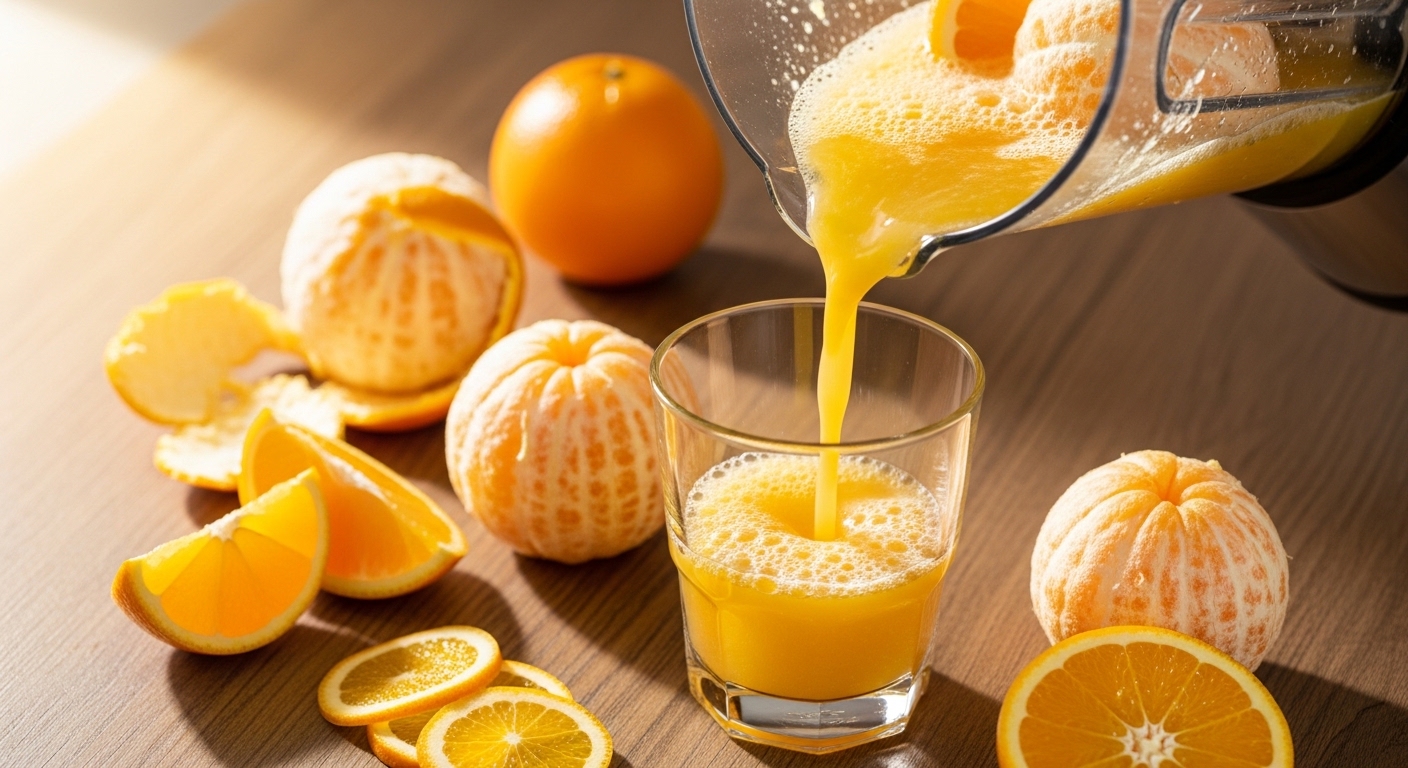
You probably searched how to make orange juice with a blender because, well, you’re standing there with a bunch of oranges and no juicer, and it’s slightly annoying how that happens at the worst possible time. Like, you know it should be simple, but then you start wondering about seeds, pulp, bitterness, and suddenly it’s not that simple anymore, right.
Let’s just slow it down a bit. You don’t need fancy gear, and honestly, blender-made orange juice has its own kinda personality. It’s thicker, a bit more alive, if that makes sense, like it hasn’t been overly filtered into something boring.
Why Even Use a Blender for Orange Juice?
You might be thinking, isn’t a juicer better? Sure, technically, yeah. But also… not always.
A blender does things a little differently, and sometimes that difference is actually what you want.
- It keeps more fiber (which your stomach quietly appreciates, even if you dont think about it)
- It gives you a fuller, almost smoothie-like texture
- You don’t need to buy anything new, which is honestly the best part
There’s this small study published in the Journal of Food Science that notes whole-fruit blending retains more dietary fiber compared to traditional juicing methods. Not life-changing info, but still, kinda neat to know.
And also, cleanup is easier. Juicers can be… a bit dramatic.
What You’ll Need (Nothing Fancy, Promise)
Before you start figuring out how to make orange juice with a blender, just check if you’ve got these:
- Fresh oranges (4–6 medium ones works nicely)
- A blender (obviously, but yeah)
- Water (optional, but helps with blending)
- A strainer or sieve (optional, depending on how picky you are about pulp)
- A knife and cutting board
That’s it. No weird ingredients or anything. You’re not making a science experiment here.
Choosing the Right Oranges (This Matters More Than You Think)
Not all oranges behave the same, and if you’ve ever had a super bitter glass of juice, you already know that.
Good options for blending:
- Valencia oranges – juicy and balanced
- Navel oranges – sweeter, less acidic
- Mandarin or tangerines – softer, easier to blend
Try to avoid oranges that feel too hard or too light. Heavier ones usually have more juice, which is kinda the whole point.
There’s a USDA report that mentions citrus fruit weight is often correlated with juice content, which is one of those small facts you dont really need but somehow makes you feel smarter.
Step-by-Step: How to Make Orange Juice with a Blender
Alright, this is the part you came for. It’s simple, but there’s a right way to do it so you don’t end up with something weirdly bitter or chunky in a bad way.
1. Peel the Oranges (properly, not lazily)
Remove all the skin. And I mean all of it.
The white pith? You can leave a little bit, but too much and your juice might taste slightly bitter, like it’s judging you.
Also, take out any visible seeds. Blenders don’t magically fix that.
2. Cut into Smaller Pieces
You don’t have to, but it helps the blender not struggle.
Rough chunks are fine. No need to be precise here, this isn’t cooking show stuff.
3. Add to Blender
Put the orange pieces in. If your blender is a bit weak (no shame), add:
- ½ cup water to start
- Maybe a bit more later if needed
Too much water and you’ll dilute the flavor, so don’t go overboard.
4. Blend Until Smooth-ish
Blend for about 30–60 seconds.
You’re looking for a smooth consistency, but it’s okay if it’s not perfectly silky. This isn’t store-bought juice, and honestly thats kinda the charm.
5. Strain (Optional, but depends on your mood)
If you like pulp, skip this.
If you don’t:
- Pour through a sieve or strainer
- Press with a spoon to extract more liquid
Just know you’ll lose some fiber here. Trade-offs, always.
6. Taste and Adjust
This part people weirdly skip, but it matters.
If it’s too strong:
- Add a bit of water
If it’s too tangy:
- Add a teaspoon of sugar or honey
Or just leave it. Sometimes slightly imperfect juice feels more real.
Common Mistakes That Lowkey Ruin Everything
You might think it’s hard to mess up orange juice, but people do, and it’s usually these things:
Leaving too much pith
That bitter aftertaste? Yeah, that’s why.
Not removing seeds
Blending seeds can make the juice taste sharp and unpleasant.
Adding too much water
You end up with orange-flavored sadness instead of juice.
Over-blending
Weirdly, blending too long can heat the juice slightly, and that changes the flavor. Not by a lot, but enough to notice if you’re paying attention.
Blender Orange Juice vs Juicer Orange Juice
Here’s a quick comparison, because you’re probably wondering:
| Feature | Blender Juice | Juicer Juice |
|---|---|---|
| Texture | Thick, pulpy | Smooth, thin |
| Fiber | High | Low |
| Taste | Rich, slightly intense | Clean, lighter |
| Effort | Easy | Medium |
| Cleanup | Quick | Annoying sometimes |
Neither is “better,” it just depends what you feel like having that day.
Nutritional Side of Things (Not boring, promise)
Orange juice isn’t just sugar water, despite what some people say.
A single medium orange has about:
- 70 mg of Vitamin C (over 75% of daily need)
- Around 3 grams of fiber (if blended whole)
- Natural sugars, yes, but also antioxidants like flavonoids
According to the National Institutes of Health, Vitamin C plays a role in immune function and collagen production. Which sounds fancy, but basically, it helps your body not fall apart.
Blending instead of juicing keeps more of that fiber intact, which slows sugar absorption a bit. So yeah, blender method kinda wins here.
Variations You Might Actually Enjoy
Once you figure out how to make orange juice with a blender, you’ll probably start experimenting. It just happens.
Add a carrot
Gives a slightly earthy sweetness. Also makes you feel healthier than you probably are.
Throw in some ginger
A small piece adds a sharp kick. Not for everyone, but kinda addictive.
Mix with other fruits
- Mango → thicker, tropical vibe
- Pineapple → brighter, more tangy
- Apple → balances acidity
Just don’t overdo it. You still want it to taste like orange juice, not fruit confusion.
Storage Tips (If You Somehow Don’t Drink It Immediately)
Fresh juice is best right away, but if you have leftovers:
- Store in an airtight container
- Keep in the fridge
- Drink within 24–48 hours
After that, it starts tasting… off. Not dangerous, just not nice.
There’s also oxidation happening, which reduces Vitamin C over time. So yeah, sooner is better.
A Slightly Honest Truth
Blender orange juice isn’t going to taste exactly like the one you buy in cartons. And that’s actually a good thing, even if it feels strange at first.
It’s less predictable. Sometimes sweeter, sometimes sharper. But it feels more connected to the fruit itself, not processed into something uniform.
And once you get used to it, going back to packaged juice can feel a bit… flat. Not bad, just different in a way you notice.
Final Thoughts (Before You Go Try It)
So now you know how to make orange juice with a blender without overthinking it too much or accidentally making something weird. It’s one of those small kitchen things that seems obvious until you actually do it, and then you’re like, oh okay, that’s how it works.
You don’t need perfect technique. Just decent oranges, a working blender, and a bit of patience with the peeling part, which honestly is the most annoying bit.
Try it once, mess it up slightly, adjust the next time. That’s kinda the whole process, and it works better than trying to get everything perfect on the first go.

Jamesmathew is an expert Amazon affiliate writer, helping readers discover top products, smart deals, and practical buying guides through honest reviews and insightful content.