

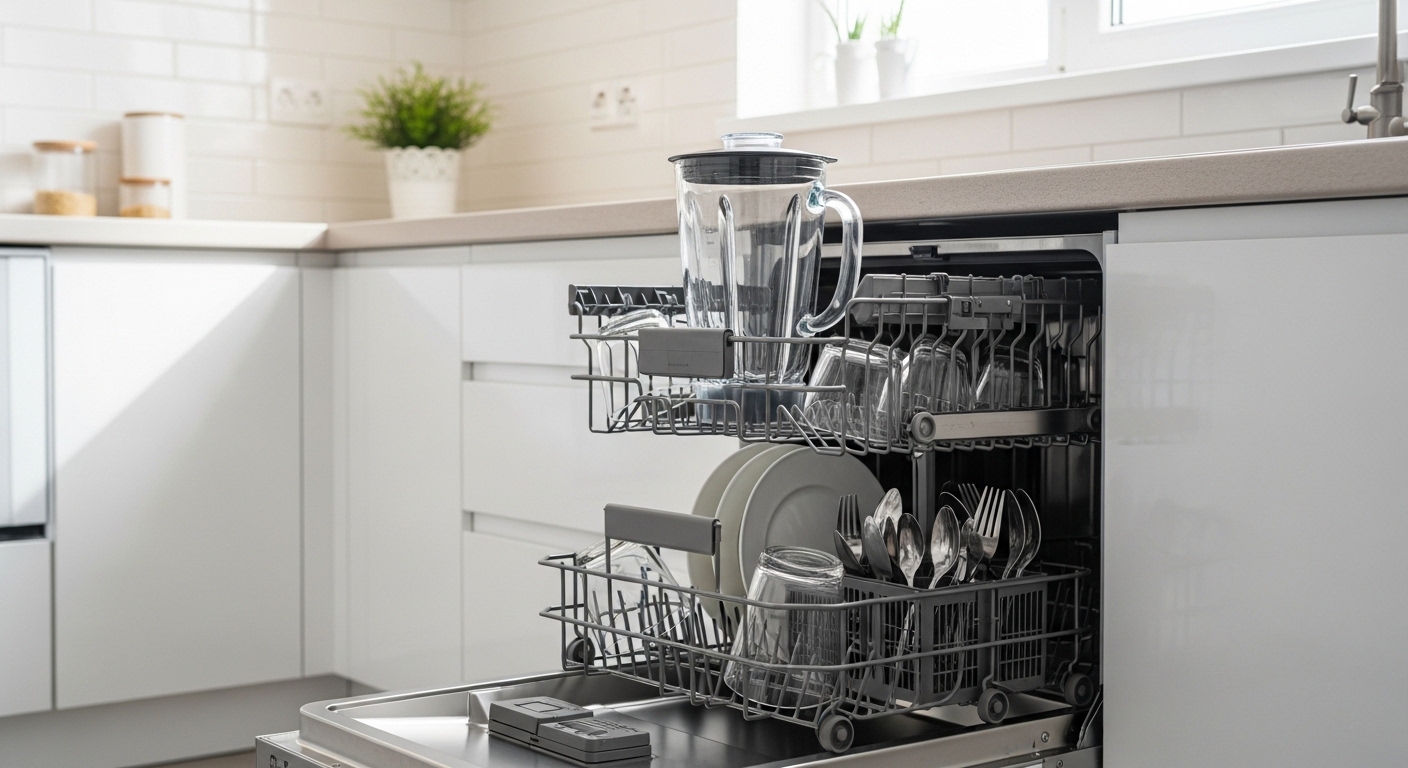
You’re probably standing there right now wondering can I put my ninja blender in the dishwasher, like you’ve just finished a smoothie and the blades are staring back at you in a slightly threatening way, and honestly yeah, it’s a fair question because nobody wants to ruin an expensive appliance just to save five minutes of scrubbing.
Let’s untangle this properly, but not in a stiff “manual voice” kind of way, more like how someone would explain it while rinsing a sticky pitcher under the tap and kinda thinking out loud.
So… Can You Put a Ninja Blender in the Dishwasher?
Short answer, yes… but also no… but also kinda depends, which is annoyingly vague but also very true.
Most Ninja blender parts are dishwasher safe, but not all of them, and definitely not in the same way. The pitcher, cups, and lids usually handle dishwasher cleaning just fine, but the base (the motor part, the heavy bit you never wanna drop) absolutely does not go anywhere near water, let alone a dishwasher. That part is strictly wipe-only territory.
And then there’s the blades, which are where things get slightly spicy. Technically dishwasher safe in many models, but also… a bit risky if you’re not careful, because heat and movement can dull them over time, or worse, you accidentally jab yourself unloading them. Not fun.
A Quick Breakdown of What Goes Where
Here’s a clearer look so you don’t overthink it mid-cleaning:
| Blender Part | Dishwasher Safe? | Notes |
|---|---|---|
| Pitcher/Jar | Yes | Top rack preferred |
| Single-serve cups | Yes | Usually very durable |
| Lids | Yes | Small parts can shift around |
| Blade assembly | Sometimes | Handle carefully, may dull |
| Motor base | No | Never submerge or wash |
That table might save you from doing something you’ll regret in like 12 seconds later.
Why People Even Ask This in the First Place
It’s not just laziness, even though yeah, a little bit of that is always there. It’s more like… you’ve just blended something messy, maybe peanut butter or frozen fruit, and it’s stuck in corners that feel impossible to reach. You look at the dishwasher like it’s a magical solution.
Also, manufacturers don’t always make it super clear. Manuals say “dishwasher safe parts” but don’t exactly scream which parts should be kept far, far away from heat and spinning water jets.
And let’s be honest, sometimes you just don’t wanna hand wash sharp blades after a long day, your brain goes “dishwasher will deal with it,” even if that’s not always the best call.
The Blade Situation (This Is Where People Mess Up)
Okay so, the blades deserve their own little moment because they’re kinda the troublemakers here.
Yes, many Ninja blades are labeled dishwasher safe. But putting them in there repeatedly can:
- Dull the sharp edges faster than expected
- Cause slight corrosion if water sits too long
- Increase the chance of accidental cuts when unloading
And like… those blades are really sharp. Not “oops tiny cut” sharp, more like “why is there suddenly so much blood” sharp.
If you’re going to dishwasher them anyway, put them:
- On the top rack
- Away from other utensils
- Positioned so they won’t flip or move
But honestly, hand washing them gently is usually the better move, even if it feels like a chore.
A Slightly Better Way to Clean It (That People Forget Exists)
This is one of those things that feels obvious once you remember it, but somehow gets ignored all the time.
You can clean your Ninja blender by… blending.
Yeah, just:
- Fill the pitcher halfway with warm water
- Add a drop of dish soap
- Run the blender for 20–30 seconds
It kinda cleans itself, which feels almost unfair in how easy it is. After that, just rinse it out and you’re done.
For most everyday uses, this method works better than throwing everything in the dishwasher anyway, and it keeps the blades sharper for longer too.
What About Heat Damage? Is That a Real Thing?
Yeah, a little bit. Not dramatic meltdown levels, but still worth noting.
Dishwashers use heat, especially during drying cycles, and over time that can:
- Warp plastic components slightly
- Fade markings or measurement lines
- Loosen seals in lids
It doesn’t happen instantly, more like a slow “why does this feel different now” kind of thing after months of repeated washing.
So if you’re trying to make your blender last years instead of just “a decent while,” maybe don’t rely on the dishwasher every single time.
Manufacturer Guidelines (And Why They Matter More Than You Think)
Most Ninja blender manuals say something along the lines of:
“All removable parts are dishwasher safe, top rack recommended.”
That sounds simple, but it hides a bit of nuance. “Dishwasher safe” doesn’t always mean “best long-term option.” It just means it won’t immediately break.
Manufacturers design for convenience, but also assume you’ll use some common sense. Like not stacking blades under heavy pans or blasting everything on the hottest cycle daily.
So yeah, follow the guidelines, but also read between the lines a little.
When You Should Avoid the Dishwasher Completely
There are some situations where the dishwasher is just… not the move at all.
Skip it if:
- The blender has just handled thick, sticky stuff (like nut butter)
- You notice cracks or wear in plastic parts
- The blade assembly feels loose or fragile
- You’re in a hurry and might unload carelessly
In those moments, hand washing is not just safer, it’s honestly quicker too.
Real-Life Usage: What People Actually Do
If you ask around (or just observe your own habits), most people fall into one of these patterns:
- Dishwasher-only users who just toss everything in and hope for the best
- Hand-wash-only folks who don’t trust machines with blades
- Hybrid people who switch depending on how tired they are
The hybrid method is probably the most realistic. Like, on a lazy day, sure, dishwasher it. On a careful day, wash it properly.
There’s no single perfect method, just better or worse habits over time.
Small Mistakes That Quietly Ruin Your Blender
These don’t feel like big deals in the moment, but they add up:
- Leaving parts un-rinsed before dishwasher (stuff hardens and sticks)
- Using high heat cycles repeatedly
- Letting blades knock into other items during washing
- Not drying parts properly afterward
Each one chips away at the lifespan just a tiny bit, and then one day the blender just feels… off.
A Simple Cleaning Routine That Actually Works
If you want something practical without overthinking it, try this:
After each use:
- Quick rinse immediately (don’t let stuff dry)
- Blend warm water + soap for 20 seconds
- Rinse again
Once or twice a week:
- Dishwasher for cups and lids
- Gentle hand wash for blades
That’s it. Nothing fancy, just consistent.
Final Thoughts: Should You Do It or Not?
So, back to the main question, can you put your ninja blender in the dishwasher?
Yes, you can, but you probably shouldn’t rely on it every single time. It’s more like a convenience option, not the best-care option.
If you want your blender to last longer, stay sharp, and not develop weird issues over time, mixing dishwasher use with simple hand cleaning is the smarter path, even if it feels slightly more effort in the moment.
And honestly, once you get into the habit of that quick self-cleaning blend trick, you’ll wonder why you ever stood there debating this in the first place.

Jamesmathew is an expert Amazon affiliate writer, helping readers discover top products, smart deals, and practical buying guides through honest reviews and insightful content.