

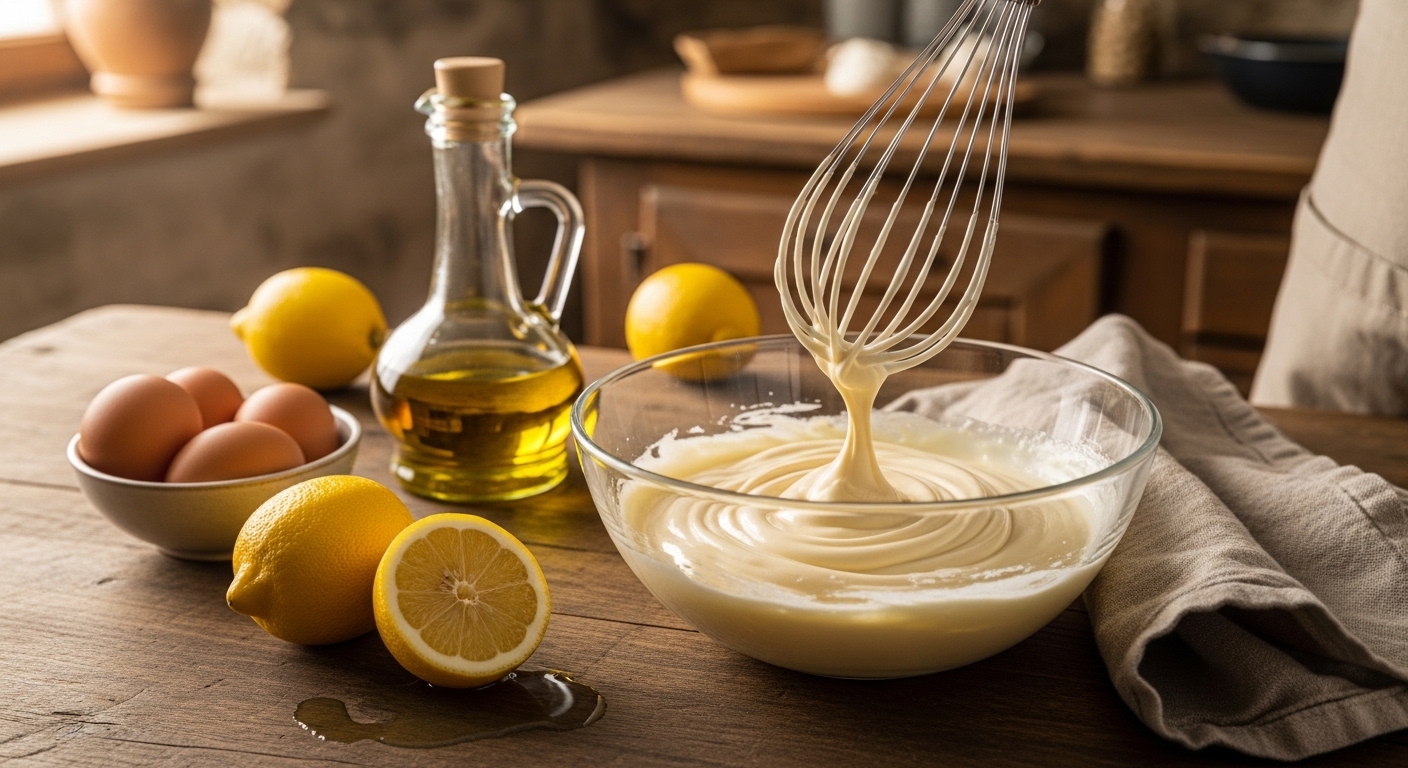
How to make mayo without immersion blender is one of those things you suddenly care about when you’re standing in your kitchen holding an egg, a bottle of oil, and that slightly confused feeling like “ok so… now what exactly?” and honestly yeah, you’re not alone in that moment at all, it happens to people more than they admit.
You probably expected mayo to behave nicely, but instead it just kind of splits or refuses to thicken when you try doing it by hand, and then you start wondering if everyone else secretly owns fancy gadgets. The truth is, you don’t actually need an immersion blender at all, just a bit of patience and a weirdly steady wrist.
Why How to make mayo without immersion blender feels harder than it should
The whole struggle mostly comes down to emulsification, which sounds fancy but is really just oil and water being forced to stay friends under pressure. Egg yolk contains lecithin, a natural emulsifier that helps bind oil and vinegar or lemon juice together. Harold McGee in On Food and Cooking explains that emulsions like mayonnaise depend on slowly dispersing fat droplets so they stay suspended instead of separating.
When you rush it, mayo breaks. When you go too slow, it might never form. And when you’re stressed, yeah, it somehow knows.
Also, immersion blenders make it look easy because they aggressively force everything together. Without it, you’re basically doing diplomacy between oil and egg yolk.
Ingredients you actually need for How to make mayo without immersion blender
Nothing wild here, but proportions matter more than people think.
| Ingredient | Amount | Purpose |
|---|---|---|
| Egg yolk | 1 large | Emulsifier base |
| Neutral oil (sunflower/canola) | 180–240 ml | Fat structure |
| Lemon juice or vinegar | 1–2 tsp | Acid, flavor, stability |
| Mustard (optional but helpful) | 1 tsp | Extra emulsification boost |
| Salt | Pinch | Flavor balance |
A lot of old-school recipes from chefs like Julia Child recommend mustard because it stabilizes the emulsion slightly, even though it doesn’t change the chemistry drastically, it just gives you a better chance of not messing it up.
Oil choice matters more than people expect too. Strong olive oil can make mayo bitter, so most home cooks mix it with neutral oil instead.
Step-by-step How to make mayo without immersion blender
Here’s the part where it either works or makes you question your kitchen skills a little.
- Separate your egg yolk carefully. No egg white at all if possible, it weakens the mix.
- Put yolk in a bowl and whisk it until it looks slightly thick and smooth.
- Add mustard, salt, and a tiny bit of lemon juice.
- Start adding oil drop by drop at first. seriously, slow like annoyingly slow.
- Once it thickens, you can pour in a thin stream instead of drops.
- Keep whisking constantly, don’t stop or it might split.
- Adjust with lemon juice or salt at the end.
It usually takes around 5–10 minutes of whisking, which doesn’t sound like much until you’re actually doing it and questioning your life choices slightly.
Different ways for How to make mayo without immersion blender
Not everyone wants to stand there whisking like it’s some kind of arm workout challenge, so there are a few methods that people use depending on patience level.
Whisk method (classic but slightly painful)
This is the traditional approach and honestly the most reliable if you do it right. You need a bowl that doesn’t slide around (put a damp towel underneath if needed). The trick is keeping constant motion.
A small tip that chefs quietly swear by: warm egg yolk works better than cold. Not hot, just room temperature. Cold yolks make emulsification slower and more unstable.
Jar shake method (for lazy but hopeful people)
You basically throw everything in a jar and shake it like you’re trying to wake it up.
Steps:
- Add yolk, mustard, acid first
- Slowly pour oil
- Seal tightly
- Shake for 2–3 minutes
It sometimes works, sometimes it absolutely doesn’t. It’s a bit like kitchen gambling, not gonna lie.
Fork method (weirdly effective in emergencies)
If you don’t even have a whisk, a fork can do the job. It just takes longer and feels slightly chaotic.
You mash the yolk first, then slowly incorporate oil while stirring aggressively. It’s not elegant, but it works in survival-level cooking situations.
Common mistakes when learning How to make mayo without immersion blender
Most failed mayo attempts come from the same few errors, which are honestly easy to fix once you know them.
- Adding oil too fast at the beginning
- Using cold ingredients straight from fridge
- Not whisking consistently
- Too much liquid acid early on
- Wrong oil type (strong olive oil overload)
- Impatience, basically
One chef quote often repeated in culinary schools goes something like: “Mayonnaise is not difficult, it is just unforgiving.” That line kind of sticks because it’s true in a slightly annoying way.
Troubleshooting broken mayo (because yeah, it happens)
So your mayo split. It looks greasy, watery, or just weird. Don’t throw it away immediately.
Try this rescue method:
- Take a fresh egg yolk in a clean bowl.
- Start whisking it alone.
- Slowly drizzle the broken mayo into it like new oil.
This works because you’re basically restarting the emulsification system. It’s like giving the mixture a second chance at behaving properly.
Another trick is adding a teaspoon of hot water and whisking hard, which sometimes pulls it back together (not always, but often enough to try).
Food safety and storage notes for How to make mayo without immersion blender
Homemade mayo uses raw egg yolk, so you do need to be a bit careful. According to food safety guidelines commonly referenced by USDA recommendations, homemade mayonnaise should be stored in the refrigerator and used within about 3–4 days.
Also:
- Don’t leave it out at room temperature for more than 2 hours
- Always use clean utensils
- Store in a sealed container
If you’re using pasteurized eggs, risk is lower, but still not something you leave sitting around on the counter like ketchup.
Flavor variations you can try
Once you know how to make mayo without immersion blender, you kind of unlock a whole category of sauces that feel fancier than they are.
Some easy variations:
- Garlic mayo (aioli style): add crushed garlic
- Spicy mayo: mix in chili flakes or hot sauce
- Herb mayo: parsley, dill, or chives
- Lemon-heavy mayo: brighter, sharper taste for seafood
- Smoked paprika mayo: gives a deeper, slightly smoky flavor
A small note from traditional French cuisine: aioli originally used only garlic and oil emulsified without egg, but modern versions almost always include yolk because it’s easier and more stable.
Why homemade mayo actually tastes different
Store-bought mayo is engineered for stability and long shelf life, which means additives, stabilizers, and a very controlled flavor profile. Homemade mayo, even when slightly imperfect, has a fresher, more “alive” taste because the oil hasn’t been processed the same way.
Food writer Harold McGee notes that fresh emulsions carry volatile flavors more strongly, which is why homemade versions feel sharper and richer even if they’re technically less stable.
That slight inconsistency you get? That’s kind of the charm, even if it doesn’t feel like it while you’re whisking.
Final thoughts on How to make mayo without immersion blender
Once you’ve done it successfully even one time, it stops feeling like magic and starts feeling like a skill you actually own. It’s a bit messy, a bit slow, sometimes frustrating, but also weirdly satisfying when it suddenly thickens and you realize it actually worked without any machine helping you.
And yeah, you might still mess it up sometimes. That’s just part of it honestly.

Jamesmathew is an expert Amazon affiliate writer, helping readers discover top products, smart deals, and practical buying guides through honest reviews and insightful content.