

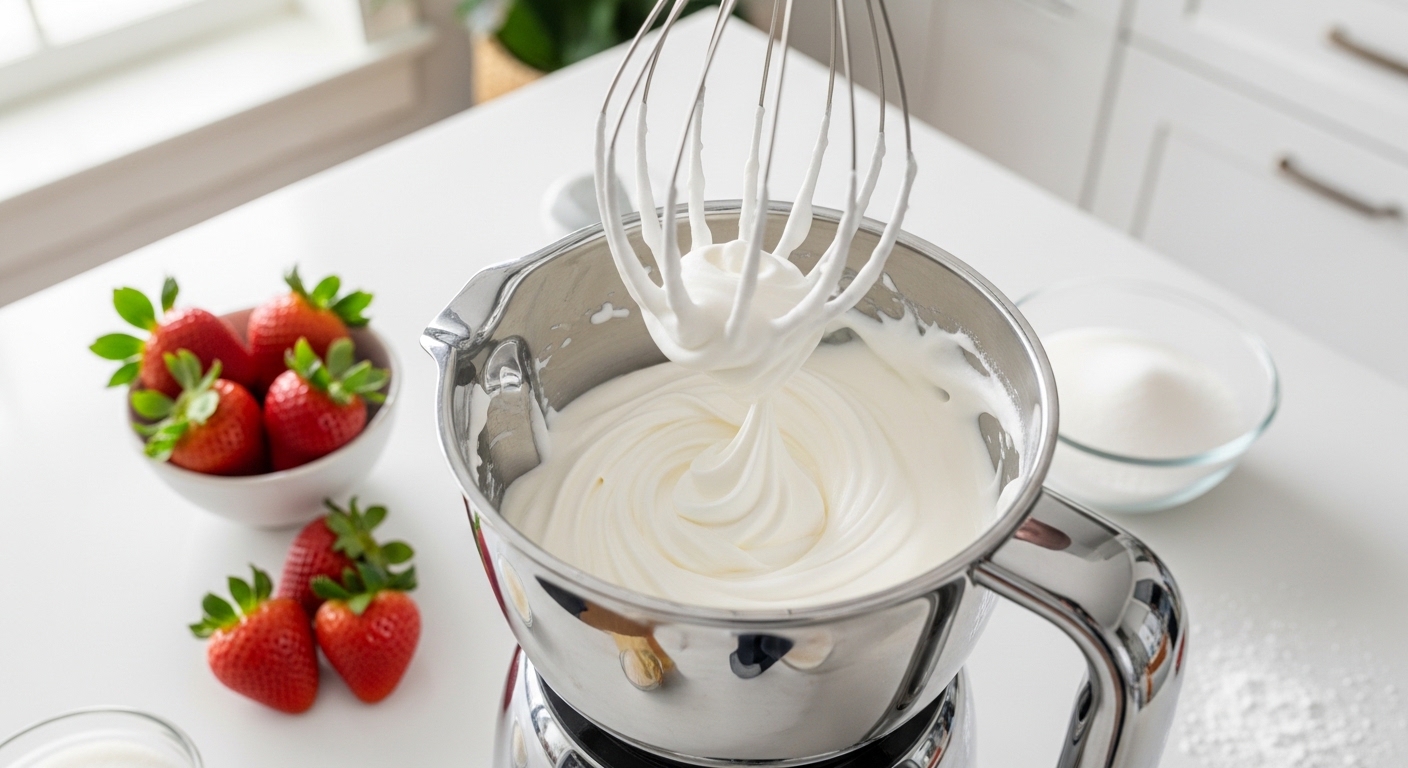
can i make whipped cream in a blender is probably something you’ve asked while staring at a carton of cream in your fridge and thinking “do I really need a mixer for this or am I overthinking it again”. And honestly yeah, that moment of doubt is real, because it looks simple but also weirdly risky when you’ve never tried it before.
You’re not alone in that kitchen hesitation. A lot of people assume whipped cream is some delicate bakery-only thing, but it’s actually just air trapped in fat. Still, the method matters a lot more than most recipes casually admit, and a blender can either save your dessert or turn your cream into butter faster than you expect.
Understanding what whipped cream actually is (so you don’t mess it up instantly)
Before jumping into the blender, it helps to know what you’re even trying to achieve. Whipped cream is basically heavy cream that’s been aerated until it forms soft or stiff peaks. The fat molecules (usually around 36% in heavy cream according to USDA FoodData Central standards) start clumping together and trapping air bubbles.
That’s why low-fat milk doesn’t work here at all, it just won’t hold structure no matter how long you beat it. You need that fat content to stabilize the foam. And once you understand that, the blender method starts making more sense, even if it still feels a bit chaotic.
A small detail people miss: temperature matters more than technique sometimes. Cold cream whips faster and more stable, while warm cream kinda just turns sad and loose, like it gave up mid-way.
So, can you really make whipped cream in a blender?
Short answer: yes, you can make whipped cream in a blender, but it’s kind of a “handle with caution” situation.
Blenders are powerful. Like, aggressively powerful. They’re designed to crush ice and pulverize fruit, not gently fold air into dairy. So the trick is timing, not strength. If you overdo it even by 10–15 seconds, you can accidentally make butter. Which is funny once, but annoying when you wanted dessert topping.
Still, many home cooks use blenders because they’re fast and already sitting on the counter. You just have to work with the machine, not against it.
Blender method: step-by-step (but don’t zone out halfway)
If you’re trying this at home, here’s a simple way that actually works most of the time:
- Use cold heavy whipping cream (straight from the fridge, don’t leave it out “for a bit”)
- Chill the blender jar if possible (not mandatory but helps stability)
- Add:
- 1 cup heavy cream
- 1–2 tablespoons sugar (adjust to taste)
- 1/2 teaspoon vanilla extract (optional but makes it taste less “flat”)
- Blend on low speed first for 10–15 seconds
- Stop, check texture
- Continue in very short bursts until soft peaks form
Now here’s the part people mess up: they walk away. Don’t. You need to watch it like it owes you money.
Once it starts thickening, it goes from liquid → fluffy → overwhipped in what feels like 5 seconds.
What “overwhipped” actually looks like (and why it ruins everything)
Overwhipped cream doesn’t just look wrong, it behaves wrong. It starts separating into grainy bits and liquid. That’s fat clumping too tightly and squeezing out liquid whey.
If you’ve ever accidentally made butter while trying to be fancy, you already know this feeling. It’s not tragic, but it’s not whipped cream anymore either.
A rough breakdown:
| Stage | Texture | What it means |
|---|---|---|
| Liquid cream | Pourable | Not whipped yet |
| Soft peaks | Falls gently | Good for desserts |
| Stiff peaks | Holds shape | Ideal for piping |
| Overwhipped | Grainy, separating | Turning into butter |
Why a blender is tricky but still kinda genius
Here’s the weird truth: a blender is both too strong and also incredibly efficient.
Pros:
- Very fast (sometimes under 30 seconds)
- No need for hand whipping
- Good for small batches
Cons:
- Easy to overwhip
- Can warm cream slightly due to friction
- Less control than a whisk or mixer
Professional chefs often prefer stand mixers because they give more “feedback time” before things go wrong. A blender kind of jumps straight from “nothing happening” to “oops butter” without much warning.
Still, if you’re careful, it works surprisingly well.
Small science detour (but not boring, I promise)
Whipping cream is basically a foam stabilization process. The fat globules in cream partially break and reconnect, forming a network that traps air.
According to general dairy science references and USDA dairy composition data, heavy cream contains enough fat to create stable emulsions when mechanically agitated. That’s why whipping works in the first place.
Blenders just speed up that mechanical agitation a lot. Too much speed, though, and you rupture too many fat globules at once, which pushes you past whipped cream into butter territory.
So yeah, it’s not magic. It’s just fat physics doing its thing.
Common mistakes people keep repeating (and blaming the blender for)
You might think the blender is the problem, but usually it’s small user errors:
- Using warm cream (this alone ruins half the attempts)
- Blending continuously without checking texture
- Using low-fat cream (it simply won’t whip properly)
- Adding sugar too early and not dissolving it properly
- Overfilling the blender jar so air can’t circulate
One weird one: people assume more blending = better cream. Nope. Whipped cream is more like “controlled chaos” than “long processing time”.
Better alternatives if your blender keeps betraying you
If your blender keeps turning cream into soup or butter, you still have options:
- Hand whisk (slow but very controllable)
- Jar shaking method (old-school but works with small amounts)
- Electric hand mixer (best balance of speed and control)
A lot of home cooks actually prefer hand mixers because you can visually stop right at soft peaks, which is the sweet spot for most desserts.
Troubleshooting guide (because something will probably go weird)
Here’s how to fix common blender issues:
It’s not thickening
- Cream might be too warm
- Fat content too low
- Blender speed too low or too high (both can mess it up oddly)
It turned grainy
- You’ve overwhipped it
- Try adding a spoon of fresh cream and gently folding it back
It splashed everywhere
- Jar was overfilled
- Start with smaller batches next time
It tastes flat
- Add vanilla, powdered sugar, or even a tiny pinch of salt to enhance flavor
When blender whipped cream actually shines
Even with its quirks, blender whipped cream is perfect for:
- Last-minute dessert toppings
- Quick fruit bowls
- Coffee topping (yes, like a lazy café moment at home)
- Emergency cake decoration when guests show up unannounced
It’s not about perfection, it’s about speed and “good enough looks fancy”.
A quick reality check most recipes skip
Here’s something people don’t say enough: whipped cream is forgiving, but only to a point. It doesn’t care about your schedule. It reacts to physics, not urgency.
So if you rush it, it punishes you. If you watch it carefully, it rewards you instantly. Kind of dramatic for something made of milk fat, but that’s how it is.
Final thoughts (not too polished, just honest)
So yeah, can i make whipped cream in a blender isn’t just a yes-or-no question, it’s more like “yes, but are you paying attention while it happens”.
Once you get the timing right, it becomes almost silly how easy it is. But the first few tries might feel a bit chaotic, like the blender is arguing with you personally. It’s not, it just works fast.
And honestly, after you’ve made it successfully once, you’ll probably stop buying canned whipped cream for a while. Or at least you’ll think about it differently next time you’re in the dairy aisle.

Jamesmathew is an expert Amazon affiliate writer, helping readers discover top products, smart deals, and practical buying guides through honest reviews and insightful content.