

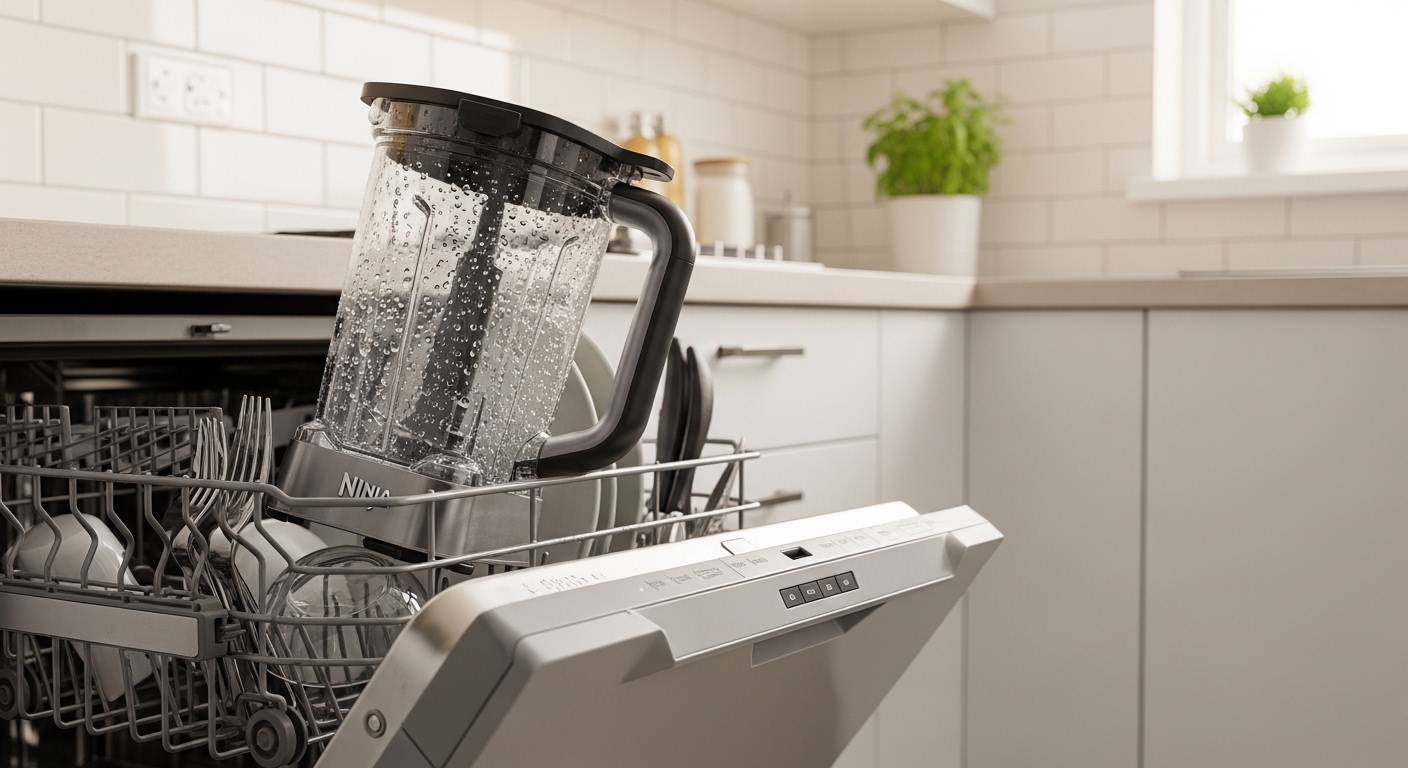
is a ninja blender dishwasher safe — yeah, that question usually pops into your head right when you’re standing in the kitchen holding a greasy pitcher and thinking “I really don’t wanna scrub this right now.” And honestly, you’re not alone, because Ninja blenders are powerful but cleaning them feels like one of those small annoying mysteries nobody fully explains at first use, kinda like why there’s always one stubborn seed stuck under the blade no matter what you do.
You probably just finished making a smoothie, or maybe something thicker like hummus or nut butter, and now you’re wondering if you can just toss everything in the dishwasher and walk away. The short answer is: most Ninja blender parts are dishwasher safe, but not everything, and not in every way you might assume. The details matter more than people think, and skipping them is where mistakes usually happen.
Quick answer: is a Ninja blender dishwasher safe or not?
Yes, many parts of a Ninja blender are dishwasher safe, especially the pitcher, lids, and some cups. But the motor base is never dishwasher safe (that one is obvious but still gets asked way too often), and the blades are “technically yes but carefully” depending on the model.
A more honest breakdown looks like this:
- Pitcher: usually dishwasher safe (top rack recommended)
- Lids: dishwasher safe
- Single-serve cups: dishwasher safe
- Blade assembly: sometimes dishwasher safe, but hand washing often recommended
- Motor base: absolutely not dishwasher safe
So yeah, it’s not a simple yes/no situation, more like a “yes, but don’t go wild with it” type of answer.
What parts of a Ninja blender are dishwasher safe
When people search “is a ninja blender dishwasher safe,” what they really want is clarity on which parts survive the dishwasher without getting dull, cracked, or weirdly warped over time.
Here’s a cleaner breakdown in table form so it actually makes sense:
| Part | Dishwasher Safe? | Notes |
|---|---|---|
| Pitcher (jar) | Yes | Top rack preferred |
| Lid | Yes | Remove rubber seal if possible |
| Blades assembly | Sometimes | Hand wash extends life |
| Single-serve cups | Yes | Avoid high heat drying cycles |
| Motor base | No | Electrical component, never wash |
One thing Ninja (SharkNinja company) consistently notes in their care guides is basically: “most removable parts are dishwasher safe on the top rack,” but they also quietly warn that repeated dishwasher cycles can dull blades over time. That part is often ignored until someone notices their blender “feels weaker” after months of washing everything on hot cycles.
Dishwasher safety by component (the stuff nobody explains clearly)
Let’s break it down a bit more casually, because manuals always sound like they were written in another universe.
Pitcher (the big jar thing)
The pitcher is usually the safest bet. You can place it in the dishwasher, but top rack is important. Bottom rack heat can be intense and over time it might cause clouding or tiny cracks.
Some users report that after a year of dishwasher cleaning, their pitcher gets slightly foggy. Not broken, just… tired-looking.
Lid and seals
The lid is generally dishwasher safe too, but the rubber gasket is where things get tricky. If the gasket is removable, it’s better to take it out. Otherwise, food particles sometimes hide there like they’re paying rent.
A weird real-life complaint people mention: “it smells clean but also kinda like old smoothie.” That’s usually gasket residue, not detergent failure.
Blade assembly (the sharp part you pretend not to be scared of)
This is where opinions split.
Technically, many Ninja blade assemblies are dishwasher safe. But practically, hand washing is safer for long-term sharpness. Dishwashers can make the edges slightly dull over time due to heat + detergent abrasion.
And let’s be honest, nobody enjoys cleaning blades because it feels like you’re negotiating with danger.
Single-serve cups
These are the easiest. Just rinse and toss them in the dishwasher. Still, avoid bottom rack heat cycles if your dishwasher runs really hot. Some cheaper plastic cups can warp slightly over time.
Top rack vs bottom rack confusion (why it matters more than you think)
Most people just throw everything in the dishwasher wherever it fits. But with a Ninja blender, rack placement actually matters.
Top rack is safer because:
- Lower heat exposure
- Less direct spray pressure
- Reduces plastic warping risk
Bottom rack is riskier because:
- Higher heat intensity
- Stronger water jets
- More long-term wear on plastic parts
So if you remember nothing else, just remember: top rack is your blender’s comfort zone.
Common mistakes people make with Ninja blender dishwasher cleaning
Even if you know the basics, small mistakes sneak in. And they build up over time.
Here are the most common ones:
- Putting blades on bottom rack (big no, seriously)
- Leaving food stuck under seals before washing
- Using heated dry cycles constantly
- Overloading dishwasher so parts don’t clean properly
- Assuming all Ninja models have identical dishwasher rules (they don’t)
One underrated mistake is forgetting that smoothies with sugar or protein powder leave sticky residue that needs a quick rinse before dishwashing. Otherwise it kinda bakes on, weirdly.
What Ninja actually says (manufacturer guidance)
According to general Ninja kitchen appliance care instructions, removable parts like pitchers, lids, and cups are designed to be dishwasher safe, typically on the top rack. They also recommend hand washing blades to preserve sharpness and performance over time.
A paraphrased version of their guidance often reads like:
“Most removable components are dishwasher safe, but hand washing may extend the life and performance of the blades.”
It’s one of those polite manufacturer warnings that basically translates to: “you can use the dishwasher, but don’t blame us later if things get dull.”
Real-world experiences (what actually happens over time)
People who use Ninja blenders daily tend to fall into two groups.
Group 1: dishwasher users
Group 2: hand-wash loyalists who don’t trust machines
Dishwasher users usually say:
- “Super convenient, never going back”
- “Pitcher still fine after months”
- “Blade got slightly less sharp after a year”
Hand-wash users say:
- “Takes 2 minutes, worth it”
- “Blades last longer for sure”
- “Less clouding on plastic parts”
Truth is somewhere in between. Dishwasher use is fine, just not careless dishwasher use.
Care tips to keep your Ninja blender safe in dishwasher
If you want your blender to last longer without getting cloudy, dull, or weird smelling, a few simple habits help a lot:
- Rinse immediately after use (don’t let smoothie cement itself)
- Use top rack only for plastic parts
- Avoid high heat dry settings when possible
- Hand wash blades occasionally even if you dishwasher them
- Check rubber seals weekly for trapped food
Small habits, but they really stretch the lifespan more than people expect.
Final thoughts: so, is a Ninja blender dishwasher safe?
So yeah, coming back to the main question is a ninja blender dishwasher safe — the answer is mostly yes, but with a bit of common sense attached. The pitcher, lids, and cups can handle it fine, while blades need more care if you want them to stay sharp longer than “just a few months of chaos.”
If your dishwasher is already running and you’re tempted to toss everything in without thinking, it’ll probably be okay. But if you want your blender to feel brand new for years instead of months, a little hand washing here and there makes a noticeable difference, even if it feels slightly annoying at first.
And honestly, once you get used to the routine, cleaning a Ninja blender becomes less of a chore and more like a 60-second reset before the next smoothie experiment, which you’ll probably start planning way sooner than expected anyway.

Jamesmathew is an expert Amazon affiliate writer, helping readers discover top products, smart deals, and practical buying guides through honest reviews and insightful content.