

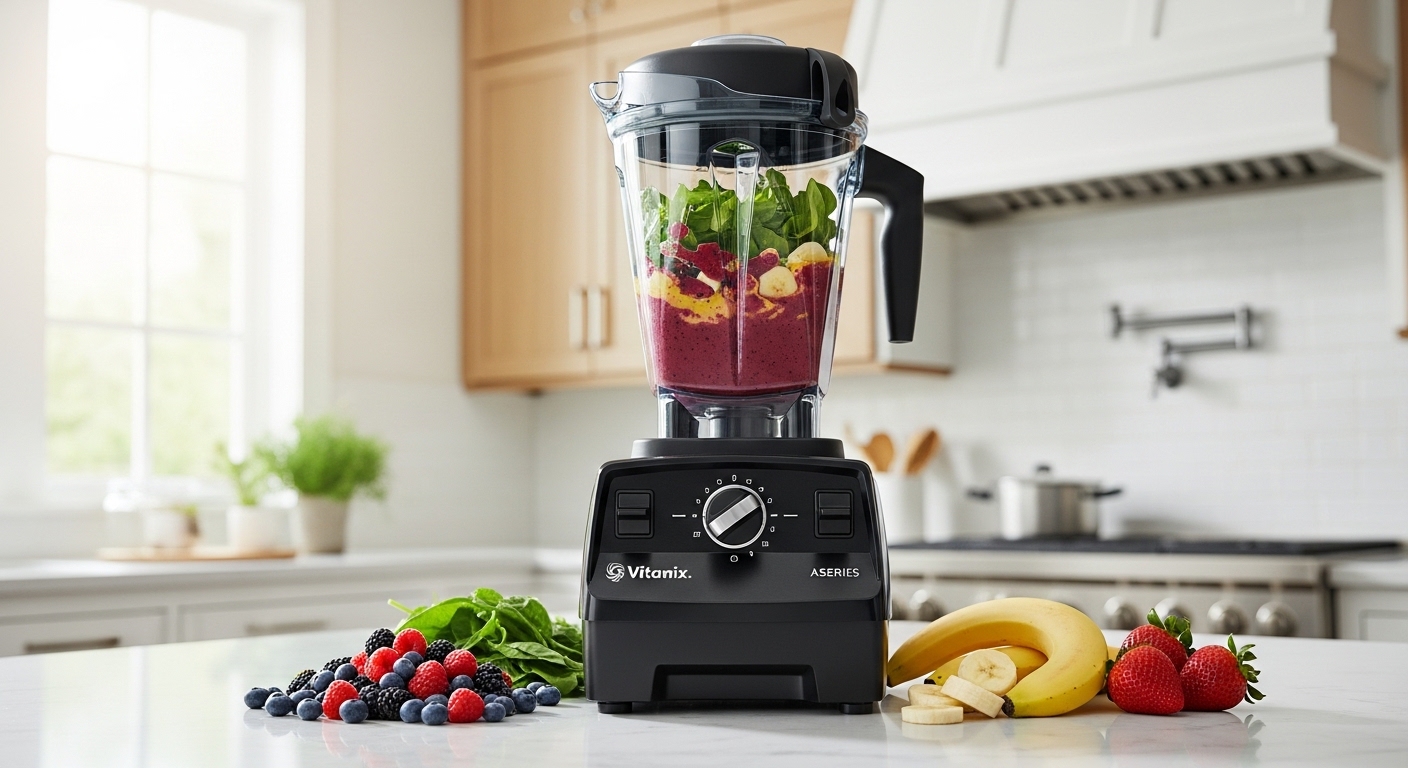
how to use vitamix blender sounds simple when you first think it, like you just press a button and everything turns smooth, but then you’re standing in front of it with frozen fruit and a bit of doubt in your head wondering if you’re about to overdo it or underdo it and end up with chunky disaster instead of a drinkable smoothie. That exact moment, yeah, most people go through it quietly even if they won’t admit it.
You might already have a machine from Vitamix sitting on your counter looking kinda serious, almost like it expects you to know what you’re doing. And honestly, it’s not your fault if it feels a bit intimidating at first, because these machines are powerful in a way regular blenders just… aren’t really. Once you get the rhythm though, it becomes one of those kitchen things you stop overthinking completely.
The funny part is, most confusion doesn’t come from the blender itself but from not knowing the “order” of things. Like do you throw ice first? liquids first? does it matter or is that just kitchen myth stuff? We’ll break it down properly, but not in a boring instruction-manual tone, more like someone showing you while standing next to you in a slightly messy kitchen.
Getting Comfortable With Your Vitamix Blender First
Before you even press anything, just take a minute and look at it properly. The base, the container, the lid, the tamper thing (that weird stick-looking tool), everything has a purpose and once you know it, things start making sense real quick.
Most Vitamix models come with a variable speed dial, an on/off switch, and sometimes a pulse button. Nothing too wild, but the power behind it is where people get surprised.
Some quick reality check facts:
- Motors often range around 2 to 2.2 peak horsepower
- Blade speeds can go way beyond what you’d expect from a home blender
- Designed to handle hot soups, frozen fruit, nuts, seeds, even ice cream type textures
Consumer kitchen testing groups like Consumer Reports have repeatedly noted that high-performance blenders like Vitamix “produce consistently smoother textures than standard blenders,” which honestly you notice the first time you try it.
You don’t need to memorize anything though. It’s more like learning a bicycle gear shift than studying a machine.
Understanding the Parts (So You Don’t Guess Every Time)
Here’s a simple breakdown that actually sticks in your head better than manuals:
| Part | What it does | Why you care |
|---|---|---|
| Motor Base | Powers everything | The “engine” of the blender |
| Container | Holds ingredients | Where magic (or chaos) happens |
| Lid + Cap | Seals top | Prevents smoothie explosion |
| Tamper | Pushes ingredients down | Helps blend thick mixtures |
| Dial / Controls | Speed control | Gives texture control |
Once you get this, the fear kinda drops off. You stop thinking “what is this machine” and start thinking “okay I control this thing now.”
A lot of beginners skip understanding the tamper and then complain their mixture won’t blend properly, which is honestly a bit funny because that tool is literally made for that exact problem.
How to Use Vitamix Blender Step by Step (Without Overthinking It)
Now let’s actually go through the how to use vitamix blender process in a real-world way, not textbook style.
Start with liquids first most of the time. Water, milk, juice, whatever your base is. This helps everything move smoothly. Then softer ingredients, then frozen stuff or ice at the top. It sounds small but it changes everything.
A basic flow looks like this:
- Add liquid base (juice, water, almond milk, etc.)
- Add soft fruits or veggies
- Add frozen items or ice last
- Secure lid tightly (this part people forget too often)
- Start on low speed first
- Slowly increase speed using the dial
- Use tamper if ingredients get stuck
- Blend until smooth or desired texture is reached
There’s a quote often shared in Vitamix training materials:
“Let the machine do the work, not force the ingredients down aggressively.”
That basically means don’t panic and start stabbing things randomly with the tamper like you’re fighting the blender. Gentle pressure is enough.
A common mistake is just blasting it to high speed immediately. That usually creates air pockets and uneven blending, which makes people think something is wrong with the machine when it’s actually just timing.
Texture Control is the Real Secret Nobody Tells You
The real skill in how to use vitamix blender isn’t just blending, it’s controlling texture. You can go from chunky salsa to silky soup in the same machine just by changing speed and time.
Here’s how speed affects things:
- Low speed: chopping, mixing, gentle blending
- Medium speed: smooth blending, sauces, dips
- High speed: soups, ultra-smooth smoothies, nut butters
One underrated trick is “layer blending.” You start low, let things settle, then slowly ramp up. It gives you way more control than just going full power.
Also slightly random but important: Vitamix machines can actually heat soup through friction. Not instantly boiling or anything dramatic, but enough to serve warm soup straight from blending in some cases. It feels almost like cheating the kitchen system a bit.
Common Mistakes People Keep Making (Even After Watching Videos)
Even if you’ve watched like five tutorials, people still mess up in similar ways:
- Overfilling the container (it needs space to move)
- Not adding enough liquid
- Forgetting to secure the lid properly
- Using wrong order of ingredients
- Running it on high too early
- Ignoring the tamper completely
There’s also this thing where people assume more blending time always means better results. Not true. Sometimes you actually over-blend and ruin texture, especially for things like salsa or chunky sauces.
And yeah, it’s normal if it sounds loud. These machines are not whisper quiet, they’re more like “I am working seriously here” kind of loud.
Small Tricks That Make a Big Difference
Once you get basics down, a few small habits make everything smoother:
- Warm liquids help tougher blends start easier
- Cut big ingredients smaller before blending
- Layer ingredients instead of dumping everything randomly
- Stop and check texture instead of guessing
- Use pulse for control, not just continuous blending
Also slightly weird but true, sometimes shaking the container gently (with lid secured obviously) helps redistribute stuck ingredients better than forcing speed changes.
If your blend looks like it’s stuck in a vortex and nothing is moving, don’t panic. Just use the tamper lightly and things usually fix themselves in seconds.
Quick Real-World Uses You Probably End Up Trying
Once you get comfortable with how to use vitamix blender, you start using it for way more than smoothies.
Some common things people end up making:
- Morning protein smoothies
- Peanut butter or almond butter
- Hot soups (tomato, pumpkin, etc.)
- Pancake or crepe batter
- Dips like hummus
- Frozen desserts like banana ice cream
Honestly, the machine kinda expands what you even think is “easy cooking.”
Simple Troubleshooting When Things Feel Off
If something goes wrong, it’s usually one of these:
If it won’t blend:
- Add more liquid
- Use tamper
- Reduce ingredient size
If it’s too watery:
- Add frozen fruit or ice
- Blend longer on high
If it smells slightly warm:
- That’s normal for high-speed blending, especially thick mixes
If texture is uneven:
- Stop, scrape sides, restart on lower speed
Most issues aren’t mechanical problems, just technique tweaks.
Final Thoughts on Using a Vitamix Blender
Learning how to use vitamix blender isn’t really about mastering a machine, it’s more like learning how to cooperate with something that’s already way more powerful than it looks. At first it feels a bit serious, almost like it demands respect or something, but after a few uses it becomes second nature.
And yeah, you’ll probably mess up a smoothie or two in the beginning, maybe overblend something or forget the liquid order, that’s just part of it. But once it clicks, you stop thinking about steps entirely and just start throwing things in confidently, which is kinda the whole point.
At that stage, you’re not really “using a blender” anymore, you’re just making food without overthinking it, and that’s where it actually gets fun.

Jamesmathew is an expert Amazon affiliate writer, helping readers discover top products, smart deals, and practical buying guides through honest reviews and insightful content.