

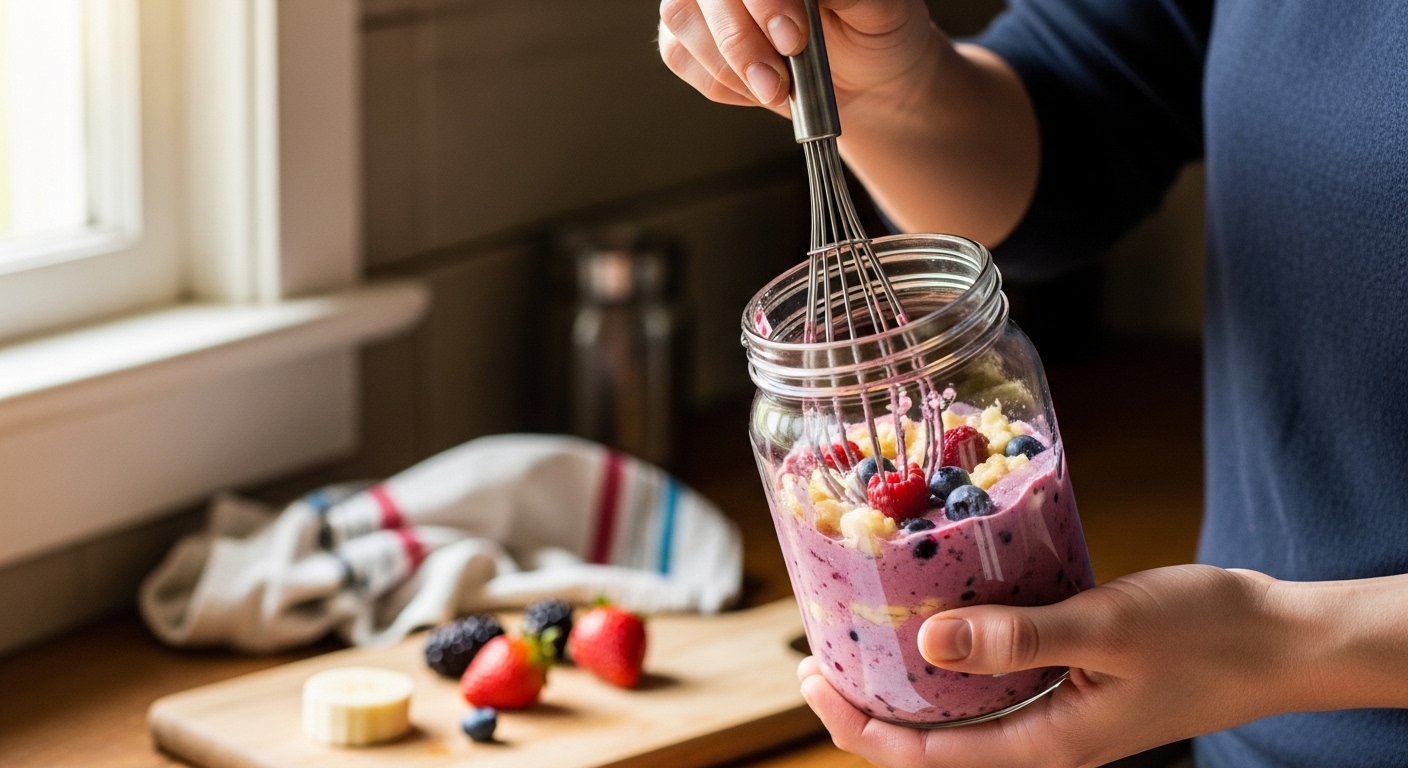
how to make smoothie without blender is something you probably never thought you’d need until you’re standing in your kitchen, tired, hungry, maybe a bit annoyed, staring at fruit and thinking “okay… now what?” It’s weird how often life removes the one tool you assumed was always there. And suddenly you’re improvising like you’re on some low-budget cooking show nobody asked for.
You’re not doing anything wrong, honestly. It happens more than people admit. Students in dorms, travelers in small rentals, people whose blender just gave up mid-life without warning. You still want something cold, sweet, and drinkable, not a full cooking project. So yeah, let’s work through it in a real way, not the overly perfect version you see online.
how to make smoothie without blender using simple kitchen hacks
The truth is you don’t actually need a blender, you just need patience and a bit of crushing power. Smoothies are basically just soft fruit broken down and mixed with liquid. The machine just makes it faster, not magical.
If you strip it down, you only need:
- Something to crush fruit
- Something to mix
- Something to strain (optional, but helpful)
- A bit of patience you didn’t plan on using today
People used to make fruit drinks long before blenders existed. Mortar and pestle setups go back thousands of years in many cultures. Even ancient food prep methods relied on grinding and soaking rather than spinning blades. So you’re not “behind,” you’re just going old-school accidentally.
tools you can use instead of a blender
Let’s be practical here. You probably already have at least one of these in your kitchen, even if it’s messy or slightly dull.
- Fork (the underrated hero)
- Potato masher
- Mortar and pestle
- Rolling pin (yes, really)
- Clean bottle or jar for shaking
- Fine sieve or strainer
A study from the Harvard T.H. Chan School of Public Health often emphasizes that food texture doesn’t significantly change nutritional value unless heat or processing destroys fiber structure. In simple words, smashing fruit manually still keeps most nutrients intact, especially fiber, potassium, and vitamin C.
You’re not losing much. You’re just working harder for the same smoothie vibe.
how to make smoothie without blender step-by-step method
This is where things get slightly messy, but in a good way.
Step 1: Choose soft fruits first
Bananas, ripe mangoes, strawberries, and peaches work best. Hard apples or raw carrots will make your life unnecessarily difficult.
Bananas are especially useful because they naturally mash into a creamy texture. A medium banana contains about 422 mg of potassium according to USDA nutritional data, which helps with hydration balance in the body.
Step 2: Pre-cut everything very small
Don’t skip this. The smaller you cut, the easier your life becomes later. Think tiny cubes, almost embarrassing how small.
Step 3: Mash aggressively
Use a fork or masher and press until it turns into a rough pulp. It won’t look pretty at first, and that’s fine. It’s not supposed to.
You might feel like you’re doing it wrong, but you’re not. Smoothie without blender always looks a bit rustic at this stage.
Step 4: Add liquid slowly
Milk, yogurt, almond milk, or even juice works. Add a little, mix, then adjust. Don’t flood it at once or you’ll lose control of texture.
Step 5: Stir or shake
If using a jar, close it tightly and shake like you’re angry at it (but safely). If using a bowl, stir for longer than you think is reasonable.
Step 6: Strain if needed
If chunks are too much, push mixture through a sieve. This step is optional but makes it closer to a real smoothie texture.
best ingredients when learning how to make smoothie without blender
Some ingredients behave better than others when you’re going manual. It’s kind of like they cooperate more.
Soft fruits that work well
- Bananas (best base texture)
- Strawberries (easy to mash when ripe)
- Mangoes (very smooth when overripe slightly)
- Avocado (makes it creamy but heavy)
- Blueberries (need more crushing but doable)
Liquids that help consistency
- Milk (classic, creamy)
- Yogurt (adds thickness and protein)
- Fruit juice (adds sweetness but can get watery)
- Coconut water (light and refreshing)
A 2023 nutritional overview published by the CDC noted that fruit intake is strongly associated with improved dietary fiber intake and better digestion patterns in general populations. So even a rough homemade smoothie still fits into healthy eating habits.
quick comparison table for smoothie texture without blender
| Ingredient Type | Ease of Manual Mashing | Final Texture | Best Use |
|---|---|---|---|
| Banana | Very Easy | Creamy | Base for all smoothies |
| Strawberry | Easy | Slightly chunky | Flavor + sweetness |
| Mango | Medium-Easy | Smooth | Tropical smoothies |
| Apple | Hard | Grainy | Needs straining |
| Avocado | Easy | Very creamy | Thick smoothies |
This table might look simple, but it saves you from a lot of “why is this still crunchy?” moments.
variations you can try without a blender
Once you understand the basic method, you can start experimenting a bit. Not everything has to be exact.
yogurt fruit bowl drink
Mash banana + strawberries + yogurt + honey, then thin it slightly with milk. It’s halfway between smoothie and dessert.
shake bottle smoothie
Put chopped fruit + milk in a sealed bottle, shake for 2–3 minutes, let it sit for another minute, then shake again. It’s not perfect, but it’s surprisingly drinkable.
juice-based crushed smoothie
Crush berries, mix with orange juice, and strain lightly. This one feels more like a chilled fruit drink than a smoothie, but still counts.
common mistakes when making smoothie without blender
People usually mess up in predictable ways, even if they’re careful.
- Using unripe fruit (too hard to mash)
- Adding too much liquid too early
- Not cutting fruit small enough
- Expecting blender-level smoothness immediately
- Skipping mixing time (this one is big)
There’s a quote from food scientist Harold McGee often referenced in culinary science circles: “Texture is as much a part of flavor as taste itself.” That’s very true here. If texture feels off, the whole drink feels off, even if ingredients are fine.
nutritional reality check
Even without a blender, your smoothie still carries real nutritional value. Here’s a simple breakdown based on common USDA values:
- Banana (1 medium): ~105 calories, potassium, vitamin B6
- Strawberries (1 cup): ~49 calories, vitamin C, manganese
- Milk (1 cup): ~103 calories, protein, calcium
- Yogurt (plain, 100g): ~59–100 calories depending on fat level, probiotics
So what you’re making is not just a “backup drink.” It’s still a legitimate nutrient-dense snack, just made in a more manual way.
tips that make everything easier
A few small adjustments change the whole experience more than you’d expect:
- Warm fruit slightly (room temperature mashes easier)
- Use overripe fruit when possible
- Add a pinch of salt to bring out sweetness (tiny trick, but real)
- Let mixture sit for 2–3 minutes before final stirring
It’s a bit like giving ingredients time to “talk to each other,” even though that sounds weirdly poetic for food.
conclusion (but not the polished kind)
At the end of the day, how to make smoothie without blender is less about perfection and more about getting something decent, cold, and actually enjoyable when you don’t have fancy equipment. It’s not supposed to beat a café smoothie. It’s supposed to get you through a moment when you still want something good without overthinking it.
And honestly, once you try it a couple of times, it stops feeling like a compromise. It just becomes another way of doing things. Slightly slower, a bit messier, but kind of satisfying in a way you don’t expect at first.

Jamesmathew is an expert Amazon affiliate writer, helping readers discover top products, smart deals, and practical buying guides through honest reviews and insightful content.