

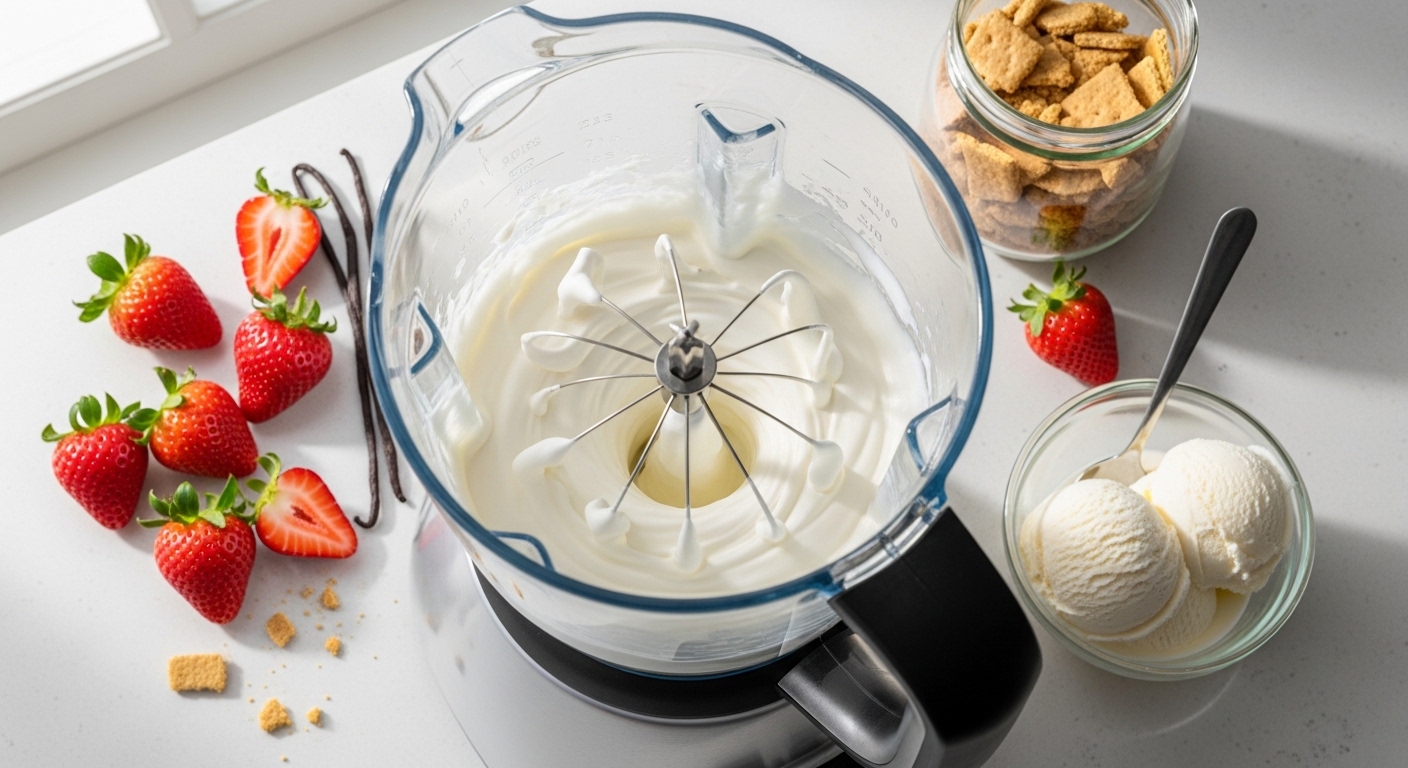
You’re standing there thinking can you whip cream in a blender or is that just one of those kitchen myths people say and then never actually try, and yeah maybe you already poured the cream in and now you’re kinda committed, which is honestly how most kitchen experiments begin anyway.
The short answer is yes, you can whip cream in a blender. But the longer answer, the one that actually matters when you don’t want to accidentally make butter at 2am, is a bit more wiggly and depends on how you go about it.
What Actually Happens When You Whip Cream
So here’s the slightly nerdy but still real-life version. Heavy cream has fat molecules that, when agitated (which is just a fancy word for “shaken around aggressively”), start trapping air. That’s how whipped cream becomes fluffy instead of just…liquid sadness.
Normally you’d use a whisk or a hand mixer, right. But a blender spins blades super fast, which means it can do the same thing but also way faster than you maybe expect. Sometimes too fast, which is where things go sideways kinda quick.
There’s this often-quoted kitchen rule that says, “cream goes from liquid to whipped to butter in seconds,” and honestly, it’s not even exaggerating much. One minute you’re like “oh nice soft peaks,” next second it’s grainy and you’re questioning your life choices.
Can a Blender Really Do It Well?
Yeah, but it’s not exactly the ideal tool. Blenders are more like “power tools,” not “gentle persuaders.” If you’re careful, you’ll get whipped cream. If you’re not paying attention, you’ll get something closer to butter, which is… useful, but probably not what you were aiming for on top of your coffee.
Here’s where blenders actually shine:
- When you need whipped cream fast
- When you don’t have a whisk or mixer
- When you’re okay with slightly less control over texture
And where they kinda struggle:
- Precision (soft peaks vs stiff peaks gets tricky)
- Small quantities (blades may not catch it properly)
- Overmixing (this is the big one)
Step-by-Step: How to Whip Cream in a Blender
You don’t need anything fancy, but you do need to pay attention a bit more than usual. It’s not a “set it and forget it” thing, not even close.
Ingredients
- Heavy cream (at least 30–36% fat, otherwise it just won’t whip properly)
- Sugar (optional, but most people add it)
- Vanilla extract (optional but kinda nice)
Process
- Chill everything first
Cold cream whips better, it just does. If your cream is warm-ish, it’ll fight you. Some people even chill the blender jar, which feels excessive until you try it once and realize oh, that actually helps. - Pour the cream into the blender
Don’t overfill it. About halfway or less is safer because the cream needs room to expand and move around. - Use low to medium speed
This is where people mess up. High speed feels tempting, like “let’s get this done fast,” but nope, that’s how you overshoot the perfect texture. - Blend in short bursts
Think 5–10 seconds at a time. Stop. Check. Repeat. It’s annoying but necessary. - Watch for texture changes
First it gets frothy, then thicker, then suddenly it starts forming peaks. This part happens faster than you expect, so don’t walk away. - Stop early
Seriously, stop just before you think it’s ready. Residual motion will continue thickening it slightly. - Add sugar or flavoring at the end
If you add sugar too early, it can sometimes mess with how the cream thickens, not always but sometimes enough to be annoying.
What Can Go Wrong (And It Probably Will Once)
There’s a reason people still use whisks and mixers for this. Blenders are a bit… chaotic.
Overwhipping Into Butter
This is the classic mistake. The cream separates into butter solids and buttermilk. You’ll notice it looks grainy and kinda clumpy, and at that point there’s no going back.
But hey, accidental butter is still butter, so not the worst outcome in the world.
Uneven Texture
Sometimes the bottom gets whipped while the top is still liquid, especially if you’re using a large blender with a small amount of cream. You’ll end up with this weird half-done situation.
Too Thin
If your cream isn’t cold enough or doesn’t have enough fat, it just won’t whip. You’ll blend and blend and it stays liquid, like it’s refusing politely.
Blender vs Other Methods
Here’s a quick comparison that might help you decide if this is even worth doing.
| Method | Speed | Control | Effort | Risk of Overwhipping |
|---|---|---|---|---|
| Hand whisk | Slow | High | High | Low |
| Electric mixer | Medium | Very high | Low | Medium |
| Blender | Very fast | Low | Very low | High |
So yeah, blender is the chaotic fast option. Works, but you gotta babysit it a bit.
Tips That Actually Make a Difference
These are the little things people skip and then wonder why it didn’t work right.
Use the Right Cream
Look for “heavy cream” or “double cream.” Anything below 30% fat is gonna struggle. This isn’t one of those situations where substitutes work nicely, they don’t.
Don’t Walk Away
It sounds obvious, but people do it anyway. You cannot leave a blender running and expect whipped cream to politely wait for you. It won’t.
Listen to the Sound
This one feels weird but it helps. The sound of the blender changes as the cream thickens. It gets slightly deeper, less splashy. Once you notice it, you can kinda predict when to stop.
Scrape the Sides if Needed
If your blender jar is wide, some cream might stick to the sides and not whip evenly. Pause and scrape it down.
Go Small if Possible
Smaller batches are easier to control. Big batches can be unpredictable and uneven.
Is It Worth It Though?
If you’re in a pinch, absolutely. If you’re trying to impress someone with perfectly textured whipped cream, maybe not your best move.
There’s this thing where convenience tools sometimes trade off finesse, and a blender is exactly that kind of trade. You gain speed but lose a bit of delicacy.
A lot of home cooks actually say they tried it once, got decent results, and then went back to using a hand mixer just because it felt more controllable, which makes sense honestly.
Real-World Example
Imagine you’re making dessert late at night, maybe pancakes or some quick mug cake situation, and you suddenly realize whipped cream would make it way better. No mixer, no whisk, just a blender sitting there like “well, I exist.”
You pour in cold cream, pulse it nervously, check every few seconds like you’re diffusing a bomb. And then, somehow, it works. Soft, fluffy, not perfect but definitely good enough.
That’s kinda the vibe of using a blender for whipped cream. Slightly chaotic, but surprisingly effective if you stay present.
Common Questions People Have
Can you make stiff peaks in a blender?
Yes, but it’s tricky. The margin between stiff peaks and overwhipped is very thin. You have to stop at just the right moment, which takes a bit of practice or luck, or both honestly.
Can you add sugar at the beginning?
You can, but it’s safer to add it later. Early sugar can sometimes slow down the whipping process or make the texture less stable.
What about flavored whipped cream?
Totally doable. Vanilla, cocoa powder, even a bit of coffee. Just add them toward the end so you don’t interfere with the whipping stage too much.
Can you fix overwhipped cream?
If it’s just slightly overdone, you can add a splash of liquid cream and gently stir it back. But if it’s fully turned into butter, that’s it, you’ve crossed the line.
A Slightly Honest Conclusion
So, can you whip cream in a blender? Yeah, you can, and it works better than you’d think, but also worse than you’d hope if that makes any sense at all.
It’s one of those kitchen hacks that lives in the “technically correct but situationally risky” category. If you’re careful, attentive, and a bit patient (even though the blender itself is not patient at all), you’ll get something fluffy and satisfying.
But if you rush it, or assume it’ll behave like a mixer, it’ll humble you pretty fast.
Still, there’s something kinda fun about making whipped cream this way. Feels a bit improvised, a bit experimental, like you’re bending the rules just enough to get away with it. And sometimes, that’s exactly the kind of cooking that sticks with you.

Jamesmathew is an expert Amazon affiliate writer, helping readers discover top products, smart deals, and practical buying guides through honest reviews and insightful content.