

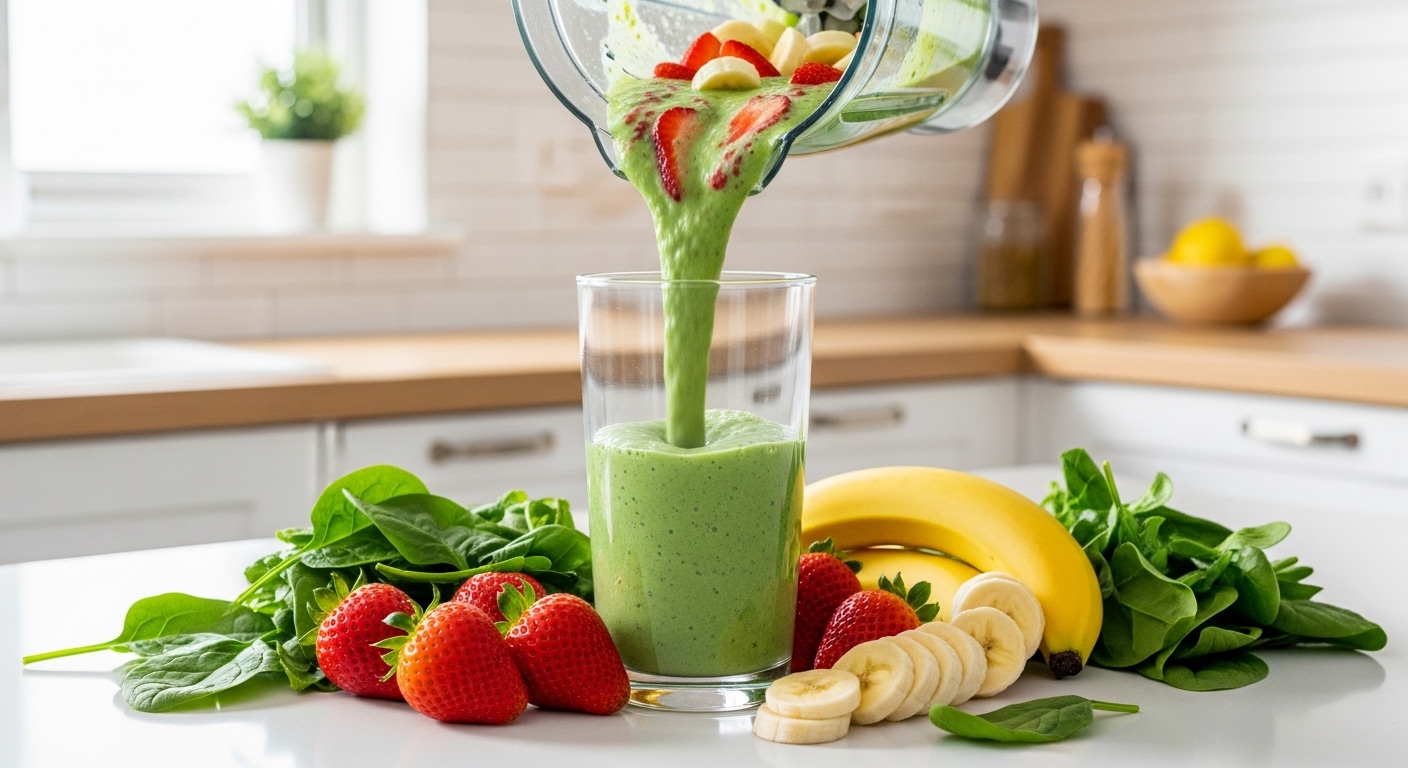
You’re probably standing there right now, staring at your blender and wondering how to make a smoothie with a blender without turning it into some weird chunky mess that tastes… off, like something almost right but not really. Yeah, that happens more than people admit, and it’s not even your fault most times, it’s just small things that get ignored.
Smoothies look easy from the outside, like throw stuff in, press a button, done. But then you try it and suddenly it’s either too thick, too watery, or doing that awkward thing where the blades spin but nothing actually blends, which feels mildly insulting to be honest.
So let’s fix that, properly but not in a robotic way.
What You Actually Need (and What You Don’t)
Before you even start, don’t overthink the equipment part. You don’t need some fancy machine that costs half your rent. A basic blender works fine, even the slightly noisy one that sounds like it’s about to take off.
Here’s the core stuff you’ll want nearby:
- A blender (obviously, but yeah)
- Fresh or frozen fruits
- A liquid base (milk, water, juice, etc.)
- Something creamy (optional but makes life better)
- Ice (if you like it cold-cold)
And that’s… kinda it. People complicate it by adding 12 ingredients and then wondering why it tastes like confusion.
The Basic Smoothie Formula (That No One Explains Clearly)
There’s actually a loose formula, not strict like baking, but enough to guide you so things don’t go sideways.
The 3:2:1-ish Method
- 3 parts fruit
- 2 parts liquid
- 1 part creamy or thickener
It doesn’t have to be exact, honestly eyeballing it works better sometimes, but this ratio keeps things from becoming either soup or cement.
Example Combo
- 1 cup frozen bananas
- 1/2 cup strawberries
- 3/4 cup milk
- 2 tablespoons yogurt
Blend that and you’ll get something smooth-ish, creamy-ish, and actually drinkable without regret.
Step-by-Step: How to Make a Smoothie with a Blender
This is where people mess up, weirdly enough. Order matters more than you’d think.
1. Add Liquid First (don’t skip this)
Pour your liquid into the blender before anything else. This helps the blades move properly instead of just spinning angrily under a pile of fruit.
If you forget this step, you’ll probably end up stopping the blender 3 times just to shake it like it owes you money.
2. Soft Ingredients Next
Things like yogurt, peanut butter, or honey go in now. They blend easier when they’re not sitting on top.
3. Fruits and Greens
Add your fruits after that. If you’re using spinach or kale, toss it in here too. It looks like too much at first, but it blends down, don’t panic.
4. Ice or Frozen Stuff Last
Frozen fruits or ice cubes go on top. This pushes everything down toward the blades when blending starts, which is oddly satisfying when it works.
5. Blend in Pulses First
Instead of going full power instantly, pulse it a few times. Then increase speed gradually. This avoids that awkward air-pocket situation where nothing blends.
Best Ingredients for Smoothies (That Actually Taste Good)
Some ingredients just work better than others, and some… not so much unless you know what you’re doing.
Fruits That Blend Smoothly
- Bananas (basically the backbone of smoothies)
- Mangoes (super creamy)
- Berries (add flavor but can be seedy)
- Pineapple (freshens everything up)
Liquid Options
| Liquid Type | Texture Result | Flavor Impact |
|---|---|---|
| Milk | Creamy | Mild |
| Almond milk | Light | Slightly nutty |
| Orange juice | Thin | Sweet and tangy |
| Water | Very light | Neutral |
Creamy Add-ins
- Yogurt
- Peanut butter
- Avocado (sounds odd but works surprisingly well)
Sometimes just one of these changes everything, like suddenly your smoothie feels intentional instead of accidental.
Common Mistakes (Yeah, You Might Be Doing These)
You don’t really notice these until someone points them out, and then it’s like… oh.
Too Much Liquid
You think more liquid means easier blending, but it actually waters everything down and kills the texture. Start small, you can always add more later.
Not Using Frozen Ingredients
If everything is fresh and room temperature, your smoothie ends up kinda warm and meh. Frozen fruit fixes that instantly.
Overloading the Blender
More ingredients doesn’t mean better smoothie. It just makes blending harder and flavors muddled, like everything arguing at once.
Blending Too Long
You’d think longer blending = smoother, but sometimes it just heats things up and ruins the freshness. 30–60 seconds is usually enough.
How to Fix a Bad Smoothie (Because It Happens)
Even when you follow everything, sometimes it still turns out weird. It’s fine, not a disaster.
Too Thick?
Add a bit more liquid slowly, not all at once.
Too Thin?
Throw in:
- Ice
- Frozen banana
- A spoon of yogurt
Too Bland?
Add:
- A pinch of salt (seriously, tiny amount)
- Honey or dates
- A splash of citrus juice
Sometimes it just needs a small nudge, not a full restart.
Smoothie Ideas You Can Try Right Away
These are simple, not overly fancy, but they work consistently.
Classic Banana Berry
- Banana
- Mixed berries
- Milk
- Honey
It’s predictable but in a good way.
Tropical-ish Blend
- Mango
- Pineapple
- Coconut milk
Tastes like something you’d drink on vacation but you’re just in your kitchen, which is slightly funny if you think about it.
Green Smoothie (That Doesn’t Taste Like Grass)
- Spinach
- Banana
- Apple
- Almond milk
The banana hides the greens, almost suspiciously well.
A Few Real-World Tips People Don’t Usually Say
This part matters more than recipes sometimes.
- Your blender has a limit. If it smells like something’s burning, stop immediately, don’t just keep going like nothing’s wrong.
- Clean it right after use. Waiting makes it weirdly harder, like the smoothie decides to glue itself permanently.
- Taste before pouring. Small adjustments make big difference, and it’s easier than pretending it’s fine later.
There’s this quote from nutrition expert Dr. Frank Hu that kinda fits here:
“Small, consistent dietary habits often have a larger impact than occasional drastic changes.”
And yeah, making smoothies regularly—even imperfect ones—beats trying once and giving up.
Nutritional Benefits (Without Sounding Like a Lecture)
Smoothies can be healthy, but it depends what you put in them. Not all smoothies are automatically good for you, which people sometimes assume.
What You’re Getting
- Vitamins from fruits
- Fiber (if you don’t strain it)
- Healthy fats (from nuts or avocado)
What to Watch Out For
- Too much sugar (especially from juices)
- Overloading calories with nut butters
- Skipping protein entirely
Balance matters more than perfection, even if that sounds slightly cliché, it’s true.
Final Thoughts (But Not in a Formal Way)
So yeah, learning how to make a smoothie with a blender isn’t complicated, but it’s also not just tossing random things together and hoping for the best. There’s a bit of rhythm to it, like once you get the order and balance right, it kinda clicks and you stop overthinking it.
You’ll mess up a few times, probably more than a few actually, and that’s fine. Every bad smoothie weirdly teaches you something useful, even if it tastes like regret in a glass.
Once you get the hang of it, though, it becomes one of those things you do without thinking, like muscle memory but for breakfast. And then suddenly you’re the person casually making smoothies while someone else is staring at their blender wondering what they’re doing wrong.

Jamesmathew is an expert Amazon affiliate writer, helping readers discover top products, smart deals, and practical buying guides through honest reviews and insightful content.