

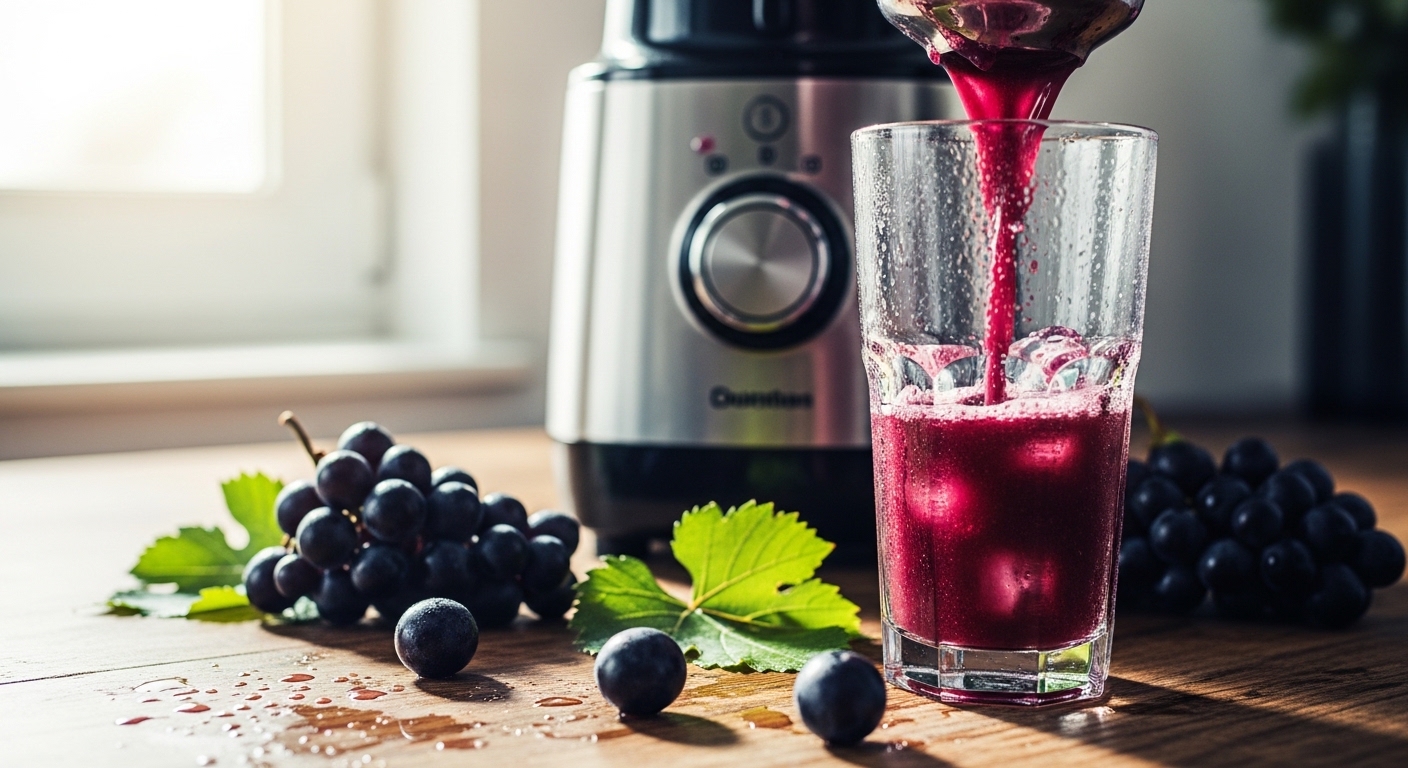
You’re probably standing there wondering how to make grape juice with a blender because, well, the grapes are just sitting there and the juicer isn’t, or maybe you never even had one in the first place and now you’re kinda stuck but also curious if this’ll actually work or just turn into a weird purple mess you regret later. And yeah, it does work, not perfectly like store-bought, but in a way that feels oddly more real, like you actually did something with your hands instead of twisting open a cap.
why even bother making grape juice in a blender
There’s something slightly chaotic but satisfying about using a blender for grape juice. It’s not what most people imagine first, but honestly it’s way more accessible. You don’t need fancy gear, just grapes, a blender, and a bit of patience that might run out halfway but that’s fine.
Also, fresh grape juice has actual nutrients that packaged ones sometimes quietly lose during processing. According to the United States Department of Agriculture (USDA), grapes contain vitamin C, vitamin K, and antioxidants like resveratrol, which people keep talking about like it’s some secret life potion or something.
And the taste? It’s not flat. It’s kinda loud, slightly uneven, sometimes sweeter, sometimes tangy, depending on the grapes you picked without thinking too much about it at the store.
ingredients you’ll need (nothing dramatic)
You don’t need a long list that makes you second guess everything. Just this:
- Fresh grapes (red, green, or black, all work, just differently)
- Water (optional but helpful)
- Sugar or honey (optional, depends on your mood honestly)
- A pinch of salt (sounds odd but it balances flavor a tiny bit)
quick note about grape types
Not all grapes behave the same, which feels unfair but that’s how it is:
| Grape Type | Flavor Profile | Juice Outcome |
|---|---|---|
| Red Grapes | Sweet, mild | Smooth and balanced |
| Green Grapes | Tangy, crisp | Slightly sharp taste |
| Black Grapes | Deep, rich | Strong flavor, darker juice |
If you mix them, you get something unpredictable, but sometimes that’s the best part.
how to make grape juice with a blender step by step
Alright, here’s where things actually happen, not just talking about it.
step 1: wash the grapes (don’t skip this pls)
Even if they look clean, they’re not really clean. Rinse them under running water and kinda rub them gently. Some people soak them in salt water for a few minutes, which feels extra but actually helps remove residues.
step 2: remove stems and bad ones
This part is slightly annoying but necessary. Take off the stems and throw away any grapes that look weirdly soft or shriveled like they’ve given up on life already.
step 3: add grapes to blender
Fill your blender jar about halfway or a bit more. Don’t overpack it or you’ll stress the motor and maybe yourself too.
Add a splash of water, maybe half a cup. Not too much, you’re not making grape soup.
step 4: blend until it looks… kinda right
Blend on medium to high speed for 30–60 seconds. You’ll see it turn into a thick, pulpy mixture. It won’t look like juice yet, more like a smoothie that didn’t decide what it wants to be.
step 5: strain the juice
This is where it becomes actual juice. Use:
- A fine mesh strainer
- Cheesecloth
- Or even a clean cotton cloth if you’re improvising
Pour the blended mixture through and press it down with a spoon. This part takes a bit, and your hands might get sticky, which is just part of the experience I guess.
step 6: taste and adjust
Take a sip. If it’s too strong, add a little water. Too sour? Add a bit of sugar or honey. Too flat? That pinch of salt helps weirdly well.
tips that make a surprising difference
Some of these sound small, but they kinda change everything in subtle ways.
chill your grapes beforehand
Cold grapes = instantly refreshing juice. No need to add ice that waters it down later.
don’t overblend
If you blend too long, the seeds (if your grapes have them) can make the juice slightly bitter, which is not a fun surprise.
strain twice if needed
If you want smoother juice, strain it again. First pass removes pulp, second pass refines it more.
add lemon juice (optional but nice)
A tiny squeeze of lemon brightens the flavor. Not necessary, but noticeable.
nutritional benefits you didn’t think much about
Grape juice isn’t just sweet and nice. It actually does things inside your body, even if you’re not thinking about it while drinking.
- Rich in antioxidants like resveratrol
- Supports heart health (studies from Harvard Health mention this effect in moderation)
- Contains natural sugars for quick energy
- Hydrating, especially in warmer climates
“Grapes are a good source of several important nutrients, including potassium and vitamins C and K.” — USDA FoodData Central
But yeah, don’t go overboard. It’s still sugar, even if it’s natural.
common mistakes people make (and regret a bit)
You’ll probably avoid these now, so that’s something.
using unripe grapes
They make very sour juice. Not “refreshing sour,” more like “why did I do this” sour.
skipping straining
Unless you like chewing your juice, straining is not optional.
adding too much water
Dilutes everything. Then you try to fix it with sugar and it just becomes confusing.
storing it too long
Fresh grape juice doesn’t last like packaged ones. Keep it in the fridge and drink within 2–3 days max.
variations you might actually enjoy trying
Once you get the basic version down, you can experiment a bit without ruining everything.
spiced grape juice
Add a tiny pinch of:
- Cinnamon
- Ginger
It gives a warm twist, kinda unexpected but interesting.
mixed fruit grape juice
Blend grapes with:
- Apples
- Oranges
Creates a layered flavor that feels more complex, even if you didn’t plan it that way.
frozen grape juice slush
Freeze the grapes first, then blend with minimal water. You get a thick, icy drink that’s perfect when it’s too hot and you’re not thinking straight.
how it compares to store-bought juice
Not everything homemade is automatically better, but this one kinda is in certain ways.
| Feature | Homemade | Store-bought |
|---|---|---|
| Freshness | Very high | Moderate |
| Preservatives | None | Often present |
| Taste | Variable but real | Consistent but flat |
| Effort | Medium | None |
The main difference is control. You decide what goes in, even if you mess it up slightly.
storing your grape juice properly
Once you’ve made it, don’t just leave it sitting around.
- Use a glass container with a lid
- Refrigerate immediately
- Shake before drinking (natural separation happens)
If it smells off or tastes weird after a couple days, just don’t risk it.
a slightly honest ending
Making grape juice in a blender isn’t this perfectly smooth process where everything goes right the first time. Sometimes it’s too thick, sometimes too sour, sometimes you spill a bit and pretend it didn’t happen. But once you figure out your own way of doing it, it becomes oddly simple, like muscle memory but for juice.
And yeah, next time you see grapes sitting there doing nothing, you probably won’t ignore them the same way again.

Jamesmathew is an expert Amazon affiliate writer, helping readers discover top products, smart deals, and practical buying guides through honest reviews and insightful content.