

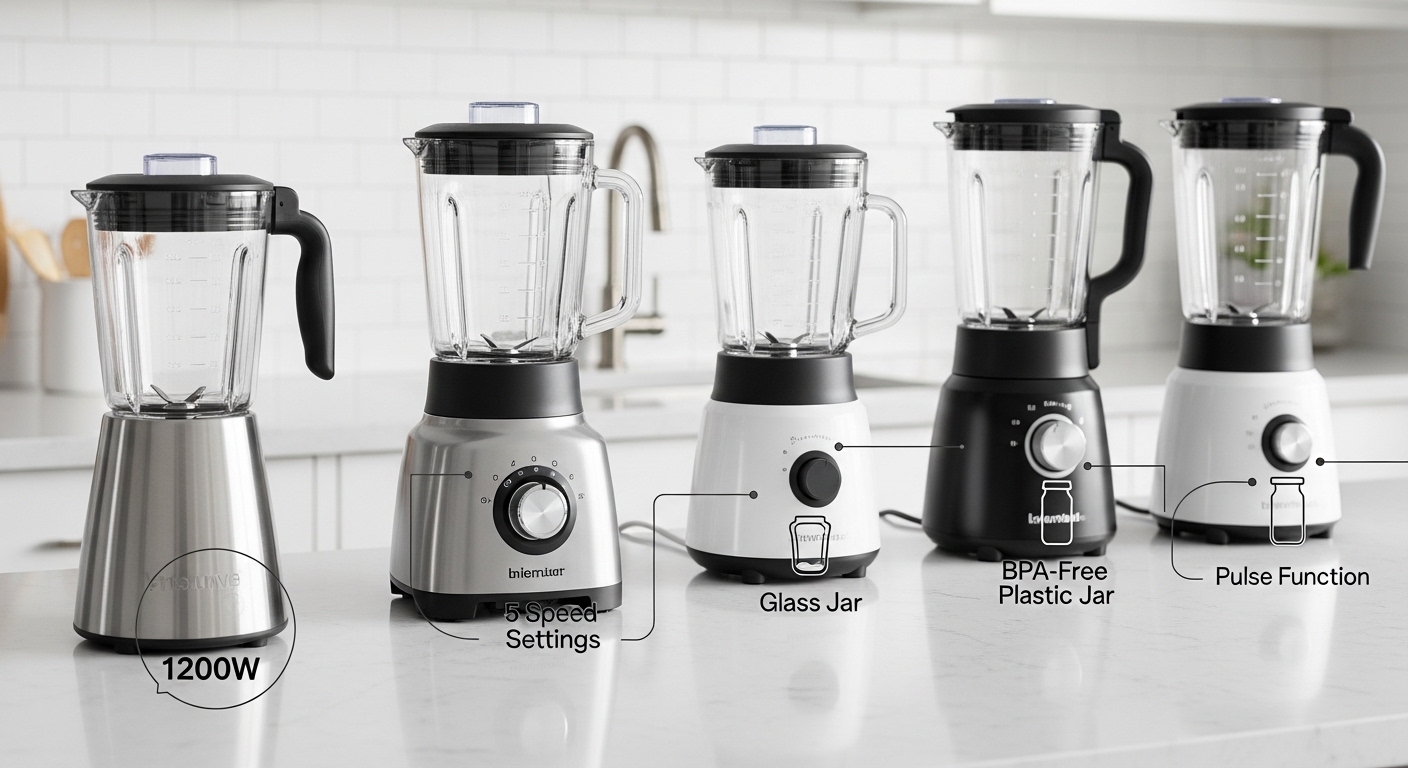
You’re probably standing there wondering what to look for in a blender while scrolling through a dozen tabs, and somehow every option feels both right and wrong at the same time, which is… honestly a bit annoyin if we’re being real. Like you just want something that works, not a whole personality crisis in appliance form.
Blenders, they seem simple till they’re not. One minute you’re thinking “just blend stuff,” next minute you’re comparing watts like it’s a car engine, and suddenly your brain kinda fogs up a bit. So let’s walk through it properly, but not in that stiff way that makes you forget halfway.
Why Choosing the Right Blender Actually Matters
You might think, eh, a blender is a blender, but then you try making a smoothie and end up chewing ice chunks like it’s some accidental dessert experiment. That’s where the difference starts poking you.
A decent blender doesn’t just mix things, it sort of persuades ingredients to cooperate, if that makes sense. Cheap ones kinda argue with your food instead of blending it.
According to consumer appliance reports, blenders with higher wattage and better blade design can reduce blending time by up to 40%, which sounds small until you’re late and your banana refuses to disappear into the mix.
Motor Power: The Not-So-Secret Backbone
How Much Wattage Do You Actually Need?
This is one of the main things to look at when deciding what to look for in a blender, even if it feels a bit technical at first glance.
- 300–500 watts: okay-ish for soft fruits, not great for ice
- 600–900 watts: decent middle ground, does most jobs fine
- 1000+ watts: crushes ice, nuts, frozen stuff without complaining much
You don’t always need a super powerful motor unless you’re planning to blend things that kinda fight back, like almonds or frozen mango chunks that feel like rocks.
A small tip, though, higher wattage doesn’t always mean better performance if the design is meh. It’s like having a strong engine in a car with square wheels… doesn’t really help much.
Blade Quality: More Than Just Sharp Metal
Stainless Steel vs Cheap Alternatives
Blades are weirdly overlooked, which is funny because they’re literally doing the main job.
Look for:
- Stainless steel blades (they last longer, don’t rust easy)
- Multi-directional design (not just spinning in one lazy circle)
- Thick, sturdy build (thin blades can dull quicker than you expect)
Some brands use stacked or angled blades that create a vortex effect, which sounds fancy but really just means your ingredients don’t sit there awkwardly at the top refusing to blend.
Real-World Example
Ever tried blending spinach in a weak blender? It just floats there like it’s protesting. A good blade setup pulls it down properly, no drama.
Jar Material: Glass, Plastic, or Tritan?
This part gets oddly personal, people have strong opinions here.
Glass Jars
- Heavier (like noticeably heavy)
- Don’t absorb smells or stains
- Can crack if you’re clumsy, which happens more than we admit
Plastic Jars
- Lightweight and easier to handle
- Can scratch or hold odors over time
- Usually cheaper
Tritan (Fancy Plastic)
- BPA-free
- More durable than standard plastic
- Doesn’t stain as easily
If you’re blending turmeric or berries often, plastic might betray you with permanent color memories, which is… not ideal.
Speed Settings and Controls
Do You Need 10 Speeds? Probably Not
Some blenders come with a ridiculous number of buttons, like you’re piloting a spaceship instead of making a smoothie.
What actually matters:
- 2–3 speed levels (low, medium, high)
- Pulse function (this one’s actually useful)
- Pre-set programs (nice, but not essential)
Pulse is especially helpful when you don’t want to over-blend something into oblivion, like salsa turning into soup.
Quote from Kitchen Testing Experts
“Pulse control gives users better texture control compared to continuous blending modes.”
That basically means you get to decide if your food stays chunky or goes full liquid chaos.
Capacity: Bigger Isn’t Always Better
You might think getting the biggest jar is smart, but then you try lifting it full and your wrist kinda regrets your decisions.
- Personal blenders (300–500 ml): good for single servings
- Standard size (1–1.5 liters): works for most households
- Large (2 liters+): better for families or batch prep
If you live alone or just make quick smoothies, a huge jar feels unnecessary, like buying a bus to go grocery shopping.
Ease of Cleaning: The Thing You’ll Care About Later
Nobody thinks about cleaning until they’re standing at the sink wondering why peanut butter sticks like glue.
What Makes Cleaning Easier?
- Dishwasher-safe parts
- Detachable blades
- Smooth jar interior (fewer places for stuff to hide)
A quick trick people use: add warm water + a drop of soap and blend for 30 seconds. It kinda cleans itself, which feels like cheating but in a good way.
Noise Level: Yes, It Matters More Than You Think
Blenders are loud, but some are aggressively loud.
If you’re making early morning smoothies, a quieter blender saves you from accidentally waking everyone up and then pretending you didn’t.
High-powered models tend to be louder, but better insulation can reduce noise a bit.
Durability and Build Quality
This one’s hard to judge online, which makes it annoying.
Look for:
- Solid base (not wobbly)
- Rubber feet (prevents sliding)
- Good reviews mentioning long-term use
A blender that lasts 5–10 years is actually cheaper than replacing a cheap one every year, even if it feels expensive upfront.
Price vs Value: Where Should You Land?
Blenders range from budget-friendly to “why is this so expensive” levels.
| Price Range | What You Get |
|---|---|
| $20–$50 | Basic blending, limited power |
| $50–$150 | Solid performance, good for daily use |
| $150+ | High power, durability, premium features |
You don’t need the most expensive option unless you’re blending daily or doing heavy stuff like nut butters.
Extra Features That Might Actually Help
Some features sound gimmicky but are secretly useful.
- Tamper tool: helps push ingredients down
- Travel cups: blend and go
- Auto shut-off: prevents overheating
- Ice crush mode: self-explanatory but handy
You don’t need all of these, but a couple can make your life easier without you noticing at first.
Common Mistakes People Make When Buying a Blender
This part is where people kinda trip up a bit.
- Buying based only on looks (it sits on your counter, sure, but still)
- Ignoring wattage completely
- Choosing too large or too small capacity
- Overpaying for features they never use
It’s easy to get distracted by design or branding, happens more often than people admit.
Quick Checklist: What to Look for in a Blender
If you’re feeling slightly overwhelmed, here’s a quick run-through:
- Motor power suited to your needs
- Strong, well-designed blades
- Durable jar material
- Simple, useful controls
- Easy cleaning setup
- مناسب capacity (yeah mixing languages but you get it)
- Reasonable noise level
- Good long-term reviews
That’s kinda your core formula, even if it doesn’t look like one.
Final Thoughts
Figuring out what to look for in a blender doesn’t have to feel like solving a puzzle with missing pieces, even though it sometimes does. You’re basically matching your habits with the machine, not chasing the “best” one out there.
If you mostly do smoothies, keep it simple. If you’re blending tougher stuff, invest a bit more. And if you’re stuck between two options, the one that feels easier to use daily is probably the better choice, even if the specs are slightly lower.
At the end of it, a blender should make your life easier, not give you another thing to overthink, which, yeah, we already have enough of those.

Jamesmathew is an expert Amazon affiliate writer, helping readers discover top products, smart deals, and practical buying guides through honest reviews and insightful content.