

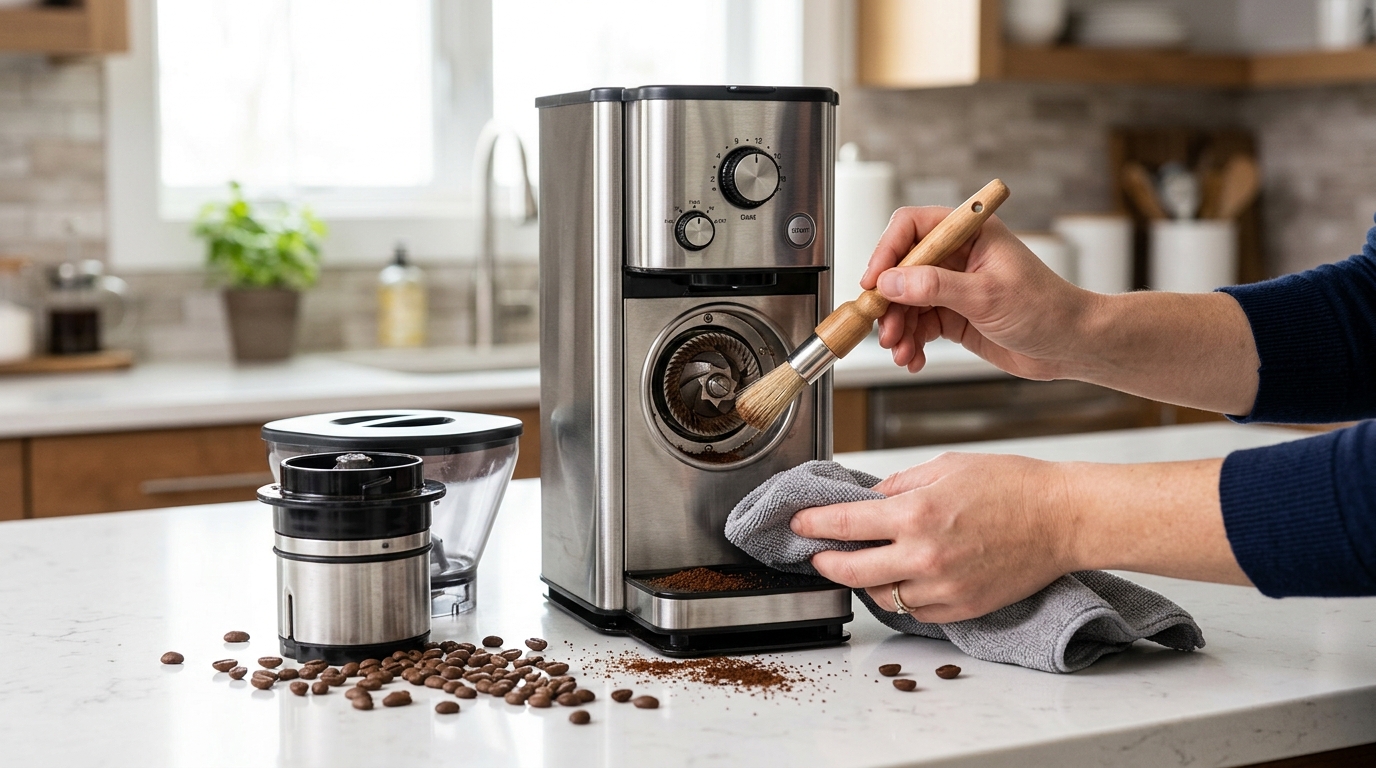
You probably searched for how to clean Cuisinart coffee grinder because your morning coffee has started tasting just a little… off. Maybe the grinder sounds different, maybe stale grounds keep falling into fresh beans, or maybe you opened the lid and thought, “yeah, that can’t be good.” It happens faster than most people expect, honestly.
A coffee grinder quietly collects old coffee oils, tiny particles, and fine dust every single time you use it. Even if it looks fairly clean from the outside, the inside can hold enough residue to affect flavor, create unpleasant odors, and even shorten the life of the grinder. The good news? Cleaning a Cuisinart coffee grinder isn’t difficult, and you don’t need fancy equipment to keep it working like new.
This guide walks you through everything you need to know, from everyday cleaning habits to deep cleaning methods, common mistakes to avoid, and tips for maintaining consistently fresh coffee.
Why Cleaning Your Cuisinart Coffee Grinder Matters
Coffee beans naturally contain oils. Those oils are wonderful inside your cup, but they’re less charming once they stick to grinding chambers and blades or burrs.
Over time, coffee oils become rancid. They coat internal surfaces, trap fine coffee dust, and slowly change the taste of every new batch you grind. It’s kinda sneaky because the decline happens gradually. You don’t always notice until you compare it with freshly ground coffee from a clean grinder.
Regular cleaning helps you:
- Keep coffee tasting fresh
- Prevent stale flavors
- Remove trapped coffee oils
- Reduce grinder noise
- Improve grinding consistency
- Extend the grinder’s lifespan
- Prevent clogs
A surprisingly small amount of old coffee residue can influence flavor, especially if you brew lighter roasts where subtle tasting notes are easier to notice.
How Often Should You Clean a Cuisinart Coffee Grinder?
The answer depends on how frequently you brew coffee.
| Usage | Light Cleaning | Deep Cleaning |
|---|---|---|
| Daily | Every week | Once a month |
| 3–4 times weekly | Every two weeks | Every six weeks |
| Occasional use | After every few uses | Every two months |
If you grind oily dark roast beans, you’ll probably notice buildup sooner. Dark roasts leave behind more residue than lighter roasts, so they ask for a little more attention.
What You’ll Need Before Cleaning
Fortunately, most supplies are already sitting somewhere in your kitchen.
Gather:
- Soft microfiber cloth
- Small soft brush
- Dry toothbrush
- Cotton swabs
- Mild dish soap
- Warm water
- Dry towel
- Grinder cleaning tablets (optional)
- Wooden toothpick for stubborn corners
Avoid using harsh chemicals or abrasive scrubbers. Plastic parts can scratch easier than you’d think, and rough cleaning may damage surfaces over time.
Know Which Cuisinart Coffee Grinder You Own
Cleaning instructions vary slightly depending on the grinder style.
Blade Grinder
Blade grinders have spinning stainless steel blades attached permanently inside the grinding chamber.
Cleaning focuses mainly on:
- Grinding chamber
- Blade area
- Lid
- Exterior housing
Burr Grinder
Burr grinders contain removable grinding burrs.
These models usually require cleaning:
- Bean hopper
- Upper burr
- Lower burr
- Grounds container
- Chute
Fortunately, many Cuisinart burr grinders are designed so the upper burr removes easily without tools.
How to Clean a Cuisinart Blade Coffee Grinder
Blade grinders are common in many kitchens because they’re affordable and simple.
Follow these steps carefully.
Step 1: Unplug the Grinder
Always disconnect power before cleaning.
It sounds obvious, yet people skip this surprisingly often when they’re in a hurry.
Step 2: Empty Remaining Grounds
Turn the grinder upside down over a trash bin.
Tap gently.
Loose grounds should fall out naturally.
Step 3: Brush the Grinding Chamber
Use a soft brush or dry toothbrush to remove trapped coffee particles.
Pay attention around the blade where fine coffee dust likes hiding. It sorta packs itself into tiny corners.
Step 4: Wipe Carefully
Use a slightly damp cloth.
Never pour water directly into the grinding chamber.
Instead:
- Wipe carefully around blades.
- Clean side walls.
- Remove oily residue.
- Dry immediately.
Moisture left inside may encourage corrosion or damage electrical components.
Step 5: Clean the Lid
Wash removable lids using:
- Warm water
- Mild dish soap
Dry completely before reinstalling.
Even tiny droplets left inside can cause fresh coffee grounds to clump together.
How to Clean a Cuisinart Burr Coffee Grinder
Burr grinders need slightly more attention, but they’re easier to clean thoroughly.
Step 1: Remove Beans
Empty the hopper completely.
Store unused beans in an airtight container rather than leaving them inside the grinder.
Step 2: Remove Removable Parts
Take out:
- Bean hopper
- Grounds container
- Upper burr
Check your owner’s manual if you’re unsure how each piece unlocks.
Never force anything.
Step 3: Brush the Burrs
Use the supplied cleaning brush or a soft paintbrush.
Brush away:
- Coffee dust
- Chaff
- Oil residue
- Small bean fragments
Take your time here. This part matters more than people realize.
Step 4: Clean the Hopper
Wash removable plastic pieces using warm soapy water.
Rinse thoroughly.
Allow them to air dry completely before putting everything back together.
Step 5: Clean the Grounds Chute
Coffee often gets trapped inside the exit chute.
Use:
- Small cleaning brush
- Cotton swab
- Wooden toothpick
Avoid inserting metal objects.
Step 6: Reassemble
Once every component is perfectly dry, reinstall everything according to the manufacturer’s instructions.
Run a small amount of inexpensive coffee beans afterward to remove any remaining dust before brewing your favorite beans.
Can You Wash the Grinding Chamber?
This depends entirely on the grinder.
Here’s a simple guide.
| Grinder Part | Wash with Water? |
|---|---|
| Lid | Yes |
| Bean hopper | Yes |
| Grounds container | Yes |
| Grinding chamber | No |
| Blade assembly | No |
| Motor housing | No |
Water should never enter the motor or electrical housing.
If moisture reaches internal electronics, repairs can become expensive very quick.
Should You Use Rice to Clean a Coffee Grinder?
Years ago, many people recommended grinding uncooked rice.
Today, most manufacturers discourage this practice.
Rice is harder than roasted coffee beans and may:
- Stress the motor
- Wear blades faster
- Damage burr edges
- Leave starch residue
Instead, use grinder cleaning tablets made specifically for coffee equipment.
These products safely absorb oils and remove residue without harming grinding components.
Using Coffee Grinder Cleaning Tablets
Cleaning tablets are probably the easiest deep-cleaning option.
The process usually looks like this:
- Empty coffee beans.
- Add recommended amount of cleaning tablets.
- Grind tablets completely.
- Empty residue.
- Grind a small amount of coffee beans.
- Discard those beans.
Many coffee professionals use this method monthly because it removes oils from areas brushes cannot easily reach.
Common Cleaning Mistakes to Avoid
Even careful coffee drinkers occasionally make mistakes.
Here are the biggest ones.
Using Too Much Water
A damp cloth is enough.
Never rinse the grinder body under running water.
Forgetting to Dry Everything
Moisture encourages coffee residue to stick even faster.
Always allow removable parts to dry completely.
Using Sharp Objects
Knives and screwdrivers may scratch burrs or plastic components.
Wooden tools are much safer.
Ignoring Coffee Oils
Visible grounds aren’t the only issue.
Invisible oils continue building after every grind.
That’s why regular maintenance matters even when everything looks clean.
Skipping Routine Cleaning
Waiting until the grinder smells bad usually means residue has accumulated for weeks.
Small cleanings save much more effort later.
How to Remove Stubborn Coffee Oil Buildup
Sometimes a grinder hasn’t been cleaned for months.
When that happens, sticky oils become harder to remove.
Try this approach.
First, brush away loose grounds.
Next, wipe surfaces with a cloth lightly dampened using warm water and a tiny drop of dish soap.
Use cotton swabs around tight corners.
Repeat several gentle cleanings instead of scrubbing aggressively.
Patience works better than force here, even if it feels a bit slower.
Maintenance Tips to Keep Your Grinder Cleaner
Good habits reduce deep cleaning dramatically.
Try these simple practices:
- Empty beans after each use if you don’t brew daily.
- Wipe the hopper weekly.
- Brush out loose grounds frequently.
- Deep clean monthly.
- Store beans separately.
- Avoid flavored coffee beans whenever possible.
- Keep the grinder covered from kitchen dust.
Flavored beans often contain added oils that leave heavier residue inside the grinder.
Signs Your Cuisinart Coffee Grinder Needs Cleaning
Sometimes the grinder tells you before you actually notice.
Watch for these symptoms:
- Coffee tastes bitter or stale.
- Grinding becomes slower.
- Grounds come out uneven.
- Strange smells appear.
- Extra noise during grinding.
- Grounds stick inside the chamber.
- Bean hopper feels greasy.
If you notice two or three of these signs together, it’s probably time for a thorough cleaning.
Frequently Asked Questions
Can I use vinegar to clean my Cuisinart coffee grinder?
Not inside the grinding chamber. Vinegar can leave behind odors and shouldn’t contact electrical components. Mild dish soap for removable parts works much better.
Can I put Cuisinart grinder parts in the dishwasher?
Some removable plastic components may be dishwasher safe, depending on your model. Always check your owner’s manual first because high heat may warp certain plastic pieces.
Why does my grinder still smell after cleaning?
Coffee oils sometimes hide beneath burrs or around the grounds chute. A deeper cleaning with grinder cleaning tablets usually removes lingering odors.
Does cleaning improve coffee flavor?
Yes. Fresh beans ground through a clean grinder produce noticeably cleaner flavors because old oils and stale particles aren’t mixing with newly ground coffee.
How long does cleaning take?
Weekly cleaning usually takes about five minutes. A thorough deep cleaning may require fifteen to twenty minutes, mostly because drying removable parts properly takes a little extra time.
Final Thoughts
Learning how to clean Cuisinart coffee grinder equipment isn’t really about making the machine look shiny. It’s about protecting every cup you brew. Fresh coffee deserves a clean path from bean to brewer, and surprisingly tiny amounts of old residue can quietly steal flavor without you realizing it.
If you build a simple habit of brushing out grounds every week and deep cleaning once a month, your grinder should stay consistent for years. The process never feels exciting, honestly it doesn’t, yet the difference shows up every morning in your cup. That’s a pretty good trade for just a few minutes of maintenance.

Jamesmathew is an expert Amazon affiliate writer, helping readers discover top products, smart deals, and practical buying guides through honest reviews and insightful content.