

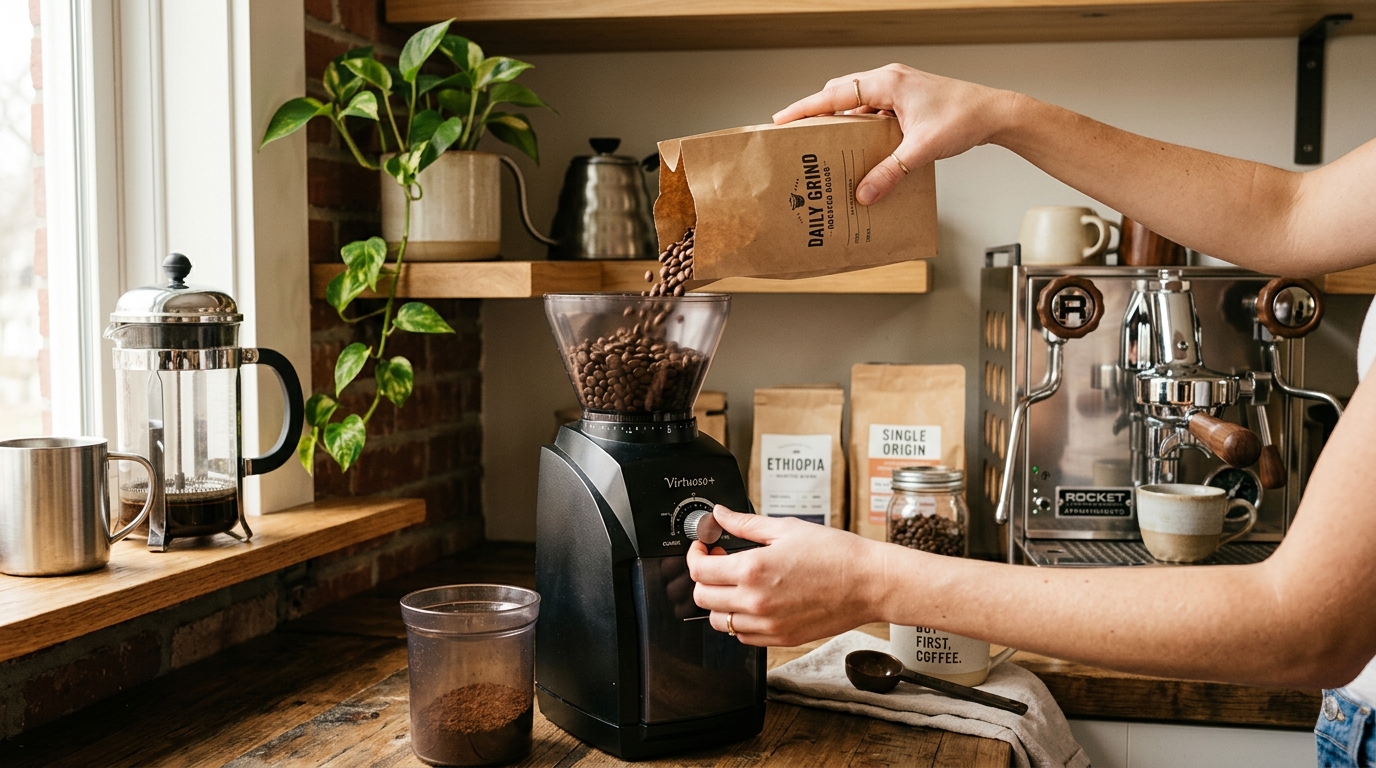
You probably searched how to use coffee grinder because you’ve got fresh coffee beans sitting on the counter, the grinder is making mysterious noises, and somehow the coffee still tastes… kinda flat. That happens way more often than people admit. You can own amazing beans and still end up with a disappointing cup if the grinder isn’t doing what you think it’s doing.
The funny thing is, grinding coffee isn’t difficult. It just has a few tiny details that quietly change everything. A difference of only a fraction of a millimeter in grind size can completely transform the flavor in your mug. Sounds dramatic, yeah, but coffee is weird like that.
Whether you bought your first coffee grinder yesterday or you’ve had one gathering dust for months, this guide will walk you through exactly how to use it correctly. You’ll also learn common mistakes, cleaning tips, grind settings, and how to get consistently great coffee without guessing every morning.
Why Grinding Coffee Correctly Matters
Freshly ground coffee contains hundreds of aromatic compounds that begin escaping almost immediately after grinding. According to the Specialty Coffee Association (SCA), coffee is at its peak flavor when brewed shortly after grinding because oxidation happens rapidly.
That means pre-ground coffee isn’t necessarily bad, it just loses freshness much faster. Think of it like slicing an apple. The moment the inside is exposed, things start changing.
When you grind beans yourself, you gain control over:
- Flavor strength
- Brewing speed
- Bitterness
- Sweetness
- Aroma
- Extraction quality
A surprisingly tiny adjustment can mean the difference between a balanced cup and one that tastes sour or painfully bitter.
Know Your Coffee Grinder Before You Start
Not every grinder works the same way. Before adding beans, spend a minute identifying what type you own. Saves a lot of confusion later.
| Grinder Type | Best For | Grind Consistency | Price Range |
|---|---|---|---|
| Blade Grinder | Beginners | Fair | Low |
| Burr Grinder | Most coffee lovers | Excellent | Medium |
| Flat Burr Grinder | Espresso | Outstanding | Higher |
| Conical Burr Grinder | Everyday brewing | Excellent | Medium to High |
Blade Coffee Grinder
Blade grinders chop beans using spinning blades. They don’t actually grind—they slice repeatedly until the beans become small enough.
Pros:
- Affordable
- Compact
- Easy to use
Cons:
- Uneven grind size
- Can heat the beans
- Less consistent flavor
They’re alright if you’re just starting, although consistency can be a bit wonky sometimes.
Burr Coffee Grinder
Burr grinders crush beans between two burrs set a specific distance apart.
This produces evenly sized coffee particles, which leads to more even extraction and noticeably better flavor. Most coffee professionals recommend burr grinders because consistency matters more than almost anything else during grinding.
How to Use Coffee Grinder Step by Step
Using a coffee grinder isn’t complicated, although skipping one step can throw the whole brew off.
Step 1: Measure Your Coffee Beans
Instead of filling the hopper randomly, measure your beans first.
A common ratio is:
| Cups of Coffee | Coffee Beans |
|---|---|
| 1 cup | 15–18 grams |
| 2 cups | 30–36 grams |
| 4 cups | 60–72 grams |
Using a digital kitchen scale provides the most accurate results.
Step 2: Choose the Correct Grind Size
Your brewing method determines your grind.
| Brewing Method | Grind Size |
|---|---|
| Espresso | Extra Fine |
| Moka Pot | Fine |
| AeroPress | Medium-Fine |
| Pour Over | Medium |
| Drip Coffee Maker | Medium |
| Chemex | Medium-Coarse |
| French Press | Coarse |
| Cold Brew | Extra Coarse |
Grinding too fine for French press creates muddy coffee.
Grinding too coarse for espresso usually gives sour, weak shots.
Step 3: Fill the Hopper
Pour only the beans you’ll use immediately.
Keeping beans inside the hopper for days exposes them to oxygen, moisture, sunlight, and temperature changes. Coffee kinda hates all four.
Step 4: Select the Grind Setting
If you own a burr grinder:
- Start in the middle setting.
- Adjust finer if coffee tastes weak.
- Adjust coarser if coffee tastes bitter.
Only make one adjustment at a time.
Changing multiple settings together makes troubleshooting almost impossible.
Step 5: Grind the Coffee
Turn on the grinder.
Let it finish naturally rather than pulsing on and off repeatedly unless you’re using a blade grinder.
For blade grinders:
- Shake gently while grinding.
- Pulse in short bursts.
- Avoid grinding continuously for more than about 20 seconds.
This helps reduce uneven particle sizes.
Step 6: Brew Immediately
Coffee starts losing volatile aroma compounds within minutes.
Grinding immediately before brewing preserves sweetness, body, and aroma much better than grinding hours earlier.
Some people honestly underestimate just how much fresher coffee tastes within the first few minutes after grinding.
Coffee Grind Sizes Explained
Imagine beach sand.
Imagine table salt.
Imagine breadcrumbs.
Imagine tiny pebbles.
That’s basically how coffee professionals describe grind sizes.
| Grind | Looks Like | Brewing Method |
|---|---|---|
| Extra Fine | Flour | Turkish Coffee |
| Fine | Table Salt | Espresso |
| Medium Fine | Sand | AeroPress |
| Medium | Regular Sand | Drip Coffee |
| Medium Coarse | Rough Sand | Chemex |
| Coarse | Sea Salt | French Press |
| Extra Coarse | Peppercorn Pieces | Cold Brew |
Visual comparison actually helps more than measurements for many beginners.
Common Coffee Grinder Mistakes
Everyone makes these eventually.
Grinding Too Much Coffee
Ground coffee becomes stale much faster than whole beans.
Only grind what you’ll brew today.
Ignoring Grinder Cleaning
Old coffee oils become rancid over time.
Those leftover oils quietly coat fresh grounds and can create unpleasant flavors.
Using One Grind Size for Everything
Espresso and French press need completely different grind sizes.
Trying one universal setting rarely works.
Overheating the Beans
Long grinding sessions create heat.
Heat speeds up aroma loss before brewing even begins.
Guessing Instead of Testing
Coffee brewing is surprisingly scientific.
Adjust one variable.
Taste.
Repeat.
That’s usually how professionals dial in coffee.
How to Adjust Grind Size Based on Taste
Your coffee tells you what needs changing.
| Coffee Taste | Likely Problem | Solution |
|---|---|---|
| Sour | Grind too coarse | Grind finer |
| Bitter | Grind too fine | Grind coarser |
| Weak | Under-extracted | Finer grind |
| Harsh | Over-extracted | Coarser grind |
| Watery | Too coarse or too little coffee | Finer grind or more coffee |
Tiny adjustments often produce surprisingly large improvements.
Tips for Using a Coffee Grinder Like a Pro
These habits make a noticeable difference.
- Buy whole beans instead of pre-ground coffee.
- Store beans in an airtight container.
- Keep beans away from sunlight.
- Use filtered water.
- Weigh coffee instead of scooping.
- Clean the grinder every couple of weeks.
- Experiment with grind settings.
- Replace dull burrs when needed.
- Keep a notebook of successful recipes.
Coffee enthusiasts often keep records of grind settings for different beans. It sounds obsessive until you brew the exact same amazing cup twice.
How to Clean Your Coffee Grinder
Coffee oils slowly build up inside every grinder.
Cleaning doesn’t take long.
Burr Grinder Cleaning
- Unplug the grinder.
- Remove the hopper.
- Take out removable burrs.
- Brush away coffee particles.
- Wipe with a dry cloth.
- Reassemble carefully.
Never wash steel burrs unless the manufacturer specifically allows it.
Blade Grinder Cleaning
Add one tablespoon of uncooked rice.
Pulse briefly.
Discard the rice.
Wipe the inside clean with a dry microfiber cloth.
Many manufacturers now recommend dedicated grinder-cleaning pellets instead of rice because rice can stress certain blade motors, so it’s worth checking your grinder’s manual first.
How Much Coffee Should You Grind?
Here’s a quick reference.
| Brew Size | Coffee | Water |
|---|---|---|
| 1 Cup | 15–18 g | 250 ml |
| 2 Cups | 30–36 g | 500 ml |
| 4 Cups | 60–72 g | 1 liter |
| French Press (8 Cup) | 55–60 g | 900 ml |
These ratios are good starting points.
After that, adjust according to your taste.
Manual vs Electric Coffee Grinder
Choosing between manual and electric grinders depends on your routine.
| Manual Grinder | Electric Grinder |
|---|---|
| Portable | Fast |
| Quiet | Convenient |
| Affordable | Better for large batches |
| Requires effort | Minimal effort |
| Excellent for travel | Ideal for daily home use |
Many coffee travelers actually prefer manual grinders because they’re lightweight and don’t require electricity. Your morning arm workout comes included, which isn’t the worst deal honestly.
Frequently Asked Questions
Should You Grind Coffee Every Day?
Yes.
Fresh grinding produces noticeably better flavor compared to grinding several days in advance.
Can You Grind Coffee Too Fine?
Absolutely.
Coffee that is too fine extracts slowly and often tastes bitter or harsh.
How Long Should You Grind Coffee?
Most burr grinders finish within 10–20 seconds.
Blade grinders usually require several short pulses until the desired consistency is reached.
Is a Burr Grinder Better Than a Blade Grinder?
For consistency, yes.
Burr grinders create more uniform particles, leading to better extraction and improved flavor.
Should You Wash a Coffee Grinder?
Most grinders should not be rinsed with water.
Instead, brush away coffee residue and wipe dry unless the manufacturer specifically says removable parts are dishwasher-safe.
Final Thoughts
Learning how to use coffee grinder becomes much less intimidating once you stop chasing perfection and start paying attention to the little patterns. A slightly finer grind here, a cleaner burr there, maybe a fresh batch of beans next week. Those tiny tweaks stack up faster than you’d expect.
Great coffee doesn’t really begin when hot water hits the grounds. It begins a few minutes earlier, when you choose the right grind size for your brewing method and grind only what you need. That’s the quiet step many people overlook, yet it’s often the one that changes the entire cup.
With a little practice, you’ll spend less time wondering why today’s coffee tastes different from yesterday’s, and more time enjoying a brew that feels consistently rich, balanced, and exactly the way you like it.:::

Jamesmathew is an expert Amazon affiliate writer, helping readers discover top products, smart deals, and practical buying guides through honest reviews and insightful content.