

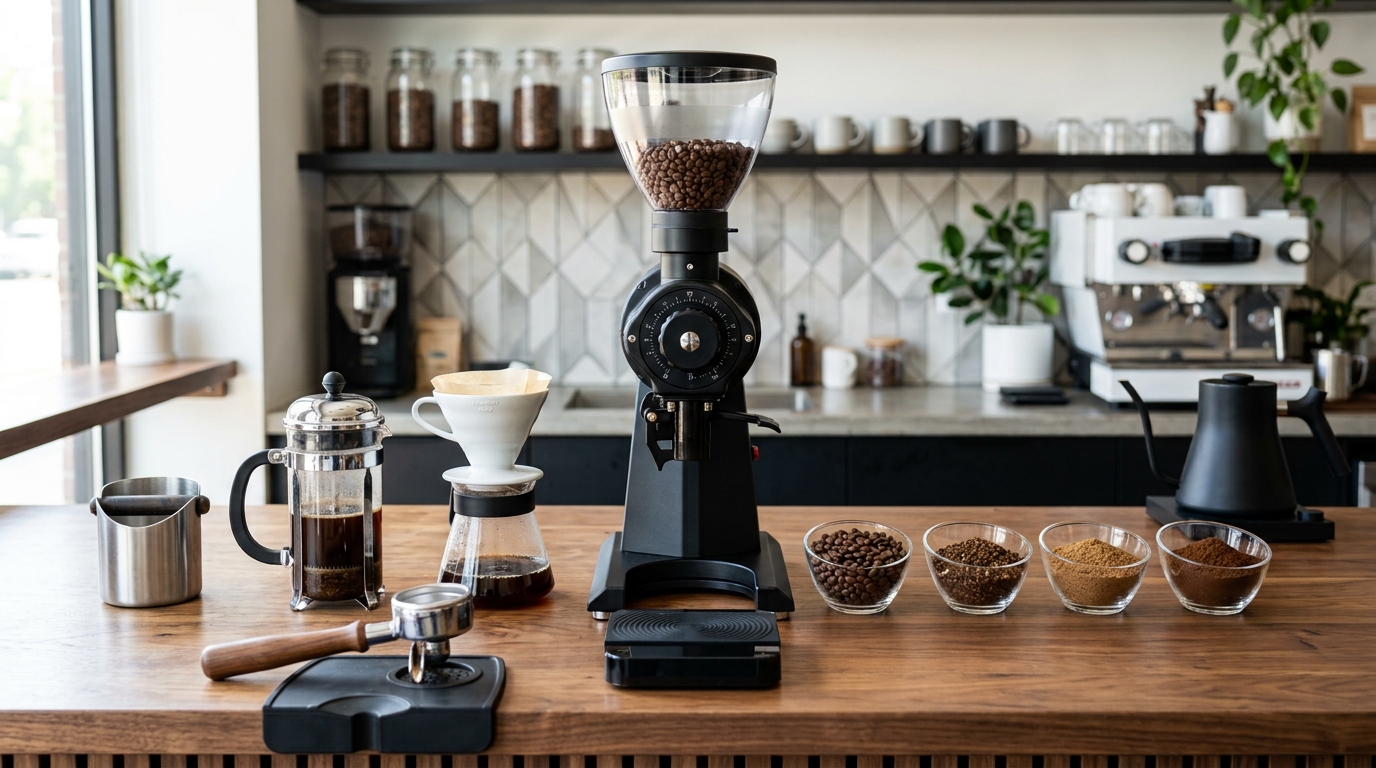
You already know what to look for in a coffee grinder is not something you think about until your coffee starts tasting like cardboard water for no reason you can explain. Maybe you bought fancier beans, followed a recipe off some coffee nerd’s video, and it still came out sour or bitter or just flat, and you’re sitting there wondering if the problem is you. It’s usually not you. It’s the grinder, or more specifically, the fact that most people never learn what actually makes a grinder good versus what just looks good on a shelf at Target.
I’ve broken more than a few cheap grinders trying to figure this out myself, so let’s actually go through what matters, without the marketing fluff that coffee brands love shoving into product descriptions.
Burr Grinders Versus Blade Grinders (This Part Actually Matters A Lot)
This is the one thing that if you get wrong, nothing else on this list will save you. Blade grinders, the ones that look like little spice choppers with a spinning blade at the bottom, chop your beans unevenly. You’ll get a mix of powder-fine dust and chunky bits in the same batch, which means the powder over-extracts and tastes bitter while the chunks under-extract and taste sour, and somehow both happen in the same cup at once, which is honestly kind of impressive in the worst way.
Burr grinders crush beans between two burrs (either flat or conical) set to a consistent gap, giving you particles that are actually similar in size. According to the Specialty Coffee Association, grind consistency is one of the primary variables affecting extraction, right alongside water temperature and brew ratio, and inconsistent grinds are basically the number one reason home coffee tastes worse than what you get at a decent cafe.
So step one, non negotiable really: get a burr grinder. If your current one has a blade, it’s time.
Conical Burrs vs Flat Burrs
Here’s where people start overthinking it, and honestly you don’t need a PhD in this to make a decent choice.
- Conical burrs tend to run quieter, produce less heat, and are common in more affordable grinders like the Baratza Encore or the Timemore C2 hand grinder
- Flat burrs generally give slightly more consistent particle sizes at the cost of more retention (leftover grounds stuck inside) and usually a higher price tag, think Niche Zero territory or the Fellow Ode
Neither one is “wrong,” it kinda depends on your budget and how obsessive you wanna get about it.
Grind Settings And Range
A grinder that can only do “fine-ish” or “coarse-ish” is gonna limit what you can brew well. If you’re doing espresso one day and French press the next, you need a wide range of adjustability, and ideally, one with numbered or clearly marked settings so you’re not guessing every single time you switch it up.
Baratza grinders, for example, use a stepped adjustment system with dozens of settings, which sounds excessive until you realize how sensitive extraction is to grind size. Move a grinder like the Baratza Encore just two or three clicks and you can go from a balanced pour over to something that tastes like biting into a lemon.
A rough guide for grind size by brew method:
| Brew Method | Grind Size | Texture Comparison |
|---|---|---|
| Espresso | Very fine | Table salt, almost powder |
| AeroPress | Fine to medium-fine | Fine sand |
| Pour Over (V60, Chemex) | Medium | Regular sand |
| Drip Coffee Maker | Medium | Sand, slightly coarser |
| French Press | Coarse | Sea salt or breadcrumbs |
| Cold Brew | Extra coarse | Coarse breadcrumbs |
Grind Consistency And Particle Uniformity
I keep coming back to consistency because it really is the backbone of this whole thing, more than any spec sheet number a company brags about. A study published by researchers at the University of Oregon’s coffee-focused physics lab (yes, that’s a real thing, coffee extraction has actual physicists studying it) found that particle size distribution has a measurable, direct impact on extraction yield and taste balance, more so than most people assume.
Cheaper grinders, even burr ones, often produce what’s called “fines,” which are ultra-fine particles that clump together and mess with even extraction. More expensive grinders reduce fines through better burr geometry and tighter tolerances. This is part of why a $600 Niche Zero and a $140 entry burr grinder can use beans from the same bag and taste noticeably different in the cup.
Motor Speed And Heat Retention
This one’s kind of overlooked but worth mentioning honestly. High-speed grinders (often blade or cheap electric burr models spinning at high RPM) generate friction heat quickly, and heat can degrade the delicate aromatic oils in coffee before it even hits your water. Slower, low-RPM grinders, like most hand grinders or geared electric ones such as the Baratza Sette, minimize this heat buildup.
Does it make a night and day difference for casual drinkers? Probably not dramatically. But if you’re grinding a lot of coffee at once, say for a party or a busy cafe morning, heat becomes more of a real factor.
Hopper Size And Retention
Retention refers to how much old ground coffee gets stuck inside the grinder’s chute and burrs, contaminating your next grind with stale leftover particles. It sounds minor until you realize some grinders retain a gram or two every single time, which over weeks adds up to a noticeably stale undertone in your coffee that you can’t quite place.
Single-dose grinders, designed to grind only the exact amount you need with near-zero retention, have become popular partly because of this issue. Brands like the DF64 and various Option-O models were built specifically around minimizing retention, sometimes down to under half a gram per grind.
If you’re someone who grinds small amounts frequently rather than a big batch once a week, low retention matters more to you than it would to someone brewing a giant pot of drip coffee every morning.
Noise Level (Because Mornings Are Already Loud Enough)
Nobody talks about this enough honestly. Some electric grinders sound like a small aircraft taking off in your kitchen at 6am, which is a real problem if you live with roommates, a partner who’s still asleep, or thin apartment walls. Hand grinders are obviously silent-ish (just the crunch sound), but slower to use. If noise matters to you, check reviews specifically mentioning decibel levels or “quiet operation,” since manufacturers rarely list this stat upfront.
Build Quality And Longevity
A grinder is one of those purchases where cheaping out often costs you more long term. Plastic burrs wear down fast and lose their edge, sometimes within a year of daily use, while steel or ceramic burrs can last years, even a decade with proper cleaning. Baratza, for instance, sells replacement parts and burrs individually, which extends the practical lifespan of their grinders considerably compared to sealed units you just throw away when something breaks.
As coffee educator James Hoffmann has said in various interviews and videos, the grinder is arguably more important to your final cup than the coffee maker itself, a statement that surprises people who assumed the brewer was the star of the show.
Price Range Breakdown
Just so you have a rough sense of what you’re working with:
- Under $50: Mostly blade grinders, avoid these for anything beyond emergencies
- $100–$200: Entry-level burr grinders, solid for beginners (Baratza Encore, Timemore C2/C3)
- $200–$500: Mid-range with better consistency and lower retention (Baratza Virtuoso+, DF64)
- $500+: Premium single-dose or flat burr grinders (Niche Zero, Fellow Ode 2, various Option-O builds)
You don’t need to spend $500 to make genuinely good coffee at home, to be clear. But going below $100 for a burr grinder usually means compromising on consistency in ways you’ll taste, even if you can’t articulate exactly why the coffee tastes “off.”
Final Thoughts
Honestly, picking a grinder comes down to figuring out what kind of coffee drinker you actually are, not what some review site says you should buy. If you brew one method consistently and don’t mind a slower morning routine, a hand grinder might genuinely suit you better than a loud electric one. If you’re brewing multiple methods or need speed on busy mornings, an electric burr grinder with a wide adjustment range is worth the investment.
Either way, once you switch from blade to burr, or from a cheap burr to a slightly better one, you’ll probably notice the difference in your very first cup, and you’ll wonder why nobody told you sooner.

Jamesmathew is an expert Amazon affiliate writer, helping readers discover top products, smart deals, and practical buying guides through honest reviews and insightful content.