

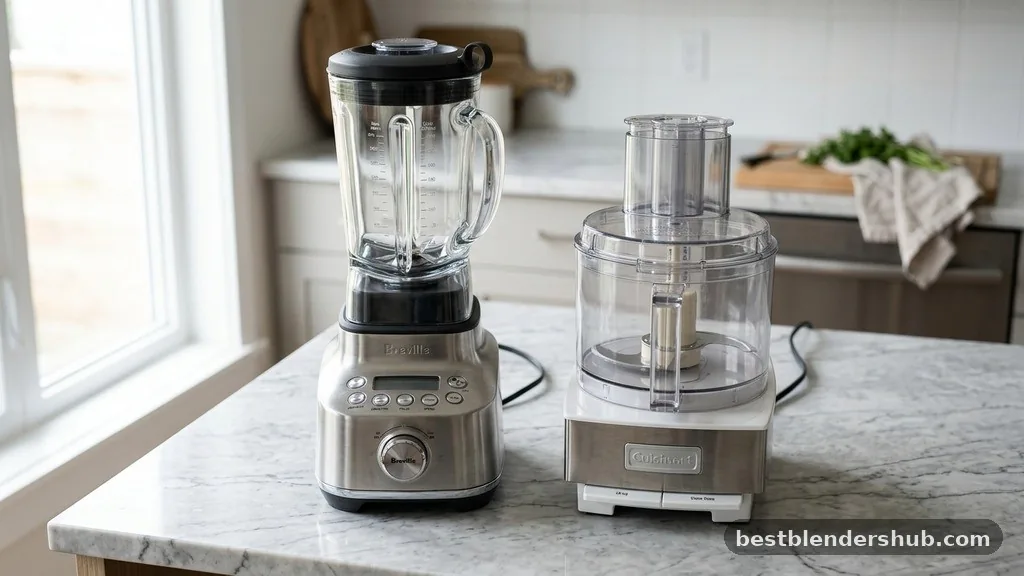
Many home cooks wonder if they can use a blender instead of a food processor when a recipe calls for one but the counter space is already crowded. While these two kitchen staples share some overlapping functions, their internal mechanics are quite different. You might find yourself in a bind while preparing a complex dish, but understanding the specific strengths of your appliances will help you decide if a substitution is possible.
Whether you are blending smoothies or trying to chop vegetables for a salsa, knowing the limitations of your equipment prevents kitchen disasters. Let’s look at how your blender performs when it steps out of its liquid-focused comfort zone.
Understanding the Core Differences in Appliance Design
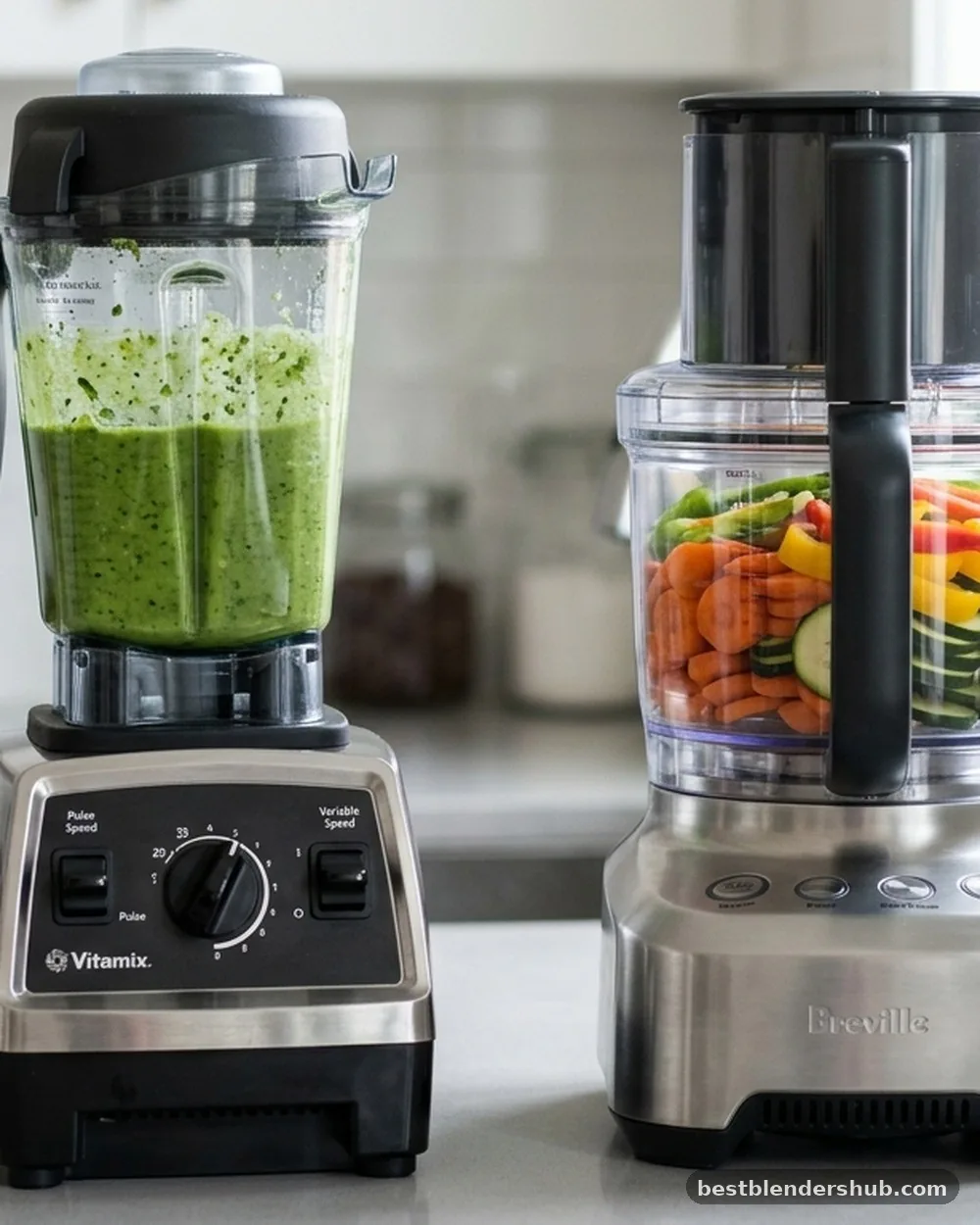
The primary reason you might hesitate to swap these tools is the fundamental difference in blade design and motor torque. A food processor is built with a wide, flat bowl and a low-profile blade that sits close to the bottom.
This layout is specifically engineered for chopping, slicing, and shredding solid ingredients. Conversely, a standard blender uses tall, narrow jars and blades designed for high-speed pureeing and liquid movement.
Because the blender jar is shaped to create a vortex, it pulls ingredients downward toward the blades. This is excellent for smoothies or soups but problematic for thick pastes or chunky vegetables.
If you try to chop onions in a blender, you often end up with a watery mush at the bottom while the top pieces remain untouched. The food processor bowl provides the necessary surface area for even distribution, which is a major advantage for consistent textures.
When You Can Successfully Swap Your Equipment
You can use a blender instead of a food processor for specific tasks that require a smooth or semi-smooth consistency. If a recipe asks for pureed chickpeas for hummus, a blender often does a better job than a processor because it achieves a creamier emulsification. Similarly, if you are making salad dressings, vinaigrettes, or thin sauces, the blender’s high-speed motor excels at integrating oil and vinegar.
It is also effective for grinding dry ingredients like nuts or seeds into a fine powder, provided you work in small batches. If you are making a quick pesto, you can pulse the blender to keep some texture, though you must be careful not to over-process the basil into a dark green liquid. The key is to rely heavily on the pulse function rather than running the motor continuously.
| Task | Food Processor Suitability | Blender Suitability |
|---|---|---|
| Dough Kneading | High (with dough blade) | Low (risk of motor burn) |
| Chopping Vegetables | High (even results) | Low (uneven/mushy) |
| Making Smoothies | Low (leaks/poor texture) | High (ideal) |
| Pureeing Soups | Moderate | High |
| Nut Butters | Moderate | High (if powerful) |
Addressing Common Culinary Challenges
When you decide that you must use a blender because you lack a processor, you need to adjust your technique. One of the biggest issues is the lack of a dough hook or specialized processing blade.
Blenders are simply not designed to handle heavy, elastic mixtures like bread or pizza dough. The motor will likely overheat, and the blades are too sharp, cutting through the gluten rather than folding it.
If you are dealing with viscosity, keep in mind that blenders need liquid to function properly. A food processor can move thick, dry, or semi-solid ingredients around the bowl because of the wide blade radius.
In a blender, thick ingredients will just sit on top of the blades, causing the motor to spin uselessly. To fix this, you must add small amounts of liquid—like water, oil, or broth—to help the contents circulate.
The Role of Blade Geometry in Food Preparation
The stainless steel blades in a blender rotate at much higher revolutions per minute compared to the slower, more deliberate rotation of a food processor. This high chopping speed is great for breaking down fibrous plant cell walls, which is why blenders are the standard for green juices. However, this same speed works against you when you want a rough chop.
When you use a blender for recipes like falafel or chunky salsa, the blades act like a high-speed fan. They create a pocket of air around the center, leaving the food on the outer edges untouched.
To mitigate this, you should stop the machine every few seconds, remove the lid, and scrape down the sides with a spatula. This manual intervention is the only way to ensure the consistency remains uniform across the entire batch.
Can You Use an Immersion Blender Instead?
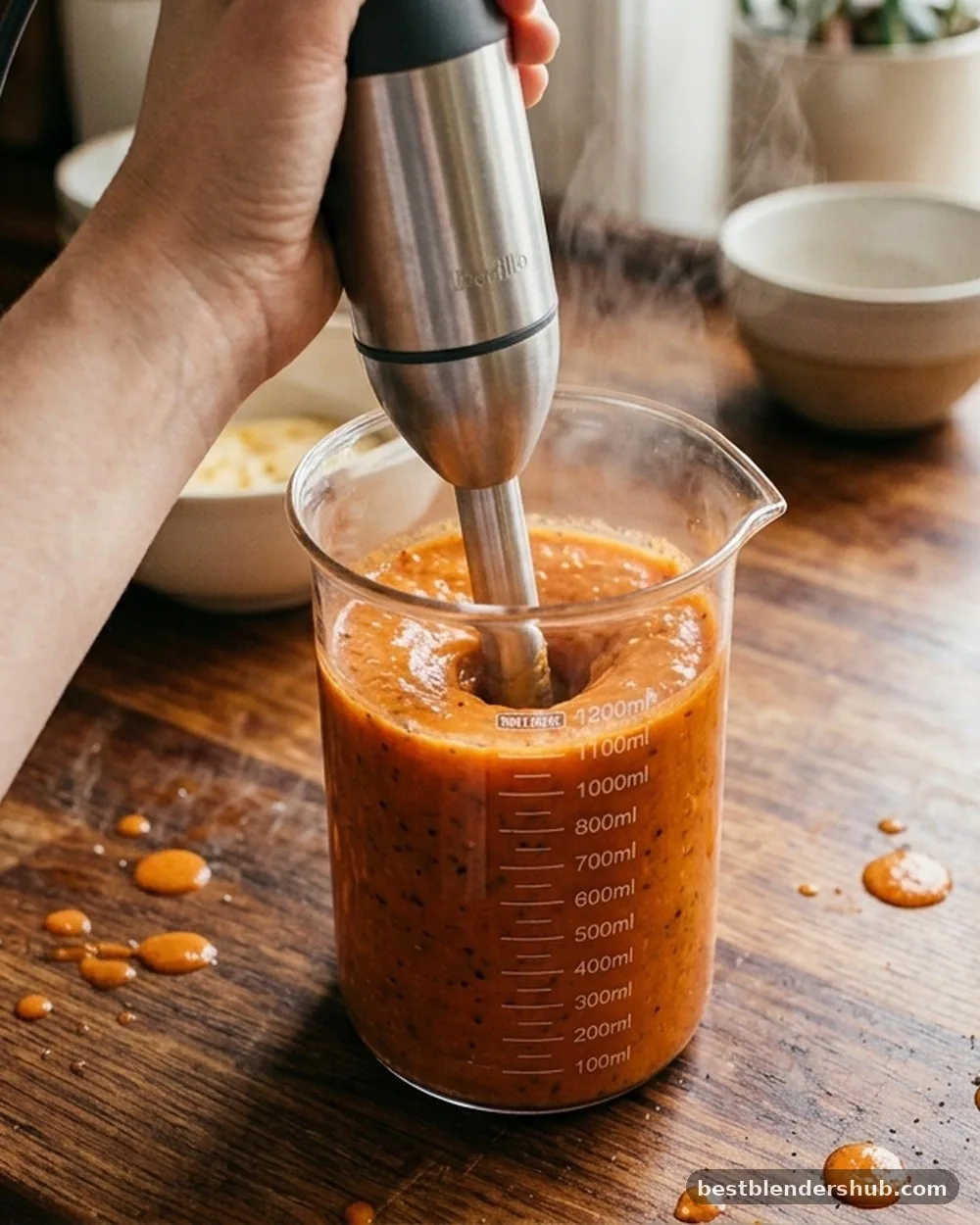
An immersion blender is an interesting middle ground for many home cooks. It is essentially a handheld motor with a small blade attachment that you move directly into your mixing bowl or pot. This kitchen appliance is perfect for pureeing soups directly in the pot, which saves you from transferring hot liquids into a traditional blender jar.
However, it is not a direct replacement for a food processor when it comes to chopping. Because the blade is small and fixed in one spot, it lacks the mechanical ability to process large amounts of solid food evenly. It works well for small tasks like making a quick dip or a small amount of pesto, but for large batches, you will find yourself frustrated by the uneven results.
Navigating Specific Ingredient Limitations
Certain ingredients are notoriously difficult to process in a blender. If you are working with hard, dense items like raw carrots or potatoes, the blender may struggle to grab the pieces.
You should always chop these items into small, uniform cubes before putting them into the blender jar. This reduces the strain on the motor and helps the blades catch the food more effectively.
Conversely, if you are working with leafy greens, the blender will shred them into tiny pieces almost instantly. This is great for a smoothie but bad for a salad or a refined garnish.
If you need a specific texture, always start with the blender on its lowest setting. Never jump straight to the highest speed, as you lose control over the final product the moment the motor hits its peak velocity.
Addressing Topical Gaps in Appliance Functionality
Many users ask if they can use a blender to “shred” cheese. The answer is generally no.
Because a blender generates heat during operation, the cheese will likely start to soften or melt before it is properly shredded, resulting in a clumped, oily mess. A food processor, with its dedicated shredding disc, handles cheese with ease because the cheese spends very little time in contact with the blades.
Another gap involves the use of blenders for making nut butters. While high-end, high-powered blenders can make excellent nut butter, standard blenders often lack the necessary motor torque to handle the resistance of crushed nuts for an extended time.
You may find that your blender starts to smell like burning plastic if you push it too hard. Always check the manufacturer’s guidelines regarding the maximum run time for your specific model when working with heavy, thick mixtures.
Safety and Maintenance Considerations
When you push an appliance beyond its intended use, you increase the risk of mechanical failure. Blenders are designed for short bursts of high-speed work. If you are using one to mimic a food processor’s function, you are likely running it for longer periods or at lower speeds than it was designed for.
Monitor the base of the unit for heat. If the motor housing becomes hot to the touch, turn it off immediately and let it cool down before continuing.
Also, be mindful of the jar material. Older, thinner plastic jars can crack if you are forcing hard, frozen items into them.
Glass jars are more stable but are heavy and can break if you accidentally drop a heavy mixing spoon into them while the blades are moving. Always prioritize safety by keeping your hands away from the blades and ensuring the lid is securely locked before hitting the power button.
Conclusion
Deciding whether you can use a blender instead of a food processor comes down to the texture you need and the ingredients you are working with. While a blender is a master of liquids, smooth purees, and high-speed emulsification, it struggles with the structural tasks that a food processor handles with ease. By understanding the limitations of your equipment and utilizing smart techniques like pulsing and scraping down the sides, you can successfully adapt many recipes.
If you find yourself frequently needing the specific chopping and grating power of a processor, investing in one is a long-term benefit for your kitchen efficiency. Experiment with your current tools, keep an eye on your motor’s performance, and enjoy the process of learning what your appliances can truly achieve.
Frequently Asked Questions
Can I use a blender for making bread dough?
No, a blender cannot knead dough; the blades are too sharp and will overheat the motor quickly.
Is it safe to chop vegetables in a blender?
You can, but the results will be uneven and often mushy, so use short pulses very carefully.
Why does my blender smell like burning when I make thick sauces?
The motor is straining against the heavy mixture, which causes the internal components to overheat and smell.
What is the best way to get an even chop in a blender?
Use the pulse function in short, one-second bursts and scrape down the sides of the jar frequently.
Can I use a blender to grate cheese?
No, the blender will soften the cheese and turn it into a clumped mess rather than shreds.
Should I add water when using a blender for solid food?
Yes, adding a small amount of liquid helps the ingredients circulate properly and prevents motor strain.
Does a blender work for making nut butter?
Only high-powered blenders can handle nut butter; standard models usually lack the torque and will overheat.

Jamesmathew is an expert Amazon affiliate writer, helping readers discover top products, smart deals, and practical buying guides through honest reviews and insightful content.