


Deciding exactly when a baby can safely transition into a lightweight umbrella stroller is a common milestone for new parents. While these compact designs offer incredible convenience for travel and quick errands, they often lack the structural support necessary for a developing infant. Most manufacturers and pediatric experts suggest waiting until your child reaches specific physical milestones before making the switch.
Understanding the intersection of posture support and neck control is vital to ensuring your little one remains both comfortable and protected during outings. By focusing on your baby’s unique developmental milestones rather than just their age, you can confidently determine when it’s the right time to transition.
Developmental Milestones for Stroller Transitions
Most infants are not physically ready for an umbrella stroller until they reach six months of age. At this stage, your baby typically possesses the core strength required to sit upright without slumping over, which is a fundamental requirement for most lightweight models. Before this point, a baby’s spine and neck are still undergoing significant musculoskeletal development, making them susceptible to injury if they are placed in a seat that does not provide adequate infant head support.
The Importance of Neck Control
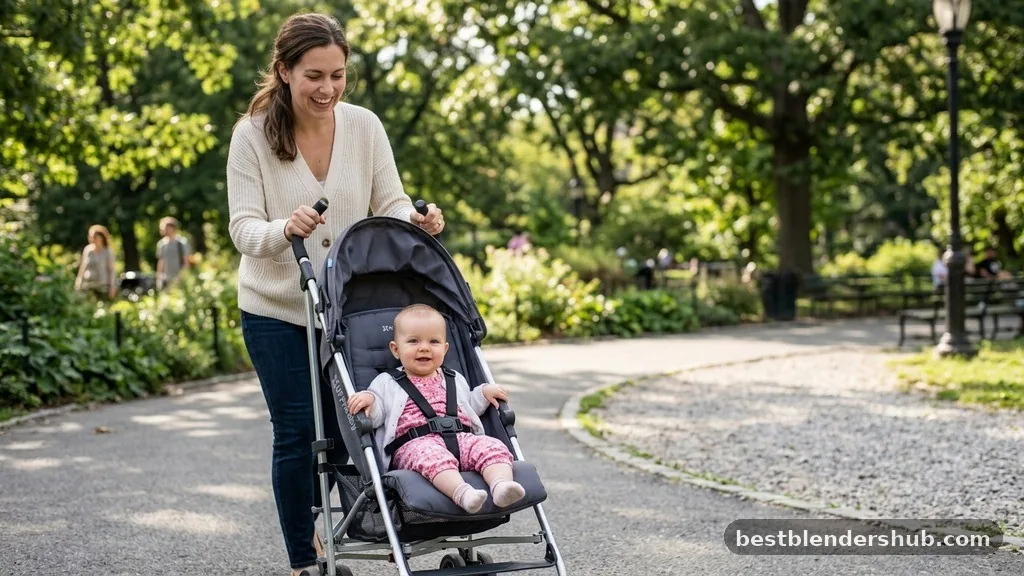
If your baby cannot hold their head steady for an extended period, an umbrella stroller is likely unsuitable. These strollers often feature a sling-style seat that lacks the rigid backing found in full-sized travel systems.
Without consistent neck control, a baby’s head may flop forward or to the side, potentially obstructing their airway. Always observe your child during floor time; if they can maintain a steady head position while in a seated or prone position, they are closer to being ready for a more upright stroller environment.
Assessing Core Strength and Sitting Ability
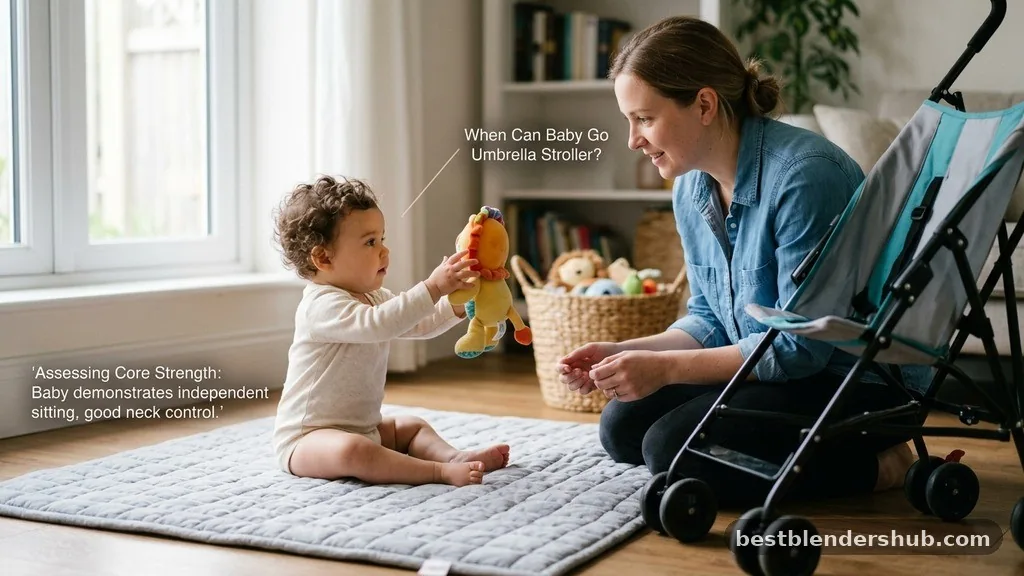
An umbrella stroller requires the passenger to maintain a relatively stable posture. If your child still struggles to stay upright in a high chair or on a play mat, their core muscles are likely not yet developed enough to handle the vibrations and movement of a stroller.
A proper upright seating position requires stable back muscles. If you find your baby leaning significantly to one side when placed in a seat, it is safer to stick with a stroller that offers a deeper, more adjustable recline or a dedicated car seat attachment.
Safety Features to Look For
When you do decide to transition, the safety features of the stroller become paramount. You should prioritize models that adhere to strict ASTM safety standards, which ensure the frame and harness system meet rigorous testing requirements. Even if a model is labeled as “lightweight,” it must still provide a secure environment for your child.
- Five-point harness: This is non-negotiable for safety, as it prevents the child from sliding out or slumping over.
- Reclining seat: A flat recline feature is essential if you need to use the stroller for a nap or if your baby still needs more support than a standard seat provides.
- Sturdy frame construction: Avoid models that feel flimsy or prone to tipping when weight is applied to the handles.
- Adjustable leg rest: This helps keep your baby’s legs in a comfortable position, reducing strain on the hips.
Comparing Stroller Types for Different Ages
The primary difference between a standard travel system and an umbrella stroller lies in the level of support provided. The following table illustrates the typical capabilities of different stroller configurations based on age and development.
| Stroller Type | Recommended Age | Key Support Features |
|---|---|---|
| Full-Size/Travel System | Newborn+ | Deep recline, head/body inserts, car seat compatible |
| Lightweight/Umbrella | 6 Months+ | Minimal frame, basic harness, upright orientation |
| Jogging Stroller | 6 Months to 1 Year+ | Advanced suspension, stable frame, harness security |
Addressing Common Gaps in Stroller Safety
Many parents worry about whether a four-month-old can safely occupy a lightweight seat. While some modern lightweight travel strollers market themselves as “newborn-ready,” this usually requires a specific flat-recline mechanism or an insert.
If your chosen model does not offer a flat recline feature, it is generally unsafe for an infant under six months. You must ensure the stroller seat angle is appropriate for a baby who cannot yet sit independently.
The Role of Supplemental Support
If you must use an umbrella stroller earlier than recommended, you should invest in high-quality infant head support inserts. These cushions provide the necessary padding to keep the head from wobbling during walks. However, these are not a substitute for proper skeletal development.
Always follow pediatric safety guidelines, which emphasize that the safest position for a young infant is one that keeps the airway open and the spine supported. Never force a baby into an upright posture if their body is not yet naturally inclined to be there.
Evaluating the Physical Build of the Stroller
The frame design of an umbrella stroller is often simplified to keep the weight down, which can sometimes compromise stability. When shopping, check the wheels and the locking mechanism.
A stroller that lacks a stable base might tip over if you hang a heavy diaper bag on the handles—a common error that can lead to accidents. Ensure the five-point harness is tightened correctly; it should be snug enough that you can only fit one or two fingers between the strap and your baby’s chest.
Furthermore, consider the terrain you frequent. Umbrella strollers are designed primarily for smooth, paved surfaces. If you live in an area with cracked sidewalks or uneven pavement, the lack of suspension in many umbrella models can cause significant jarring for a baby.
Even if your child is old enough to sit in the seat, this constant vibration can be uncomfortable. If you find yourself frequently traveling over rough ground, look for lightweight strollers that include basic wheel suspension systems.
Maintenance and Long-term Usage
Once you have successfully transitioned your child, maintenance becomes the next step in safety. Check the hinges and folding mechanisms of your umbrella stroller regularly. Over time, these parts can become loose or develop rust, which can cause the stroller to collapse unexpectedly.
If the fabric appears worn or the harness buckles become difficult to click into place, it is time to retire the unit. A safe stroller is one that operates smoothly and maintains its structural integrity through daily use.
Always remember that your child’s growth is rapid. A stroller that fits perfectly today might be too small in six months.
Regularly check that your child’s head does not exceed the top of the seat back and that their feet are not dragging on the ground. Keeping the stroller clean and stored in a dry environment will extend its life, providing you with a reliable tool for your outings as your baby continues to grow and explore the world.
Conclusion
Determining when a baby can go in an umbrella stroller depends primarily on their ability to sit upright and maintain neck control. While the convenience of a compact, lightweight stroller is undeniable for busy parents, prioritizing your child’s physical comfort and safety remains the most important factor. Always look for models that offer a secure harness and, if necessary, a reclining seat that accommodates their current stage of development.
By adhering to these guidelines and observing your child’s individual progress, you can make the transition to an umbrella stroller safely and effectively. We hope this guide helps you feel more confident in your choices as your little one grows and becomes ready for new adventures. If you have any specific concerns about your baby’s development, consulting with your pediatrician is always the best next step.
FAQ
Can I put my 4 month old in an umbrella stroller?
Generally no, as most 4-month-olds lack the core strength and neck control required for standard umbrella strollers.
When can you switch to an umbrella stroller?
Most experts recommend waiting until the baby is at least six months old and can sit independently.
Can I put a 3 month old in a stroller?
Only if the stroller is a full-sized model with a full recline or car seat attachment capability.
Are there umbrella strollers for newborns?
Only if they feature a specialized “newborn-ready” design with a flat-recline feature and proper head support inserts.
What if my baby is hitting milestones early?
Even if they reach milestones early, follow the stroller manufacturer’s minimum age and weight requirements for safe operation.
Does a 5-point harness make an umbrella stroller safer?
Yes, a 5-point harness is essential to prevent the baby from slumping or slipping out of the seat.
How do I know if my baby has enough neck control?
If your baby can hold their head steady for long periods without support, they are likely ready.

Jamesmathew is an expert Amazon affiliate writer, helping readers discover top products, smart deals, and practical buying guides through honest reviews and insightful content.