


Removing eye makeup effectively is a cornerstone of any healthy skincare routine, yet it is often the most neglected step. When you fail to properly clear away pigment at the end of the day, you risk irritation, clogged hair follicles, and long-term damage to your delicate ocular area.
Learning the correct technique for how to remove mascara is essential not just for the sake of your skin, but for maintaining the integrity and strength of your lashes. Whether you use a heavy-duty waterproof formula or a simple lengthening mascara, the process requires patience and the right tools to ensure no makeup residue is left behind.
Understanding the Importance of Proper Lash Hygiene

The skin around your eyes is the thinnest on your entire body, making it incredibly susceptible to aging, dryness, and irritation. When you sleep in your makeup, you aren’t just dealing with unsightly smudges the next morning; you are actively trapping bacteria and pollutants against the skin. These particles can cause inflammation, which often leads to puffiness and dark circles.
Furthermore, leaving mascara on overnight causes the product to harden. As you toss and turn on your pillow, these hardened, brittle lashes are subjected to mechanical stress, which is a leading cause of eyelash breakage.
Beyond the aesthetic concerns, there is a medical component to consider. The base of your eyelashes contains tiny glands that produce oils to lubricate the eye. When these become clogged with dried makeup, it can lead to styes, blepharitis, or general ocular discomfort.
By prioritizing a thorough cleansing routine, you allow your skin to breathe and repair itself while you sleep. Maintaining clean lashes is the most effective way to prevent premature lash loss and ensure that your natural fringe remains thick and healthy. Investing a few extra minutes into this process is an act of self-care that pays off in the long run for your overall eye health.
Selecting the Right Solvent for Your Specific Needs
Not all mascaras are created equal, and therefore, not all removers are suitable for every situation. If you are a fan of waterproof mascara, you are likely already aware of how stubborn these formulas can be.
Waterproof products are designed to withstand moisture, meaning they require an oil-based cleanser or a dedicated bi-phase remover to break down the hydrophobic polymers. Using water alone or a light foaming wash will rarely suffice, and the subsequent scrubbing will only result in irritation and lash loss.
For those with sensitive skin, the search for the perfect remover is even more critical. You want a product that dissolves pigment quickly without requiring excessive rubbing or harsh surfactants. Micellar water has become a gold standard for many, as it uses micelles—tiny oil molecules suspended in soft water—to lift dirt and makeup away from the surface without stripping the skin of its natural moisture.
If you prefer a more luxurious experience, a cleansing balm is an excellent alternative. These solid oils melt into a liquid state upon contact with warm skin, effectively melting away even the most resilient mascara while keeping the eye area hydrated. Evaluating your specific needs—whether it is ease of use, skin compatibility, or the longevity of your makeup—is the first step in mastering the removal process.
The Gentle Art of Using Micellar Water
Micellar water is perhaps the most popular tool for those looking for an efficient, no-rinse solution. To use it correctly, you must rely on the principle of gentle friction rather than aggressive wiping. Start by soaking two soft cotton pads with the solution.
Place one pad over each closed eye and hold it there for at least thirty seconds. This “soaking” period is vital; it gives the micelles time to encapsulate the mascara and break the bonds between the makeup and your lashes.
Once you have waited, gently press the pad down and swipe in a downward motion, following the natural direction of your lashes. Avoid rubbing back and forth, as this movement tangles the hairs and increases the risk of mechanical damage. If there is still makeup residue lingering between the lashes, you can use a cotton swab dipped in the micellar water to clean the lash line with precision.
The goal is to lift the product off, not to scour it away. By following this method, you minimize the amount of force applied to the orbital bone and the eyelid, preserving the elasticity of the skin and ensuring that your lashes remain intact throughout the cleansing process.
Harnessing the Power of Oil-Based Cleansers
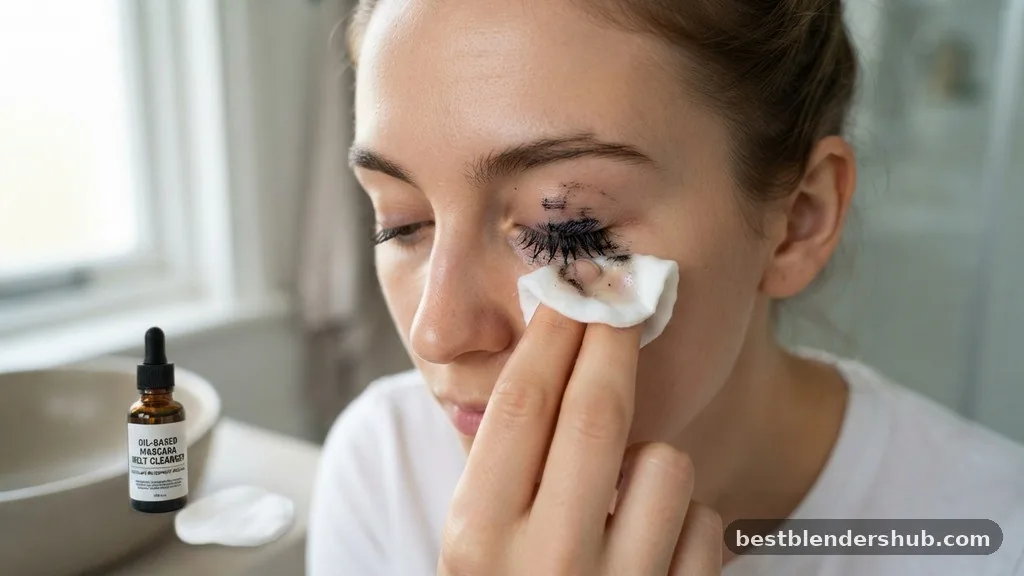
Oil-based cleansers are arguably the most effective way to remove heavy-duty eye makeup. Because “like dissolves like,” the oils in the cleanser easily break down the waxes and pigments found in mascara. This is especially true for waterproof varieties that resist water-based removers.
When you apply an oil cleanser, you are providing a cushion that allows your fingers or a cloth to glide over the eye area without dragging the skin. This reduces the risk of creating fine lines or causing redness.
To effectively use an oil-based cleanser, apply a small amount to dry skin. Use your ring fingers—which naturally apply the least amount of pressure—to gently massage the lashes in a circular motion. You will see the mascara begin to lift and mix with the oil.
Take your time during this phase to ensure every lash is coated. After massaging, add a few drops of warm water to emulsify the cleanser, turning it into a milky texture that is easy to rinse away.
This method is exceptionally gentle, making it a favorite for those who wear heavy makeup daily. It effectively prevents the “panda eye” effect that often persists after standard face washing, ensuring your lashes are completely clean and ready for your nightly serum or moisturizer.
Techniques for Removing Waterproof Mascara Safely
Waterproof formulas are notorious for their persistence, often requiring extra care to remove without compromising lash health. The biggest mistake most people make is trying to wipe the mascara off with a dry towel or a standard cleanser. This will almost always lead to pulling out lashes, as the dry mascara acts like a glue.
Instead, you must focus on softening the product before attempting removal. If you don’t have a specialized bi-phase remover, a simple oil-based approach is your best defense.
One effective strategy is the double cleansing method. Start by applying a cleansing balm or a high-quality oil cleanser to the eyes. Let it sit for a full minute to allow the oils to penetrate the waterproof layers.
Once the mascara has been loosened, use a damp, warm microfiber cloth to gently wipe the product away. The texture of the microfiber is superior to cotton for this task because it grabs onto the pigment more effectively without leaving behind lint or fibers. If you find that some remnants remain at the root of the lashes, use a clean mascara spoolie dipped in a little oil to brush through the lashes.
This mechanical action helps dislodge any stubborn clumps without the need for harsh pulling. Remember, the key to removing waterproof mascara is patience; if you rush the process, you are far more likely to damage your natural lashes.
Natural Alternatives: Jojoba and Coconut Oil
Many people prefer to use natural oils to remove mascara, as these ingredients are often free from the fragrances and preservatives found in commercial makeup removers. Jojoba oil is a fantastic option because its chemical structure closely mimics the natural sebum produced by human skin.
This makes it non-comedogenic and highly unlikely to cause irritation, even for those with sensitive skin. It penetrates the lashes effectively, softening them and making the removal process smooth and effortless.
Coconut oil is another popular choice, though it is slightly heavier and can be comedogenic for some skin types. If you choose to use coconut oil, ensure it is organic and cold-pressed to avoid unnecessary chemicals. To use these oils, take a pea-sized amount and rub it between your fingertips until it melts.
Gently massage it onto your closed eyelids and lashes. You will notice the mascara breaking down almost immediately. After wiping it away, it is essential to follow up with a gentle foaming cleanser.
This ensures that no oily film is left behind, which could potentially cause milia or blurred vision. Natural oils are not only effective but also act as a conditioning treatment for your lashes, providing them with essential fatty acids that promote health and flexibility.
Common Mistakes That Lead to Lash Breakage

Learning how to remove mascara is as much about what not to do as it is about the correct techniques. One of the most common errors is using too much force. Many people treat the eye area like the rest of the face, scrubbing vigorously to get the makeup off.
The eyelid skin is incredibly delicate, and the lashes themselves are brittle. Applying excessive pressure can cause the lashes to snap at the base, leading to sparse or patchy growth over time. Always use the ring finger or a very soft, dampened cotton pad to minimize impact.
Another major mistake is pulling or tugging at the lashes to remove stubborn clumps. If a piece of mascara is stuck, it is a sign that your cleanser has not had enough time to work. Instead of pulling, apply more product and wait longer.
Furthermore, using the wrong type of cotton can be damaging. Low-quality cotton balls often leave behind fibers that can get stuck in the lash line, potentially causing irritation or infection. Opt for high-quality, lint-free cotton pads or, better yet, a soft reusable cloth.
Finally, neglecting to clean the lash line—the area where the lashes meet the skin—is a mistake that leads to buildup. Even if the length of your lashes looks clean, residual product at the base can block follicles and cause inflammation. Being mindful of these common pitfalls will significantly improve the long-term health and appearance of your lashes.
Integrating Eye Care into a Comprehensive Routine
The process of removing mascara should be viewed as the first step of a broader eye-care regimen. Once the makeup is removed, the skin around the orbital bone is perfectly primed to absorb active ingredients. After you have ensured all makeup residue is gone, consider applying an eye cream or serum.
These products are formulated to hydrate the delicate skin and address concerns like fine lines or darkness. Applying these treatments to clean, makeup-free skin ensures that the ingredients can penetrate effectively without being blocked by leftover oils or pigments.
Furthermore, if you are prone to lash breakage, consider incorporating a lash-conditioning serum into your evening routine. These serums are designed to strengthen the hair follicles and provide moisture, effectively acting as a night cream for your eyelashes. By combining a gentle removal process with nourishing treatments, you create a supportive environment for your lashes to grow and thrive.
This holistic approach ensures that you aren’t just erasing the day’s look, but also actively investing in the health of your eyes. A well-executed routine is the difference between lashes that look tired and brittle and those that appear lush, hydrated, and strong. When you treat your eyes with the care they deserve, the results will be visible in the quality of your skin and the vitality of your lashes.
Advanced Tips for Sensitive Eyes and Contact Lens Wearers
For those with highly sensitive eyes or those who wear contact lenses, the stakes for proper mascara removal are even higher. If you wear contacts, always remove them before beginning your cleansing routine. This prevents makeup particles or oils from getting trapped behind the lens, which is a common cause of irritation and infection.
Once the lenses are out, proceed with a fragrance-free, ophthalmologist-tested cleanser. These products are specifically formulated to be non-irritating and are often pH-balanced to match the natural environment of the eye.
If you struggle with watery or stinging eyes during removal, look for cleansers that are specifically labeled for sensitive eyes. Avoid products containing alcohol, fragrances, or harsh preservatives, as these are the primary culprits for stinging. If you find that even the gentlest commercial products cause discomfort, plain jojoba oil is often the safest bet.
It is pure, simple, and unlikely to provoke a reaction. Additionally, always ensure that your tools—whether they are cotton pads or microfiber cloths—are clean.
Reusing a dirty cloth introduces bacteria back onto the eye, which is a major risk for those with sensitive ocular health. By taking these extra precautions, you can ensure that the process of removing your mascara remains comfortable, safe, and effective, allowing you to maintain your beauty routine without compromising your eye health.
The Long-Term Benefits of Consistent Cleansing
Consistency is the secret to beautiful, healthy lashes. When you make it a non-negotiable part of your evening to remove every trace of mascara, you are preventing the accumulation of debris that can stunt lash growth. Over time, this discipline becomes a habit, and you will find that your skin looks brighter and your lashes appear more resilient.
The cumulative effect of proper cleansing is a reduction in inflammation, a clearer eye area, and a lower risk of long-term ocular issues. It is a small investment of time that prevents the need for more intensive treatments later on.
Beyond the physical benefits, there is a psychological aspect to this ritual. Taking the time to properly cleanse your face serves as a transition from the busy day to a period of rest. It is a moment to slow down, care for your body, and wash away the stresses of the day.
When you view mascara removal as a calming, deliberate act rather than a chore, you are more likely to perform it with the necessary care and attention. This mindset shift is often the difference between a rushed, damaging wipe and a soothing, effective cleanse.
Ultimately, mastering the technique of how to remove mascara is about respecting the fragility of your body and acknowledging that true beauty is rooted in health. By adopting these practices, you ensure that your eyes remain bright, your lashes stay strong, and your skin continues to glow for years to come.

Jamesmathew is an expert Amazon affiliate writer, helping readers discover top products, smart deals, and practical buying guides through honest reviews and insightful content.