

Understanding what is mascara made of requires a journey into the complex world of cosmetic chemistry, where art meets rigorous laboratory science. At its core, mascara is a specialized emulsion—a mixture of water, oils, waxes, and pigments—designed to coat, thicken, and darken individual eyelashes while maintaining a safe, stable form that stays put throughout the day.
Because the product is applied in such close proximity to the sensitive ocular region, the ingredients used must not only perform their aesthetic functions but also meet strict safety standards regarding biocompatibility and ocular tolerance. Manufacturers balance these competing needs through meticulous formulation processes that ensure the product remains free from contamination while providing the dramatic lash enhancement consumers expect.
While the basic goal—thickening and darkening lashes—has remained constant for decades, the technology behind the formulas has evolved significantly. Modern mascara chemistry focuses on creating flexible, smudge-proof films that can withstand humidity and physical movement.
By analyzing the various components—from the structural waxes that provide body to the sophisticated polymers that ensure longevity—we can gain a clearer picture of how this daily staple is engineered. The following exploration breaks down the chemical architecture of mascara, separating fact from urban legend and highlighting the vital role of individual ingredients in achieving the desired cosmetic finish.
The Role of Pigments and Colorants
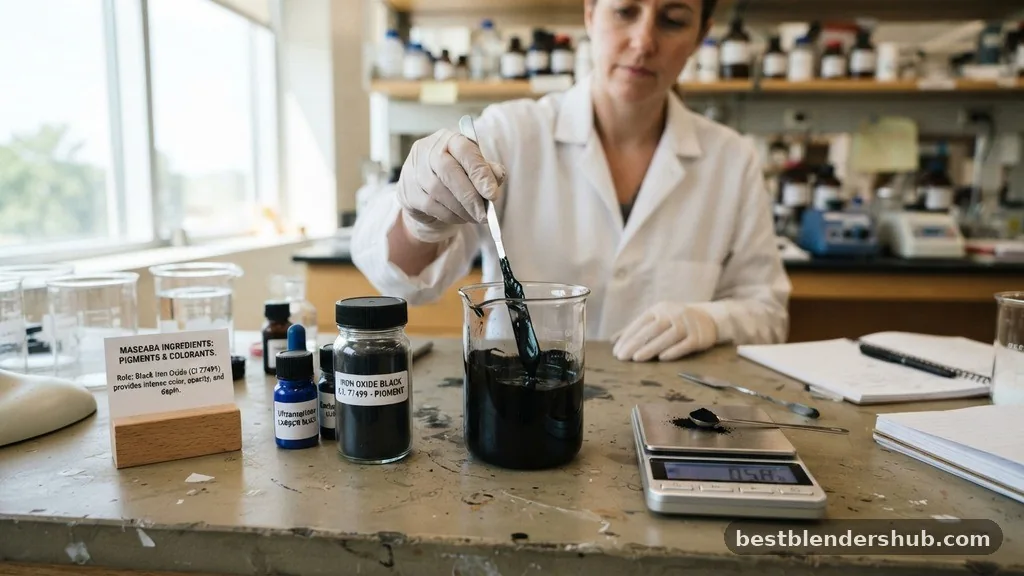
The primary function of any mascara is to deliver deep, rich color to the lashes. To achieve this, chemists rely on a variety of colorants that must be finely milled to ensure a smooth, clump-free application. The most common pigments utilized in the industry are iron oxides, which are responsible for the natural-looking browns and blacks found in the vast majority of products.
These inorganic compounds are favored for their excellent stability, safety, and ability to provide opaque coverage without causing significant irritation. Because iron oxides are inert, they do not react with other ingredients in the formula, making them ideal for the complex chemical environment of a mascara tube.
In addition to iron oxides, many intense black formulas incorporate carbon black. This pigment is prized for its ability to provide an ultra-deep, high-contrast black that is difficult to replicate with traditional mineral pigments alone. Carbon black is a fine, amorphous carbon powder produced by the incomplete combustion of hydrocarbons.
In the cosmetic industry, it is strictly controlled to ensure high purity and low heavy metal content. While its appearance is unparalleled in terms of depth, its use requires careful formulation to ensure it remains evenly suspended in the emulsion. Some brands are moving toward synthetic alternatives or ultra-refined charcoal to achieve similar effects, responding to consumer demand for greater transparency regarding particle size and source purity.
Beyond these staples, some mascaras incorporate ultramarines, particularly in blue or violet-tinted formulas, or mica coated with titanium dioxide for shimmering or metallic effects. These pigments must be meticulously dispersed using wetting agents to prevent the product from becoming grainy.
The goal is a uniform suspension where the pigment particles are small enough to coat the lash shaft evenly without creating a sandy texture. This precision in pigment technology is what separates high-end, smooth-gliding mascaras from cheaper alternatives that may feel heavy or crumbly on the lashes.
Waxes: The Structural Foundation
If pigments provide the color, waxes provide the structure and volume. When asking what is mascara made of, the wax phase is essentially the skeleton of the formula. Waxes are responsible for the thickness of the mascara, the way it grips the lashes, and how it holds its shape as it dries.
A typical mascara will use a blend of multiple waxes, each chosen for its specific melting point and structural properties. Beeswax is perhaps the most iconic ingredient in this category, valued for its natural emollient properties and its ability to create a flexible, non-brittle coating on the lash.
Carnauba wax, derived from the leaves of the Brazilian palm tree, is another essential component. Known for its high melting point and hardness, carnauba wax provides the “stiffness” necessary for the mascara to hold a curl. When combined with softer waxes like beeswax or paraffin, it creates a balanced formula that is sturdy enough to provide volume but soft enough to be applied without tugging at the delicate lash hairs.
Paraffin, a petroleum-derived wax, is often included for its ability to provide a smooth, consistent spread. Because paraffin is highly stable and inexpensive, it serves as a reliable base that helps maintain the product’s consistency across different ambient temperatures.
The balance of these waxes is what determines the “feel” of a mascara. A formula heavy in carnauba will feel drier and more volumizing, perfect for dramatic looks, whereas a formula with a higher proportion of beeswax or synthetic waxes will feel creamier and more conditioning.
Chemists must calibrate this blend carefully; too much wax makes the mascara prone to flaking as it dries, while too little wax results in a watery formula that fails to provide any meaningful body or lift. Modern innovation has even introduced plant-based waxes and synthetic alternatives to ensure that the structural integrity of the mascara remains consistent regardless of the source of the raw materials.
Film Formers and Long-Wear Polymers
In the modern cosmetic landscape, consumers demand mascaras that are smudge-proof, sweat-resistant, and long-lasting. This is where film formers and polymers enter the equation. These are the “glue” that keeps the pigment and wax in place once the water in the formula has evaporated.
Film formers create a thin, transparent layer around the lash, sealing the other ingredients against the hair shaft. This layer is crucial for preventing the “raccoon eye” effect, where oils from the skin or perspiration cause the mascara to smear onto the under-eye area.
Polymers are sophisticated long-chain molecules that can be engineered for specific behaviors. Some polymers are designed to be hydrophobic, meaning they repel water and tears, making them the star ingredients in waterproof mascaras.
Others are designed to be water-soluble, allowing the wearer to remove the product easily with warm water—the signature characteristic of “tubing” mascaras. In tubing formulas, these polymers wrap around the lash like a sleeve, creating a robust structure that resists smudging throughout the day but slides off the lashes cleanly when saturated with water during removal.
The inclusion of these film formers also contributes to the “lengthening” effect. As the film dries, it can slightly extend beyond the tip of the natural lash, creating a subtle visual illusion of added length. By selecting specific polymers, formulators can dictate whether the mascara will remain rigid or flexible on the lash.
Flexibility is key for comfort; a formula that dries too hard can cause the lashes to feel brittle and prone to breakage. Today’s advanced mascaras use a combination of synthetic resins and naturally derived polymers to achieve a perfect balance between durability and a lightweight, natural feel.
The Role of Preservatives and Safety Standards
Because mascara is a water-based product stored in a warm, dark, and damp tube, it is a prime environment for bacterial growth. This makes preservatives an absolute necessity rather than an optional additive.
The preservative system in mascara is perhaps its most critical component from a public health perspective, as ocular infections can be severe. Manufacturers use a combination of antimicrobial and antifungal agents to ensure the product remains sterile from the first use until the recommended disposal date.
Parabens were historically the go-to preservative due to their high efficacy and low cost. However, due to shifting consumer preferences, many brands have transitioned to alternative preservative systems like phenoxyethanol, ethylhexylglycerin, or organic acids.
Regardless of the specific chemical used, the goal remains the same: to prevent the colonization of microorganisms like Pseudomonas aeruginosa, which can cause significant eye damage. It is vital for users to understand that these preservatives have a limited lifespan, which is why ophthalmologists consistently recommend replacing mascara tubes every three months.
Beyond preservatives, the industry relies on rigorous testing protocols to ensure the safety of the final formulation. An ophthalmologist-tested product has gone through clinical trials to verify that it does not cause irritation to the eye or the surrounding skin.
This testing is essential because the skin around the eyes is the thinnest on the body, making it highly susceptible to contact dermatitis. The formulation process involves testing the pH of the mascara to ensure it matches the natural environment of the ocular surface, minimizing the risk of stinging or redness.
Myth-Busting: The Truth About Common Ingredients
When people ask what is mascara made of, they often encounter persistent urban legends—most notably the idea that mascara contains bat guano (bat poop). Let us set the record straight: there is no bat guano in any commercially available mascara. This myth likely stems from a misunderstanding of the word “guanine.”
Guanine is a crystalline material that provides a pearlescent, shimmering effect. While it was historically derived from fish scales, modern guanine is typically synthetic or derived from non-animal sources. It is used in some cosmetics to add luster, but it has no relation to animal excrement.
Another common concern involves the use of animal-derived ingredients. While older, traditional formulations might have utilized lanolin (from sheep’s wool) or beeswax, the majority of modern mass-market mascaras have moved toward synthetic or plant-based alternatives to cater to the growing vegan and cruelty-free market.
Ingredients like carnauba wax and candelilla wax are plant-derived, and synthetic polymers have largely replaced animal-based proteins. If a specific product is labeled as vegan, it has been verified that all waxes, pigments, and film formers are sourced without the use of animal byproducts.
Similarly, the idea that mascara is made from “spider legs” or other insect parts is entirely false. Mascara is a highly regulated cosmetic product subject to strict FDA (or regional equivalent) oversight regarding ingredient purity and safety. Every single ingredient listed on a mascara tube must be approved for use in eye-area cosmetics.
The rumors of bizarre biological additives are remnants of internet clickbait and have no basis in the actual chemical manufacturing processes of the beauty industry. Consumers can be confident that their mascara is a product of modern chemical engineering rather than obscure biological harvesting.
Conditioning Agents and Eye Health
In recent years, the industry has shifted toward “skincare-infused” makeup, leading to the inclusion of lash conditioning agents in many mascara formulas. The goal is to provide benefits to the lashes while simultaneously enhancing their appearance.
Common ingredients like panthenol (pro-vitamin B5) are frequently added for their humectant properties, which help draw moisture into the lash hair, keeping it hydrated and flexible. Other agents, such as keratin, peptides, or various botanical oils, are included to help strengthen the lash structure over time.
These conditioning agents are particularly important for heavy mascara users. If a mascara formula is too stripping or drying, it can cause the lashes to become brittle, leading to breakage during removal.
By incorporating ingredients that nourish the hair shaft, manufacturers can mitigate the damage caused by daily wear and the mechanical stress of makeup removal. While these ingredients do not “grow” new lashes in the same way that medical-grade lash serums do, they do improve the overall health and appearance of the existing lashes, making them look thicker and more resilient.
It is worth noting that while these conditioning agents are beneficial, they must still be compatible with the rest of the mascara’s chemical profile. For example, adding too much oil could break the emulsion or compromise the smudge-proof nature of the formula.
Formulators must find the “sweet spot” where the mascara provides the desired aesthetic effect while delivering enough moisture to keep the lashes healthy. This balancing act is a testament to the sophistication of modern cosmetic chemistry, where the product is no longer just a surface-level coating but a functional part of a daily beauty routine.
Triethanolamine and pH Regulation
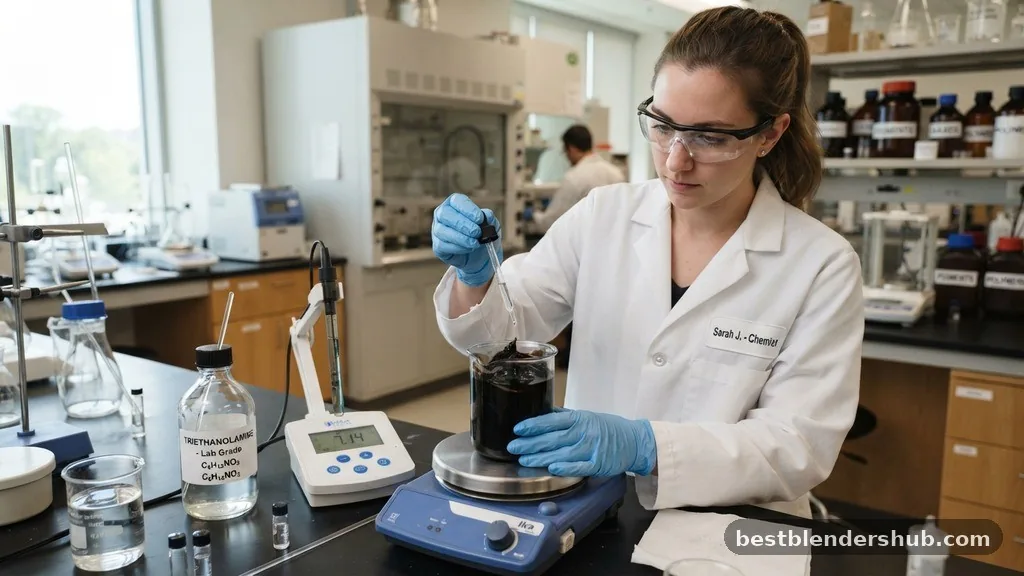
Triethanolamine is a common ingredient that often appears on mascara labels, and it serves a very specific chemical purpose. It is a pH adjuster and a surfactant, meaning it helps the water-based and oil-based components of the mascara mix together in a stable emulsion.
Without an ingredient like triethanolamine, the waxes and pigments would likely separate from the water, resulting in a clumpy or inconsistent product. It also helps to neutralize fatty acids, which can act as a binding agent, ensuring that the mascara remains smooth and easy to apply.
The pH of the mascara is critical for both the stability of the ingredients and the health of the eye. The eye is naturally slightly acidic, and any product introduced to the area should be formulated to be as close to that pH as possible to avoid stinging or irritation.
Triethanolamine helps maintain this environment, ensuring the formula remains stable and comfortable. Despite its technical name, which can sound intimidating to the average consumer, it is widely recognized as safe for use in eye makeup when used within established concentration limits.
Understanding this ingredient highlights the importance of the emulsification process. Mascara is essentially a complex mixture of ingredients that don’t naturally want to stay together. The emulsion must be “locked” in a state that remains fluid in the tube but sets quickly on the lash.
This requires a delicate interplay of surfactants and buffers. The presence of such ingredients is a sign of a well-engineered product designed to perform consistently every time the wand is pulled from the tube.
The Evolution of Tubing Mascara Chemistry
Tubing mascara represents a unique category of eye makeup that has gained significant popularity due to its ease of removal and smudge-proof properties. Unlike traditional mascara, which is essentially a pigmented wax paste, tubing mascara is built on a foundation of liquid polymers.
When applied, these polymers dry into tiny tubes that wrap around each individual lash. This technology is a significant departure from standard formulations and requires a completely different set of raw materials to function correctly.
The primary difference lies in the absence of heavy waxes. Because the “tube” is formed by the polymer film itself, there is no need for large quantities of paraffin or beeswax.
This makes tubing mascara an excellent choice for individuals with oily skin or hooded eyelids, as the polymers do not break down in the presence of natural face oils. The removal process is also fundamentally different; rather than using a cleanser to break down the wax, the wearer simply uses warm water to soften the polymers, allowing the tubes to slide off the lashes in one piece.
This technology has expanded the definition of what is mascara made of, moving the industry away from traditional wax-based formulas toward more advanced film-forming systems. As consumer demand for convenience and long-wear performance increases, we are likely to see even more innovation in this space, with new polymers that are even more resistant to smudging while becoming increasingly easy to remove. The evolution of tubing mascara perfectly illustrates how modern chemistry is constantly refining the user experience to meet the specific needs of the modern consumer.
Biocompatibility and the Future of Mascara Formulation
The future of mascara lies in the concept of biocompatibility. As we learn more about the long-term effects of cosmetics on the ocular surface, there is a push toward ingredients that are not only safe but also actively supportive of eye health.
This means moving away from harsh synthetic chemicals that can cause micro-abrasions or inflammation and toward ingredients that mimic the natural lipids found on the eye. We are seeing a rise in “clean” beauty labels that prioritize biocompatible ingredients, such as plant-derived waxes, mineral pigments, and gentle, non-irritating preservative systems.
The focus is shifting toward transparency. Consumers are increasingly asking not just what is in their mascara, but where those ingredients come from and how they interact with the biology of the eye.
This is leading to a new era of formulation where the “cleanliness” of the ingredient list is just as important as the performance of the mascara. Brands are investing in third-party testing and clinical studies to prove that their products are gentle, sustainable, and effective.
Ultimately, the chemistry of mascara is a dynamic field that balances performance, aesthetics, and safety. Whether it is the deep color of iron oxides, the structural hold of carnauba wax, or the innovative grip of modern polymers, every ingredient serves a purpose. By understanding the complexity behind the wand, we can make more informed choices about the products we use every day.
As science continues to advance, we can look forward to mascaras that provide even more dramatic results with even greater safety, ensuring that our daily beauty rituals remain both beautiful and healthy for years to come. The intersection of art and science in a simple tube of mascara remains one of the most fascinating aspects of modern cosmetic chemistry, proving that even the most mundane daily products are the result of intense research and innovation.

Jamesmathew is an expert Amazon affiliate writer, helping readers discover top products, smart deals, and practical buying guides through honest reviews and insightful content.