

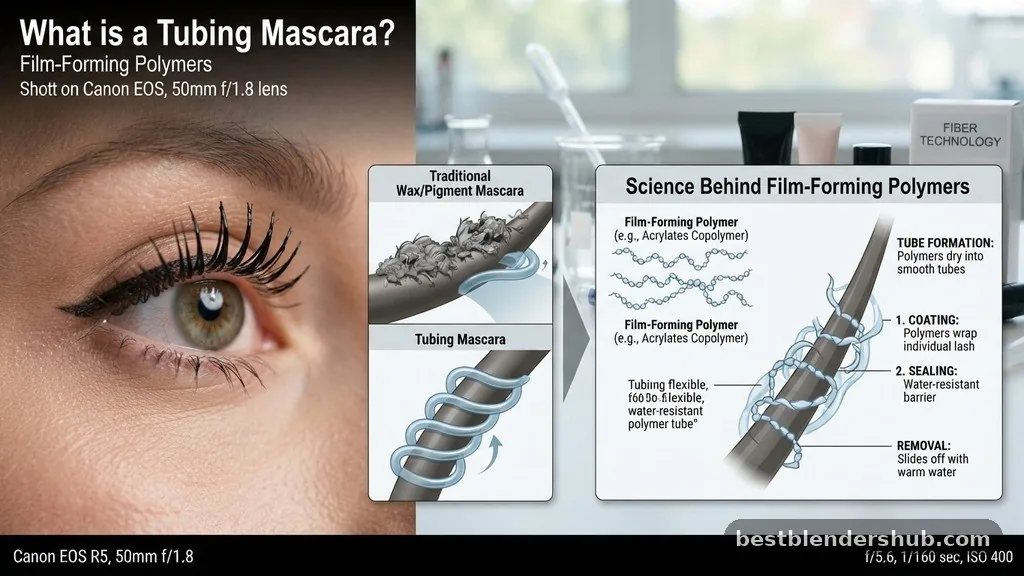
Understanding what is a tubing mascara requires looking past the traditional wax-and-oil formulas that have dominated the beauty industry for decades. Unlike conventional mascaras, which rely on pigment suspended in wax to coat your lashes, tubing formulas operate through a sophisticated mechanism involving polymers. When you apply this type of product, the formula wraps each individual lash in a microscopic, flexible “tube” or sleeve.
These polymers are designed to grip the hair shaft securely, creating a defined, lengthened appearance that does not smudge or migrate throughout the day. Because these tubes are chemically distinct from standard waxes, they do not dissolve in the presence of natural face oils or sweat, which is why they have become a staple for those struggling with the dreaded “panda eye” effect.
The unique composition of these products is what truly separates them from standard drugstore options. Most conventional mascaras rely on waxes that can soften when they interact with the natural oils on your eyelids. If you have hooded eyes or an oily skin type, those traditional formulas often fail, leading to raccoon-like smudges by the afternoon.
Tubing technology, however, remains inert until it encounters a specific set of conditions—namely, a combination of warm water and gentle physical pressure. This makes them a fascinating study in modern cosmetic chemistry, offering a solution to a problem that has plagued mascara wearers for as long as the product has existed. By shifting the focus from simply thickening lashes to sealing them within a protective shell, manufacturers have created a product that feels remarkably different in both wear and removal.
The Science Behind Film-Forming Polymers
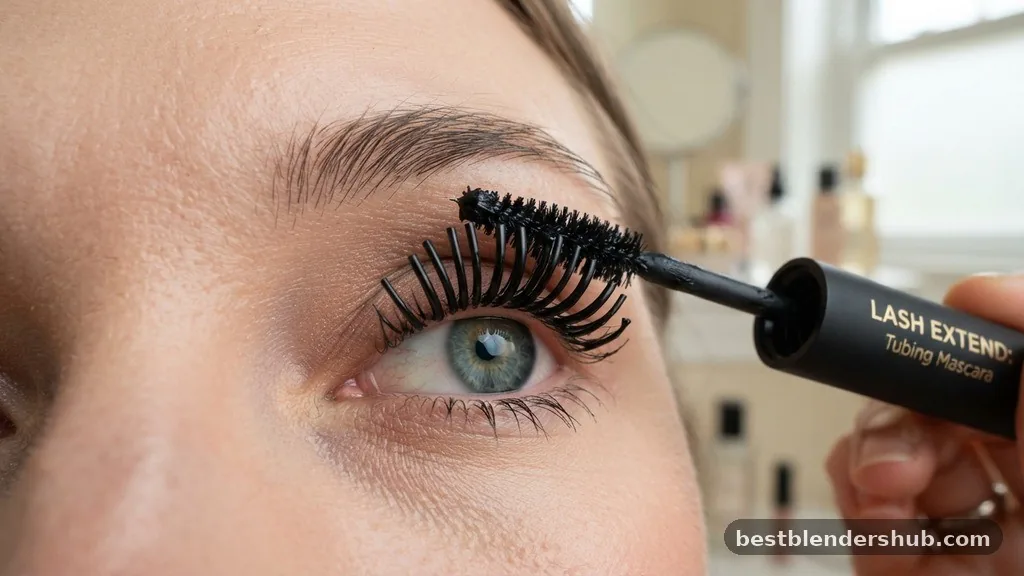
At the core of how tubing mascara functions is the application of film-forming technology. Rather than depositing a thick layer of heavy pigment that sits on top of your lashes, these products utilize acrylic copolymers. These synthetic ingredients are engineered to be liquid during application but quickly set into a flexible, rubberized state as the solvent evaporates.
This creates a cohesive “sleeve” around the lash. The beauty of this chemical reaction is that the tube is essentially a solid structure that won’t smear.
Even if you rub your eyes during a busy day, the tubes stay intact. They don’t break down into liquid pigments that run down your cheeks, which is a common failure point for wax-based mascaras that soften upon contact with sebum.
This film-forming capability also contributes to the unique aesthetic benefits of the product. Because the tubes harden to a consistent size, they effectively elongate the look of your natural lashes. The formula doesn’t just sit on the surface; it builds upon the tip of the lash, extending the reach of each fiber.
This process is inherently non-clumping. Because the polymers are designed to form a smooth, uniform sleeve rather than a clumpy pile of wax, the result is usually much cleaner and more separated. If you value lash definition over extreme, spidery volume, this technology offers a professional-looking finish that remains consistent from the moment you apply it until the moment you wash it off.
Understanding the Removal Process
Perhaps the most distinct feature of this product category is the method of warm water removal. Because the tubes are designed to be water-resistant but not solvent-proof against water at a specific temperature, they slide off the lashes cleanly without the need for harsh rubbing or aggressive oil-based makeup removers.
When you splash warm water onto your eyes and apply gentle pressure with your fingers or a damp cloth, the tubes lose their grip on the lash shaft and slip off in tiny, string-like pieces. This is a revelation for anyone who has experienced the irritation of scrubbing away stubborn, pigment-heavy traditional mascara, which often leads to lash breakage and unnecessary strain on the delicate eye area.
The efficiency of this removal process is also a massive benefit for eye health. Traditional waterproof mascaras often require oil-based cleansers or makeup remover pads that can leave a hazy, oily residue on the eyes or require excessive tugging of the eyelid skin. With a tubing mascara, you are essentially performing a clean, non-greasy rinse.
This lack of friction is particularly beneficial for those with sensitive eyes, as it minimizes the mechanical trauma often associated with the nightly makeup removal ritual. You won’t find yourself waking up with “mascara ghosts”—those dark stains left behind by conventional formulas that refuse to leave the lash line—because the tubing technology ensures the entire coating is removed in one go.
How to Identify a Tubing Mascara
If you are wondering how to know if your mascara is tubing, the most reliable indicator is the ingredients list and the removal instructions provided by the manufacturer. While many brands do not explicitly label their products as “tubing,” you can look for key ingredients like acrylates copolymer or ammonium acrylates copolymer near the top of the list. These are the primary film-forming agents.
Furthermore, if the packaging specifically instructs you to use warm water for removal rather than a makeup remover, you are almost certainly dealing with a tubing formula. It is important to note that many “waterproof” mascaras are actually oil-based, not tubing, so the removal instructions are your best clue.
Another way to test your current stash is to observe how the product behaves when you remove it. If you use a standard makeup remover and find that the product dissolves into a dark, smeary liquid, it is a traditional wax-based mascara.
If, however, you use warm water and see small, solid black fibers or “sleeves” coming off your lashes without creating a mess around your eyes, you have confirmed that the product relies on tubing technology. This distinction is vital for your beauty routine, as trying to remove a tubing mascara with a standard oil cleanser often proves frustratingly ineffective, as the oils simply slide over the tubes without breaking the bond that keeps them attached to your lashes.
Tubing Mascara Versus Fiber Mascara
It is common to confuse tubing mascara with fiber mascara, but the two function on fundamentally different principles. A fiber mascara typically contains tiny, synthetic particles (often nylon or rayon) that adhere to your lashes to add literal length and volume. While effective for dramatic looks, these fibers can sometimes fall into the eyes, causing irritation, or create a “messy” lash appearance if not applied with precision.
Tubing mascara, by contrast, relies on the chemical properties of polymers to create a smooth, continuous sleeve. There are no loose fibers involved in the tubing process; the “extension” effect comes from the formula coating the very tip of the lash and hardening into a solid extension of the hair.
When choosing between the two, consider your primary concern. If you want extreme, dramatic, runway-style volume, fiber mascaras might be more appealing, though they require a steeper learning curve to apply without clumping.
If you prioritize a smudge-proof, long-lasting look that is easy to remove and keeps your lashes looking defined and natural, a tubing mascara is the superior choice. Many people find that tubing formulas are much better for daily wear, especially if they wear contact lenses or have sensitive skin, as the absence of loose fibers eliminates the risk of gritty debris getting stuck under the eyelid.
Benefits for Sensitive Eyes
For those with sensitive eyes, finding the right mascara is often an exercise in trial and error, usually ending in red, watery, or itchy eyes by the end of the day. Tubing formulas are frequently lauded as a hypoallergenic formula option for these individuals.
Because they do not flake, there is virtually no risk of product particles falling into the eye throughout the day. Flaking is a major source of ocular irritation for contact lens wearers and those with allergies, as the tiny crumbs of dry, waxy mascara can easily scratch the cornea or cause inflammation in the conjunctiva.
Furthermore, the gentle nature of the removal process cannot be overstated. The skin around the eyes is the thinnest and most delicate on the body. Constant pulling and rubbing to remove stubborn waterproof mascara contributes to premature fine lines and can even cause lash thinning.
By opting for a tubing mascara, you remove the need for aggressive cleansing. The ability to simply “slide” the product off with warm water allows your lashes to stay intact and healthy. This makes tubing options a dermatologically friendly choice that supports the long-term health of your natural lashes, ensuring they remain strong and full rather than brittle and prone to breaking.
Managing Expectations: The “Tubing” Look
While tubing technology is revolutionary, it is important to understand that it does not provide the exact same aesthetic as traditional mascaras. Because the formula is designed to wrap the lash in a film, it does not typically offer the same “thick and clumpy” volume that heavy wax-based mascaras achieve.
If you are looking for that thick, dramatic, false-lash intensity that comes from piling on layers of heavy wax, you might initially find tubing mascara to be “too light.” However, this is precisely what gives the product its clean, sophisticated, and professional appearance.
The “look” of a tubing mascara is best described as lash definition. It separates the lashes beautifully, creating a fanned-out effect that looks like your natural lashes, only longer and more defined. It is the perfect choice for the “no-makeup makeup” aesthetic or for office settings where you want to look polished without appearing as though you have heavy, clumpy product on your eyes.
If you desire more volume, many enthusiasts use a tubing mascara as a top coat over a volumizing mascara, though this can sometimes make the removal process more complex. For most, the trade-off—a clean, smudge-proof look that lasts through a gym session or a rainy day—is well worth the adjustment in aesthetic expectation.
Is Tubing Mascara Truly Waterproof?
A common question is whether tubing mascara qualifies as waterproof. The answer is nuanced: it is technically water-resistant, but not in the way a traditional waterproof mascara is. A standard waterproof mascara is designed to be completely hydrophobic, meaning it will not break down with water, sweat, or even tears.
It requires an oil-based solvent to remove. A tubing mascara, however, is designed to be impervious to the oils on your skin and the moisture in the air, which makes it effectively “smudge-proof” for 99% of daily activities. You can cry, sweat, or get caught in a light mist, and the tubes will remain securely on your lashes.
However, if you are planning to go swimming or take a hot shower where you are actively scrubbing your eyes, the tubing mascara will likely begin to slide off. This is because the warm water and the friction of the water pressure act as the catalyst for removal.
Therefore, while it is arguably the best “everyday” mascara for preventing smudges, it might not be the best choice for a beach day or high-intensity water sports where the formula might be compromised by prolonged saturation. For general, everyday life, it offers the best of both worlds: the longevity of a waterproof product with the easy, non-damaging removal of a standard one.
The Future of Lash Technology
As cosmetic technology continues to evolve, we are seeing a shift toward more functional, health-conscious makeup. Tubing mascara is a prime example of this trend, moving away from heavy, oil-based formulas toward high-performance, polymer-based solutions.
We are seeing more brands incorporate lash-conditioning ingredients—such as panthenol, biotin, or peptides—into their tubing formulas. This allows the user to treat their lashes while wearing makeup, providing hydration and strength while the film-forming polymers protect the hair from environmental stressors like pollution and dryness.
Looking ahead, we can expect even more innovation in the flexibility of these polymers. Newer versions of tubing formulas are becoming more buildable, allowing users to apply multiple coats to achieve a fuller, more dramatic look without sacrificing the signature smudge-proof benefits.
The integration of tubing technology into more diverse product ranges, including colored mascaras and tinted lash primers, suggests that this is not just a passing trend but a fundamental shift in how we approach eye makeup. By prioritizing the health of the lash and the convenience of the user, the beauty industry is signaling that the era of heavy, hard-to-remove wax mascara may eventually become a thing of the past.
Practical Tips for Best Results
To get the most out of your tubing mascara, technique is key. Because the formula sets quickly to form that protective sleeve, it is best to apply it in a single, smooth stroke from base to tip.
Unlike traditional mascaras, which you might wiggle back and forth to deposit product, tubing mascara performs best when you let the brush do the work in one continuous motion. Avoid letting the product dry completely between coats if you plan to layer it, as the “sleeves” might become irregular or clump together if you try to apply a second layer after the first has hardened.
Additionally, always ensure your lashes are completely clean and free of leftover oil or moisturizer before application. Because tubing formulas rely on the polymers adhering to the lash surface, any oily residue on your lashes can prevent the tubes from gripping properly, leading to flaking or premature removal. By starting with a clean slate, you allow the film-forming technology to perform at its peak.
If you have particularly straight lashes, you should always curl them before applying the tubing mascara. The rubberized sleeve will then hold the curl in place, providing a lift that lasts throughout the day, whereas heavy, oil-based mascaras can sometimes weigh down a curl and cause it to fall flat within an hour of application.
Ultimately, the shift to tubing mascara is about simplifying your routine while enhancing your results. By understanding the chemistry of film-forming polymers, you move from a place of frustration—dealing with smudges and difficult removal—to a place of confidence. Whether you are navigating a long workday, dealing with humid weather, or simply trying to improve the health and integrity of your natural lashes, this technology offers a robust, reliable, and aesthetically pleasing solution.
It is a testament to how modern science can transform a simple daily habit into a more effective and enjoyable experience. Once you make the switch and experience the ease of warm water removal, it is rare to go back to the old, waxy ways of the past.

Jamesmathew is an expert Amazon affiliate writer, helping readers discover top products, smart deals, and practical buying guides through honest reviews and insightful content.