

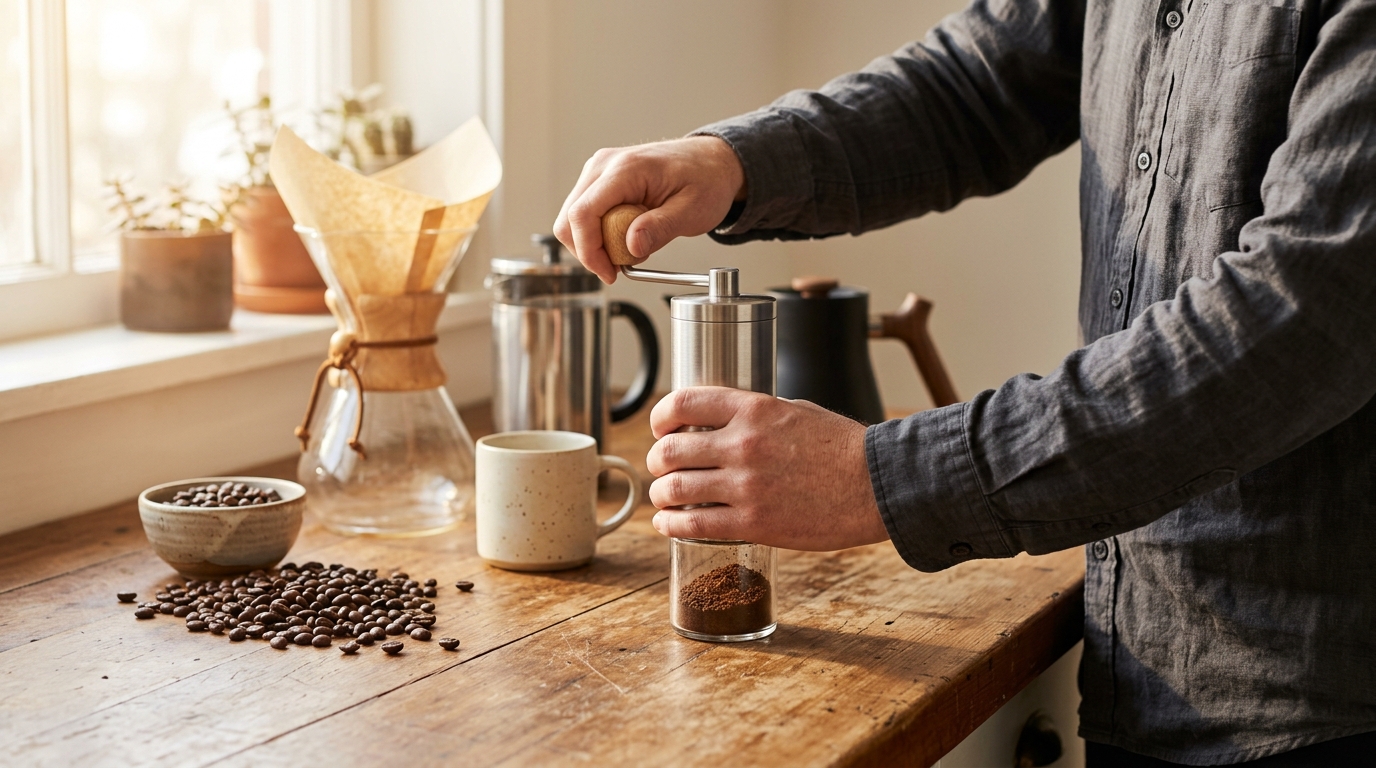
If you’re standing in the kitchen wondering how to use a manual coffee grinder without making a total mess or ending up with coffee that tastes weirdly bitter, you’re honestly not alone. Maybe you picked one because it looked simple, maybe because everyone kept saying fresh-ground coffee changes everything, and now you’re twisting a handle thinking, “this can’t be the whole story… right?” Turns out there are a few tiny details that make a much bigger difference than people usually expect.
Grinding coffee by hand isn’t just about crushing beans. The size of the grounds, the way you hold the grinder, even how quickly you turn the handle all have a sneaky effect on the cup waiting for you. Once you understand the process, it becomes less of a chore and kinda satisfying in a strange little way.
Why People Still Prefer a Manual Coffee Grinder
Electric grinders are fast, sure. But manual coffee grinders have stayed popular for reasons that actually make sense.
For starters, they’re quiet. If you wake up before everyone else, you can grind beans without sounding like you’re blending rocks. They’re also portable, don’t need electricity, and usually cost less than quality electric burr grinders.
Another thing people often notice is control. You feel the resistance changing as the beans break down, which sounds oddly poetic but it’s true. It gives you a better sense of what’s happening inside the grinder.
According to the Specialty Coffee Association (SCA), consistent grind size plays a major role in proper extraction and flavor balance. A quality burr grinder, whether manual or electric, produces far more uniform coffee grounds than blade grinders.
Understanding the Parts Before You Start
A manual coffee grinder may look complicated the first time you unscrew it, but there really aren’t many pieces.
| Part | Purpose |
|---|---|
| Hopper | Holds whole coffee beans |
| Burrs | Crush beans into consistent particles |
| Adjustment Dial | Changes grind size |
| Handle | Rotates the burr mechanism |
| Grounds Container | Collects freshly ground coffee |
Some grinders hide the adjustment dial beneath the burr while others place it underneath the catch cup. If yours feels confusing at first, that’s pretty normal honestly.
Choose Fresh Coffee Beans First
Even the best grinder can’t rescue stale beans.
Coffee begins losing noticeable aroma after grinding because hundreds of volatile compounds escape into the air. Whole beans keep those flavors protected much longer.
Try buying beans roasted within the last two to four weeks. Store them in an airtight container away from sunlight and heat instead of inside the refrigerator.
Fresh beans usually grind more evenly too, though darker roasts can feel a little oilier.
Adjust the Grind Size Correctly
Learning how to use a hand coffee grinder mostly comes down to choosing the right grind setting.
Different brewing methods require different particle sizes.
| Brewing Method | Recommended Grind |
|---|---|
| Turkish Coffee | Extra Fine |
| Espresso | Fine |
| Moka Pot | Medium-Fine |
| Pour Over | Medium |
| Drip Coffee | Medium |
| Chemex | Medium-Coarse |
| French Press | Coarse |
| Cold Brew | Very Coarse |
Don’t get discouraged if your first attempt isn’t perfect. Coffee somehow enjoys making people experiment a bit.
Step-by-Step Guide on How to Use a Manual Coffee Grinder
Now comes the actual grinding process.
Step 1: Measure Your Coffee Beans
Instead of guessing, weigh your beans if possible.
Most people use around 15 to 18 grams of coffee for one standard mug. A digital scale helps keep every brew consistent, although a tablespoon works in a pinch.
Step 2: Fill the Hopper
Pour the measured beans into the hopper.
Avoid overfilling because beans need room to move around. Packing them tightly can make grinding harder than it needs be.
Step 3: Set Your Grind Size
Rotate the adjustment dial according to your brewing method.
If your grinder counts clicks, remember the number that tastes best. Keeping notes sounds nerdy until you realize it saves loads of trial and error later.
Step 4: Attach the Handle
Make sure the handle sits securely on the shaft.
Loose handles can wobble, making the grind uneven and slightly annoying.
Step 5: Start Grinding
Turn the handle steadily.
You don’t need superhero strength here. Smooth, even rotations generally produce more consistent grounds than racing through the process.
Some people naturally speed up halfway through. Try not too. Slower, steady grinding often feels easier on the wrists anyway.
Step 6: Collect the Grounds
Unscrew the bottom container and empty the coffee into your brewer.
Give the grinder a gentle tap first since tiny particles sometimes cling inside.
How Long Does Manual Grinding Take?
This depends on your grinder, roast level, grind size, and the amount of coffee.
Here’s a rough guide.
| Coffee Amount | Average Grinding Time |
|---|---|
| 15 grams | 30–60 seconds |
| 30 grams | 1–2 minutes |
| 60 grams | 2–4 minutes |
Premium steel burr grinders often finish quicker because they cut beans more efficiently than ceramic burrs.
Common Mistakes Beginners Make
Almost everybody makes at least one of these.
- Grinding too fine for French press.
- Grinding too coarse for espresso.
- Changing grind settings while beans remain inside.
- Turning the handle aggressively.
- Forgetting to clean old coffee particles.
- Using stale beans and blaming the grinder.
Tiny mistakes stack up. Coffee is funny like that.
Why Burr Grinders Beat Blade Grinders
Manual grinders almost always use burrs instead of blades.
Blade grinders chop beans into random shapes, creating both dust-like particles and chunky pieces together. This unevenness causes over-extraction and under-extraction at the same time.
Burr grinders crush beans between two precisely spaced surfaces, producing much more consistent grounds.
Research published by coffee professionals and supported through SCA brewing standards consistently shows grind uniformity improves extraction quality.
Does Grinding Speed Matter?
Surprisingly, yes.
Spinning the handle wildly may create inconsistent feeding through the burrs, especially with lighter roasted beans.
A calm rhythm usually works better.
Imagine winding an old music box instead of trying to start a lawn mower. Strange comparison maybe, but it kinda fits.
Cleaning Your Manual Coffee Grinder
Cleaning isn’t glamorous, though it helps preserve flavor.
Every week or two:
- Empty leftover grounds.
- Remove loose coffee particles with a soft brush.
- Wipe removable parts using a dry cloth.
- Reassemble carefully.
Every month:
- Deep clean according to the manufacturer’s instructions.
- Inspect burrs for excessive wear.
- Tighten loose screws if necessary.
Avoid washing steel burrs with water unless your grinder specifically allows it. Moisture encourages rust over time.
Tips to Get Better-Tasting Coffee
These little adjustments often matter more than buying expensive equipment.
- Grind immediately before brewing.
- Weigh both coffee and water.
- Keep brewing water around 92–96°C.
- Store beans in airtight containers.
- Replace worn burrs when needed.
- Adjust only one brewing variable at a time.
Professional baristas rarely change everything together because then nobody really knows what improved the coffee.
Manual Coffee Grinder vs Electric Coffee Grinder
| Feature | Manual Grinder | Electric Grinder |
|---|---|---|
| Cost | Usually lower | Usually higher |
| Noise | Very quiet | Louder |
| Portability | Excellent | Limited |
| Speed | Slower | Faster |
| Physical Effort | Required | Minimal |
| Travel Friendly | Yes | Often no |
Neither option is automatically better.
If you enjoy slowing down your morning routine just a tiny bit, manual grinders have a charm that’s difficult to explain until you’ve used one for a while.
Real-World Example
Imagine two friends making pour-over coffee.
One uses pre-ground supermarket coffee that’s been open for three weeks.
The other buys freshly roasted beans, measures 18 grams, adjusts the grinder for a medium grind, and brews immediately after grinding.
Both use identical brewing equipment.
The second cup will almost certainly have brighter aromas, clearer sweetness, and noticeably more complexity. Fresh grinding alone often creates a difference people can recognize without knowing anything about coffee.
Final Thoughts
Learning how to use a manual coffee grinder isn’t really difficult, but it rewards patience more than speed. Once you dial in the right grind size, develop a steady grinding rhythm, and start using freshly roasted beans, you’ll probably notice your coffee tasting richer and more balanced than before.
Don’t worry if the first few cups aren’t perfect. Even experienced coffee enthusiasts keep adjusting grind settings depending on the beans they’re using. That’s part of the fun, honestly. Every bag of coffee behaves a little differently, and that’s what keeps the process interesting instead of predictable.
Can you use a manual coffee grinder for espresso?
Yes, if the grinder has precise burr adjustments capable of producing fine, consistent grounds. Lower-quality grinders may struggle with true espresso grind consistency.
How often should you clean a manual coffee grinder?
Brush away coffee residue every week and perform a deeper cleaning about once each month to maintain flavor quality and keep burr performance consistent.
Is a manual coffee grinder better than an electric one?
Neither is universally better. Manual grinders offer portability, quiet operation, and control, while electric grinders save time and require much less physical effort.
How fine should coffee be ground for French press?
French press works best with coarse grounds that resemble coarse sea salt. Finer grounds can create bitterness and allow more sediment into the finished coffee.
How long does it take to grind coffee manually?
Grinding about 15 to 20 grams of coffee usually takes between 30 seconds and one minute, depending on burr quality, grind size, and bean hardness.

Jamesmathew is an expert Amazon affiliate writer, helping readers discover top products, smart deals, and practical buying guides through honest reviews and insightful content.