

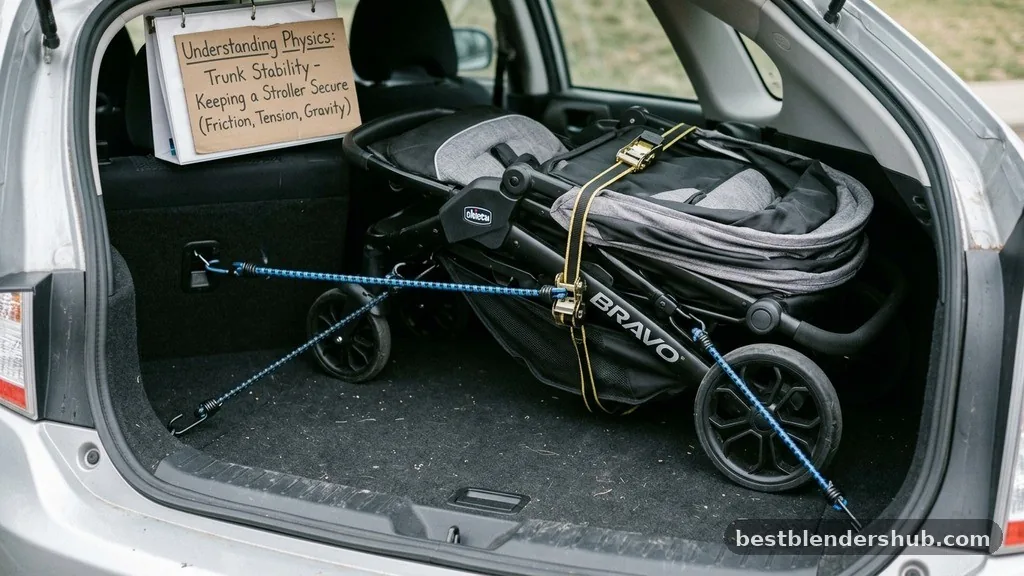
Dealing with a shifting stroller while driving is more than just a noisy nuisance; it can cause damage to your vehicle’s interior and potentially harm your baby gear. If you have ever opened your hatch to find your expensive stroller has migrated across the entire SUV cargo area, you know how frustrating it is to constantly reposition it.
Learning how to keep a stroller from sliding in the trunk effectively protects your investment and keeps your driving experience peaceful. By using the right combination of friction, tension, and containment, you can ensure that your gear stays exactly where you put it, regardless of how many turns you take.
Understanding the Physics of Trunk Stability
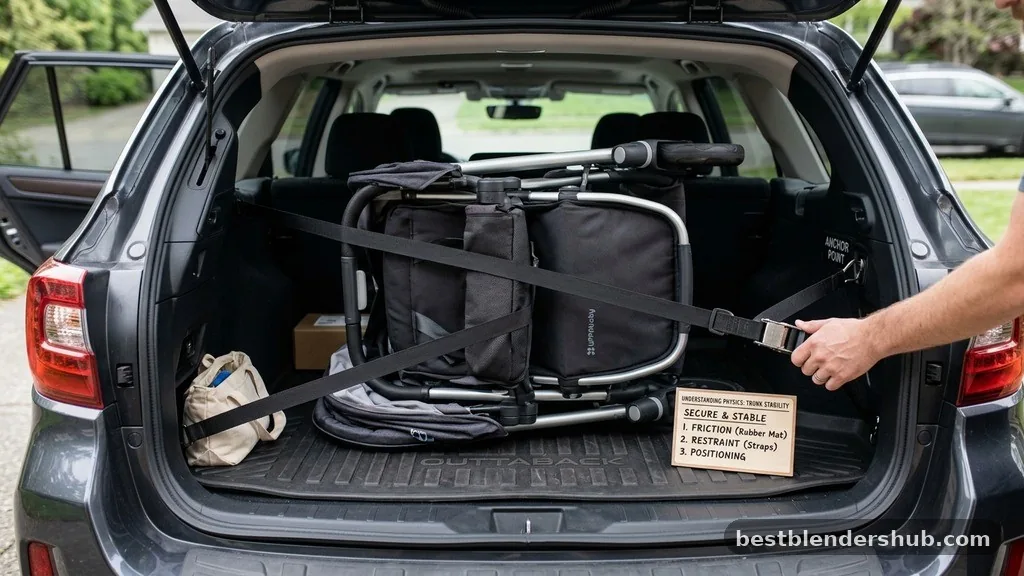
The primary reason your stroller slides around is a lack of friction between the wheels or chassis and the floor of your vehicle. Most modern trunks are lined with plastic or thin, slick carpeting designed for easy cleaning, which offers almost no grip for heavy, wheeled items.
When you accelerate, brake, or round a corner, the momentum of the stroller overcomes the minimal surface resistance. To stop this, you must either increase the grip beneath the stroller or physically tether it to the vehicle’s chassis.
Utilizing Non-Slip Solutions
The simplest way to create a stable foundation is to add a rubberized liner or a non-slip mat to the floor of your trunk. These materials are specifically engineered to increase the coefficient of friction, effectively “grabbing” the stroller wheels or frame.
Benefits of High-Friction Liners
- They prevent small movements during city driving.
- They protect the factory carpet from dirt, spills, and mud.
- They are usually easy to remove and hose off when they get dirty.
- They require no installation time or complex hardware.
When choosing a mat, look for one that covers the entire floor area of your trunk. If the mat is too small, the stroller might slide off the edge and onto the slick plastic, rendering the solution ineffective. A thick, heavy-duty rubber mat is often superior to thin, foam-based alternatives because it stays flat and resists bunching up when you load or unload the stroller.
Securing with Tension and Anchors
If you prefer a more permanent fix, using bungee cords or velcro straps attached to the vehicle’s tie-down anchors is the gold standard for stability. Most vehicles, especially SUVs and hatchbacks, come equipped with built-in metal loops or plastic hooks hidden in the corners of the trunk. These are designed to hold heavy loads in place during transit.
Step-by-Step Securing Process
- Identify the four tie-down anchors in your trunk area.
- Collapse your stroller fully to minimize its footprint.
- Loop a bungee cord or strap around the main frame of the stroller.
- Hook the ends of the strap into the nearest vehicle anchors.
- Tighten the strap until the stroller feels immovable against the floor.
Avoid using high-tension ratchet straps unless you are very careful. Because strollers are often made of lightweight aluminum or plastic, excessive force from a heavy-duty ratchet can bend the frame or crack a plastic component. A simple bungee cord or a soft-webbing strap with a cam buckle is usually enough to keep the stroller from shifting without risking damage to the frame.
Managing Gear with Storage Organizers
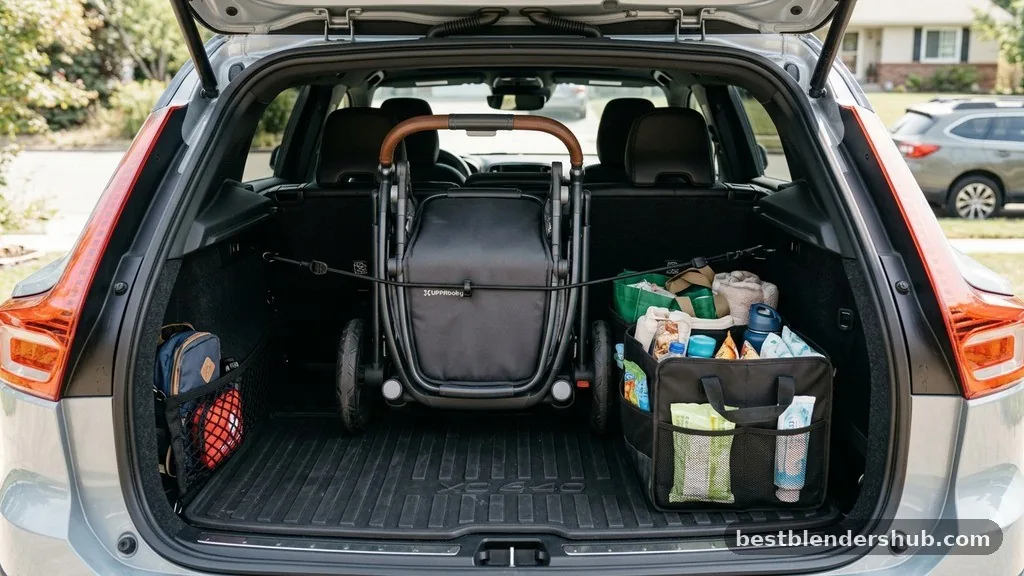
A trunk organizer acts as a physical barrier that prevents your stroller from roaming freely. Many of these products feature weighted bottoms or velcro strips on their underside that stick to the trunk carpet, creating a stable “bin” for your gear.
| Feature | Cargo Net | Trunk Organizer | Bungee Cords |
|---|---|---|---|
| Primary Use | Holding loose items | Containing gear | Immobilizing heavy objects |
| Ease of Use | High | Medium | Low |
| Security Level | Low | Medium | High |
| Versatility | Moderate | High | Moderate |
When using an organizer, place the stroller in the center and pack smaller items, like diaper bags or grocery totes, around it to fill the gap. This “filling” technique reduces the amount of empty space in the trunk, making it physically impossible for the stroller to gain enough speed to slide.
Addressing Unique Vehicle Configurations
Every vehicle interior is different, and the challenge of securing a collapsible stroller changes depending on whether you drive a sedan, a crossover, or a large SUV. In a sedan, the trunk is enclosed, which means you have less space for the stroller to slide, but the lack of accessible tie-down points can be a hurdle. In this case, a cargo net that spans the width of the trunk is often the most effective solution.
If you own an SUV, you likely have a much larger, open space. A cargo partition or a rigid divider can be a life-saver here.
These dividers act as a wall, effectively shrinking your trunk space to fit your specific needs. By creating a dedicated “stroller zone” using a partition, you keep the rest of your trunk free for groceries or sports equipment while ensuring the stroller stays pinned against the back seats.
Solving Persistent Sliding Issues
Sometimes, standard methods fail because the stroller has a unique geometry or the trunk floor is slanted. If you still find your gear moving, consider the weight distribution.
Always try to place the heaviest part of the stroller—usually the wheel base—against the rear seats. This creates a natural stop point.
Another common gap is the “center-slide” issue where a stroller is too narrow to be caught by the side walls of the trunk. If you have this problem, consider using two small, heavy-duty suction cup hooks if your trunk has side plastic panels.
Attach the hooks to the side walls and run a short bungee cord between them, creating a “fence” that traps the stroller against the back of the seats. This keeps your vehicle interior protection intact while providing a custom anchor point where none existed before.
Common Questions About Stroller Mobility
Can I use heavy items to hold my stroller in place?
Yes, placing heavy grocery bags or a cooler against the stroller frame can help reduce shifting during short trips.
Are bungee cords safe for all strollers?
Avoid over-tightening; use soft-coated bungee cords to prevent scratching the finish on your stroller’s frame during the journey.
Do non-slip mats work on plastic trunk liners?
Most rubberized mats are designed to grip plastic surfaces, but ensure the liner is specifically marked as “non-slip” for efficacy.
What is the best way to secure a stroller in a truck bed?
Use heavy-duty ratchet straps and a weather-resistant cover to ensure the stroller remains dry and stationary during high-speed travel.
Does a cargo net provide enough tension?
A cargo net is best for lightweight items; for a heavy stroller, pair the net with a bottom-based rubberized liner.
Can I use velcro strips on the stroller frame?
Adhesive-backed velcro can be attached to the stroller’s plastic base to stick directly to carpeted trunks for extra stability.
Is it better to lay the stroller flat or stand it up?
Laying the stroller flat is almost always safer, as it lowers the center of gravity and reduces the sliding potential.
Final Thoughts on Trunk Organization
Keeping your stroller stationary in the trunk is a small adjustment that makes a massive difference in your daily routine. By combining simple tools like non-slip mats, bungee cords, or a well-placed trunk organizer, you remove the stress of hearing your gear crash against the sides of your car every time you hit a bump. It is well worth the few minutes of effort to set up a secure system that protects your stroller and your vehicle’s interior.
Start by assessing your specific trunk layout and choosing the combination of methods that fits your lifestyle. If you have found a unique way to keep your stroller from sliding in your trunk, feel free to share your setup with other parents who are looking for a smoother ride.

Jamesmathew is an expert Amazon affiliate writer, helping readers discover top products, smart deals, and practical buying guides through honest reviews and insightful content.