

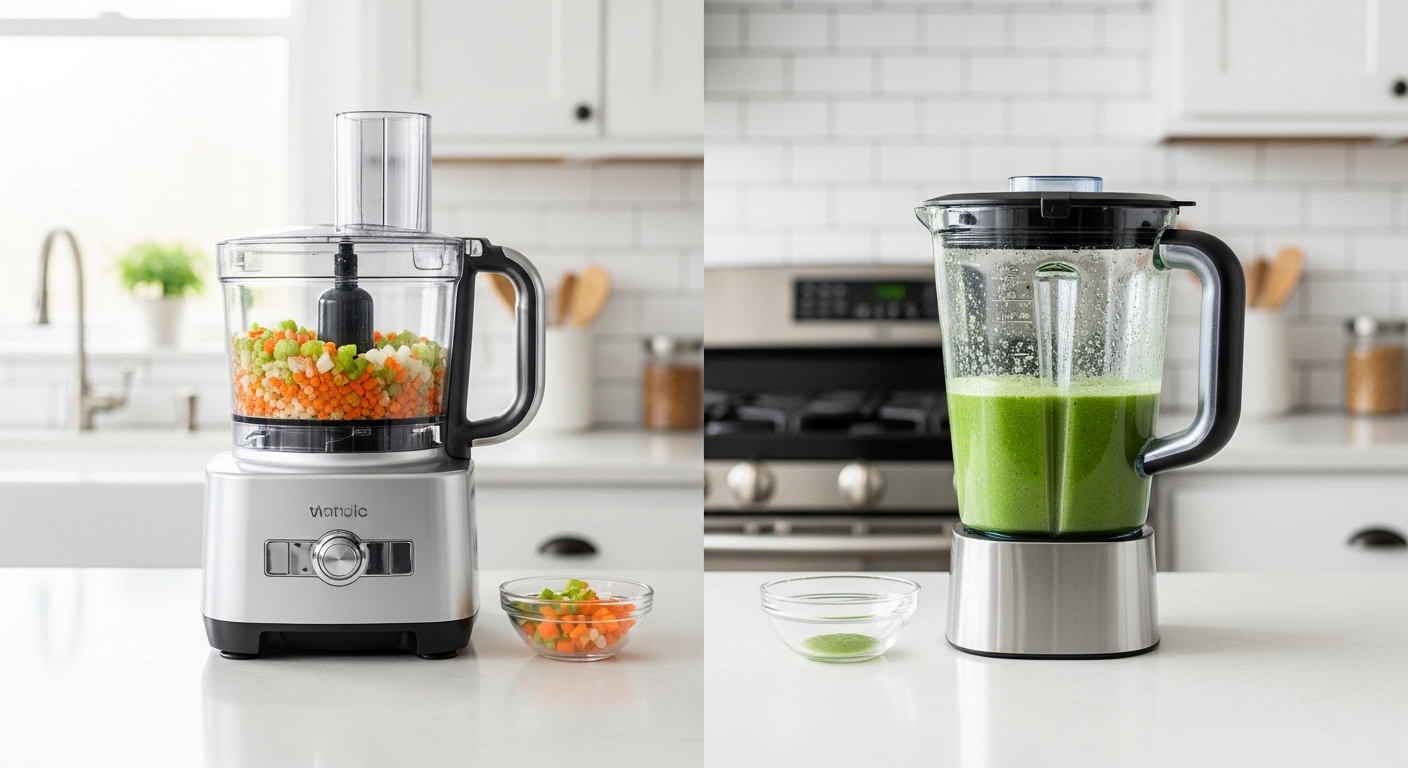
can i use blender instead of food processor — yeah, that exact question pops up in your head the moment you’re staring at a recipe and realizing you own the “wrong” appliance, and honestly it’s a bit of a messy situation most people don’t talk about enough.
You’re probably in your kitchen, ingredients already out, maybe onions half chopped, and suddenly the recipe casually says “use a food processor” like everyone just has one sitting around. And you’re there thinking, well… I only got a blender, so now what. That confusion is way more common than people admit.
So let’s just walk through it like a normal kitchen conversation, not some perfect cookbook explanation.
Can I Use Blender Instead of Food Processor — Short Answer, but Not Too Simple
Yes, you can use a blender instead of a food processor in many cases, but it’s not a clean swap every time. It depends on what you’re making, how wet it is, and how patient you are feeling that day (important factor honestly).
A blender is more like that overenthusiastic friend who goes all in fast. A food processor is slower but more controlled, like it actually plans things.
People often confuse the two because both “chop stuff,” but the way they do it is totally different, and that difference matters more than it sounds.
Blender vs Food Processor — The Real Mechanical Difference
At a glance, both machines look similar: a base, a blade, a container. But inside, they behave very differently.
Blade motion and design
A blender pulls ingredients downward into a vortex. That’s why smoothies come out so silky. It’s built for liquid-heavy jobs.
A food processor spins wide, flat blades that chop and push food outward. It doesn’t rely on liquid movement as much.
So basically:
- Blender = pull + liquify
- Food processor = chop + pulse + control texture
Not exactly interchangeable vibes.
Texture control difference
Food processors are better when you want:
- chunky salsa
- chopped onions
- pastry dough
- shredded vegetables
Blenders are better when you want:
- smoothies
- soups
- purees
- sauces
A small study often referenced in kitchen tech reviews (like Consumer Reports testing data summaries) notes that blenders can over-process solid ingredients quickly, which leads to uneven texture when dry foods are involved. That’s something you notice immediately when you try it.
When You CAN Use Blender Instead of Food Processor
Now this is where things get practical, because honestly, most people don’t need perfection. You just need food that works.
1. Smooth or semi-liquid mixtures
If there’s liquid involved, your blender is basically in its comfort zone.
Examples:
- hummus (with enough water or oil)
- pancake batter
- soups
- smoothie bowls
2. Soft vegetables (with a trick)
You can blend things like:
- boiled potatoes
- cooked carrots
- softened onions
But you gotta pulse carefully or you’ll end up with vegetable soup instead of chopped bits.
3. Nut-based spreads
Blenders can handle:
- peanut butter (small batches)
- cashew cream
- almond-based sauces
But you may need to stop often and scrape sides, otherwise it just sticks and spins like nothing is happening.
4. Sauces and dips
Anything like:
- pesto (with enough oil)
- mayonnaise-style blends
- yogurt dips
Works surprisingly well in a blender.
When You Should NOT Use Blender Instead of Food Processor
This is where people get into trouble and blame the blender unfairly.
1. Dry chopping tasks
If the recipe says:
- chop onions finely
- dice vegetables
- shred cabbage
A blender will just mash or unevenly grind them.
2. Dough making
Blenders struggle badly with dough. It’s too thick and sticky. You’ll hear the motor scream a little, not joking.
3. Layered textures
Anything that needs control like:
- salsa with chunks
- salads base prep
- pastry crumbs
Blender will go from “chunky” to “paste” in like 3 seconds.
4. Large batches
Food processors handle volume better. Blenders tend to create uneven blending unless you constantly stop and stir.
Real Kitchen Example (so it makes sense)
Let’s say you’re making hummus.
A food processor would:
- blend chickpeas evenly
- slowly incorporate tahini
- keep texture slightly thick
A blender would:
- need extra water or oil
- stick ingredients at the bottom
- sometimes over-blend the edges into paste while leaving chunks above
You can still make it work, but it’s more effort.
Another example: chopping onions.
Food processor gives you:
- uniform diced pieces
Blender gives you:
- onion mush at the bottom
- random chunks flying around
Not exactly the same experience.
Blender Hacks That Actually Work (kind of lifesavers)
If you’re stuck with only a blender, there are ways to make it behave a bit more like a food processor.
Use pulse mode, not continuous blending
Pulse is your best friend. It gives short bursts instead of full chaos.
Cut ingredients smaller first
Don’t throw whole carrots in there. Chop them roughly before blending.
Add small amounts at a time
Overloading is the fastest way to ruin texture.
Use minimal liquid (but not zero)
Dry blending is risky. A spoon of water or oil can help movement.
Shake or stir between blends
Yeah it feels annoying, but it helps a lot.
Blender vs Food Processor Comparison Table
| Feature | Blender | Food Processor |
|---|---|---|
| Best for liquids | Excellent | Moderate |
| Best for chopping | Poor | Excellent |
| Dough making | Not suitable | Good |
| Texture control | Low | High |
| Speed | Very fast | Controlled |
| Batch size | Small-medium | Medium-large |
This is why chefs don’t usually swap them, even if both sit in the same kitchen.
Common Mistakes People Make
People think the problem is the appliance, but often it’s how they’re using it.
1. Expecting identical results
A blender won’t chop like a food processor. It just won’t, no matter how long you try.
2. Overfilling the jar
This leads to uneven blending and motor strain.
3. Using dry ingredients only
Blenders need some movement help.
4. Ignoring pulse technique
Continuous blending is where things go wrong fast.
Food lab testers (like those mentioned in Serious Eats equipment breakdowns) often highlight that technique matters almost as much as machine type, which honestly feels true once you mess up a few batches yourself.
So… Can I Use Blender Instead of Food Processor or Not?
Yes, but with conditions.
If your goal is:
- smoothies → blender wins
- soups → blender wins
- dips → blender works fine
If your goal is:
- chopping
- dough
- structured textures
Then blender becomes a workaround, not a replacement.
It’s kind of like using a bicycle for highway travel. It moves, but you’ll feel every limitation.
Final Thoughts (not the polished kind)
At the end of the day, most home kitchens don’t have perfect equipment setups. People just make things work, sometimes awkwardly, sometimes surprisingly well.
So if you’re standing there wondering can i use blender instead of food processor, the honest answer is yeah, you can, just don’t expect it to behave politely all the time.
It’ll surprise you sometimes, frustrate you other times, and occasionally give you something better than expected — which is basically how cooking at home usually goes anyway.

Jamesmathew is an expert Amazon affiliate writer, helping readers discover top products, smart deals, and practical buying guides through honest reviews and insightful content.