

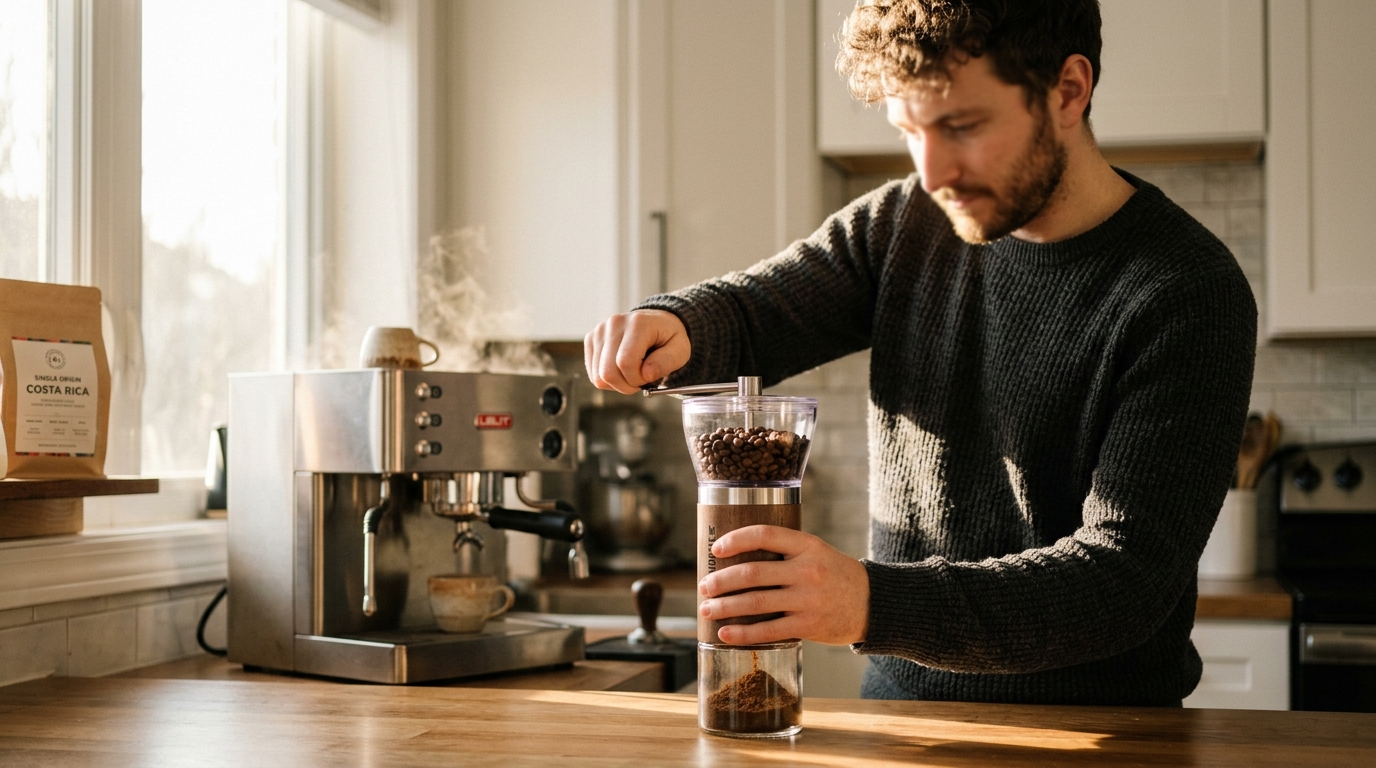
You probably looked at your coffee grinder, turned it over once or twice, and thought, how to use a coffee grinder can’t possibly be this confusing… yet somehow your coffee still tastes different every morning. That’s a weirdly common spot to end up in. One cup feels rich and balanced, the next one kinda tastes flat for no obvious reason. Most of the time, the grinder is quietly causing all the drama.
The truth is, grinding coffee isn’t just another step before brewing. It’s the step that decides how evenly water extracts flavor from the beans. Even expensive coffee beans can produce disappointing coffee if they’re ground incorrectly. Once you understand a few simple principles, you’ll notice an immediate improvement without buying fancy equipment.
Whether you’ve just bought your first grinder or you’ve been using one without really knowing if you’re doing it right, this guide walks you through everything you need to know. You’ll learn how different grinders work, which grind size matches each brewing method, common mistakes to avoid, and practical tips that make every cup noticeably better.
Why Your Coffee Grinder Matters More Than You Think
A coffee grinder doesn’t simply crush beans into smaller pieces. It controls extraction, which is the process where hot water dissolves flavors from coffee grounds.
When coffee particles are roughly the same size, water extracts them evenly. If some pieces are tiny while others are much larger, the smaller particles become over-extracted and taste bitter while the larger ones remain under-extracted and taste sour. It’s kinda like cooking diced potatoes of completely different sizes in the same pot—some become mush while others stay half raw.
Researchers from the Specialty Coffee Association consistently emphasize grind consistency as one of the biggest factors affecting coffee quality. Even before changing beans, water, or brewing equipment, improving grind consistency often creates the most noticeable improvement.
“Grinding coffee immediately before brewing preserves aroma and flavor compounds that quickly disappear after grinding.”
Freshly ground coffee contains hundreds of aromatic compounds that begin escaping within minutes.
Understanding the Two Main Types of Coffee Grinders
Before learning how to use a coffee grinder, it helps to understand what type you’re working with.
| Grinder Type | How It Works | Best For | Pros | Cons |
|---|---|---|---|---|
| Blade Grinder | Rotating blade chops beans | Casual coffee drinkers | Affordable, compact | Uneven grind |
| Burr Grinder | Two burrs crush beans evenly | Most brewing methods | Consistent particle size | Higher cost |
Blade Coffee Grinders
Blade grinders use spinning blades similar to tiny blenders.
Instead of producing uniform grounds, they chop beans randomly. The longer you grind, the finer everything becomes, though the grind remains uneven. They still work reasonably well for drip coffee if you’re careful, but they struggle with espresso and French press because consistency matters much more there.
Burr Coffee Grinders
Burr grinders crush coffee between two precisely machined surfaces.
This creates grounds with far greater consistency. There are two common varieties:
- Flat burr grinders
- Conical burr grinders
Both produce excellent coffee. Unless you’re chasing competition-level espresso, either design works beautifully.
How to Use a Coffee Grinder Step by Step
If you’ve never used one before, don’t overthink it. The process is surprisingly straightforward.
Step 1: Choose Fresh Coffee Beans
Whole beans retain freshness much longer than pre-ground coffee.
Ideally, buy beans roasted within the last two to four weeks. Store them inside an airtight container away from sunlight and moisture.
Step 2: Measure Your Coffee
Instead of filling the grinder randomly, weigh your beans first.
A digital kitchen scale provides the best accuracy.
General starting ratio:
- 15 grams coffee
- 250 ml water
You can adjust later depending on your taste.
Step 3: Select the Correct Grind Size
This is probably the biggest decision.
Different brewing methods require different grind sizes because water stays in contact with coffee for different lengths of time.
| Brewing Method | Grind Size |
|---|---|
| Espresso | Very Fine |
| Moka Pot | Fine |
| AeroPress | Medium-Fine |
| Pour Over | Medium |
| Drip Coffee Maker | Medium |
| Chemex | Medium-Coarse |
| French Press | Coarse |
| Cold Brew | Extra Coarse |
A lotta beginners accidentally use espresso-fine grounds in a French press, which creates muddy coffee and over-extraction.
Step 4: Load the Grinder
Place only the amount of beans you plan to brew.
Grinding extra coffee “for later” seems convenient, but coffee loses noticeable aroma surprisingly fast after grinding.
Step 5: Grind the Coffee
For burr grinders:
- Select grind setting.
- Press Start.
- Allow grinder to finish completely.
For blade grinders:
Use short pulses instead of one continuous grind.
Shake the grinder gently between pulses to improve consistency.
Step 6: Brew Immediately
This matters more than many people realize.
Coffee begins oxidizing almost immediately after grinding. Brewing within five minutes preserves much more aroma than waiting thirty minutes.
How Fine Should You Grind Coffee?
There’s no universal answer.
Instead, match the grind size to brewing time.
Think about sugar dissolving in water.
Granulated sugar dissolves quickly.
Sugar cubes dissolve slowly.
Coffee works similarly.
Fine coffee has more surface area, so extraction happens faster.
Coarse coffee extracts more slowly.
If your coffee tastes:
- Sour: Grind finer.
- Bitter: Grind coarser.
- Weak: Use slightly finer grounds or more coffee.
- Harsh: Try a coarser grind.
Tiny adjustments usually make a bigger difference than changing beans.
Coffee Grind Size Visual Guide
Here’s a simple comparison.
| Grind | Texture |
|---|---|
| Extra Fine | Powdered sugar |
| Fine | Table salt |
| Medium-Fine | Fine sand |
| Medium | Beach sand |
| Medium-Coarse | Rough sand |
| Coarse | Sea salt |
| Extra Coarse | Peppercorn pieces |
Once you’ve compared a few batches with your fingers, identifying grind sizes becomes almost instinctive.
Common Mistakes When Using a Coffee Grinder
Nobody gets perfect coffee immediately. Honestly, that’s half the fun.
Here are mistakes worth avoiding.
Grinding Too Far in Advance
Ground coffee loses volatile aromatic compounds rapidly.
Whole beans stay fresh for weeks.
Ground coffee begins declining within minutes.
Using the Wrong Grind Setting
One grind size doesn’t fit every brewing method.
Changing from French press to espresso without adjusting your grinder almost guarantees disappointing coffee.
Ignoring Grinder Cleaning
Old coffee oils become rancid.
Those stale oils eventually coat fresh grounds, creating unpleasant flavors.
Cleaning takes only a few minutes each month.
Filling the Hopper Completely
Large amounts of beans remain exposed to oxygen.
Instead, add only what you’ll brew today.
Constantly Changing Settings
Many beginners change grind settings dramatically after every cup.
Instead:
- Change one setting.
- Brew again.
- Taste.
- Repeat.
Small adjustments usually solve the problem.
How to Adjust Your Grinder Correctly
Every grinder behaves slightly differently.
Start with the manufacturer’s recommended medium setting.
Then taste your coffee.
If extraction feels too fast:
Move one click finer.
If extraction feels too slow:
Move one click coarser.
Especially with espresso grinders, tiny adjustments produce surprisingly noticeable differences.
How Often Should You Clean Your Coffee Grinder?
Coffee contains natural oils.
Those oils build up over time.
Cleaning schedule:
| Usage | Cleaning Frequency |
|---|---|
| Daily | Brush after use |
| Weekly | Wipe removable parts |
| Monthly | Deep clean burrs |
| Every 3–6 Months | Full inspection |
Never wash electric grinder motors under water.
Instead:
- Unplug grinder.
- Remove removable parts.
- Brush away loose grounds.
- Wipe surfaces with a dry microfiber cloth.
- Reassemble completely dry.
Some manufacturers also recommend food-safe grinder cleaning pellets.
Burr Grinder vs Blade Grinder: Which Should You Buy?
If you’re deciding today, here’s the short version.
Choose a blade grinder if:
- Budget matters most.
- You mainly brew drip coffee.
- You’re just getting started.
Choose a burr grinder if:
- You drink coffee regularly.
- You enjoy experimenting.
- You want noticeably better consistency.
- You brew espresso, pour over, or French press.
Many coffee professionals consider a quality grinder more important than an expensive coffee maker.
That sounds backwards at first, but after tasting the difference it sorta makes perfect sense.
Expert Tips for Better Grinding
These small habits improve coffee more than expensive gadgets.
- Grind immediately before brewing.
- Store beans in airtight containers.
- Keep grinders clean.
- Use filtered water.
- Measure coffee with a scale.
- Record grind settings that work well.
- Change only one variable at a time.
- Replace worn burrs according to manufacturer recommendations.
Professional cafés rely heavily on consistency rather than guesswork.
You can adopt the same approach at home.
Troubleshooting Coffee Grinder Problems
Coffee Tastes Bitter
Possible causes:
- Grind too fine.
- Water too hot.
- Brewing too long.
Solution:
Use a slightly coarser grind.
Coffee Tastes Sour
Possible causes:
- Grind too coarse.
- Under-extraction.
- Brewing too quickly.
Solution:
Adjust one step finer.
Grinder Produces Uneven Grounds
Possible causes:
- Blade grinder limitations.
- Dull burrs.
- Dirty grinder.
Solution:
Clean thoroughly.
Replace burrs if heavily worn.
Grinder Clogs Frequently
Oily dark roasts sometimes stick inside grinders.
Brush out leftover grounds regularly and avoid letting coffee accumulate around the burr chamber.
Frequently Asked Questions
Can You Grind Coffee Without a Burr Grinder?
Yes.
Blade grinders still produce drinkable coffee, especially for drip machines. Using short pulses instead of continuous grinding improves consistency.
Should You Grind Coffee Every Day?
Yes.
Grinding only the amount needed for each brew preserves aroma and flavor significantly better than pre-grinding several days’ worth.
Can Coffee Be Ground Too Fine?
Absolutely.
Overly fine coffee slows water flow and often creates bitter, harsh flavors due to over-extraction.
Is Freshly Ground Coffee Really Better?
Yes.
Fresh grinding preserves aromatic compounds that begin escaping almost immediately after beans are broken apart.
Final Thoughts
Learning how to use a coffee grinder isn’t really about mastering complicated equipment. It’s about understanding how tiny changes affect the final cup. Once you begin matching grind size to your brewing method, measuring beans consistently, and cleaning the grinder regularly, coffee starts tasting clearer, sweeter, and more balanced. Funny enough, the grinder sitting quietly on your kitchen counter often has more influence than the coffee machine beside it.
Don’t chase perfection right away. Brew a cup, taste it, adjust one thing, then brew again. Those small experiments teach you more than any instruction manual ever could. Before long, you’ll stop wondering whether you’re using your grinder correctly because your morning coffee will quietly answer the question for you.

Jamesmathew is an expert Amazon affiliate writer, helping readers discover top products, smart deals, and practical buying guides through honest reviews and insightful content.