

You know that weird stale bitterness that creeps into your coffee even though you just bought fresh beans last week, that’s usually the first sign nobody tells you about when they explain how often to clean coffee grinder machines actually need attention. It’s not the beans betraying you. It’s the little layer of old coffee dust hiding in the burrs, quietly turning rancid while you keep blaming the roaster.
Most people treat their grinder like it’s some kind of self cleaning appliance, which, spoiler, it absolutely is not. Coffee oils build up on metal and plastic parts the same way grease builds on a stovetop, except you can’t see it as easy because it’s tucked inside a machine you rarely open up.
So How Often Should You Actually Clean It
There isn’t one single magic number that fits every grinder, every bean, every household, but here’s a rough breakdown that most specialty coffee folks and equipment makers seem to agree on, more or less.
| Grinder Type | Light Daily Use | Heavy Daily Use | Occasional Use |
|---|---|---|---|
| Blade grinder | Wipe weekly | Wipe every 3-4 days | Once a month |
| Home burr grinder | Deep clean monthly | Deep clean every 2 weeks | Every 2-3 months |
| Espresso grinder (home) | Brush daily, deep clean monthly | Brush daily, deep clean weekly | Every month regardless |
| Commercial burr grinder | Brush daily, deep clean weekly | Brush multiple times daily | N/A, always in use |
Take this table as a starting point and not gospel, cause honestly your own nose and tastebuds will tell you faster than any chart ever could.
According to specialty coffee roasters and baristas who talk about this stuff constantly, coffee grounds contain oils that oxidize quickly once exposed to air, and that oxidation is a big contributor to the stale, cardboard-like flavor people describe when their coffee “just tastes off” even with good beans. Fresh whole bean coffee typically stays good for about 2 to 4 weeks after the roast date if stored properly, while already-ground coffee only lasts about 1 to 2 weeks before it starts losing flavor noticeably. That number shrinks even faster if the grinder itself is contaminating every batch with old, oxidized residue sitting around from last week or last month even.
Signs Your Grinder Is Overdue (Trust Me, You’ll Notice)
Sometimes the machine tells you before you even think to check. A few things worth paying attention to, in no particular order because honestly they all matter about the same:
- Your coffee tastes flat or slightly soapy, even with beans you know are fresh and good
- There’s visible dust buildup around the chute or hopper, like a fine grey fuzz
- The grind size seems inconsistent one day to the next even though you didn’t touch the settings
- You catch a faint rancid, almost oily smell when you open the lid
- Static seems worse than usual, grounds clinging to everything and flying everywhere
If two or more of these sound familiar, it’s probably past time, not exactly urgent-emergency time, but past time.
Why Oils Are the Real Villain Here
Coffee beans are surprisingly oily little things, especially darker roasts, since roasting pulls oils to the surface of the bean. Those oils don’t just disappear after grinding, they smear across burrs and settle into every crevice of the machine, slowly turning rancid the way any oil does when left sitting exposed to oxygen and warmth.
This is why people who drink darker roasts often find they need to clean more frequent than someone drinking a light roast, cause the oil content alone is just higher to begin with.
Blade Grinders vs Burr Grinders: Cleaning Differences
People assume all grinders are basically the same job to clean, they are not, not even close really.
Blade grinders are simpler mechanically, so cleaning them is mostly about wiping the chamber and blade area with a dry cloth or a slightly damp one, then drying it thoroughly before use again. Some people use a small amount of raw rice to grind through and absorb oils, this trick genuinely works okay for light maintenance, though it shouldn’t replace an actual wipe down every so often.
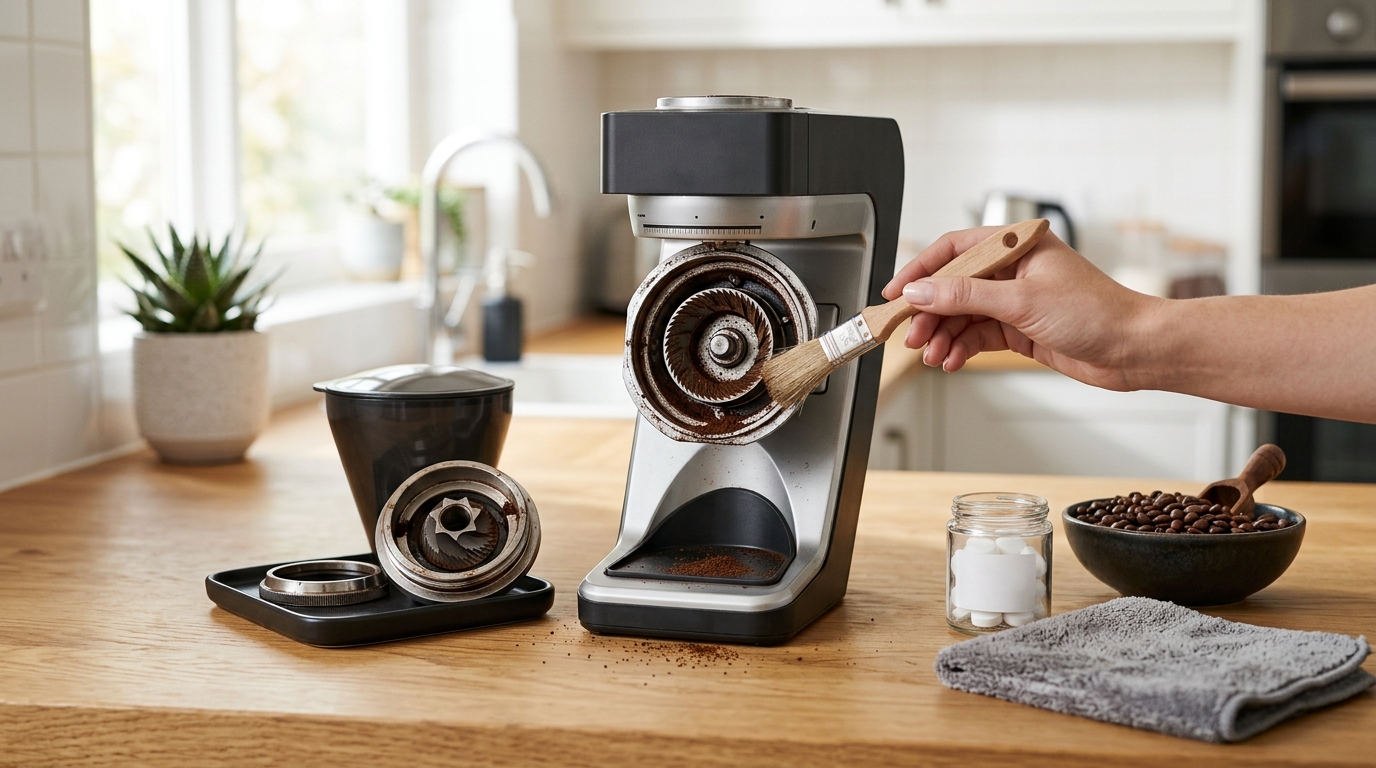
Burr grinders, whether conical or flat, have way more nooks for grounds to hide in. The burrs themselves need to come out periodically, brushed clean with a stiff bristle brush (a cheap paintbrush works fine honestly), and the chute below needs attention too since that’s where fine dust loves to pile up and just sit there getting stale.
A Simple Cleaning Routine You Can Actually Stick To
Here’s a routine that doesn’t feel like a chore, broken into three tiers depending on how deep you wanna go:
- Daily quick brush — a small brush swept through the chute and around the hopper opening, takes maybe thirty seconds, removes loose grounds before they sit and go stale.
- Weekly wipe down — unplug the machine, remove the hopper if possible, wipe surfaces with a dry or barely damp cloth, focus on anywhere oil residue tends to collect.
- Monthly deep clean — disassemble burrs according to manufacturer instructions, brush thoroughly, use grinder cleaning tablets (like Urnex Grindz or similar products) which are basically rice-like pellets designed to absorb oils and residue as they pass through.
A lot of manufacturers, including Baratza, one of the more respected home grinder brands, recommend running cleaning tablets through the burrs roughly every two to four weeks depending on usage, and doing a full manual teardown every few months for anyone grinding daily.
Does Cleaning Frequency Change With Climate
Yes, actually, humidity plays a bigger role than most people realize. In more humid environments, coffee oils and residue tend to clump rather than stay powdery, which can clog burrs faster and encourage a bit of mold growth if things sit too long without airflow. Drier climates tend to be more forgiving, though dust and static become the bigger annoyance instead.
If you live somewhere humid, lean toward the more frequent end of whatever cleaning schedule fits your usage.
What Happens If You Just… Don’t Clean It
Nothing catastrophic happens overnight, your grinder won’t explode or stop working suddenly. But over weeks and months, a few things quietly get worse:
- Flavor becomes muddier and less bright, especially noticeable with lighter roasts that rely on subtle flavor notes
- Grind consistency drifts, which throws off extraction and can make espresso either sour or bitter depending on the day
- Old rancid oils mix into every fresh batch, meaning even excellent beans start tasting mediocre
- Mechanical wear increases slightly as buildup interferes with moving parts, shortening the life of burrs over time
None of this is dramatic, it’s more of a slow fade that a lot of people just accept as “well I guess this is what coffee tastes like now,” when really it’s just an overdue cleaning.
Quick Answer If You’re in a Hurry
If someone forced you to give one single answer for how often to clean coffee grinder equipment, most experts and grinder manufacturers land somewhere around a light wipe weekly and a proper deep clean once a month for typical home use. Heavier daily grinders, especially espresso setups, benefit from tightening that up to every two weeks.
Your nose, honestly, is a pretty reliable backup system here. If it smells stale or oily before you even brew, that’s your grinder asking for a bit of attention it probably hasn’t gotten in a while.

Jamesmathew is an expert Amazon affiliate writer, helping readers discover top products, smart deals, and practical buying guides through honest reviews and insightful content.