

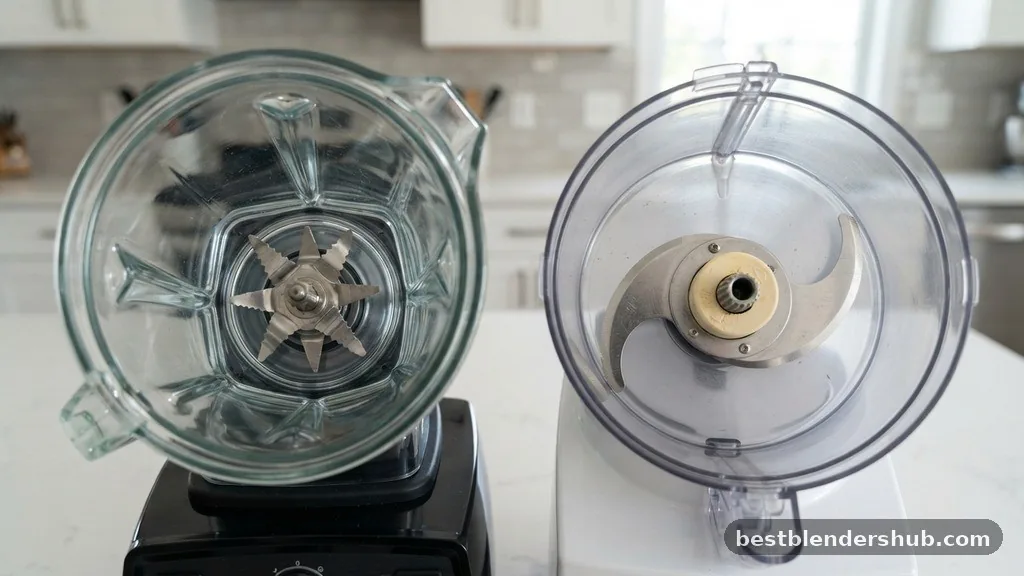
Many home cooks wonder if they can use a blender as a food processor when they find themselves missing the right tool for a specific recipe. While these two kitchen staples share some overlapping functions, they are engineered for different mechanical tasks.
Understanding the nuances of your equipment helps you decide when you can safely swap them and when you should stick to the intended device. You will discover how to adjust your techniques to achieve the best results without damaging your motor or ruining your ingredients.
Understanding the Mechanical Differences
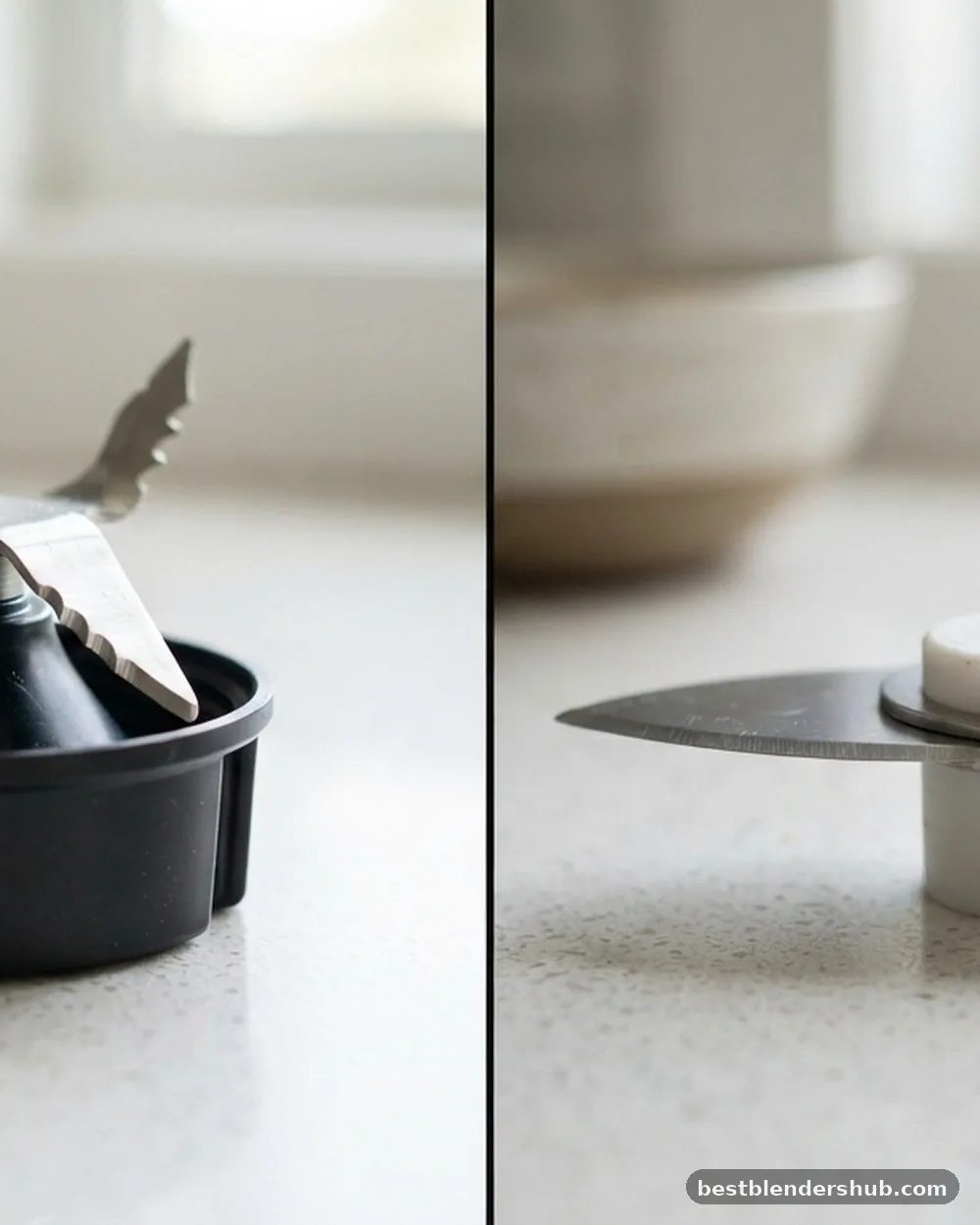
The primary difference between these machines lies in the design of their blades and the shape of their containers. A food processor typically uses a sharp, flat S-blade that rotates near the bottom of a wide food processor bowl.
This setup is designed to slice, shred, and chop solid ingredients without turning them into liquid. In contrast, blender blades are usually duller and angled to create a vortex, pulling ingredients down into the center to liquefy or emulsify them.
Because of these design distinctions, the way each machine interacts with food is fundamentally different. A food processor relies on the width of the bowl to process large volumes of dry or semi-solid ingredients.
A blender relies on a high-speed motor and a narrow pitcher to create a smooth, consistent puree. If you try to force solid, dry items into a blender, the lack of liquid often prevents the blades from grabbing the food, leading to stalled processing.
When You Can Successfully Substitute
You can effectively substitute a blender for a food processor when the desired outcome is a smooth texture rather than a chunky one. If your recipe calls for pureeing soups, making hummus, or blending thick sauces, a blender is often the superior choice. Because blenders excel at breaking down fibers, they can create a silkier consistency than a standard processor for liquid-based mixtures.
To get the best results, you must monitor your liquid-to-solid ratio closely. Since blenders require liquid to create a vortex, you may need to add a small amount of oil, water, or broth to get the blades moving. If you are making a dip or a spread, adding a splash of liquid allows the blades to circulate the ingredients effectively, resulting in a uniform texture that mimics what a food processor would achieve.
Tasks Where Blenders Fall Short
There are specific culinary tasks where using a blender is either impossible or counterproductive. Trying to perform vegetable dicing or shredding cheese in a blender will almost always result in a mushy, uneven mess. The high speed of the blades combined with the narrow container creates an instant puree rather than the clean, distinct cuts that a food processor produces.
Furthermore, attempting to make dough in a standard blender is a recipe for disaster. The thickness of bread or pastry dough requires the slow, powerful torque of a food processor’s motor.
Blenders lack the necessary gear reduction to handle heavy, elastic masses. Attempting this can lead to motor overheating or permanent damage to the machine’s internal components.
Techniques for Better Blender Performance
If you find yourself in a situation where you have no other choice, you can improve your results by using the pulse function exclusively. Never run your blender on a continuous setting when you are trying to imitate a food processor.
Pulsing allows you to control the food texture by checking the progress between short bursts of power. This prevents you from accidentally over-processing your ingredients into a liquid state.
Another helpful tip is to work in small batches. If you fill a blender to the brim, the ingredients at the top will never reach the blades, and the ingredients at the bottom will be pulverized into a paste.
By processing your food in smaller, manageable amounts, you maintain better control over the final consistency. Always stop frequently to scrape down the sides of the pitcher with a spatula to ensure everything is processed evenly.
Comparing Kitchen Appliance Versatility
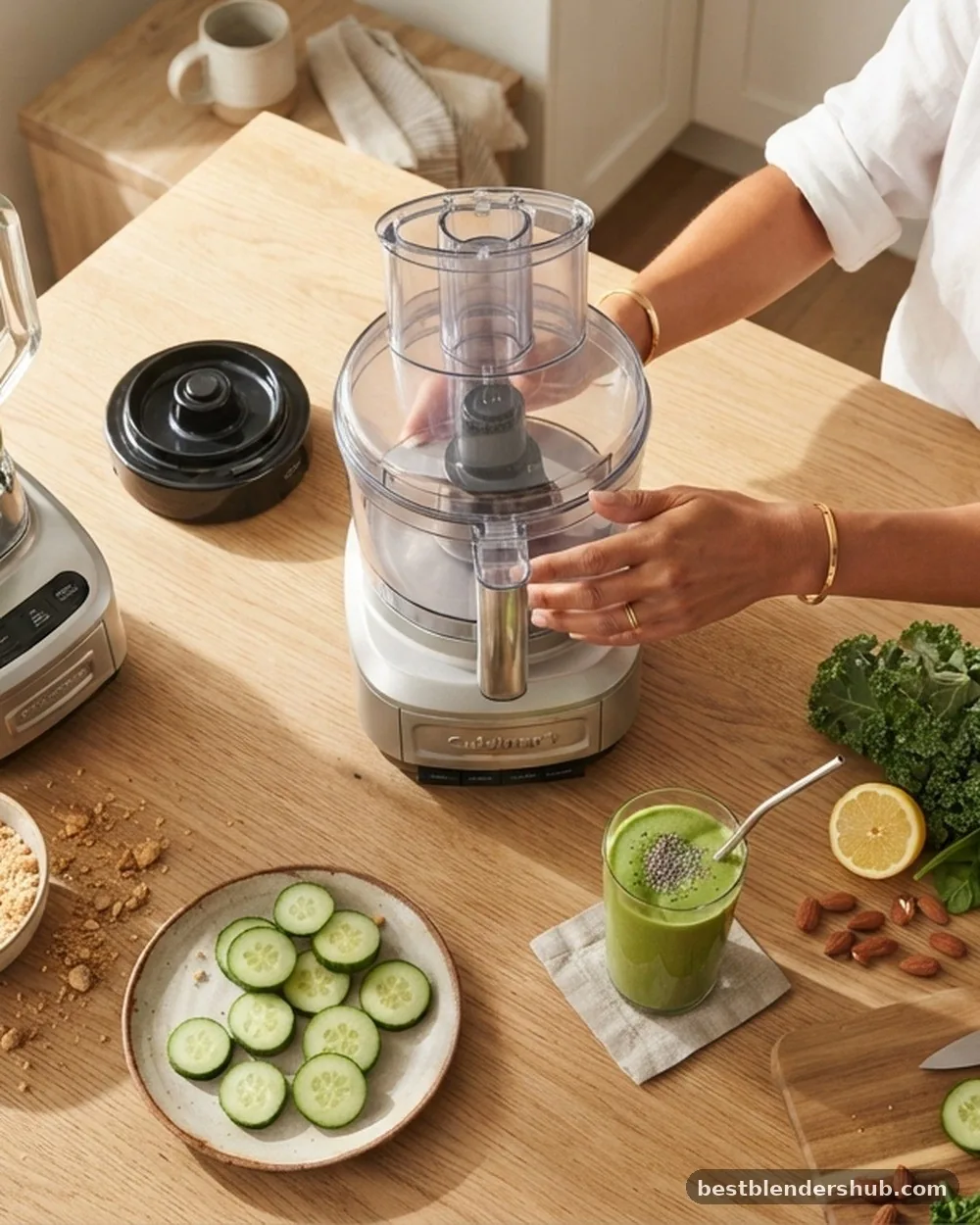
To better understand which device suits your needs, it helps to look at how they handle common kitchen challenges. While some tasks are interchangeable, others are strictly the domain of one machine or the other.
| Task | Best Tool | Blender Suitability |
|---|---|---|
| Smoothie Preparation | Blender | Excellent |
| Dough Kneading | Food Processor | Poor (Do not attempt) |
| Pureeing Soups | Blender/Immersion Blender | Excellent |
| Chopping Onions | Food Processor | Poor (Risk of mush) |
| Making Nut Butter | High-Speed Blender | Good |
Addressing Common Limitations and Risks
A significant concern when using a blender for heavy-duty tasks is the risk of damaging the motor. Blenders are designed to run for short periods, often with plenty of liquid to keep the friction low.
When you subject them to heavy, dry ingredients, the motor works significantly harder. If you smell a burning odor or notice the machine slowing down, turn it off immediately.
Additionally, consider the safety of your blades. Using a blender to chop hard items like raw carrots or frozen ingredients can dull the blades over time.
While kitchen appliance versatility is a great feature, pushing your blender beyond its intended scope can shorten its lifespan. If you frequently find yourself needing to chop or shred, investing in a dedicated food processor will save you money on replacement blender parts in the long run.
Exploring Alternative Methods
If you don’t own a food processor and your blender isn’t cutting it, you have other options. An immersion blender is often a better middle ground for soups and sauces because it allows you to control the processing directly in the pot. For chopping vegetables, a sharp chef’s knife and a cutting board remain the gold standard for precision.
* Use a box grater for cheese or root vegetables to get a consistent shred.
* Employ a mortar and pestle for small amounts of herbs or spices.
* Utilize a potato masher for creating rustic, chunky textures.
* Opt for a food mill if you need to puree cooked ingredients while removing seeds or skins.
The Role of the High-Speed Blender
Modern high-speed blender models have blurred the lines between these two appliances. Because these devices feature much more powerful motors and specialized blade assemblies, they can handle tasks that would stall a standard blender. Some high-speed models even come with tamper tools that allow you to push ingredients into the blades safely, which is a massive advantage when processing thicker mixtures.
If you own a high-end blender, you might find that you can make nut butters, thick dips, and even frozen desserts with ease. However, even with this extra power, you still cannot achieve the specific mechanical action of a food processor’s S-blade. You will always get a smoother, more uniform result, but you will never get the clean, crisp cuts that a food processor provides for salads or slaws.
Conclusion
Knowing whether you can use a blender as a food processor boils down to the consistency you need. For purees, sauces, and smoothies, your blender is likely more than capable of handling the job. When the recipe requires chopping, shredding, or working with heavy doughs, you are better off using a knife or a dedicated food processor to avoid damaging your equipment.
By respecting the mechanical limits of your blender and utilizing techniques like pulsing and batching, you can maximize your kitchen appliance versatility without compromising your results. Experimenting with these methods will help you become a more confident cook, regardless of the tools currently available in your kitchen. If you have questions about specific recipes, feel free to reach out and share your experiences.
Frequently Asked Questions
Can I use a blender to chop nuts instead of a food processor?
Yes, but use the pulse function in short bursts to avoid turning them into nut butter accidentally.
Is it safe to make pizza dough in a blender?
No, the motor is not designed for the resistance of dough and you will likely overheat it.
Can a blender shred cheese effectively?
No, it will likely turn the cheese into a warm, clumpy paste rather than clean, individual shreds.
What happens if I use a blender without enough liquid?
The blades will spin in a vacuum, failing to process the food and potentially burning the motor.
Are immersion blenders better than standard blenders for processing?
They are better for soups and sauces but lack the power for processing solid, dense food items.
Can I use a blender for vegetable dicing?
No, a blender will always result in an uneven, watery puree rather than distinct, uniform vegetable pieces.
How do I prevent my blender from overheating during heavy use?
Work in small batches and allow the motor to rest for a few minutes between each use.

Jamesmathew is an expert Amazon affiliate writer, helping readers discover top products, smart deals, and practical buying guides through honest reviews and insightful content.