

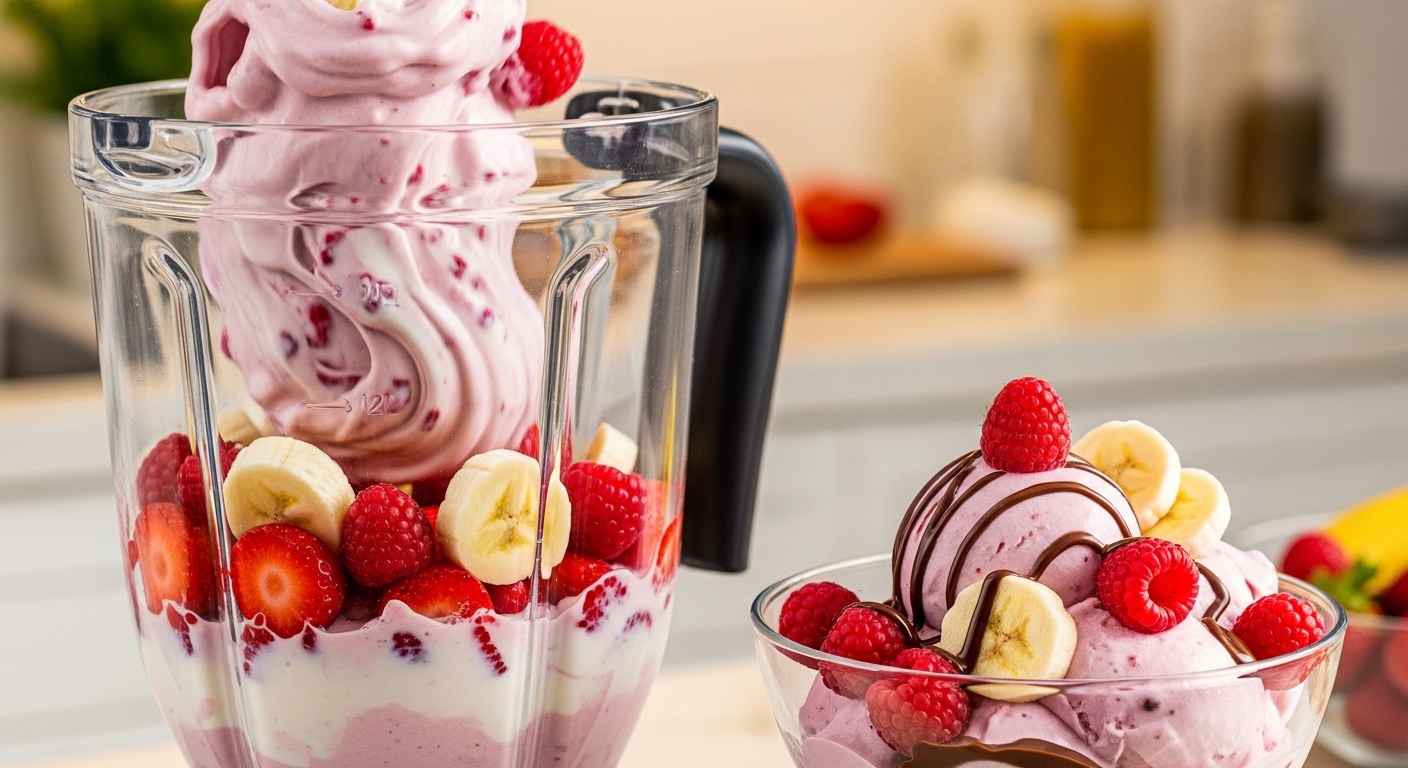
can i make ice cream in a blender is something you probably asked while standing in your kitchen staring at frozen fruit or a half-empty milk carton, thinking it can’t really be that simple… but also kinda hoping it is. And yeah, you’re not weird for wondering it, most people only figure this out after they already tried something messy once or twice and it didn’t go the way TikTok made it look.
You’re basically trying to solve a small kitchen mystery here: how does something soft and creamy like ice cream even come out of a loud spinning machine meant for smoothies. And honestly, it’s possible, but not in the “just throw anything in and magic happens” way people sometimes pretend it is.
can i make ice cream in a blender or is it just internet hype?
So, can i make ice cream in a blender at home without needing a fancy machine sitting on your counter? Yes, but there’s a catch that nobody likes hearing at first: texture depends heavily on timing, temperature, and ingredient balance.
A real ice cream machine churns while freezing slowly, which controls ice crystal size. A blender doesn’t do that—it just smashes and aerates fast. That means your “ice cream” is closer to a frozen soft-serve or thick milkshake unless you manage the freezing step carefully.
Food science actually explains this pretty clearly. Traditional ice cream (based on standards like those from the U.S. FDA) usually contains:
- 10–16% milk fat
- 9–12% milk solids-not-fat
- 12–16% sweeteners
- and a high percentage of water
That water part is the tricky one. When water freezes too quickly, it forms big ice crystals, which is why homemade blender ice cream can turn grainy if you’re not careful.
Still, the blender method works shockingly well for quick desserts, especially if you use frozen fruit or pre-frozen base cubes.
what really happens when you try to make ice cream in a blender
When you blend frozen ingredients, three things are fighting each other inside the jar:
First, the blades are trying to break everything into tiny pieces.
Second, heat from friction starts melting parts of it.
Third, cold frozen chunks are resisting everything like stubborn little ice rocks.
This balance is what creates that creamy “soft ice cream” texture.
If your mix is too frozen, your blender struggles and you get uneven chunks. If it’s too melted, you just get sweet soup. And yeah, that middle ground is annoyingly narrow sometimes.
There’s also a science trick happening: sugar lowers freezing point. That means sweeter mixtures stay softer even when frozen. That’s why store ice cream stays scoopable straight from the freezer while plain frozen milk turns into a brick.
basic blender ice cream formula that actually works
If you strip away all the internet chaos, the simplest blender ice cream base usually follows a loose ratio like this:
| Ingredient type | Example | Purpose |
|---|---|---|
| Frozen base | bananas, frozen mango, ice cubes | structure + cold |
| Creamy element | milk, yogurt, coconut cream | smooth texture |
| Sweetener | honey, sugar, condensed milk | softness + flavor |
| Fat (optional) | peanut butter, cream | richness |
A very basic working combo many people use:
- 2 frozen bananas
- 2–3 tablespoons milk (or plant milk)
- 1 teaspoon honey or sugar
- optional: pinch of vanilla or peanut butter
That’s it. Nothing fancy, nothing dramatic.
how to actually blend it (this part matters more than people think)
- Let frozen ingredients sit for 2–3 minutes (don’t skip, trust me)
- Start blender on low speed first
- Use short pulses instead of full blasting
- Stop and scrape sides a few times
- Blend just until creamy, not liquid
And yeah, this part feels slightly annoying but it’s the difference between “wow this is ice cream” and “why is this smoothie weirdly cold.”
why blender ice cream sometimes fails (and it’s not your fault exactly)
Most failures happen for boring reasons, not skill issues.
1. Over-freezing everything
Rock-hard ingredients can stall even strong blenders. People think colder is better, but it just creates uneven chunks.
2. Not enough fat
Fat is what makes ice cream feel smooth instead of icy. Without it, texture turns sharp and crunchy in a bad way.
3. Too much liquid
A splash too much milk and suddenly you’re drinking dessert instead of scooping it.
4. Blending too long
This one surprises people. Over-blending warms the mix and melts structure. Then it refreezes badly.
Food researchers often mention that ice crystal size is the main texture factor in ice cream quality. Smaller crystals = smoother bite. Blender method can achieve this, but only if you move fast and don’t overwork it.
real variations you can try in a blender
Once you get the basic idea, things get kinda fun and slightly chaotic in a good way.
banana-based “nice cream”
Probably the most popular version online, and not without reason. Frozen bananas naturally turn creamy because of starch and sugar content. It’s basically nature cheating a little.
chocolate blender ice cream
- frozen banana or milk base
- cocoa powder
- splash of milk
- sweetener
Tastes richer than it should for how simple it is.
dairy-free coconut version
Coconut cream behaves almost like heavy cream when blended frozen. It gives that dense scoopable texture people expect.
protein-style version
- frozen banana
- protein powder
- milk
- peanut butter
This one gets thick fast, sometimes almost too thick, like you accidentally built gym dessert instead of ice cream.
texture science nobody tells you in a simple way
Ice cream isn’t just “frozen cream.” It’s basically a controlled frozen foam.
Inside it:
- water forms ice crystals
- fat traps air
- sugar keeps things soft
- air gives lightness
Without proper control, blender versions tend to lose the air stability part, which is why they melt faster than store-bought ice cream.
A quote often used in food science discussions goes something like:
“Ice cream quality is defined more by ice crystal size than by flavor complexity.”
That’s why two recipes with identical ingredients can taste wildly different depending on how they were blended or frozen.
quick comparison: blender vs ice cream machine
| Feature | Blender method | Ice cream machine |
|---|---|---|
| Texture control | medium | high |
| Speed | very fast | slow churn |
| Equipment cost | low | higher |
| Creaminess | depends on skill | consistent |
| Convenience | very easy | requires planning |
So yeah, blender wins on speed and accessibility, but not always on perfection.
small mistakes that make a big difference
People usually think they’re doing something wrong when it’s just tiny details messing things up:
- using warm fruit instead of fully frozen
- blending in one long nonstop run
- ignoring fat content completely
- expecting store-level texture instantly
It’s kind of like cooking rice without measuring water—you can still eat it, but consistency becomes luck-based.
so, can i make ice cream in a blender or not really?
can i make ice cream in a blender is not a yes-or-no question in the strict sense. It’s more like: yes, but you’re deciding what version of ice cream you’re okay with.
If you want perfect, dense, long-melting scoops like supermarket tubs, a blender alone won’t fully get you there. But if you want quick, creamy, homemade soft-serve that actually tastes good and takes like 5–10 minutes, then yeah, it absolutely works.
And once you get used to the timing, it stops feeling like experimentation and more like a weird little kitchen shortcut you’ll keep coming back to when you’re craving something cold but don’t feel like leaving the house.

Jamesmathew is an expert Amazon affiliate writer, helping readers discover top products, smart deals, and practical buying guides through honest reviews and insightful content.